What Is AI Dropshipping And How Does It Actually Work?

You have probably seen the phrase “AI dropshipping” pop up in a YouTube thumbnail or a course ad promising a fully automated store. It sounds like a new business model, but it is really an old one with a new engine under the hood, and the label gets used loosely enough online that it is worth pinning down exactly what it means before you act on it.
This guide breaks down what AI dropshipping actually means, how it differs from the manual version of the same model, and where the automation genuinely helps versus where a person still needs to make the calls. By the end, you will know exactly what you are looking at the next time you see the term used in a headline, and what questions are worth asking before you trust any specific platform built around it.
What is AI dropshipping?
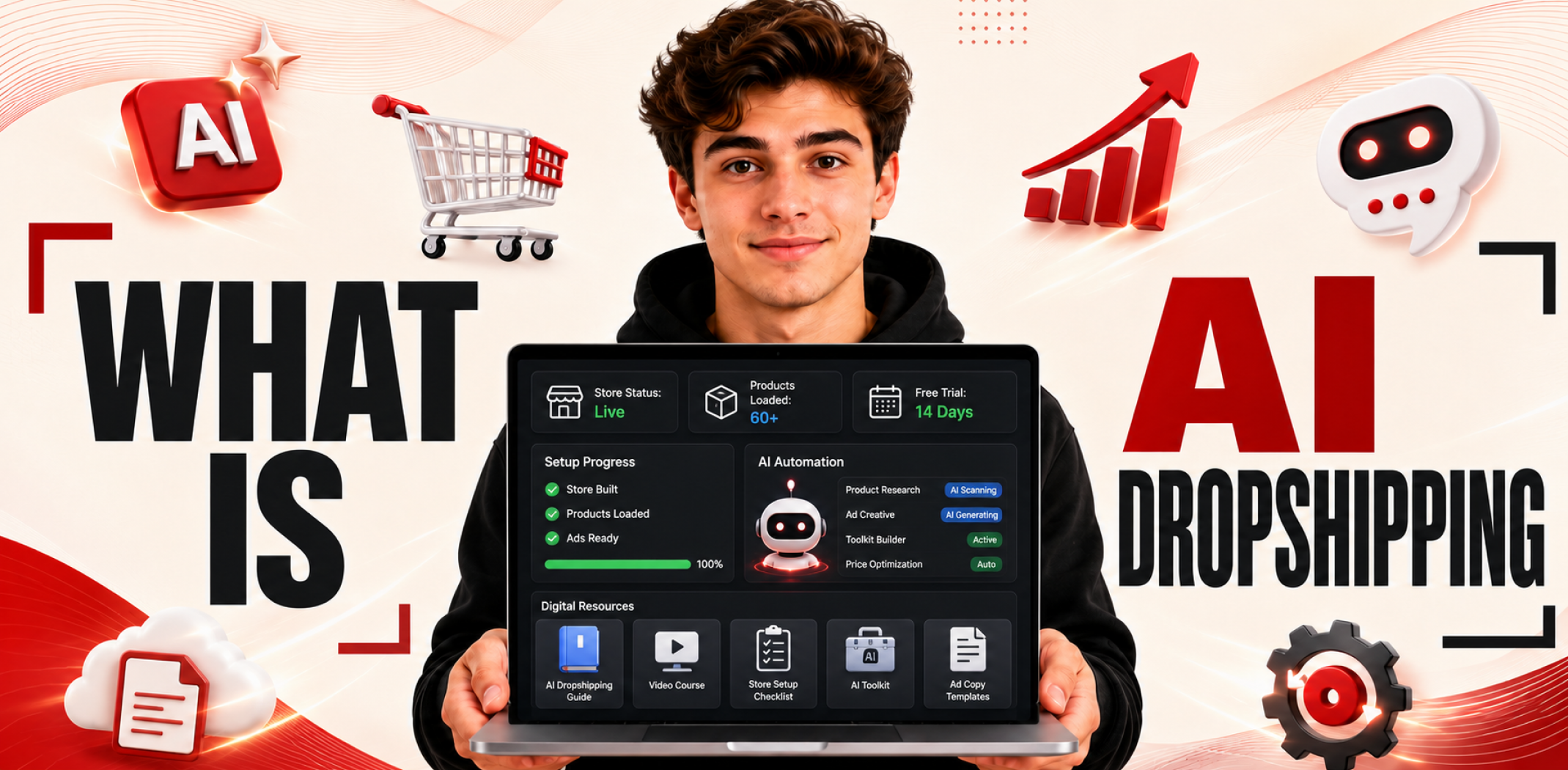
AI dropshipping is the use of artificial intelligence tools to automate parts of the dropshipping business model, most commonly product research, ad creative, store setup, and day-to-day store management. The underlying business model does not change: a seller sells products through their own store without holding that inventory themselves. What changes is how much of the manual work behind that model gets handled by software instead of by a person.
The term has become common shorthand for a specific shift in how online stores get built in 2026. A few years ago, “dropshipping” meant hours of manual product research on top of learning ad platforms from scratch. Today, a growing share of that early legwork gets handed to AI tools instead, which is why the phrase shows up so often in store-building guides, YouTube tutorials, and course marketing aimed at first-time sellers.
If you want the fuller step-by-step picture of starting an online business beyond just the AI angle, our guide on how to start an online business covers the full process from picking a niche to turning on your first ads.
AliDropship is one example of a platform built around this idea, though it has moved fully away from physical products. Every AliDropship store is now built around a digital-only catalog, guides, courses, checklists, and AI-powered toolkits, delivered instantly instead of shipped.
How does AI dropshipping actually work?
At a basic level, AI dropshipping follows the same three stages every online store goes through: finding something to sell, getting it in front of buyers, and fulfilling the order once someone buys. The difference is that each stage now has an AI layer sitting underneath it, handling the repetitive analysis and drafting work a person used to do by hand.
None of these three stages are new. What is new is the speed: a process that used to take a new seller days of research and setup can now happen in a single sitting, because the AI layer is doing the first pass on data a person would otherwise have to dig through manually. That does not mean the process runs itself with zero input; someone still needs to review what the AI surfaces and decide what actually goes live in the store. The tools speed up the grind, not the judgment calls sitting on top of it.
AI dropshipping vs traditional dropshipping
Side by side, the two approaches are aiming at the same outcome through very different amounts of manual effort. Traditional dropshipping asks the seller to do the research, writing, and setup themselves, which is doable but genuinely time-consuming for someone doing it for the first time, especially without a background in marketing or design.
Neither version removes the need for judgment. AI can shortlist products and draft ad copy, but a person still has to decide which products fit their store and which ads actually sound right for their audience. The table above is about where the manual hours go, not about whether the work disappears entirely. A seller who skips that judgment step entirely, on either side of the table, usually ends up with a store that looks busy but does not sell much.
Where AI actually shows up in a modern store
“AI dropshipping” is a broad label that covers several distinct tools working together rather than one single feature. Breaking it into its actual parts makes it easier to see which pieces genuinely save time and which ones just sound impressive in a course sales page.
AI Product Research
Tools scan trend data, sales velocity, and competitor listings to flag products with real demand before a niche gets crowded.
AI-Generated Ad Creative
Instead of writing and designing every ad from scratch, AI can draft descriptions and creative variations, then help test which ones perform best.
AI Customer Support
Chat-based tools answer common buyer questions about sizing, delivery, or order status, day or night, without a person on standby.
AI-Powered Toolkits
Some platforms now sell AI tools as the product itself: a buyer answers a few questions and the toolkit generates a tailored plan or guide on the spot.
For a broader look at how this category is evolving, AliDropship has a dedicated guide on AI dropshipping that goes deeper into specific tools and trends worth watching in 2026. Reading a few of these side by side is a good way to tell which tools are genuinely useful and which are just repackaging the same basic idea with different branding.
What AI dropshipping still cannot do
AI can speed up research, drafting, and testing, but it does not choose a niche for you in any meaningful sense, and it does not replace judgment about which products actually fit a specific brand or audience. A tool can hand over a shortlist of trending products; deciding which one is worth building a store around is still a human call, and so is deciding how that product gets priced and positioned. The same shortlist handed to 10 different sellers usually produces 10 different stores, because the products still have to be filtered through a specific brand, audience, and price point.
The same goes for customer relationships. An AI chatbot can answer routine questions about sizing, delivery, or order status, but building the kind of trust that turns a first-time buyer into a repeat customer still comes down to how consistently the store is run day to day. Automation removes friction from the setup and the repetitive parts of running a store; it does not remove the need for someone paying attention.
Is AliDropship an AI dropshipping platform?
AliDropship is a digital-only online business platform that applies this same kind of automation to a fully digital catalog, guides, courses, checklists, and AI-powered toolkits, for people starting their first online business with no coding, design, or marketing background. It brings the store, the products, and the built-in ad system together in one place, so a first-time seller can launch fast and grow with confidence. More than 1,500,000 stores have been built on AliDropship, and the platform has been featured by Forbes, Entrepreneur, Inc., NBC, Business, and Fox News. If digital products are new to you, here is a closer look at what a digital product actually is.
At its core, AI dropshipping is not a new business model so much as a faster way to run an existing one. The store, the products, and the customer are still the same three pieces every online seller has always worked with, and what has changed is how much of the setup and daily grind between those three pieces now runs on software instead of a spreadsheet and a lot of trial and error. If you want the complete roadmap beyond this one topic, our guide on how to start an online business walks through choosing a niche, setting up your store, and turning on ads for the first time.
What is AI dropshipping?
How is AI dropshipping different from regular dropshipping?
Do you need experience to start an AI dropshipping store?
Is AliDropship an AI dropshipping platform?