How To Find Low Cost Products With High Profit Margin For 2026

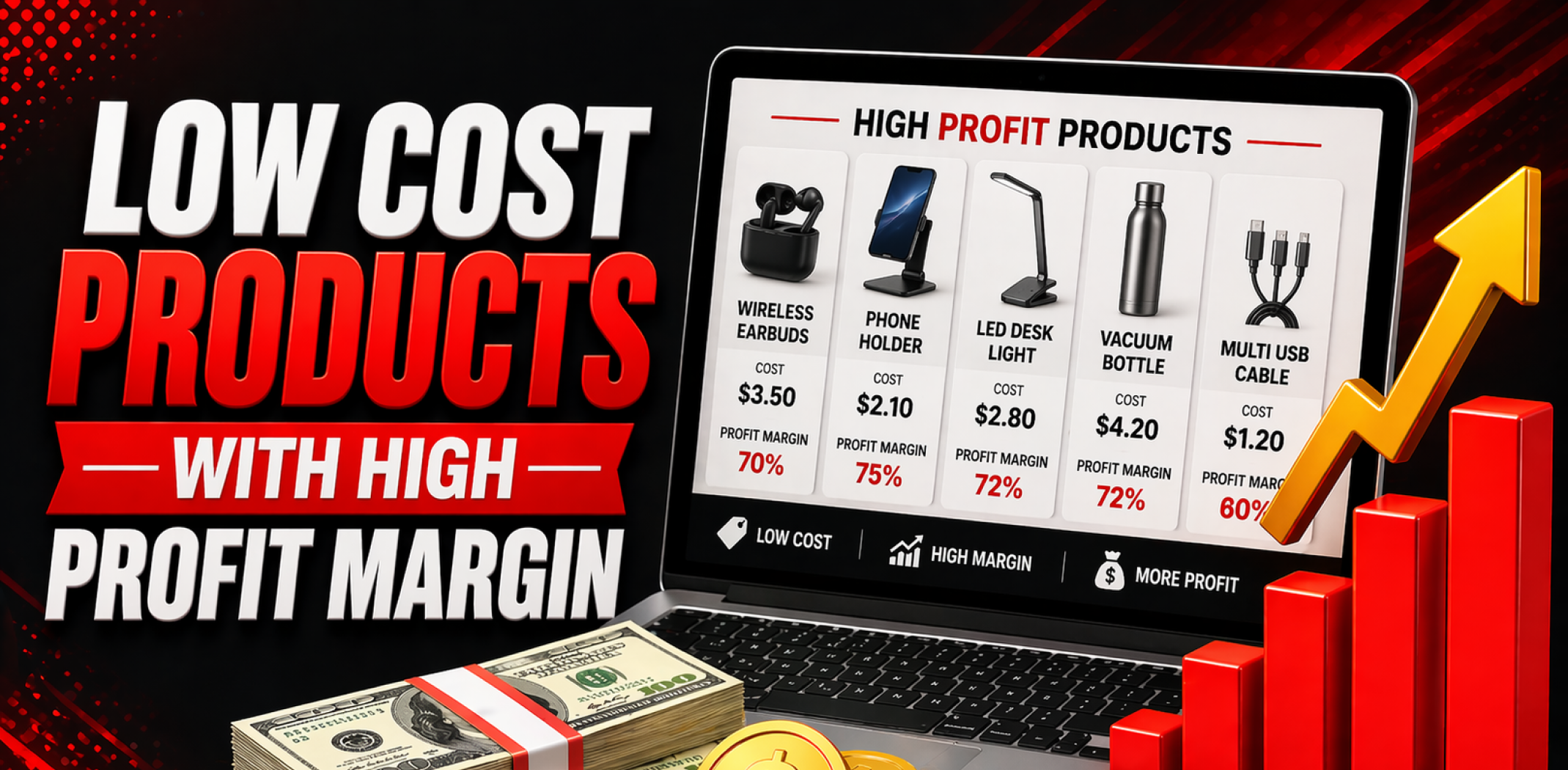
Most people who start dropshipping focus on the wrong thing first. They chase trending products, viral items, and whatever everyone else is selling – and then they wonder why margins are razor thin. The real edge in dropshipping comes from finding low cost products with high profit margin: items that cost you $3–$10 to source and sell for $25–$60 or more. That gap is where sustainable ecommerce businesses are built.
This guide breaks down the margin strategy behind profitable dropshipping – what makes a product truly high-margin, which niches consistently deliver the best returns, and how to find and evaluate products before you commit to selling them.
Quick answer: The best low cost products with high profit margin for dropshipping are typically lightweight, non-branded, and solve a specific problem – think phone accessories, pet supplies, kitchen gadgets, beauty tools, and home organizers. Sourced from AliExpress suppliers at $3–$8, these items commonly retail for $25–$50, yielding 60–80% gross margins.
Before jumping into specific categories, it helps to understand what “high margin” actually means in a dropshipping context – because a lot of beginners misread the numbers.

What is a high profit margin product in dropshipping?
In standard retail, a 30–40% margin is considered healthy. Dropshipping can do significantly better than that – but only if you select products with the right cost-to-price ratio from the start.
A high profit margin product in dropshipping is one where the difference between your supplier cost and your retail price is large enough to cover advertising, platform fees, and chargebacks – and still leave meaningful profit per order. As a general rule, aim for a minimum 3x markup (cost multiplied by three equals your retail price). On lower-ticket items, a 4x–6x markup is realistic and common.
For example: a portable phone stand sourced at $2.50 can realistically sell for $14.99. After shipping and a small ad spend, you might net $7–$9 per unit. That is a 60–65% gross margin – far above what you’d see selling branded electronics or clothing.
Three factors define whether a product can support this kind of markup:
- Perceived value – Does the product look and feel worth the price? Items with a premium visual presentation command higher prices even when sourced cheaply.
- Low commodity awareness – If buyers can easily find the same item on Amazon for $4.99, you can not charge $24.99. Avoid products with a strong price anchor.
- Lightweight and low shipping cost – Heavy or bulky items eat margin fast. The best high-margin dropshipping products weigh under 500g.
Once you understand what creates margin, the next logical question is: how much can that margin actually earn you? The numbers depend heavily on volume and niche, but there are reliable benchmarks worth knowing.
How much can you realistically earn with high-margin dropshipping?
Dropshipping income is directly tied to two things: your margin per order and your monthly order volume. The table below gives a realistic picture across three common operating levels.
These figures assume average order values of $25–$45 and a net margin of roughly 25–35% after ad spend, transaction fees, and returns. High-margin products give you more buffer – meaning you can spend more on ads per order and still stay profitable.
One note on the top figures: $15,000+/month is real but requires 12–18 months of consistent testing, reinvestment, and scaling. New stores operating part-time typically reach $300–$800/month within 60–90 days if they select products carefully from the start.
With realistic expectations in place, let’s get into the product categories that consistently deliver the margins you’re targeting.
Best product niches for low cost, high profit margin dropshipping
Not every niche is equally suited to a high-margin strategy. The categories below consistently deliver strong cost-to-price ratios, low return rates, and repeat purchase potential – all of which protect and grow your margin over time.
Phone accessories and tech gadgets
Phone accessories remain one of the most reliable high-margin niches in dropshipping. The reason is simple: suppliers manufacture these items at enormous scale, which drives sourcing costs down, while consumer willingness to pay for stylish or functional accessories stays high.
MagSafe-compatible phone cases
MagSafe cases for iPhone 13–16 models source for $2–$4 on AliExpress and commonly retail for $18–$28. The product looks premium when photographed well, and the wide device compatibility means one listing covers a large customer base. Niche down by color palette (minimalist, floral, clear) to reduce direct price comparison.
Earning potential: $12–$22 net margin per unit at moderate volume (50–100 orders/month) with low ad spend via organic social or SEO.
Portable wireless chargers
Compact wireless charging pads source for $3–$6 and retail comfortably at $19.99–$34.99. Buyers perceive these as higher-value tech items and price-check less carefully than they do with basic cables or cases. Bundle two units together and you can push average order values significantly higher.
Ring lights and phone tripod stands
Content creators are a massive and growing buyer segment. Small clip-on ring lights source for $1.50–$3.50 and retail for $12.99–$22.99. Tripod phone stands go for $2–$5 to source and sell for $16.99–$29.99. Bundle them as a “creator kit” and you have a compelling product with a $35–$50 price point from a $6–$8 combined sourcing cost.
Earning potential: $18–$38 net margin per bundle at 40–80 bundle orders/month.
Home organization and kitchen tools
Home and kitchen products punch above their weight in dropshipping because buyers rarely know what these items cost at source – and a well-photographed product image does the selling for you.
Drawer organizers and storage bins
Modular drawer organizers source for $1.80–$4 and retail for $14.99–$24.99. The key is to present them in lifestyle photography showing a neatly organized drawer – this framing alone justifies a 5x–6x markup in the buyer’s mind. Lightweight sets stack well for shipping without dramatically increasing your fulfillment cost.
Kitchen gadgets with a specific use case
Multi-blade herb scissors ($2–$4 sourced, $14.99–$19.99 retail), avocado slicers ($1.50–$3 sourced, $12.99–$17.99 retail), and over-the-sink colanders ($3–$6 sourced, $22.99–$34.99 retail) all follow the same pattern: low production cost, obvious visual value, and no strong price anchor in the buyer’s mind. Avoid generic items like can openers or basic peelers – those are too price-commoditized.
Wall-mounted hooks and bathroom organizers
Self-adhesive hooks and organizers are among the highest-repeat-purchase items in home dropshipping. A set of 10 adhesive hooks sources for $1.20–$2.50 and retails for $11.99–$15.99. Buyers order multiple sets once they trust the product, and a well-run post-purchase email sequence can generate second-order revenue without additional ad spend.
Earning potential: $8–$13 per unit, but high reorder rate and upsell potential push effective LTV (lifetime value) significantly higher than single-order margin suggests.
Beauty tools and personal care
Beauty is one of the highest-margin niches in all of ecommerce, and it translates directly to dropshipping when you focus on tools rather than consumables (serums, creams, and lotions introduce expiry and regulatory complexity you do not need at the start).
Facial rollers and gua sha sets
Rose quartz rollers source for $2–$4 and retail for $18–$29.99. Gua sha stones source for $1.50–$3 and retail for $14.99–$22.99. Bundle them together in a branded-style box (which you can source pre-made for $0.50–$1) and you have a gift-worthy product retailing for $29.99–$39.99 with a combined sourcing cost under $8. This niche is particularly strong on Pinterest and TikTok.
Electric facial cleansing brushes
Compact facial cleansing devices source for $3–$7 and commonly retail for $24.99–$44.99. These items photograph exceptionally well and carry an inherent sense of value as “devices” rather than simple tools. Look for USB-rechargeable models – buyers consistently prefer these over battery-powered alternatives and they carry fewer shipping restrictions than lithium-ion batteries.
Earning potential: $15–$35 net margin per unit, with strong conversion rates from video demonstration content.
Pet supplies
Pet owners are emotionally invested buyers who consistently pay premium prices for products that benefit their animals. This emotional driver reduces price sensitivity more than almost any other niche, which translates directly to better margins for the seller.
Interactive pet toys
Slow feeder mats source for $2–$4 and retail for $16.99–$24.99. Feather wand toys for cats source for under $2 and retail for $10.99–$15.99. Automatic laser toys source for $4–$8 and retail for $28.99–$39.99. All three hit the sweet spot of low sourcing cost, strong perceived value, and a buyer who is not particularly motivated to hunt down the cheapest alternative.
Dog bandanas and pet apparel
Adjustable dog bandanas source for $0.80–$1.80 and retail for $9.99–$14.99. Seasonal designs (holiday themes, summer prints) sell well in short bursts. The margin per unit is modest, but these items pair well with toys or accessories in bundles that push average order values to $30–$45.
Earning potential: $8–$30 per unit depending on product tier, with strong upsell and bundle potential across the full pet care category.
How to find low cost products with high profit margin: a practical process
Knowing which categories work is only half the job. You also need a repeatable method for evaluating specific products before you invest time building listings around them. Here is a four-step process that keeps margin at the center of every sourcing decision.
Step 1 – Start with the retail price, not the supplier price
Most beginners do this backwards. They find a product for $3 on AliExpress and then try to figure out what to charge. Instead, start by searching your target niche on Etsy, Amazon, or independent stores and identify what similar items sell for. If the category ceiling is $14.99, your maximum viable sourcing cost is around $3.50 (at a 4x markup). If the category ceiling is $34.99, you can work with a sourcing cost up to $8–$9.
This top-down method ensures you never fall in love with a product that simply can not support a healthy margin at realistic retail prices.
Step 2 – Check Amazon and price awareness
Before committing to any product, search it on Amazon. If the same or nearly identical item is available as an Amazon Choice listing for under $10, you face a near-impossible price anchor. Buyers who comparison-shop will always find it. This is not automatically a dealbreaker – but it means you need a genuinely differentiated angle: superior branding, a bundle, or a niche audience that does not default to Amazon first.
If the product does not appear prominently on Amazon, or only shows up from low-rated third-party sellers, that is a positive signal. It means you have pricing room.
Step 3 – Use AliExpress order history and reviews as a demand filter
A low sourcing cost is meaningless if nobody wants the product. On AliExpress, filter by orders (5,000+) and look for suppliers with 4.6+ star ratings and recent reviews from the past 60–90 days. Consistent recent orders confirm that other sellers are moving units right now – not just historically.
Pay attention to the review photos too. Buyers who post photos are engaged enough to care about the product, which is a signal that the item generates genuine satisfaction – and therefore lower return rates, which protects your margin downstream.
Step 4 – Calculate your true margin before listing
Run the numbers before you build a single listing. Use this simple formula:
Net margin per order = Retail price – Supplier cost – Shipping cost – Platform/transaction fee (approx. 3–5%) – Estimated ad cost per order
If your target retail price is $24.99 and your supplier cost plus shipping is $6.50, your gross margin is $18.49. After a 4% transaction fee ($1.00) and a conservative $5 ad spend per order, your net margin is roughly $12.49 – around 50% net. That is a healthy dropshipping margin worth building on.
If the same calculation leaves you with under $8 net per order, reconsider the product or look for a higher-priced variant of the same item to sell.
Crunch your per-unit profit potential
Enter your product price, supplier cost, shipping fee, monthly sales, and estimated ad spend per unit – the calculator will instantly show your net profit per sale, your profit margin percentage, and a quick verdict on whether that product is worth pushing.
| Under 10% | Tight — hard to sustain on paid traffic |
| 10–15% | Marginal — slim cushion for refunds and ad cost shifts |
| 15–20% | Healthy — cohort median sits at 19.2% |
| 20–25% | Strong — outperforming the median operator |
| 25%+ | Excellent — top-tier product economics |
Margin-protecting strategies every dropshipper should apply
Finding a high-margin product is the start. Keeping that margin healthy over time requires a set of deliberate operational habits.
Use bundles to increase average order value
Bundles are one of the most reliable margin-boosting tactics in dropshipping. When you sell two products together for $39.99 that individually source for $4.50 and $3.00, you’re shipping one package, paying one transaction fee, and often spending no more on ads than you would for a single-item sale. The result is a meaningfully higher margin per transaction without increasing your customer acquisition cost.
Start with complementary bundles within the same niche: facial roller plus gua sha, phone case plus screen protector, slow feeder mat plus interactive toy. Test pricing at 80–85% of the combined single-item retail prices to make the bundle feel like a deal while preserving your margin.
Negotiate with suppliers as volume grows
AliExpress supplier prices are not fixed. Once you are placing 30–50 orders per month with a single supplier, message them directly and ask for a volume discount. Even a $0.50–$1.00 reduction in unit cost adds up to $15–$50 per month in recovered margin at that volume – and more significantly as you scale.
Most reliable AliExpress suppliers are open to ongoing relationships with consistent buyers. Building this kind of supplier relationship also gives you priority access to new product launches and faster processing times during high-demand periods.
Focus on products with low return rates
Returns destroy margin fast in dropshipping. A 10% return rate on a product with a $12 net margin means you’re effectively earning $10.80 per order once returns are factored in – and that assumes you don’t cover return shipping. Products with high return rates include clothing (sizing issues), electronics with batteries (DOA rates), and anything with complex setup instructions.
The lowest-return-rate categories in dropshipping are home accessories, pet supplies, beauty tools, and phone accessories – which is no coincidence. These are the same categories with the best sourcing margins.
Review your pricing quarterly
Supplier costs on AliExpress fluctuate with raw material prices and platform promotions. A product you sourced for $3.20 in January may cost $3.80 by April – quietly shrinking your margin without you noticing. Set a quarterly reminder to check your top-10 products’ current sourcing costs and adjust retail prices accordingly.
Most buyers will not notice a $1–$2 price increase on a product they found through search or social. Those who are hyper price-sensitive were unlikely to become repeat customers anyway.
What to avoid when chasing high profit margins
High-margin product hunting has a few common traps that trip up beginners – and some of them are costly.
Branded and counterfeit goods
AliExpress has no shortage of listings that appear to replicate branded products – Apple-style charging cables, Nike-adjacent shoes, “designer” sunglasses. These items often show strong margins on paper. Do not sell them. Listing counterfeit or infringing products exposes you to store bans, payment processor terminations, and in serious cases, legal liability. There is no margin that justifies that risk.
Key principle: Stick to generic, unbranded products with no logo or identifiable brand design elements. The best high-margin products are original enough that no buyer associates them with a trademark.
Fragile products with high damage rates
Glass items, ceramic goods, and thin plastic accessories look appealing when sourced cheaply. In practice, international shipping damages a meaningful percentage of fragile items, and the cost of refunds, replacements, and customer service erodes margin quickly. Avoid fragile items until you have a supplier who packs specifically for international dropshipping.
Health claims you can not verify
Some beauty and wellness products on AliExpress carry supplier descriptions with medical-adjacent claims – “reduces inflammation,” “boosts collagen,” “clinically tested.” Do not carry these claims into your listings unless you have documentation to support them. Unverifiable health claims create liability and attract refund requests from customers who feel misled.
Important: Describe what a product does physically, not what it will produce medically. “Massages facial muscles” rather than “improves circulation.” This keeps your listings honest and your refund rates low.
Which approach fits your situation?
The right product strategy depends on where you are in your dropshipping journey. Here is a practical breakdown by reader profile.
Complete beginner
Start with one niche and one to three products, not a general store. Pick a category from the list above – phone accessories, home organizers, or pet toys are all beginner-friendly. Focus on a single supplier with 10,000+ orders and 4.7+ stars. Keep your initial product count small, learn your conversion rate and return rate per product, and only expand once you understand your margin in practice, not just on paper.
Intermediate / part-time seller
If you’re already generating 20–50 orders per month, your next lever is average order value. Introduce two to three product bundles in your top-performing niche and A/B test pricing. Revisit your ad cost per order – at this volume, you should know your cost-per-acquisition well enough to identify which products are margin-positive and which are breaking even or worse. Cut the losers and reinvest the ad budget into winners.
Advanced / full-time goal
At scale, margin protection becomes more important than margin discovery. Build supplier relationships, negotiate unit costs, and diversify across two to three niches so a trend shift in one does not collapse your entire revenue. Consider a dedicated product research process – spending 3–5 hours per week identifying new high-margin items before your current winners plateau. The dropshipping operators who build $10,000+/month businesses are not those who found one great product; they’re the ones who built a repeatable system for finding great products consistently.
AliDropship: Your complete all-in-one solution for starting dropshipping in 2026
If you want the simplest possible way to start dropshipping – especially if you’re brand new – AliDropship remains one of the most beginner-friendly tools available in 2026. It brings together store creation, product imports, automation, and marketing into a single streamlined system designed to help you launch quickly and grow confidently.
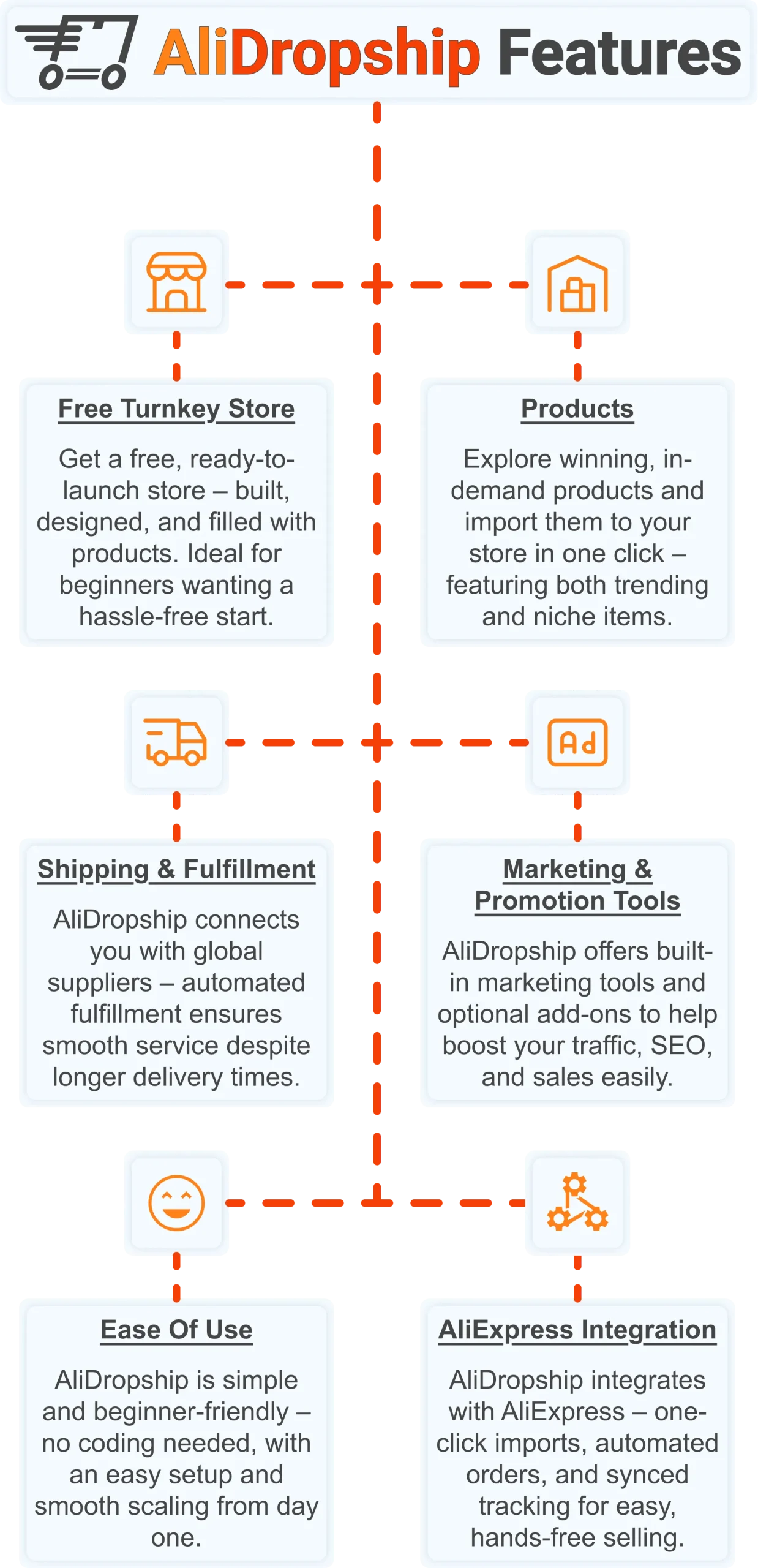
Free turnkey store 🛍️
Get a free turnkey store – built, designed, and filled with products. Ideal for beginners wanting a hassle-free start, the store comes fully optimized to attract customers right away, saving you time on setup. Plus, it includes professional design elements to give your business a polished, trustworthy look from day one. This ready-made foundation makes it easy to move seamlessly into product selection.
Products 📦
Once your store is set up, you can explore winning, in-demand products and import them in one click – featuring both trending and niche items. This wide selection lets you cater to diverse customer interests and test what works best. Regular updates ensure you always have fresh products, keeping your store competitive and relevant. With great products in place, smooth shipping becomes the next essential step.
Shipping & fulfillment 🚚
AliDropship connects you with global suppliers, and automated fulfillment ensures seamless order processing despite international delivery times. Customers receive real-time tracking updates, which builds confidence and trust in your store. Once shipping is handled reliably, you can focus on promoting your store and attracting traffic.
Marketing & promotion tools 📣
To maximize sales, AliDropship offers built-in marketing tools and optional add-ons that help boost traffic, SEO, and conversions. From email campaigns and discounts to social media integration, these tools empower you to reach and retain customers without needing prior marketing experience. With promotion strategies in place, managing your business becomes simpler and more efficient.
Ease of use 👌
AliDropship is beginner-friendly – no coding needed, with an intuitive dashboard that guides you through every step. Easy setup and smooth scaling let you expand your store without stress. As your business grows, adding new features, products, and marketing campaigns remains hassle-free, giving you more time to focus on sales.
AliExpress integration 🛒
Finally, AliDropship integrates seamlessly with AliExpress, enabling one-click imports, automated orders, and synced tracking. Your inventory stays up-to-date with the latest products and prices, while automated order processing frees you from manual tasks. Combined with the turnkey setup, reliable shipping, and built-in marketing tools, this integration ensures your dropshipping business is fully equipped for growth and success.
Selling low cost products with high profit margin is one of the smartest ways to build a dropshipping business that actually scales – and AliDropship gives you everything you need to do it from day one. Get your free turnkey store and start selling high-margin products today.
What are the best low cost products with high profit margin for dropshipping?
How do you calculate profit margin in dropshipping?
Which dropshipping niches have the highest profit margins?
How much does it cost to start a high-margin dropshipping store?
Can you make a full-time income selling low cost products with high profit margin?