Is Alibaba Legit? What Buyers Need To Know In 2026

If you have ever searched for wholesale products and landed on Alibaba, your first reaction was probably something like: “This looks too cheap to be real – is Alibaba actually legit?” It is a fair question.
The platform lists millions of products at prices that seem almost impossible, and it connects buyers with suppliers they have never met, often halfway around the world.
So the short answer is: yes, Alibaba is a legitimate platform – but that does not mean every seller on it is trustworthy.
Quick Answer: Alibaba is a legitimate B2B marketplace owned by Alibaba Group, one of the largest ecommerce companies in the world. The platform itself is safe to use, but buyer risk comes from individual suppliers – not the platform. Knowing how to vet sellers is the skill that separates smart buyers from people who get burned.
This guide breaks down exactly how Alibaba works, which supplier signals to trust, what the real risks are, and how to protect yourself when ordering – whether you are sourcing for a small business or testing a dropshipping idea for the first time.
Before diving into supplier vetting and red flags, it helps to understand the structure of the platform itself – because Alibaba is not a single store. It is a marketplace with its own trust layers, verification tiers, and dispute systems.

What is Alibaba and how does it actually work?
Alibaba is a B2B (business-to-business) wholesale marketplace founded in 1999 by Jack Ma in Hangzhou, China. Today it operates as the flagship platform of Alibaba Group, a publicly traded company listed on both the New York Stock Exchange and the Hong Kong Stock Exchange.
The platform connects buyers – mostly small business owners, importers, and entrepreneurs – with manufacturers and wholesalers, the majority of whom are based in China, though suppliers from India, Bangladesh, Turkey, and other manufacturing hubs also list products.
Unlike Amazon or eBay, Alibaba is not designed for individual retail purchases. Most listings have minimum order quantities (MOQs), meaning you are expected to buy in bulk.
Prices are negotiable, lead times can range from days to weeks depending on whether the item is in stock or made to order, and communication with suppliers happens directly through the platform’s messaging system.
Alibaba generates revenue primarily through subscription fees paid by suppliers who want to be listed as verified or Gold Suppliers, plus advertising and transaction fees. This matters because the platform has a financial incentive to maintain quality standards – but it also means the verification process is not a guarantee of perfection.
Alibaba also operates several sister platforms that are worth knowing about. AliExpress is the retail-facing version – lower MOQs, faster shipping, and aimed at individual consumers.
Tmall and Taobao are Chinese-market platforms. For most Western buyers asking whether Alibaba is legit, they are specifically asking about the B2B wholesale side, which is what this article covers.
How much risk is actually involved when buying from Alibaba?
The risk on Alibaba is real, but it is manageable – and it is supplier-specific, not platform-wide. To give you an honest picture, here is how different types of buyers typically experience the platform:
The pattern here is consistent: buyers who do their research upfront experience far fewer problems. The platform is not the issue – the due diligence process is where most people either succeed or lose money.
One note on the low prices: The pricing on Alibaba is not a scam – it reflects the reality of manufacturing costs in bulk quantities. A product that costs $25 retail can genuinely cost $3–$6 per unit when ordered in quantities of 200 or more directly from a factory. That is the entire premise of the wholesale model.
Where buyers run into trouble is when they see a $2 unit price, order 500 units without requesting a sample, and discover the product is nothing like the listing photos. That is not fraud in the legal sense – it is a quality mismatch that could have been caught with a $30 sample order. Always request samples before committing to a bulk order.
How to tell if an Alibaba supplier is trustworthy
This is the most practical section of the article – because knowing that Alibaba is legitimate does not help you if you cannot identify which suppliers are safe to buy from. Here are the key signals to evaluate before you place any order.
Verification badges and supplier tiers
Gold Supplier status
Gold Supplier is Alibaba’s paid membership tier for manufacturers. It means the supplier has paid for a premium listing and has been assessed (though not deeply audited) by Alibaba.
Gold Supplier status alone is not a guarantee of quality, but the absence of it on a listing with very high order volumes is worth a second look. Most trustworthy suppliers at scale hold this status.
Verified Supplier badge
This is a stronger signal. Verified Supplier means a third-party inspection company – typically SGS or Bureau Veritas – has physically visited the supplier’s facility and confirmed it matches the company’s claims.
Not every legitimate supplier has this badge, but those that do have passed an independent audit. If you are ordering in large quantities or dealing with a new supplier, prioritize verified ones.
Trade Assurance
Trade Assurance is Alibaba’s built-in buyer protection program. When you pay through the platform using Trade Assurance, Alibaba holds your payment and only releases it to the supplier once you confirm the order was received as described.
If there is a dispute – wrong product, missing items, quality issues – you can file a claim and Alibaba mediates. Always use Trade Assurance for any significant order. Suppliers who refuse Trade Assurance and push for direct wire transfers are a red flag.
Response rate and transaction history
Every supplier profile on Alibaba shows a response rate and response time. A supplier with a 95%+ response rate who replies within a few hours is running an active, professional operation. One with a 60% response rate and 48-hour average response times may be a part-time operation or worse.
Check also the number of transactions and years in operation. A supplier with 5+ years on the platform and thousands of completed transactions has a track record you can evaluate – a new listing with no history carries much higher risk.
Reviews and dispute history
Alibaba displays buyer reviews and, importantly, dispute rates on supplier profiles. Look for suppliers with a low dispute rate – ideally under 1%. Read the negative reviews carefully.
One or two complaints about shipping speed in 500 reviews is normal. A pattern of complaints about products not matching photos, missing items, or unresponsive customer service is a hard pass.
Cross-reference by searching the supplier’s company name on Reddit or Trustpilot – experienced importers often share their experiences in sourcing forums.
Communication quality
Message potential suppliers before ordering anything.
Ask specific questions: What is the MOQ? What materials are used? Can you send a product specification sheet? Can I order a sample first?
A legitimate supplier will answer clearly, provide documentation, and accommodate a sample request. A supplier who dodges questions, gives vague answers, or immediately pushes you toward a payment link without answering your questions is not someone you want to work with.
Common Alibaba scams and how to avoid them
Even on a legitimate platform, bad actors exist. These are the most common patterns to watch for when using Alibaba.
The bait-and-switch listing
A supplier posts professional photos of a high-quality product – often images sourced from a legitimate manufacturer’s catalog – at an unusually low price. When the order arrives, the actual product is a lower-grade version. This is the most common issue on the platform.
The fix is simple: always order a sample, compare it against the listing, and document everything before committing to a bulk order.
How to protect yourself
Request the supplier’s manufacturing certifications or quality inspection reports. Ask for a video call to see the factory floor or the product being assembled.
If the supplier cannot or will not provide these, move on. There are hundreds of competing suppliers for almost any product category on Alibaba.
Off-platform payment requests
A supplier contacts you and asks you to complete the transaction via Western Union, MoneyGram, cryptocurrency, or a personal PayPal account rather than through Alibaba’s payment system. This is almost always a scam.
Once you send money off-platform, you have no recourse – Alibaba’s Trade Assurance does not cover payments made outside its system. Never, under any circumstances, send money to a supplier outside of Alibaba’s official payment flow for a first order.
Too-good-to-be-true pricing
If a product is listed at 80–90% below what comparable suppliers charge, treat it as a red flag rather than a deal.
Margins in manufacturing are real – a product cannot cost $1 to make when every other supplier charges $5–$8, unless something is wrong with the quality, the materials, or the seller’s intentions.
Use market-rate pricing as your baseline and be suspicious of outliers on the low end.
Fake escrow sites
Less common but more dangerous: some scammers impersonate Alibaba’s Trade Assurance system with a convincing fake payment page.
Always verify you are on alibaba.com when entering payment details. Bookmark the real site directly rather than clicking links in supplier emails, and enable two-factor authentication on your Alibaba account.
Legal and ethical considerations when buying from Alibaba
Buying wholesale from Alibaba is entirely legal for most product categories. However, there are specific legal risks that buyers – especially those sourcing for resale – need to understand.
Key principle: If a product infringes on a trademark, patent, or copyright, the importer – not just the manufacturer – can be held liable in their home country.
Counterfeit and branded goods
Alibaba has invested heavily in anti-counterfeiting measures, including its Intellectual Property (IP) protection platform. But listings for replica branded goods still appear.
Ordering counterfeit products – even for personal use – carries legal risk in most countries, and reselling them is a serious offense.
If a listing features a well-known brand at a fraction of its retail price, do not order it. The savings are not worth the legal exposure.
Import regulations and duties
Importing goods in commercial quantities typically triggers customs duties, import taxes, and in some categories, regulatory compliance requirements (CE marks, FDA registration, etc.).
Research your home country’s import rules before placing a large order.
Many first-time importers are caught off guard by duties that significantly increase their landed cost per unit. Build these costs into your margin calculations from the start.
Product safety standards
Electronics, toys, cosmetics, and food-adjacent products are subject to safety regulations in most markets. A product that passes Chinese quality standards may not meet EU or US safety requirements.
If you are reselling, you are responsible for ensuring the products you sell comply with local law. When in doubt, request third-party test reports from the supplier – any professional manufacturer will have these for regulated product categories.
Final thoughts: Is Alibaba the right choice for you?
Alibaba is a powerful tool – but like any tool, it works best in the right hands. Here is a quick breakdown by reader profile to help you decide whether it fits where you are right now.
Complete beginner
If you are brand new to sourcing or ecommerce, Alibaba has a steeper learning curve than most people expect.
You need to learn supplier vetting, sample ordering, shipping logistics, import duties, and product compliance – all before you have made a single sale.
It is doable, but plan for 60–90 days of research and testing before you have a reliable supply chain in place.
Intermediate / part-time seller
If you already have an online store and want to expand your product range with custom or private-label products, Alibaba is genuinely excellent for this.
The depth of product categories, the ability to customize packaging and branding, and the pricing at scale give you margins that retail-sourced products simply cannot match.
Focus on Verified Suppliers, always use Trade Assurance, and build relationships with two or three reliable manufacturers rather than constantly chasing the cheapest price.
Advanced / full-time goal
For those who want to build a full-time import or private label business, Alibaba is one of the best sourcing platforms available anywhere.
The opportunity is real, but the ceiling figures you see online – $10,000 per month or more – are earned by people who have spent 1–2 years building supplier relationships, testing products, optimizing listings, and reinvesting profits.
The $30–$80 per day range is a more realistic early benchmark for a focused, consistent operator in their first six months.
Whatever stage you are at, the platform rewards patience and process over shortcuts. Alibaba is legitimate – and for motivated sellers willing to do the groundwork, it is one of the most powerful sourcing engines available in 2026.
AliDropship: Your complete all-in-one solution for starting dropshipping in 2026
If you want the simplest possible way to start dropshipping – especially if you’re brand new – AliDropship remains one of the most beginner-friendly tools available in 2026. It brings together store creation, product imports, automation, and marketing into a single streamlined system designed to help you launch quickly and grow confidently.
Free turnkey store 🛍️
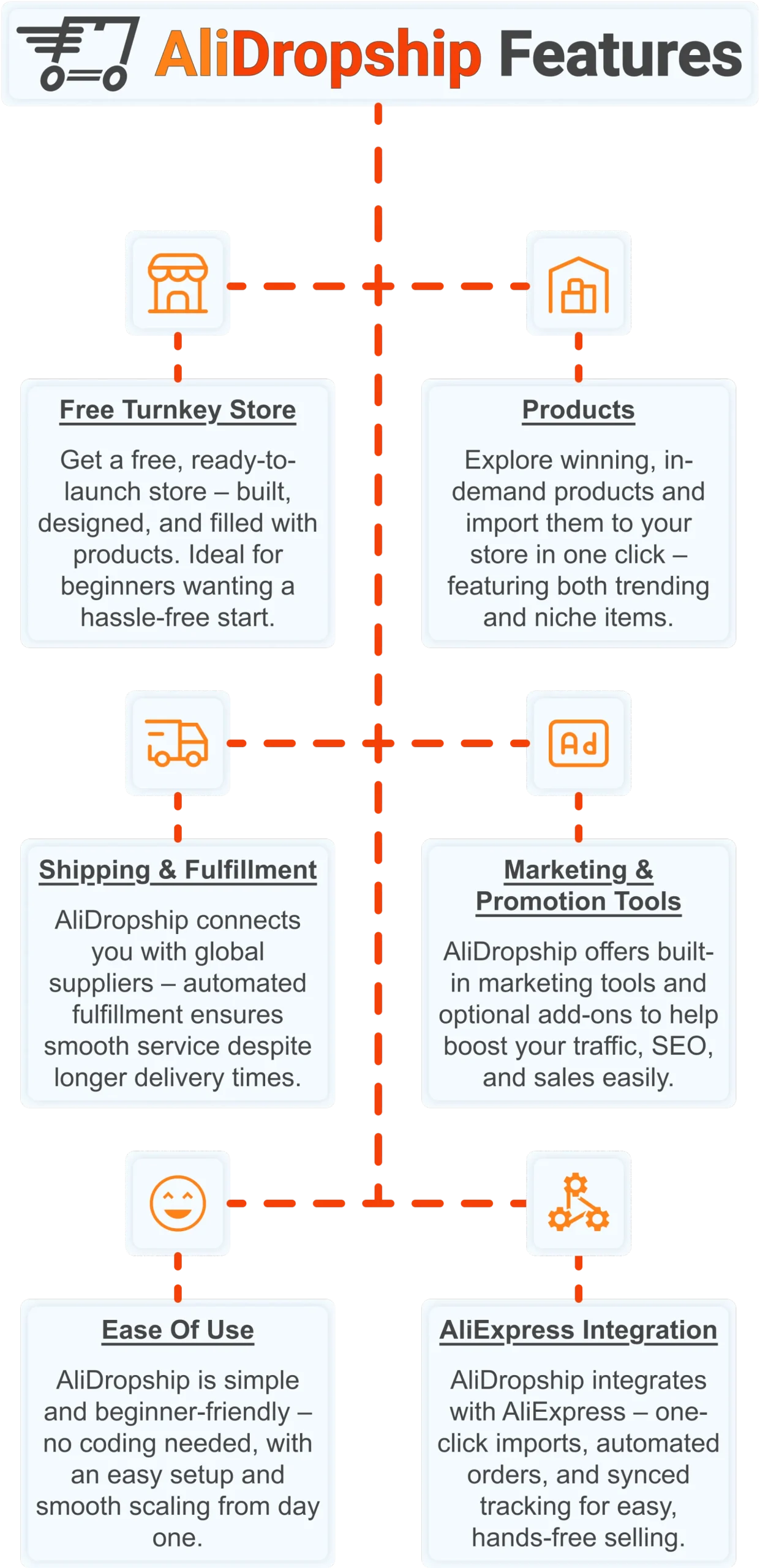
Get a free turnkey store – built, designed, and filled with products. Ideal for beginners wanting a hassle-free start, the store comes fully optimized to attract customers right away, saving you time on setup. Plus, it includes professional design elements to give your business a polished, trustworthy look from day one. This ready-made foundation makes it easy to move seamlessly into product selection.
Products 📦
Once your store is set up, you can explore winning, in-demand products and import them in one click – featuring both trending and niche items. This wide selection lets you cater to diverse customer interests and test what works best.
Regular updates ensure you always have fresh products, keeping your store competitive and relevant. With great products in place, smooth shipping becomes the next essential step.
Shipping & fulfillment 🚚
AliDropship connects you with global suppliers, and automated fulfillment ensures seamless order processing despite international delivery times. Customers receive real-time tracking updates, which builds confidence and trust in your store. Once shipping is handled reliably, you can focus on promoting your store and attracting traffic.
Marketing & promotion tools 📣
To maximize sales, AliDropship offers built-in marketing tools and optional add-ons that help boost traffic, SEO, and conversions. From email campaigns and discounts to social media integration, these tools empower you to reach and retain customers without needing prior marketing experience.
With promotion strategies in place, managing your business becomes simpler and more efficient.
Ease of use 👌
AliDropship is beginner-friendly – no coding needed, with an intuitive dashboard that guides you through every step. Easy setup and smooth scaling let you expand your store without stress.
As your business grows, adding new features, products, and marketing campaigns remains hassle-free, giving you more time to focus on sales.
AliExpress integration 🛒
Finally, AliDropship integrates seamlessly with AliExpress, enabling one-click imports, automated orders, and synced tracking. Your inventory stays up-to-date with the latest products and prices, while automated order processing frees you from manual tasks.
Combined with the turnkey setup, reliable shipping, and built-in marketing tools, this integration ensures your dropshipping business is fully equipped for growth and success.
If you have decided that Alibaba-style sourcing is the model you want to build on, AliDropship gives you a faster, lower-risk entry point with none of the supplier vetting complexity. Get your free turnkey dropshipping store and start selling today.
Is Alibaba a legitimate website or a scam?
Is it safe to give Alibaba your credit card information?
Paying through Alibabas official Trade Assurance system with a major credit card is considered safe. Alibaba uses standard SSL encryption and its payment flow is handled through regulated financial processors. The risk arises when suppliers ask buyers to pay outside the platform via wire transfer, cryptocurrency, or personal payment apps. Always complete transactions through Alibabas official checkout and never send money directly to a supplier off-platform.
What is the difference between Alibaba and AliExpress?
Alibaba is a B2B wholesale marketplace designed for businesses buying products in bulk quantities, typically with minimum order requirements of 50 to 500 units or more. AliExpress is Alibabas retail-facing platform where individual consumers can buy single items at slightly higher per-unit prices with faster, standardized shipping. Both are owned by Alibaba Group. For dropshippers and resellers, AliExpress is often the easier starting point, while Alibaba suits those ready to place larger inventory orders.
How do you know if an Alibaba supplier is trustworthy?
Start by checking the suppliers verification badges on their profile – Verified Supplier status means a third-party inspection company has visited the facility. Look for a response rate above 90 percent, at least 3 years of operation on the platform, and a dispute rate below 1 percent. Read recent buyer reviews carefully and search the company name on forums like Reddit. Always request a sample before placing a bulk order and communicate directly with the supplier to assess their professionalism.
Is buying from Alibaba worth it for small businesses?
Alibaba can be highly cost-effective for small businesses once they understand the sourcing process. Per-unit prices on Alibaba are typically 60 to 80 percent lower than wholesale prices from domestic distributors. The main challenge for small businesses is the minimum order quantity, which ties up capital before sales are confirmed. A practical approach is to start with the smallest available MOQ, test the product in your market, and scale orders only after confirming demand. Businesses that follow this process often see a meaningful improvement in product margins within 90 to 120 days.