How To Start Ecommerce Business: A Beginner Step-By-Step Guide

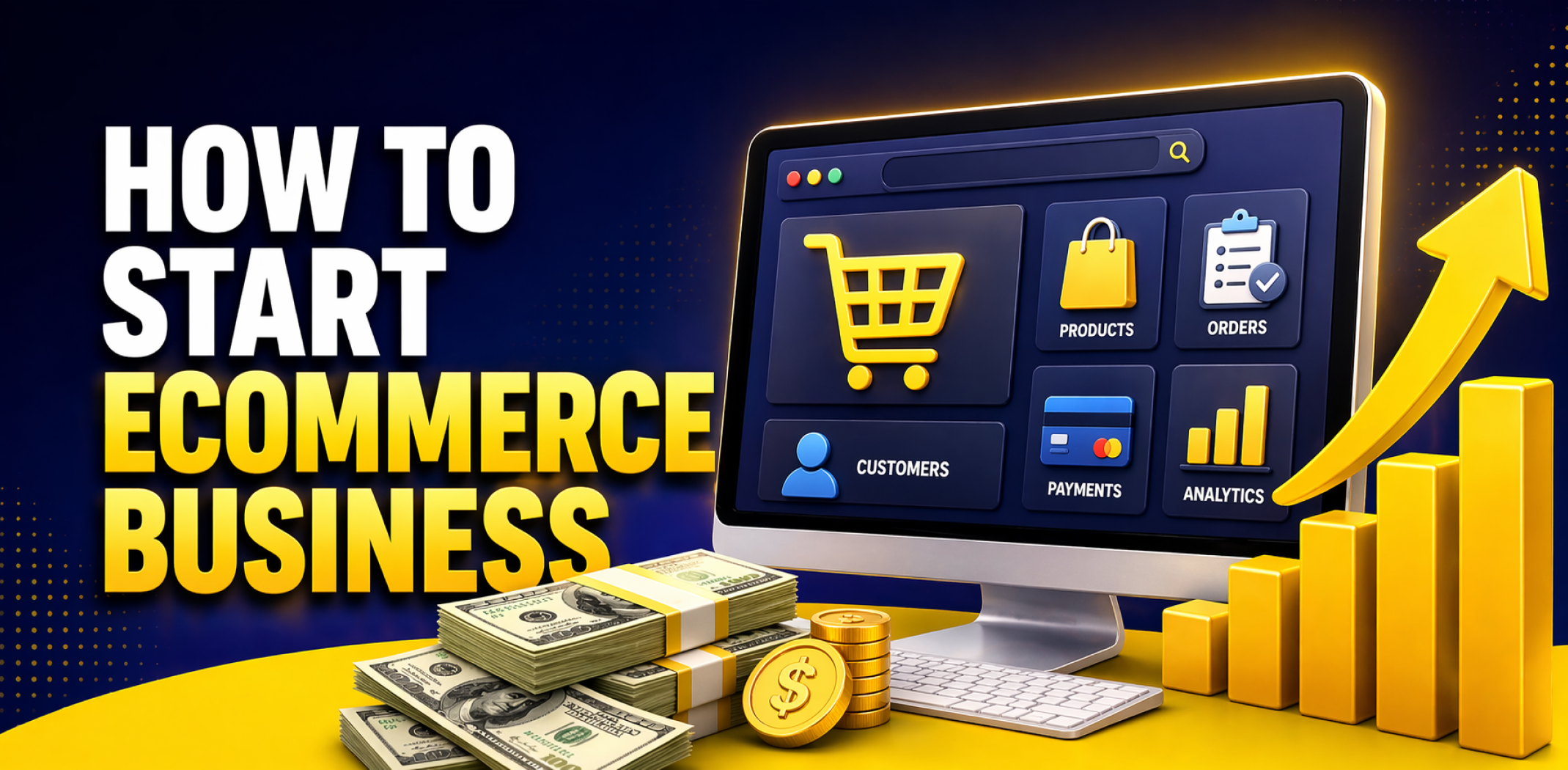
SEO TITLE 1: How To Start An Ecommerce Business In 2026
SEO TITLE 2: How To Start Ecommerce Business: A Beginner Step-By-Step Guide
META DESCRIPTION: Learn how to start ecommerce business from scratch in 2026. This beginner guide covers business models, costs, legal steps, and how to get your first sale.
Starting an ecommerce business in 2026 is more accessible than ever – but “accessible” doesn’t mean effortless. The real question isn’t whether you can do it. It’s whether you know the right steps to take so you don’t waste six months building something that never gets a single sale. This guide walks you through exactly how to start an ecommerce business from scratch, in the right order, without the fluff.
Quick answer: To start an ecommerce business, you need to pick a business model, choose a niche, source or connect to products, set up a store, and drive traffic. The full process can take as little as a few days with the right tools – or several months if you’re building everything manually.
The good news is that in 2026, you don’t need a warehouse, a developer, or a big upfront budget to launch a legitimate online store. Models like dropshipping have made it possible to start with near-zero inventory risk, and platforms like AliDropship can compress weeks of setup into a single afternoon.

What is an ecommerce business?
An ecommerce business is any business that sells products or services online – whether through its own website, a marketplace like Amazon or Etsy, or a combination of both. The term covers a wide range of setups, from a solo seller dropshipping phone accessories to a seven-figure brand running its own warehouse and fulfillment operation.
What defines ecommerce in 2026 is the shift away from complexity. Modern platforms handle payment processing, inventory syncing, and order management automatically. The barrier to entry has dropped so far that the main thing separating those who launch from those who don’t is usually just the decision to start.
There are four main ecommerce business models worth knowing before you commit to a path:
- Dropshipping – you sell products online; a supplier ships them directly to your customer. No inventory, no warehouse, low startup cost.
- Private label – you source generic products, brand them as your own, and sell under your brand name. Higher margins, but requires upfront investment.
- Wholesale / bulk – you buy products in volume from manufacturers and resell them. Requires storage and capital.
- Print-on-demand – you design products (T-shirts, mugs, posters) and a third party prints and ships them on demand.
For most beginners, dropshipping is the natural starting point. It lets you test products and niches without committing thousands of dollars to inventory that might not sell.
How much does it cost to start an ecommerce business?
One of the most common questions from beginners is how much money they actually need. The honest answer is: it depends on the model you choose. Here’s a realistic breakdown.
Dropshipping and print-on-demand keep startup costs under a few hundred dollars because you’re not buying inventory upfront. Private label and wholesale require capital before you can sell a single unit, which makes them better fits for people who’ve already validated a niche elsewhere.
One note on startup costs: “Free to start” usually means free to set up – not free to grow. Paid ads, premium themes, or tools like email marketing can add $50–$200/month once you’re ready to scale. Budget for at least 60–90 days of operating costs before expecting consistent revenue.
In terms of realistic earnings, most dropshipping beginners see their first sale within 30–60 days if they’re consistently driving traffic. A functional store doing $30–$80/day in profit is achievable within 90 days with the right niche and some ad spend. Scaling beyond that depends heavily on product selection and marketing.
How to start an ecommerce business: step-by-step
Here’s the process broken into clear, actionable steps – in the order they actually matter. Skip steps or do them out of order and you’ll likely have to redo work later.
Step 1 – Choose your business model and niche
Before you build anything, decide what you’re selling and who you’re selling it to. These two decisions shape every other choice you make – your platform, your supplier, your marketing angle, your pricing.
Pick a model first
For most people reading this guide, dropshipping is the right starting model. It lets you test multiple niches without committing capital, and you can pivot quickly if a product category doesn’t perform. Once you find what sells, you can layer in private label or bundles later.
Then narrow your niche
A niche is your focus area – the specific type of product and customer you’re targeting. “Electronics” is not a niche. “Portable charging accessories for remote workers” is a niche. The more specific you are, the easier it is to write product descriptions, run ads, and build an audience that actually wants what you’re selling.
When evaluating a niche, look for three things: consistent search demand (use Google Trends or a keyword tool), a price point that allows a reasonable margin ($25–$150 is the sweet spot for dropshipping), and enough product variety to fill a store with 30–100 SKUs.
Step 2 – Research your competition and validate demand
Once you have a niche in mind, spend time understanding what’s already out there. This is not optional – skipping validation is one of the top reasons ecommerce beginners fail in their first 90 days.
Check who’s already selling
Search your niche keywords on Google and look at the first page results. If you see established brands with well-built stores, that’s actually a good sign – it confirms demand exists. Your job isn’t to beat them on day one; it’s to find a specific angle, audience, or product variation they’re not covering well.
Validate with real search data
Use free tools like Google Trends and Google Keyword Planner to check whether people are actively searching for products in your niche. Look for keywords with consistent monthly volume (1,000+ searches/month) and manageable competition. A keyword like “how to start an ecommerce business” gets searched hundreds of thousands of times a month globally – that level of demand signals a healthy market.
Check marketplace data
Browse AliExpress, Amazon, and Etsy to see which products in your niche have high order counts and strong reviews. Products with 1,000+ orders and 4.5+ star ratings are proven sellers. Avoid products with no reviews or no order history – they’re unvalidated and risky.
Step 3 – Set up your online store
This is where most beginners spend too much time. A store doesn’t need to be perfect to go live – it needs to be functional, trustworthy, and fast. Here’s what matters.
Choose your platform
The main options in 2026 are WooCommerce (WordPress-based, highly customizable, one-time cost), Shopify (hosted, monthly fee, easiest to launch quickly), and AliDropship (WordPress-based with built-in dropshipping automation). For a pure dropshipping setup focused on AliExpress products, AliDropship gives you the most direct integration with the least manual work.
Get a domain and hosting
Your domain should be short, memorable, and not tied to a specific product in case you pivot later. Use a .com extension where possible – it still carries more trust than alternatives. Shared hosting plans from providers like SiteGround or Bluehost run $3–$10/month and are sufficient for a new store.
Design your store
Pick a clean, mobile-first theme. Over 70% of ecommerce traffic in 2026 comes from mobile devices, so a theme that looks good on a phone is non-negotiable. Keep your homepage simple: a clear value proposition, a featured product section, and an obvious call to action. Don’t overthink the design at launch.
Set up essential pages
Before you accept a single order, your store needs: an About page (builds trust), a Contact page (required for credibility), a Shipping policy (sets expectations), a Returns and refunds policy (legally and reputationally important), and a Privacy policy (required in most jurisdictions). These pages take a few hours to write and can prevent a lot of customer service headaches later.
Step 4 – Source your products and connect suppliers
Product sourcing looks different depending on your model. For dropshipping, you’re connecting your store to a supplier who fulfills orders on your behalf. For private label, you’re ordering samples, negotiating with manufacturers, and arranging shipping to your location or a 3PL.
For dropshipping: AliExpress and beyond
AliExpress remains the most accessible product source for dropshipping beginners in 2026. It has millions of products across virtually every category, low minimum order quantities (usually one unit), and most suppliers have experience working with dropshippers. The main drawback is shipping time – standard AliExpress shipping to the US or Europe can take 15–30 days. Look for suppliers offering AliExpress Standard Shipping or ePacket options to stay closer to 10–15 days.
Evaluate suppliers carefully
Before importing products, vet your supplier. Look for a minimum 4.7-star rating, at least 95% positive feedback, 12+ months of store history, and a responsive communication style (test this by sending a question before you commit). The supplier you choose affects your return rate, customer satisfaction scores, and ultimately your store’s long-term reputation.
Step 5 – Write product listings that actually convert
This step separates stores that sit idle from stores that generate revenue. Most dropshipping beginners make a critical mistake here: they copy the supplier’s product description word for word. Don’t do this. Duplicate content hurts your SEO, and generic descriptions don’t build purchase intent.
Write original product descriptions
Every product description should answer three questions: What is this product? Who is it for? Why should the buyer choose it over the alternatives? Keep descriptions concise – 100–200 words for most products, with bullet points covering the key specs. Lead with the benefit, not the feature. “Charges your phone twice as fast” beats “2.4A output” for most audiences.
Use real photos and video where possible
Order samples of your top 5–10 products and photograph them yourself or have someone shoot lifestyle images. Real photos dramatically outperform supplier stock images for conversion rate. If you can’t order samples immediately, at minimum remove any supplier branding from the images and use only the cleanest, most professional shots available.
Optimize for SEO from day one
Include your target keyword naturally in the product title, the first paragraph of the description, and the image alt text. For a dropshipping store in 2026, long-tail product keywords (“waterproof hiking backpack 40L women”) convert far better than broad terms. Use your platform’s built-in SEO fields for meta titles and descriptions – most beginners leave these blank and lose free organic traffic as a result.
Step 6 – Set up payments, taxes, and legal basics
You can’t get paid without a payment processor, and you can’t operate legally without the right business registrations. Get this done before you start driving traffic.
Payment processing
Stripe and PayPal are the standard options for most new ecommerce stores. Stripe gives you a seamless checkout experience and supports most countries. PayPal adds buyer confidence – many shoppers feel safer seeing the PayPal logo at checkout. Set up both where possible. Shopify Payments is another solid option if you’re on Shopify, as it avoids transaction fees on top of Stripe’s standard rates.
Business registration
In most countries, you’ll need to register as a sole trader or LLC before accepting customer payments at scale. In the US, an LLC costs $50–$500 depending on state and provides liability protection between your personal finances and your business. Many beginners skip this early on and operate as sole traders – that’s legally acceptable in most jurisdictions, but you’ll want to formalize as your revenue grows. Consult a local accountant or legal resource for your specific situation.
Tax obligations
Sales tax in the US has become more complex since the 2018 South Dakota v. Wayfair Supreme Court ruling. If your store sells to customers in states where you have economic nexus (typically $100,000 in sales or 200 transactions per year in that state), you may need to collect and remit sales tax. Tools like TaxJar or Avalara can automate this for a monthly fee. Outside the US, VAT requirements vary by country – research the rules for your primary markets before launch.
Step 7 – Drive traffic to your store
A store with no traffic earns nothing. This is the step most beginners underestimate – not because traffic is hard to get, but because the right traffic strategy depends on your budget, niche, and how much time you can invest.
Paid advertising (fastest results)
Meta ads (Facebook and Instagram) and TikTok ads are the dominant paid channels for ecommerce in 2026. A beginner budget of $10–$20/day is enough to test 2–3 ad creatives and identify what resonates. Expect to lose money in the first 2–4 weeks while you gather data. The goal of early paid campaigns isn’t profit – it’s learning which products and audiences convert. Once you find a winning combination, scale up.
Organic social media (slower but free)
TikTok organic is one of the most effective free traffic channels available to ecommerce stores right now. A single viral product demo can generate thousands of visits in 24 hours with zero ad spend. The catch is consistency – you need to post 3–5 times per week and be willing to iterate on content styles until something clicks. Instagram Reels and Pinterest are also worth testing for visual product niches.
SEO and content marketing (long-term play)
Starting a blog on your store and targeting product-related keywords is a slow burn that pays off significantly over 6–18 months. If you’re in a niche with high-intent search volume – home decor, fitness equipment, pet supplies – a well-optimized blog can drive consistent free traffic for years. Focus on answering the specific questions your target customer is Googling before they buy.
Legal and ethical considerations when starting an ecommerce business
Ecommerce has a lot of grey areas that beginners stumble into, usually not intentionally. Here’s what to avoid and what to do instead.
Don’t use fake reviews
Buying fake reviews, incentivizing reviews without disclosure, or importing supplier reviews without labelling them as such violates platform terms and, in some jurisdictions, consumer protection laws. The FTC in the US has issued significant fines for undisclosed review manipulation in recent years. Build reviews organically by following up with real customers via email after delivery.
Don’t mislead on shipping times
Listing “Ships in 1–3 days” when your AliExpress supplier takes 15–25 days to deliver is a refund disaster waiting to happen. Be upfront about realistic delivery windows in your shipping policy and on product pages. Customers who know what to expect will wait – customers who feel misled will dispute the charge.
Don’t dropship counterfeit or restricted products
Some AliExpress suppliers sell products that infringe trademarks or replicate branded goods. Selling these knowingly – or even unknowingly at scale – exposes you to intellectual property claims and marketplace bans. Avoid any listing that uses brand names without authorization or looks like a replica of a premium product.
Key principle: Run your ecommerce business as if your best customer can see every decision you make – because in the age of social media and public reviews, they effectively can.
Which path is right for you?
Not every ecommerce approach suits every person. Here’s how to match your situation to the right starting point.
Complete beginner
If you’ve never sold online before and you’re not sure what niche to start with, dropshipping with AliExpress products is the lowest-risk entry point. Use a platform like AliDropship that handles the technical setup, and focus your first 30 days entirely on product research and writing solid listings. Don’t worry about paid ads yet – validate your store concept with organic traffic first.
Intermediate – part-time with some budget
If you’ve tried selling online before, have $300–$500 to invest, and can commit 10–15 hours per week, consider running a dropshipping store alongside a small Meta ads budget ($10–$15/day). Test 3–5 products in your first month and cut anything that doesn’t get add-to-carts within 500 impressions. Reinvest early profits into ad spend rather than new tools.
Advanced – full-time goal
If you’re aiming to replace a full-time income within 12 months, treat your ecommerce business as a business from day one. Formalize legally, set up proper bookkeeping, plan a 90-day product testing roadmap, and allocate a real marketing budget. Dropshipping can generate $80–$200+/day in profit for full-time operators who’ve found winning products and dialed in their ad creative. Most hit that level after 3–6 months of consistent effort.
Budget-constrained starter
If your budget is under $100, skip paid ads entirely and go organic-only for the first 60–90 days. TikTok organic and Pinterest are your best free traffic sources. Use AliDropship’s free turnkey store offer to eliminate store setup costs, and redirect all saved budget toward ordering product samples for content creation.
AliDropship: Your complete all-in-one solution for starting dropshipping in 2026
If you want the simplest possible way to start dropshipping – especially if you’re brand new – AliDropship remains one of the most beginner-friendly tools available in 2026. It brings together store creation, product imports, automation, and marketing into a single streamlined system designed to help you launch quickly and grow confidently.
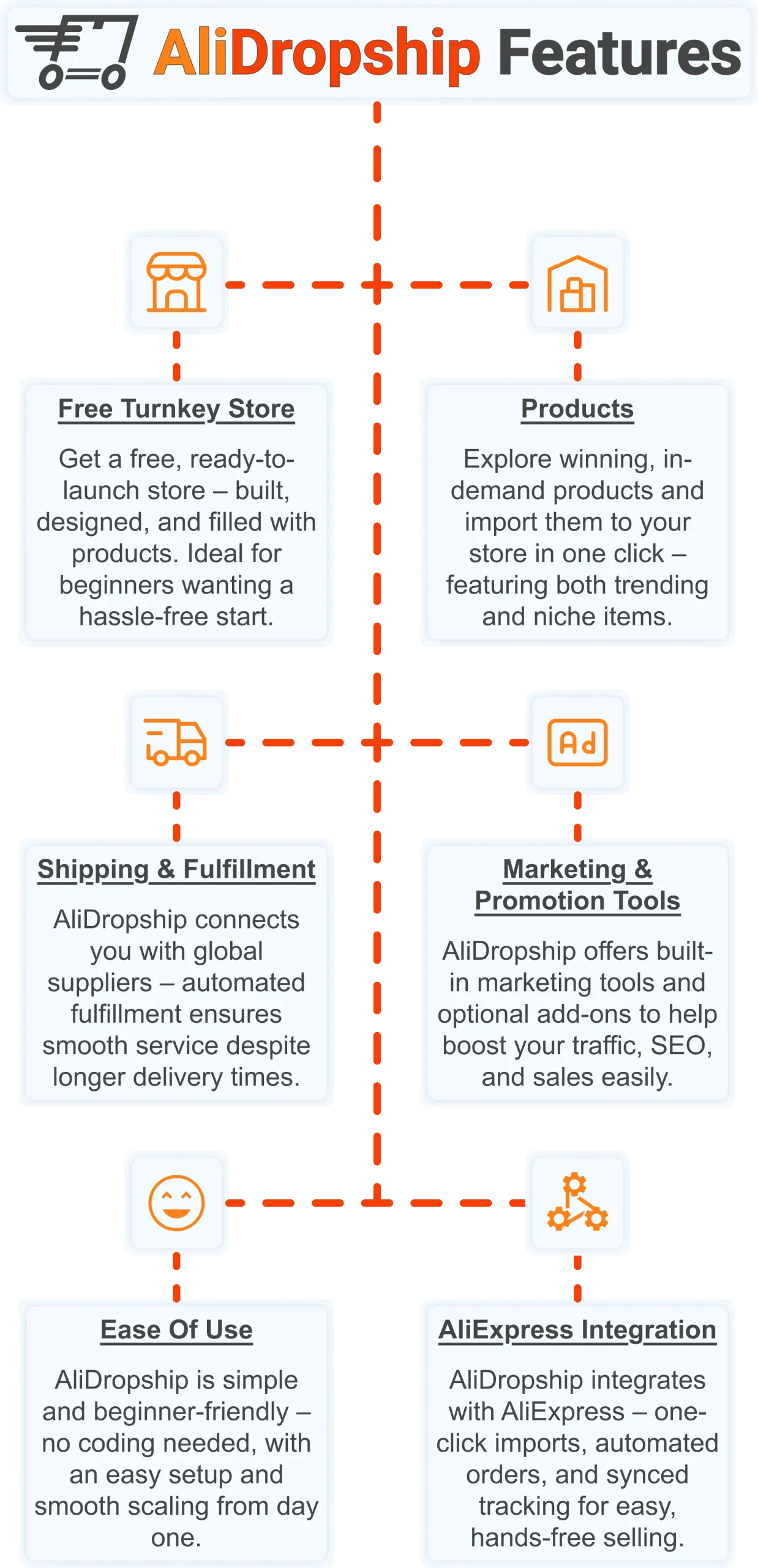
Free turnkey store 🛍️
Get a free turnkey store – built, designed, and filled with products. Ideal for beginners wanting a hassle-free start, the store comes fully optimized to attract customers right away, saving you time on setup. Plus, it includes professional design elements to give your business a polished, trustworthy look from day one. This ready-made foundation makes it easy to move seamlessly into product selection.
Products 📦
Once your store is set up, you can explore winning, in-demand products and import them in one click – featuring both trending and niche items. This wide selection lets you cater to diverse customer interests and test what works best. Regular updates ensure you always have fresh products, keeping your store competitive and relevant. With great products in place, smooth shipping becomes the next essential step.
Shipping & fulfillment 🚚
AliDropship connects you with global suppliers, and automated fulfillment ensures seamless order processing despite international delivery times. Customers receive real-time tracking updates, which builds confidence and trust in your store. Once shipping is handled reliably, you can focus on promoting your store and attracting traffic.
Marketing & promotion tools 📣
To maximize sales, AliDropship offers built-in marketing tools and optional add-ons that help boost traffic, SEO, and conversions. From email campaigns and discounts to social media integration, these tools empower you to reach and retain customers without needing prior marketing experience. With promotion strategies in place, managing your business becomes simpler and more efficient.
Ease of use 👌
AliDropship is beginner-friendly – no coding needed, with an intuitive dashboard that guides you through every step. Easy setup and smooth scaling let you expand your store without stress. As your business grows, adding new features, products, and marketing campaigns remains hassle-free, giving you more time to focus on sales.
AliExpress integration 🛒
Finally, AliDropship integrates seamlessly with AliExpress, enabling one-click imports, automated orders, and synced tracking. Your inventory stays up-to-date with the latest products and prices, while automated order processing frees you from manual tasks. Combined with the turnkey setup, reliable shipping, and built-in marketing tools, this integration ensures your dropshipping business is fully equipped for growth and success.
Starting an ecommerce business doesn’t have to mean months of setup, technical headaches, or upfront inventory risk. Get your free turnkey store today and start selling with everything already in place.
How to start an ecommerce business with no money?
What is the best ecommerce business model for beginners?
How long does it take to make money with an ecommerce business?
Do I need a business license to start an ecommerce business?
How to start an ecommerce business from home?