How To Start A Blog: A Complete Step-By-Step Guide For 2026

Around 600 million blogs exist on the internet today. The vast majority earn nothing – not because blogging is dead, but because most people skip the foundational steps that separate a money-making content business from a digital journal nobody reads. If you have been wondering how to start a blog the right way, this guide walks you through every decision: niche, platform, setup, content, and monetization – in the order that actually works.
Quick Answer: Learning how to start a blog takes a few hours technically. Turning that blog into a consistent income source takes 6–18 months of focused, strategic effort. The steps are well-defined – choose a niche, pick a platform, create great content, build traffic, monetize – but each needs to be done in the right order.
Blogging in 2026 rewards specificity and genuine depth. Google’s Helpful Content updates pushed thin, AI-generated filler out of search results and raised the bar for what “helpful” actually means. That is good news for new bloggers willing to put in real work, because quality still wins – and keeps winning over time.
Before the technical steps, it is worth clarifying what kind of asset you are actually building. A blog is not just a collection of posts – it is a long-term digital business. The bloggers who earn serious money treat it that way from day one: editorial calendars, keyword research, revenue tracking, and a genuine commitment to a defined niche. That mindset shift is the real starting point, before any plugin or platform choice.

What is blogging – and why does it still work in 2026?
A blog is a regularly updated website where you publish written content – articles, guides, tutorials, opinion pieces – around a specific topic. That content gets indexed by search engines, found by people actively searching for answers, and – when structured well – generates traffic for months or years after you first hit publish.
The reason blogging still works as an income model comes down to compounding organic traffic. A well-optimized article answering a specific question can sit on page one of Google and deliver consistent visitors with zero ongoing advertising cost. Unlike social media posts, which stop circulating within 48 hours, or paid ads, which stop the moment you stop funding them, a good blog post keeps working quietly in the background. That is the core economics of why serious bloggers invest heavily in the early months even when the returns feel invisible.
Important note: Blogging in 2026 rewards depth and genuine expertise. Search engines are now significantly better at identifying surface-level content produced without real knowledge. Write for a specific audience, answer their actual questions with specific information, and the SEO tends to follow naturally.
What makes blogging a durable income channel rather than a passing tactic is its long-term asset value. An engaged email list, strong domain authority, and a loyal readership hold real value regardless of algorithm changes. Niche blogs in the finance, health, and food spaces regularly sell for 30–40 times their monthly earnings on marketplaces like Flippa – meaning a blog earning $3,000/month could exit for $90,000–$120,000. That is not hobby income. That is business equity.
How much can you realistically earn from blogging?
Honest answer: most new blogs earn nothing in the first six months. That is not a problem – it is the expected trajectory of a content-compounding business. After 12 months of consistent publishing and solid SEO practice, bloggers typically see $200–$2,000 per month. After 24–36 months, successful niche blogs commonly reach $3,000–$15,000 per month, with the top tier earning significantly more.
Here is how the main monetization methods compare across effort and earning potential:
These figures represent established blogs with consistent traffic. New blogs in months 1–6 should budget for near-zero earnings – that is expected, not a sign of failure.
One note on the ceiling figures: The $15,000–$20,000/month ranges represent the top 5–10% of monetized blogs, typically reached after 2–3 years of consistent publishing, strong domain authority, and an email list above 10,000. Most successful bloggers describe their earnings as slow for the first 18 months, then accelerating quickly once monthly traffic crosses 25,000–50,000 sessions.
The most reliable entry-level path for a new blog is combining affiliate marketing with display ads. Programs like Amazon Associates, ShareASale, and direct brand partnerships pay commissions from month one with no traffic minimum. Premium display networks like Mediavine (25,000 monthly sessions to apply) and Raptive, formerly AdThrive (100,000 minimum), require more volume but run completely passively once accepted.
Bloggers who add a digital product – an ebook, a template pack, a mini-course – in year two or three typically see the biggest income jumps. But that product needs a trusting audience first. The entire first year is about building that trust through free, high-value content – not aggressive monetization.
How to start a blog: the complete step-by-step process
The steps below follow a specific order for a reason. Skipping ahead – buying a domain before you have a niche, or trying to monetize before you have traffic – is the fastest way to lose months of effort. Work through these in sequence and you sidestep the mistakes that cause most new bloggers to quit.
Step 1 – Choose your niche
Your niche is the specific topic area your blog covers. It needs to be narrow enough to attract a defined audience and rank for specific search terms, but broad enough to support 60–100 articles without running dry. “Health” is too broad. “Strength training for women over 40” is a niche you can actually own.
What makes a good blogging niche
Three factors decide whether a niche is worth building in: search demand (are real people actively searching for this?), commercial viability (are there affiliate programs, advertisers, or products willing to pay for that audience’s attention?), and sustainable personal interest (will you still be writing about this in 18 months?). A niche hitting all three is a real business. A niche hitting only one or two is a hobby.
Tools for niche research
Google Trends shows whether interest in a topic is rising or declining. Google’s “People Also Ask” feature surfaces the exact questions your future audience is already typing. For deeper data, Ahrefs and Semrush let you check monthly search volumes and keyword difficulty scores before committing. Reddit – especially subreddits like r/personalfinance, r/fitness, and r/homeimprovement – is an underused goldmine for finding raw, unfiltered questions that become the strongest blog post topics.
High-earning niches in 2026
Niches with strong current monetization potential include personal finance (especially budgeting and debt payoff for specific demographics), AI tools and productivity, home improvement and DIY, pet health and nutrition, fitness for specific groups (postpartum, over-50, people with chronic conditions), and sustainable living. What these share: high affiliate commission rates, strong ad RPMs, and audiences who actively search for and buy solutions to their problems.
Step 2 – Pick the right blogging platform
Your blogging platform is the software your site runs on. This decision matters more than most beginners realize because switching platforms later is time-consuming and can harm your SEO. Choose based on where you want to be in three years – not just what is easiest to set up today.
WordPress.org
WordPress.org powers roughly 43% of all websites on the internet and remains the default choice for bloggers who want full control and scalability. It is self-hosted, meaning you own your domain and files outright. Plugins like Yoast SEO, RankMath, and Elementor give you a complete toolkit without touching a line of code. If you are treating blogging as a serious business, WordPress.org is almost always the right answer.
Wix
Wix is a hosted drag-and-drop builder that works well for beginners who want a professional-looking blog up quickly. Its SEO tools have improved considerably since 2020, and its App Market covers most integration needs. The tradeoffs are limited scalability at high traffic volumes and a difficult migration path if you want to leave later. Good for testing ideas quickly – less ideal for a serious long-term authority site.
Squarespace
Squarespace is the strongest option for bloggers in visual creative niches – photography, interior design, fashion, and food. Its templates are polished, its editor is intuitive, and its built-in analytics are solid out of the box. For content-heavy blogs targeting competitive keywords, WordPress still outperforms Squarespace on SEO customization depth and plugin availability.
Ghost
Ghost has grown in popularity among newsletter-first bloggers who want to monetize through paid memberships and subscriptions. Its built-in subscriber tools, clean performance, and minimal design make it well-suited for audience-first publishing. As a starting platform for SEO-driven traffic growth, its limited plugin ecosystem is a real constraint – Ghost works best once you already have an audience you want to charge directly.
For most beginners starting from scratch, the best combination is WordPress.org on shared hosting. Providers like Bluehost, SiteGround, and WP Engine offer one-click WordPress installs at under $10/month with a domain included. Setup takes about 30 minutes, and the long-term SEO ceiling is essentially unlimited.
Step 3 – Register your domain and set up hosting
Your domain name is your blog’s permanent address. Keep it short, easy to spell, and broadly relevant to your niche. Exact-match keyword domains carry less SEO weight than they used to – a memorable, brand-style name you can own long-term is more valuable than a keyword-stuffed URL. Avoid hyphens, numbers, and anything you would have to spell out letter by letter.
For hosting, a shared plan is the right starting point. You do not need a VPS or dedicated server until you are consistently hitting 100,000+ monthly sessions. Most bloggers start on a plan at $3–$10/month and upgrade only when performance actually demands it. Bluehost’s Basic plan, SiteGround’s StartUp tier, and WP Engine’s starter option are all solid choices with strong uptime records and reliable support.
Step 4 – Design your blog and publish your first posts
Design matters far less than most beginners think – and content matters far more. A clean, fast-loading theme with clear typography and full mobile responsiveness is everything you need at the start. Free themes like Astra, GeneratePress, and Kadence are used by high-traffic blogs earning thousands of dollars per month. Do not spend weeks customizing colors and layouts before you have any content – publish first and refine the design later.
For your first posts, target long-tail keywords with low competition and clear search intent. Google’s autocomplete suggestions and the “Related Searches” section at the bottom of results pages give you keyword ideas at no cost. Aim for articles of 1,500–2,500 words that genuinely answer a question better than the current top results. Use a conversational tone, include real examples, and anchor every claim with specific numbers wherever possible.
Blog monetization strategies that actually work
Getting traffic to your blog is step one. Turning that traffic into income is step two – and it requires matching the right monetization method to your content type, audience size, and niche. Most established bloggers earn from multiple channels simultaneously, but starting with one and mastering it first is the smarter early approach.
Display advertising through premium networks is the most passive approach once you are in. Networks like Mediavine (25,000 monthly sessions to apply), Raptive (100,000 minimum), and Ezoic (no minimum, lower RPMs to start) serve ads automatically and pay per thousand sessions. RPMs in high-value niches like personal finance, insurance, and technology range from $20–$60, meaning a blog at 100,000 monthly sessions can earn $2,000–$6,000/month in display income alone – with no active selling required.
Affiliate marketing is the highest-ceiling option for most bloggers and the strongest starting point. You earn a commission every time a reader clicks your link and makes a purchase. Amazon Associates pays 1–10% depending on category. SaaS affiliate programs – hosting providers, software tools, online course platforms – regularly pay 20–50% recurring commissions. The key is content alignment: review posts, comparison articles, and “best X for Y” guides convert far better than general informational content.
Sponsored content becomes accessible once your blog has a domain authority above 30 and a consistent monthly traffic figure worth putting in a media kit. Rates range from $150–$300 on newer blogs to $1,000–$5,000+ on established sites with engaged audiences. Proactive outreach to brands in your niche, combined with a simple one-page media kit, consistently outperforms waiting to be discovered.
Digital products represent the highest-margin path of all. An ebook at $27 selling 100 copies per month generates $2,700 with no inventory, no shipping, and no fulfilment costs. A mini-course at $197 selling 50 copies delivers nearly $10,000. The prerequisite is a trusting audience – which is why this method typically pays off in year two or three, not month one.
Tips to grow your blog faster in 2026
Knowing how to start a blog is the entry point. Growing it faster – compressing a 24-month timeline into 12 – requires specific habits that most beginners overlook. These five practices make a measurable difference.
Target low-competition keywords from the start
New blogs have no domain authority, which means competing for head terms like “best running shoes” or “how to lose weight” is a waste of effort. For your first 6–12 months, target long-tail keywords with monthly search volumes between 300 and 3,000 and keyword difficulty scores under 20 (on Ahrefs’ scale). Low-competition, high-intent keywords rank faster, convert better, and compound into broader authority over time.
Build your email list from your very first post
Your email list is the only audience you truly own. Social algorithms change overnight, and Google updates can move your rankings without warning – but email subscribers stay with you. Add a simple lead magnet (a free checklist, a resource list, a short PDF guide) and an opt-in form to every post from day one. Reaching 1,000 email subscribers in your first year gives you a direct launch channel for every affiliate deal, product release, or brand partnership that follows.
Repurpose every post across multiple platforms
One well-researched blog post can power a full week of content across channels. A 2,000-word guide becomes a Twitter/X thread, a short YouTube explainer, a LinkedIn post, and three Instagram carousels. This repurposing model drives traffic back to your blog, builds your profile on other platforms, and expands your reach without multiplying your content workload.
Be consistent, not prolific
Two to three high-quality posts per week, published consistently for 12+ months, outperforms 30 posts published in a single month followed by a three-month gap. Search engines reward consistent publishing signals, and readers form habits around bloggers who show up reliably. Consistency compounds. Inconsistency stalls.
Update old posts before writing new ones
After six months of publishing, your earliest posts start to age. Statistics go stale, competitors publish deeper versions, and Google notices. Auditing and refreshing posts that are ranking on page two or three – adding current data, stronger internal links, and more comprehensive coverage – often moves them to page one faster than writing a new article from scratch. This “update before publish” habit is one of the highest-ROI activities in blogging and one of the most consistently overlooked.
Legal and ethical considerations for bloggers
Blogging has real legal requirements that many beginners skip entirely. Ignoring them is not just risky – it can result in FTC fines, Google penalties, or permanent removal from affiliate programs. These are not optional extras. They are the baseline for running a legitimate content business.
Key principle: Transparency is both legally required and commercially smart. Audiences who trust you buy from you. Readers who feel deceived leave and never return.
Here is what you need in place before monetizing your blog:
- FTC affiliate disclosure: Every post containing affiliate links must include a clear, visible disclosure near the top of the article. Something like: “This post contains affiliate links. If you buy through them, I may earn a commission at no extra cost to you.” No fine print, no buried footnotes.
- Privacy policy: Required if you use Google Analytics, run display ads, or collect email addresses. Free generators like Termly or PrivacyPolicies.com produce legally compliant policies in minutes.
- GDPR compliance: If any of your readers are in the European Union, GDPR applies. This means cookie consent banners, clear opt-in email practices, and documented data handling policies.
- Original content only: All written content must be yours. Republishing someone else’s article – even with attribution – is copyright infringement. Images must be purchased from stock libraries, used under a Creative Commons license, or created yourself.
What to avoid absolutely: paid link schemes, fake traffic claims in your media kit, AI-generated posts published without meaningful human review and editing, and sponsored content that is disguised as organic editorial. Each carries real consequences – from Google deindexing to being permanently dropped by affiliate networks. None are worth the short-term shortcut.
How to start a blog: which path fits you best?
Not every blogger starts from the same position. The right approach depends on how much time you have, what your income timeline looks like, and how much you are prepared to invest upfront. Here is a practical breakdown by profile.
Complete beginner
If you have never built a website, done keyword research, or published content online before, start simple: pick one narrow niche, install WordPress.org on affordable shared hosting, and commit to two quality posts per week. Do not worry about monetization in the first three months – focus entirely on producing genuinely helpful content and learning what your specific audience responds to. Income follows audience, without exception.
Part-time blogger
If you have some online content experience and can commit 10–15 hours per week, the timeline to income accelerates. Prioritize keyword research over raw publishing volume, start building an email list from post one, and pick one primary monetization method – affiliate marketing is the strongest default for part-time operators. Target 10,000 monthly sessions within 9–12 months as your first major milestone: that is when you unlock most premium ad networks and begin attracting genuine brand partnership opportunities.
Full-time income goal
If you are aiming to replace a full-time salary with blogging, treat it like a funded startup from month one. Build systems: a 12-month content calendar, a keyword database organized by difficulty and intent, a backlink outreach pipeline. Invest in professional tools – Ahrefs or Semrush, ConvertKit for email, a fast premium theme. Budget 18–24 months before reaching full-time income levels, and plan a parallel income source to cover that runway. Bloggers who plan for the long game are the ones still earning five years in.
Whatever your starting point, the single most important variable is consistency. The gap between bloggers who earn significant income and those who abandon their sites is almost never talent – it is simply whether they kept publishing through the slow months when progress felt invisible.
AliDropship: Your complete all-in-one solution for starting dropshipping in 2026
If you want the simplest possible way to start dropshipping – especially if you’re brand new – AliDropship remains one of the most beginner-friendly tools available in 2026. It brings together store creation, product imports, automation, and marketing into a single streamlined system designed to help you launch quickly and grow confidently.
Free turnkey store 🛍️
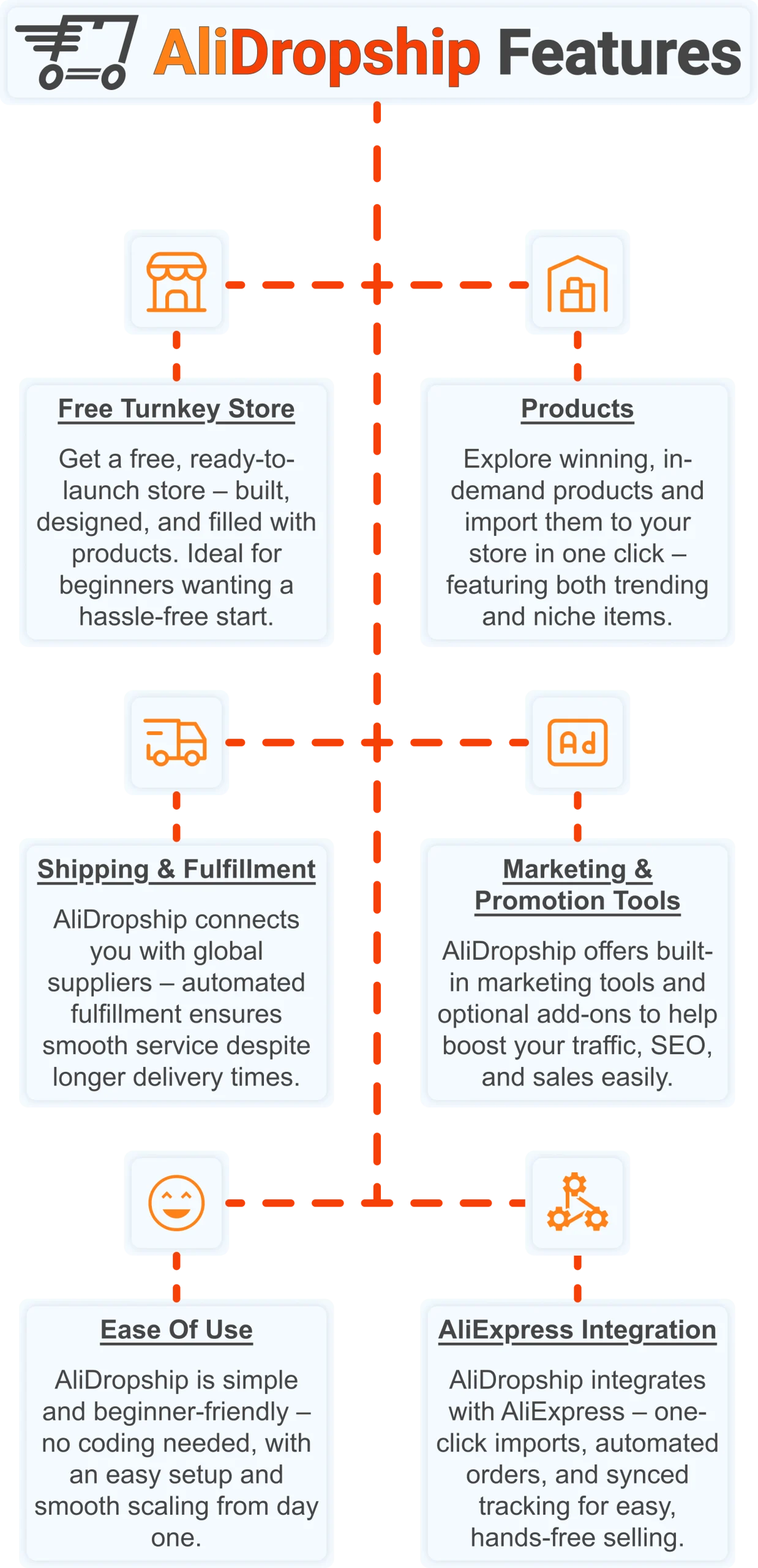
Get a free turnkey store – built, designed, and filled with products. Ideal for beginners wanting a hassle-free start, the store comes fully optimized to attract customers right away, saving you time on setup. Plus, it includes professional design elements to give your business a polished, trustworthy look from day one. This ready-made foundation makes it easy to move seamlessly into product selection.
Products 📦
Once your store is set up, you can explore winning, in-demand products and import them in one click – featuring both trending and niche items. This wide selection lets you cater to diverse customer interests and test what works best. Regular updates ensure you always have fresh products, keeping your store competitive and relevant. With great products in place, smooth shipping becomes the next essential step.
Shipping & fulfillment 🚚
AliDropship connects you with global suppliers, and automated fulfillment ensures seamless order processing despite international delivery times. Customers receive real-time tracking updates, which builds confidence and trust in your store. Once shipping is handled reliably, you can focus on promoting your store and attracting traffic.
Marketing & promotion tools 📣
To maximize sales, AliDropship offers built-in marketing tools and optional add-ons that help boost traffic, SEO, and conversions. From email campaigns and discounts to social media integration, these tools empower you to reach and retain customers without needing prior marketing experience. With promotion strategies in place, managing your business becomes simpler and more efficient.
Ease of use 👌
AliDropship is beginner-friendly – no coding needed, with an intuitive dashboard that guides you through every step. Easy setup and smooth scaling let you expand your store without stress. As your business grows, adding new features, products, and marketing campaigns remains hassle-free, giving you more time to focus on sales.
AliExpress integration 🛒
Finally, AliDropship integrates seamlessly with AliExpress, enabling one-click imports, automated orders, and synced tracking. Your inventory stays up-to-date with the latest products and prices, while automated order processing frees you from manual tasks. Combined with the turnkey setup, reliable shipping, and built-in marketing tools, this integration ensures your dropshipping business is fully equipped for growth and success.
Blogging is a powerful long-term channel – but if you want an income stream that earns while you are still building your audience, a ready-made ecommerce store gives you a head start that a new blog simply cannot match. Claim your free AliDropship store today and start earning alongside your blog.
How do you start a blog for free?
What is the best blogging platform for beginners?
How long does it take to make money blogging?
How much does it cost to start a blog in 2026?
What are the best blog monetization strategies for beginners?