How To Make Money With ChatGPT: Realistic Ways To Start Today


If you’ve typed how to make money with ChatGPT into Google, chances are you weren’t looking to become a machine-learning engineer overnight. You were probably hoping for something simpler. Something realistic. Maybe a side income that doesn’t require coding, quitting your job, or staring at spreadsheets all day.
ChatGPT won’t magically deposit money into your bank account. Still, when used the right way, it can quietly remove friction from work people already pay for. That’s where the opportunity lives. Not in hype, but in leverage. Let’s slow things down and look at how this actually works.

What ChatGPT can (and cannot) do for making money
Before diving into ideas, it helps to be clear about ChatGPT’s role. Think of it less as a worker and more as a fast, slightly opinionated assistant who never gets tired.
ChatGPT is very good at:
- Drafting text quickly
- Rewriting and simplifying content
- Generating ideas when your brain feels empty
- Structuring messy thoughts into usable formats
It struggles with:
- Understanding real-world context without guidance
- Making judgment calls on tone unless you direct it
- Owning responsibility for quality or accuracy
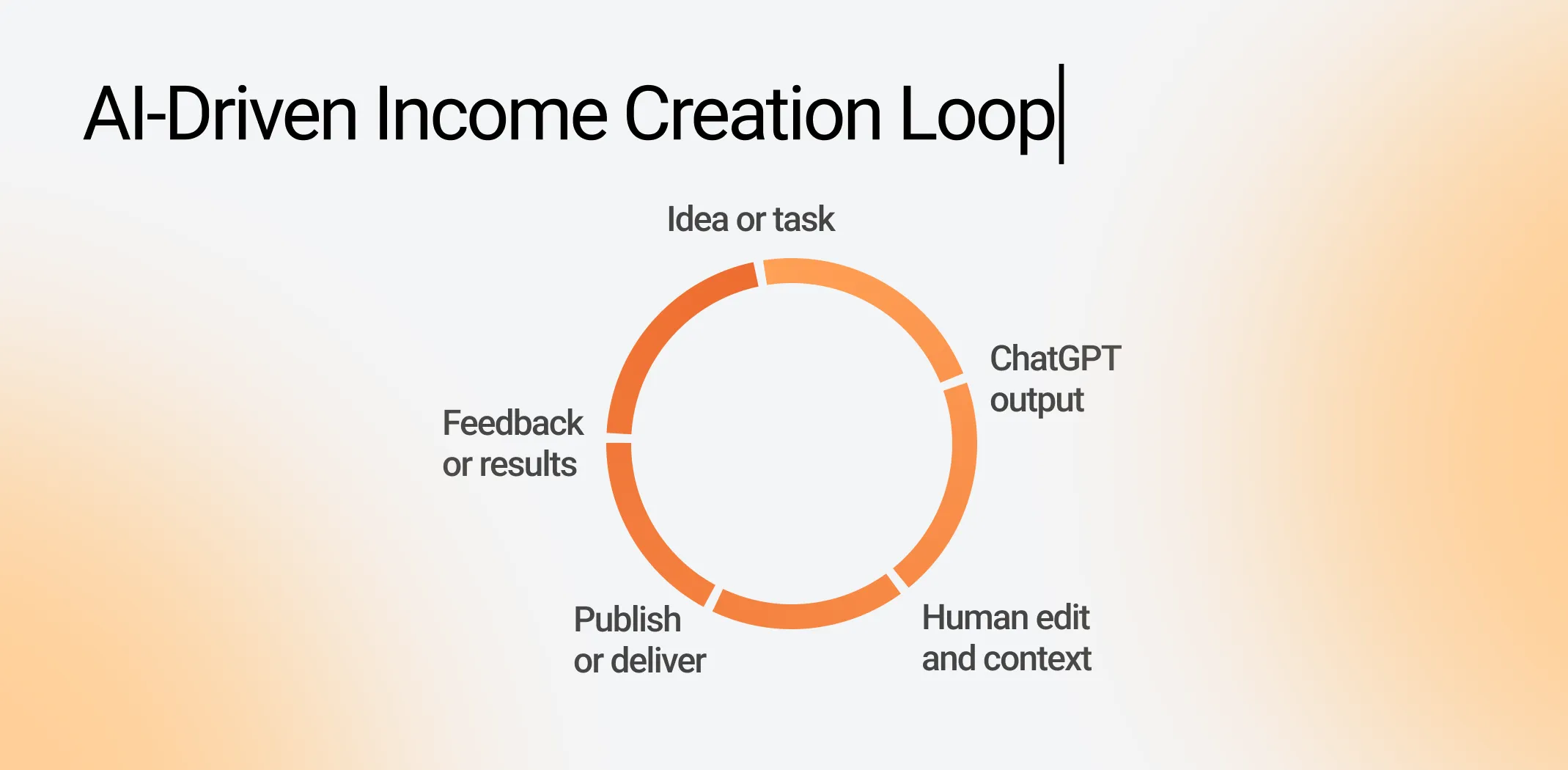
In other words, ChatGPT doesn’t replace you. It compresses time. Tasks that used to take an hour might take fifteen minutes. That time gap is where income becomes possible.
People who fail with AI tools often expect them to think for them. The ones who succeed treat them like power steering, not autopilot.
The easiest ways to make money with ChatGPT (low skill, low barrier)
This section focuses on options that don’t require technical backgrounds or large upfront investments. These are not “passive” in the pure sense, but they are accessible.
Freelance writing and content support
Writing is still everywhere. Blogs, websites, online shops, newsletters. What’s changed is speed.
With ChatGPT, beginners can:
- Draft blog posts faster
- Rewrite rough client notes into clean copy
- Create outlines that remove the fear of the blank page
You’re not selling “AI writing.” You’re selling clarity, speed, and reliability. Platforms like Fiverr or Upwork are full of small businesses that don’t want perfection – they need work delivered cleanly and on time.
Always edit. Even light human polishing can double perceived quality. Readers can feel when something is off, even if they can’t explain why.
Related terms naturally come up here – AI writing assistant, freelance writing for beginners, content creation – but the work itself stays human-led.
Social media captions and short-form content
Many business owners hate social media. They know they need it, but they don’t want to think about captions at 10 pm. That’s your opening.
ChatGPT helps generate:
- Instagram captions
- TikTok hooks
- Short LinkedIn posts
The job isn’t to be poetic. It’s to be consistent. That’s surprisingly valuable.
Because posts are short, turnaround is fast. Because demand is ongoing, clients stick around. Over time, this can become one of the steadiest ChatGPT side hustles.
Resume, cover letter, and LinkedIn profile services
This one feels almost boring – and that’s why it works.
Job seekers want results. They don’t care how the document gets polished. They care if it sounds confident, clear, and tailored.
ChatGPT can help you:
- Rewrite resumes for clarity
- Adapt cover letters to job descriptions
- Optimize LinkedIn summaries
Your role is interpretation. You ask better questions, choose stronger phrasing, and make sure the final document sounds like a real person.
This is also where trust matters. People are anxious about their careers. A calm, professional tone goes further than flashy promises.
Email marketing and newsletter writing
Emails are short, repetitive, and deadline-driven. Perfect conditions for AI-assisted work.
You can offer:
- Welcome email sequences
- Promotional emails
- Weekly newsletters
ChatGPT handles the draft. You handle intent and flow. Over time, you’ll notice patterns – what opens, what converts, what sounds flat. That learning compounds.
Email writing sharpens your thinking. You learn to say more with less. That skill pays dividends beyond this one service.
Semi-passive income ideas using ChatGPT
If freelancing trades time for money, semi-passive ideas trade setup effort for longer-term returns. These aren’t instant wins, but they scale better.
Creating and selling digital products
Digital products are everywhere because they work. ChatGPT can help you create:
- Short eBooks
- Checklists
- Guides
- Notion templates
The real work is choosing a problem people already care about. Once that’s clear, drafting becomes easier. Editing still matters, but the heavy lifting is lighter.
Platforms like Gumroad or Etsy make distribution simple. You won’t get rich overnight, but one good product can sell quietly for months.
Print-on-demand and simple product copy
Print-on-demand sounds crowded, and honestly, it is. Still, niches exist.
ChatGPT helps with:
- Slogan ideas
- Product descriptions
- SEO-friendly titles
The differentiator isn’t the tool. It’s the feel for what works. A phrase that feels obvious after you read it often performs best.
If nothing else, this route teaches you market feedback fast. Products either sell or they don’t. There’s clarity in that.
How much money can you realistically make?
This is where expectations matter. Based on real-world examples and common patterns, here’s a grounded view of earning potential when people explore how to make money with ChatGPT seriously.
$50–$200/month: Casual effort, one client, inconsistent work$300–$800/month: Focused side hustle, repeat clients, clearer offers$1,000+/month: Systems, niche positioning, steady outreach
Income depends less on the tool and more on consistency. ChatGPT reduces friction, but momentum still comes from showing up.
If you’re juggling work, life, and energy, aim for the middle tier first. It’s achievable without burning out.
Common mistakes beginners make (and how to avoid them)
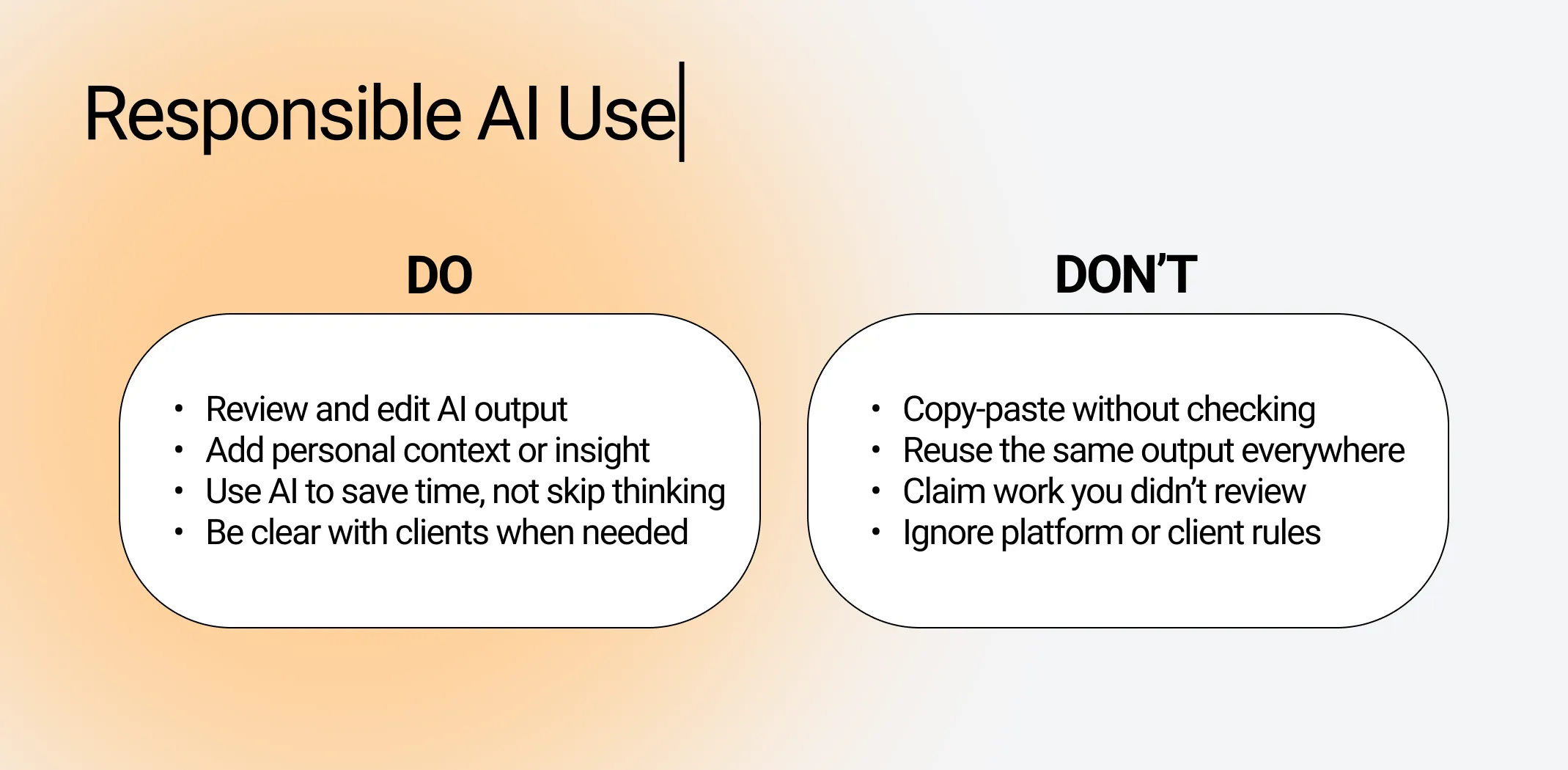
When people first start using ChatGPT to earn money, the missteps tend to follow familiar patterns. One classic trap is copy-pasting AI output without giving it any human touch. It’s tempting – after all, the text is “done” – but readers and clients can usually tell when something hasn’t been shaped by a real person. A paragraph that feels too flat or mechanical can undo all your effort.
Another common misstep is chasing too many ideas at once. You hop from one service to another, trying to sell blog posts, social media captions, and resumes all in the same week. The result? None of them get the attention they deserve.
I’ve seen beginners make this mistake, and honestly, it’s like trying to carry ten plates at once – you’ll drop a few. The simple fix is to slow down, pick one path, and chip away at it consistently. Even a small improvement each week adds up faster than flitting between projects.
And then there’s communication – or rather, undervaluing it. Clients don’t just pay for results; they pay for clarity, reassurance, and reliability. A brief check-in message, a friendly update, or a small personal note can turn an average gig into a repeat client. That’s subtle, but it separates people who succeed from the ones who plateau.
Finally, sounding generic is an easy trap. Even a single sentence that reflects your voice or perspective can make a profile feel lived-in, relatable, and trustworthy. Those tiny touches might seem minor, but they can make you stand out among dozens of similar offers.
Ethical and practical considerations
Using AI to earn money isn’t inherently shady. It’s a tool, not a shortcut around ethics. But there are moments where transparency really matters. For instance, don’t ever claim work you haven’t reviewed yourself. Rewriting and checking content isn’t just about avoiding plagiarism – it’s about protecting your reputation.
Respecting platform rules is another cornerstone. Freelance marketplaces, social networks, or ecommerce sites all have their guidelines, and bending them might feel harmless at first, but it can quickly backfire.
Clients may not care if you used ChatGPT, as long as the result works. Still, long-term trust comes from consistently delivering quality and being honest about your process. In the end, ethical practices aren’t just about “doing the right thing” – they’re practical, because credibility is one of the few things that grows in value over time.
A simple 7-day plan to get started
If starting with ChatGPT feels overwhelming, break it down into one week of focused steps.
Day 1: Pick a single income path. Focus beats spreading yourself thin.
Day 2: Learn the prompts and techniques for that task. Get comfortable with how ChatGPT can support you.
Day 3: Create two or three samples. They don’t need to be perfect – just usable.
Day 4: Set up one platform profile. Keep it simple and professional.
Day 5: Define your offer clearly. Explain what you do and why it matters.
Days 6–7: Start applying or publishing consistently. Show up, even in small steps.
You’re not building a full business in a week. You’re creating momentum – and momentum is what leads to real results.
Is ChatGPT worth using for income in the long run?
Short answer: yes, if you treat it as a skill amplifier.
AI tools will change. Interfaces will evolve. Still, the ability to think clearly, communicate well, and adapt quickly isn’t going away.
People who understand how to make money with ChatGPT today are really learning how to work alongside tools tomorrow. That mindset ages well.
Personally, I don’t see ChatGPT as a shortcut. I see it as a multiplier. What you bring in still matters.
Conclusion: A smarter way to start
There’s no single right way to begin. Still, the most sustainable path is simple: solve real problems, use ChatGPT to work faster, and keep learning as you go.
If you came here wondering how to make money with ChatGPT, the answer isn’t hidden or complicated. It’s practical. Choose one method. Commit for a month. Adjust based on feedback.
That’s not flashy advice. But it works – and it keeps working long after the noise fades.
A practical shift: Making money with dropshipping
For many people, service-based side hustles eventually hit a ceiling. You trade time for money, and once your schedule fills up, growth slows. Dropshipping appeals because it loosens that link. You don’t store products or handle shipping. You focus on the storefront, the offer, and getting traffic.
In theory, it’s simple. In practice, beginners usually get stuck on setup, product choice, and ad management. Too many tools, too many decisions, and too much room to make avoidable mistakes. This is where a streamlined system makes a real difference.
Dropshipping with AliDropship: A smarter way to start
AliDropship is designed for people who want to launch without assembling everything from scratch. Instead of giving you tools and instructions, it provides a ready-to-sell, AI-powered dropshipping store that’s already structured to work.
Plug-and-play store setup
The store arrives professionally designed and organized around ecommerce best practices. Product pages, navigation, mobile layout, and basic SEO are already handled. There’s no coding, no theme hunting, and no guesswork about what “looks right.”
This removes one of the biggest friction points for beginners: getting stuck in setup mode instead of actually selling.
Preloaded products with built-in credibility
AliDropship stores come preloaded with products from popular niches like fashion, accessories, tech gadgets, and footwear – items people are actively searching for and buying. Many of these products come from well-known brands and verified suppliers, so your store feels credible from the first day. Shoppers recognize the names and quality, which makes them more likely to click “buy” without hesitation.
AI automation for daily operations
Routine tasks are handled automatically:
- Orders are processed and fulfilled
- Inventory stays updated
- Prices remain synced to protect margins
- Customer notifications are sent automatically
This keeps the store running smoothly without constant manual checks. Instead of managing small tasks all day, you can focus on marketing and growth.
AI-powered promotions that run end-to-end
Advertising is often the most intimidating part of dropshipping. AliDropship’s built-in promotion system removes that complexity by running campaigns across Amazon, Google Shopping, Facebook, Instagram, and TikTok.
The AI creates platform-specific ads designed for conversions, not just clicks. On average, users see $200–$400 in sales for every $100 spent, with a guaranteed minimum return. That turns advertising into a measurable growth tool rather than a guessing game.
Support and resources when you need them
AliDropship includes ongoing support through live chat, tutorials, and guides. Whether you’re adjusting your store, exploring a niche, or improving product pages, help is available without long delays.
Why AliDropship fits beginners especially well
AliDropship works best for people who want to move quickly without cutting corners. By combining a ready-made store, preloaded products, AI automation, and built-in promotions, it removes many of the barriers that slow beginners down.
You still need effort and consistency. But instead of wrestling with setup and tools, you start from a place that’s already functional – and build from there.
If you want a faster, cleaner path into ecommerce, AliDropship’s AI-powered stores are built to help you start strong without unnecessary detours.
Can I use ChatGPT to make money?
Which is the No. 1 money earning app?
Which AI tool is best for earning money?
How to use AI to generate income?
What are some common AI side hustles?