Make Money While Traveling: Real Methods That Work


So you want to travel the world and not watch your savings drain with every flight. You are not alone – and the good news is that making money while traveling has never been more realistic than it is right now. In 2026, the tools, platforms, and demand for remote-friendly work have converged in a way that genuinely opens the door for anyone with Wi-Fi and a bit of hustle.
Quick Answer: You can make money while traveling through remote work, freelancing, dropshipping, content creation, and selling digital products. Most methods require an upfront investment of time (not cash), and realistic earnings range from $500–$3,000/month for beginners within the first 60–90 days of consistent effort.
This guide walks through every major method honestly – what it pays, how hard it actually is to start, and which option fits your situation best. No fluff, no “earn $10,000 your first week” promises.

What does it mean to make money while traveling?
Making money while traveling means generating income that is not tied to a fixed office, a physical location, or a 9-to-5 schedule. In practice, it covers a wide spectrum – from a freelance designer working remotely from Lisbon, to a solo seller running an online store from a beach in Bali, to a travel blogger monetizing content filmed across Southeast Asia.
What unites every successful approach is location independence: your income follows you, not the other way around. In 2026, this is no longer a novelty. According to MBO Partners, over 17 million Americans now identify as digital nomads, and that number has more than tripled since 2019. The infrastructure has caught up – fast Wi-Fi, payment platforms, e-commerce tools, and remote-friendly employers are everywhere.
The distinction worth drawing early is between active income (you work, you get paid – freelancing, remote jobs) and passive or semi-passive income (you build something once and it keeps earning – dropshipping, digital products, content). The most sustainable travel lifestyles tend to combine both: active income funds month-to-month life, while a background income stream grows quietly on the side.
How much can you realistically earn while traveling?
The honest answer depends heavily on what method you choose, how consistently you show up, and whether you are building something scalable or trading hours for money. Here is a grounded breakdown based on what real nomads report across Reddit communities, Nomad List forums, and verified case studies.
The figures above reflect what real travelers report, not ceiling projections. Remote jobs and freelancing offer the most predictable income early on. Dropshipping and digital products take 60–90 days to find traction but offer significantly more freedom once they do. Content creation is the longest runway – most creators need 6–12 months before earning consistently.
One note on the top figures: The $10,000/month content creator or the $8,000/month remote developer are real, but they represent the upper tier – people with in-demand skills or large audiences built over years. Plan for the median, not the headline, especially in your first 90 days.
Best ways to make money while traveling in 2026
Below are the most practical, tested methods for earning on the road. Each section covers what it actually takes to start and what kind of income you can expect once you are up and running.
Remote work and employment
The cleanest path to travel-compatible income is keeping – or landing – a fully remote job. After the global shift toward distributed work, thousands of companies now hire remotely by default, and many do not care where in the world you work from as long as you are available during certain hours.
How to find a legitimate remote job
The most reliable platforms for finding remote work include We Work Remotely, Remote.co, FlexJobs, and LinkedIn with the “Remote” filter enabled. Roles in software development, customer success, digital marketing, UX writing, data analysis, and product management are the most consistently available in 2026.
Before accepting a role, confirm the company’s time zone policy explicitly. Some employers say “remote-friendly” but require you to be available 9–5 in a specific time zone – which may conflict with travel across multiple regions. Also check whether your visa situation in each country allows you to work legally for a foreign employer.
Earning potential: $2,000–$8,000/month depending on role, seniority, and employer location.
Freelancing while traveling
Freelancing is the most accessible on-ramp for people who already have a marketable skill – writing, graphic design, video editing, web development, social media management, translation, and more. You set your rates, choose your clients, and work when it suits you.
Where to find freelance clients
Upwork and Fiverr are the most well-known starting points, but competition is highest there too. Better long-term sources include direct outreach to small businesses, referrals from previous clients, LinkedIn, and niche communities in your field. Building a portfolio site (even a simple one on Carrd or Notion) dramatically improves conversion when pitching to cold leads.
How to price your services
Underpricing is the most common mistake new freelancers make on the road. Research current market rates on Glassdoor’s freelance data, Bonsai’s freelance rates, or by asking in communities like r/freelance on Reddit. Start at a fair rate and build up – it is much harder to raise rates with existing clients than to set them correctly from the start.
Earning potential: $800–$5,000/month once you have 2–3 regular clients. Beginners with no portfolio typically earn $200–$600 in their first 30 days.
Teaching English or tutoring online
If you are a native or near-native English speaker, online tutoring is one of the fastest ways to earn while traveling. Platforms like Preply, iTalki, and VIPKid connect you with students globally. Hourly rates range from $10 for beginner tutors to $40+ for experienced ones. The schedule is flexible – you can take as many or as few sessions as you want per week.
Why this works in 2026: Demand for English tutoring from non-native speakers has grown consistently, particularly in Asia, Latin America, and Eastern Europe. It requires no startup costs and can be earning within a week of setup.
Running an online store while traveling
E-commerce – specifically dropshipping – is one of the most travel-compatible income models available, because it requires no warehouse, no inventory management, and can be fully automated once set up. Orders come in, suppliers ship directly to customers, and you manage the business from wherever you have a laptop and Wi-Fi.
What is dropshipping and how does it work?
Dropshipping is a retail model where you sell products in your own online store, but a third-party supplier handles storage and shipping. You set the retail price, the supplier charges you the wholesale price, and the difference is your margin. Popular niches include home goods, pet products, outdoor gear, and beauty accessories – all proven sellers across AliExpress-connected platforms.
Why dropshipping fits the travel lifestyle
Unlike freelancing, which requires you to show up and deliver work continuously, a dropshipping store can generate orders whether you are on a 14-hour flight or exploring a new city. With the right automation tools, customer emails, order processing, and tracking updates can all run without daily manual input. Most successful nomad store owners spend 1–3 hours per day managing and growing their store once it is past the initial setup phase.
Earning potential: $500–$4,000+/month after 60–90 days of consistent store management and basic marketing. First-month earnings are typically modest ($100–$300) while you test products and optimize ads.
Content creation and monetization
Travel content is one of the most naturally compelling niches online – people love to watch, read, and learn from those who are actually living the journey. YouTube, Instagram, TikTok, and blogging can all generate income through ads, brand sponsorships, and affiliate commissions.
How travel content actually earns money
YouTube monetization (through the Partner Program) kicks in at 1,000 subscribers and 4,000 watch hours. Once active, RPM (revenue per 1,000 views) in the travel niche averages $2–$5, meaning a video with 50,000 views earns roughly $100–$250. Sponsorships from travel brands, gear companies, or accommodation platforms typically earn far more – $500 to $5,000+ per placement once you have an engaged audience of 10,000+.
Blogging and affiliate income from travel content
A travel blog earns primarily through affiliate programs (Booking.com, Amazon, GetYourGuide, and others pay 4–8% commission on referred bookings). The upside: a well-optimized article can generate commissions for years with minimal maintenance. The downside: SEO takes time – most blogs need 12–18 months before earning more than a few hundred dollars a month organically.
Earning potential: $200–$2,000/month for micro-creators with under 50K followers. Established creators with large, engaged audiences can earn $5,000–$15,000/month through combined revenue streams.
Selling digital products
Digital products – ebooks, templates, Lightroom presets, online courses, printables, stock photography – are an ideal income stream for travelers because they have zero shipping cost, zero inventory, and near-zero overhead after creation. You build the product once, upload it to a platform like Gumroad, Etsy, or Teachable, and collect payments indefinitely.
What digital products work well for travelers
The most consistent sellers in the travel space include city-specific travel guides, packing list templates, itinerary planners, photography presets, and language-learning resources. If you develop a specific expertise from your travels – budget strategies for a particular region, visa advice, off-grid travel tips – that knowledge itself becomes a sellable product.
Earning potential: $100–$1,500/month for most solo creators. Those who build an audience first (through content or social media) before launching products can see $3,000+/month within 90 days of a product launch.
Legal and ethical considerations when earning while traveling
One of the most under-discussed topics in the digital nomad space is the legal side of earning income across borders. Ignoring this is a real risk – not just theoretical. Here is what you genuinely need to know.
Visa and work permit rules
Most tourist visas do not legally permit you to work – even remotely for a foreign employer. In practice, many nomads work on tourist visas without issue, but the legal exposure is real: some countries can deport or fine visitors found working without authorization. The cleaner path is to use countries with dedicated digital nomad visas (Portugal, Spain, Costa Rica, Indonesia, Georgia, and 40+ others now offer them) – these explicitly allow remote work for foreign-company employees.
Key principle: Research the specific visa rules for every country you plan to work from, not just the ones you hear about in Facebook groups.
Tax obligations
Earning income while traveling does not make it tax-free. Most countries tax residents on worldwide income, and some (notably the US) tax citizens regardless of residency. Keeping track of how many days you spend in each country matters – “tax residency” thresholds vary, but spending 183+ days in one country typically triggers local tax obligations. Use a tax professional who specializes in expats and digital nomads (firms like Greenback Tax or Bright!Tax are popular options).
What to avoid
Grey-area moves like misrepresenting your location to clients, falsely claiming non-residency to avoid taxes, or using unauthorized payment workarounds carry real consequences. The short-term gain rarely outweighs a tax audit, account freeze, or visa revocation. Operate transparently, keep records, and consult a professional early rather than retroactively.
How to choose the right method for your situation
Not every income method suits every traveler. Here is how to match your starting point to the right approach.
Complete beginner
If you have no existing client base, no audience, and no freelance history, the fastest path to income is either landing a remote job before you leave (search We Work Remotely, Remote.co) or starting a dropshipping store with a ready-made platform. Both give you something earning within 30–60 days without requiring months of audience-building. A remote job provides stability; a store provides eventual freedom from trading hours for money.
Intermediate – part-time traveler
If you already freelance or work remotely and want to expand your income while traveling, layering in a digital product or an automated store is the smartest next move. You have the foundational skills and a routine – adding an income stream that runs without constant input means your earnings grow even when you are between clients or taking time off.
Advanced – full-time nomad goal
If your goal is full-time travel with no fixed base, the most durable model is a combination of active income (freelancing or a part-time remote role) supplemented by at least one automated stream (dropshipping, digital products, or monetized content). The active income keeps your cash flow stable while the automated stream compounds. Most successful long-term nomads do not rely on a single source – they build a portfolio of small but consistent income streams over time.
Travel-first, income second
If your primary goal is maximum time on the road rather than maximum earnings, the math points toward low-cost-of-living destinations in Southeast Asia (Thailand, Vietnam, Indonesia), Eastern Europe (Georgia, Albania, Serbia), or Latin America (Mexico, Colombia). A modest $1,500–$2,000/month goes much further in these regions than in Western Europe or North America, which means even a freelance side income can fund a full travel lifestyle while you build toward something larger.
Pro Tip: Before committing to a destination for a month or more, check the average cost of living on Numbeo.com and verify Wi-Fi speeds using Speedtest data on Nomad List – both are free and genuinely reliable.
AliDropship: Your complete all-in-one solution for starting dropshipping in 2026
If you want the simplest possible way to start dropshipping – especially if you’re brand new – AliDropship remains one of the most beginner-friendly tools available in 2026. It brings together store creation, product imports, automation, and marketing into a single streamlined system designed to help you launch quickly and grow confidently.
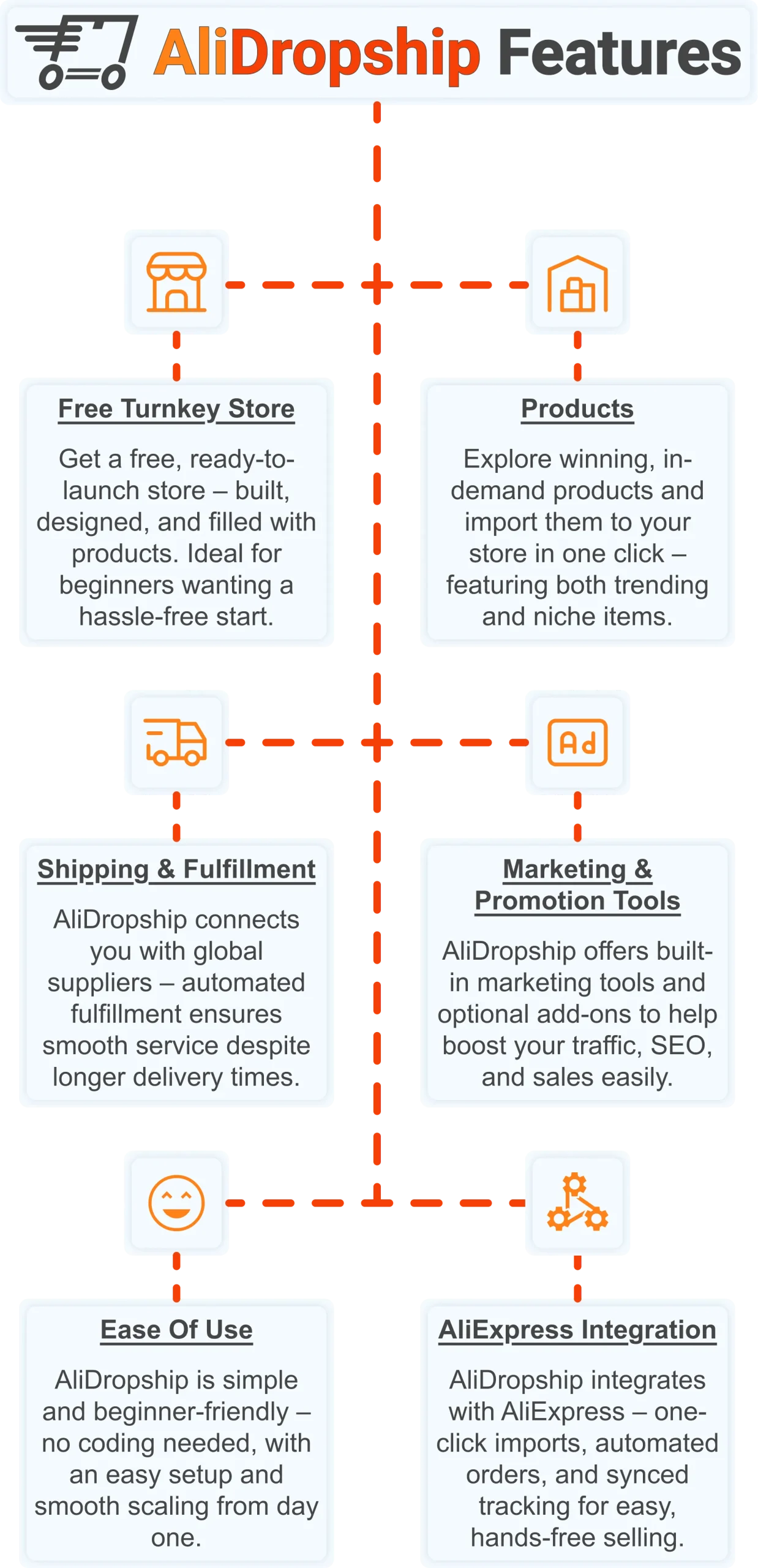
Free turnkey store 🛍️
Get a free turnkey store – built, designed, and filled with products. Ideal for beginners wanting a hassle-free start, the store comes fully optimized to attract customers right away, saving you time on setup. Plus, it includes professional design elements to give your business a polished, trustworthy look from day one. This ready-made foundation makes it easy to move seamlessly into product selection.
Products 📦
Once your store is set up, you can explore winning, in-demand products and import them in one click – featuring both trending and niche items. This wide selection lets you cater to diverse customer interests and test what works best. Regular updates ensure you always have fresh products, keeping your store competitive and relevant. With great products in place, smooth shipping becomes the next essential step.
Shipping & fulfillment 🚚
AliDropship connects you with global suppliers, and automated fulfillment ensures seamless order processing despite international delivery times. Customers receive real-time tracking updates, which builds confidence and trust in your store. Once shipping is handled reliably, you can focus on promoting your store and attracting traffic.
Marketing & promotion tools 📣
To maximize sales, AliDropship offers built-in marketing tools and optional add-ons that help boost traffic, SEO, and conversions. From email campaigns and discounts to social media integration, these tools empower you to reach and retain customers without needing prior marketing experience. With promotion strategies in place, managing your business becomes simpler and more efficient.
Ease of use 👌
AliDropship is beginner-friendly – no coding needed, with an intuitive dashboard that guides you through every step. Easy setup and smooth scaling let you expand your store without stress. As your business grows, adding new features, products, and marketing campaigns remains hassle-free, giving you more time to focus on sales.
AliExpress integration 🛒
Finally, AliDropship integrates seamlessly with AliExpress, enabling one-click imports, automated orders, and synced tracking. Your inventory stays up-to-date with the latest products and prices, while automated order processing frees you from manual tasks. Combined with the turnkey setup, reliable shipping, and built-in marketing tools, this integration ensures your dropshipping business is fully equipped for growth and success.
If you are serious about learning how to make money while traveling without being chained to a client or a schedule, a fully automated dropshipping store is the closest thing to a genuinely location-independent income. Claim your free turnkey store and start building your travel income today.
How to make money while traveling with no experience?
Can you really earn money online while traveling full time?
What is the easiest way to make money while traveling abroad?
How much money do you need to travel and work remotely?
Is dropshipping a good way to earn money from anywhere?