How To Make Money Online Selling Productivity Products In 2026

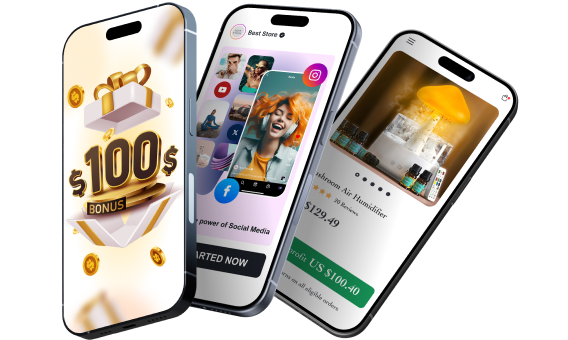
More people are finding ways to make money online in 2026 without needing a large audience, a technical background, or years of experience first. A working store, stocked with real products and backed by an advertising system, can go live faster than most people expect. What used to take weeks of setup, sourcing, and design work can now happen in a single sitting.
This guide covers the real numbers behind selling online in 2026, how a beginner friendly store actually works, and where your own interests can shape a real product catalog. No specific income figure is promised here, since outcomes depend on the products chosen and the effort behind them, but the mechanics are worth understanding regardless. Understanding how the pieces fit together tends to matter more than any single number quoted in isolation.
None of this depends on technical skill or marketing experience. The store, the products, and the advertising system already exist inside one platform, so the rest of this guide focuses on using it well rather than building it from scratch.
The real numbers behind making money online in 2026
These numbers reflect the platform overall, not a forecast for any individual store. They do show that this margin holds steady across the whole catalog, since every product on the platform is digital. Scale like this also says something about how long the model has been tested in practice, rather than being a new or unproven idea.
A single percentage is easier to trust once you see it applied to one real transaction. The breakdown below shows exactly what happens to a single sale, from the price a customer pays to what is actually left over.
Numbers alone do not explain how a store actually earns that margin in practice, so the next section covers the mechanics from account creation through to a completed sale. Seeing the full sequence laid out removes most of the mystery around how any of this actually functions day to day.
The process involves fewer moving parts than most newcomers assume. Three steps account for nearly the entire path from signing up to a customer completing checkout.
How making money online actually works
Each step is designed to remove a barrier that normally holds new sellers back: building the store, learning to advertise, and creating a product. What is left in your hands is choosing products and setting an ad budget. Those two decisions end up mattering far more than any technical skill would.
Because those two choices carry the most weight, it helps to think early about which kind of product to lead with. The difference between a written guide and an AI powered toolkit, covered next, tends to be the first real decision a new seller faces.
Once the basic mechanics feel familiar, most sellers start noticing that certain product types fit their audience better than others, which is exactly where written guides and AI powered toolkits start to diverge.
Neither format wins in every situation, since the better choice depends on your audience and how much margin you want to protect. Comparing the two side by side makes the tradeoffs clearer than describing them separately.
Two types of digital products: Guides vs AI-powered toolkits
Both formats share the same store and the same ad system, so the decision mostly comes down to how much personalization your audience values. A written guide feels complete and finished from the first page, while an AI powered toolkit feels tailored to the person reading it, since the result changes based on their own answers. Many sellers end up carrying both once their store is live.
This choice gets easier once a specific interest already points you toward a catalog direction, since understanding your audience in advance makes product selection far less of a guessing game and speeds up everything that follows.
What can you sell if you are into productivity?
If productivity is where your interest lives, the AliDropship catalog gives that focus somewhere real to go. Digital courses and a newer AI powered option both fit a productivity minded audience without requiring you to build a single one of them yourself.
The two categories below cover the main ways that interest becomes an actual product lineup: a fully written option, and an AI powered option built around personalization.
None of these require you to write a course, design a planner, or build any kind of software. The lineup already exists, and the real task is choosing which pieces suit your audience, then letting the built in ad system introduce them to potential customers. That leaves far more time for testing and iterating than a from-scratch product line ever would.
Most sellers do not lock in a final catalog immediately, and there is no need to. Picking two or three products across categories gives you room to see what resonates before committing further.
Testing a mix of product types early tends to pay off, since this kind of audience often reacts differently to a written guide than to a personalized AI toolkit. Whichever gets stronger engagement tells you where to direct your ad budget next.
Real success stories from everyday sellers
Neither result happened overnight, and neither seller treated the first few weeks as a failure when things moved slowly. Both spent that early stretch learning how their budget and product choices interacted before settling into a routine. That early patience is easy to overlook when reading a success story after the fact.
That willingness to keep adjusting instead of walking away after a quiet week shows up again in the practical strategies covered next. It is a small habit, but it tends to matter more over time than any single tactic on its own.
Strategies that actually move the needle
Lead with a digital product
Digital courses and toolkits need no shipping and no inventory, which makes them a low risk way to learn how pricing and ads affect your results from the very first sale.
Launch ads before everything feels perfect
Delaying ads until the store feels finished only postpones real feedback. Early ad data tells you more about what resonates than additional planning ever will.
Bundle a guide with a matching toolkit
Pairing a written guide with a related AI powered toolkit gives shoppers an extra reason to buy and lifts average order value without any additional ad spend.
Review performance weekly
Checking results every single day makes normal fluctuations feel more dramatic than they are. A weekly review gives the ad system enough time to actually optimize before you intervene.
None of these strategies rely on guesswork, since the platform surfaces which products and campaigns are actually performing. Patience matters more than any single tactic: giving a test enough time to generate real data before changing course. Sellers who switch products every few days rarely get far enough into the data to learn anything useful.
That patience gets easier once the numbers behind a single sale stop feeling abstract. Seeing exactly what portion of a sale you keep, next to what getting started actually costs, makes trying it feel far less like a gamble.
What affects how much you can make
Which products you list
Certain products sell faster simply because they solve an obvious problem or match a trending search. Testing two or three early on, instead of settling on just one, gives you real signal on what your audience wants.
How consistent your ad spend is
A steady daily budget, even a modest one, gives the ad system more to learn from than an occasional large burst followed by silence. Spending at least 10 dollars a day consistently tends to produce steadier results than starting and stopping.
Your pricing
Set a price too low and fees eat the margin; set it too high without justification and conversion drops off. Testing a slightly different price for a week or two usually reveals the right spot for that specific product.
How fast you respond to customers
Even with automated fulfillment, an unanswered customer question can turn into a refund request or a negative review. Checking in once or twice a day keeps small issues from turning into bigger ones.
Whether your catalog is diversified
A store built around one product feels every shift in demand directly. Adding two or three complementary guides or toolkits spreads that risk and gives customers more reasons to come back.
How much time you give it
Both ad systems and audiences need time to respond. Judging a product or campaign after only two or three days usually underestimates it, since most platforms need close to a week of data to settle.
None of these factors operate alone. A strong product paired with an inconsistent ad budget performs about as well as an average product with steady attention, which is part of why the built in ad system matters so much for sellers without a marketing background.
Most of these are also adjustable after launch rather than decisions that need to be perfect from day one. That flexibility is part of what makes the whole process feel less high stakes than it initially sounds.
Small, steady increases outperform dramatic ones almost every time. When something is working, scale the budget gradually over several days instead of doubling it all at once. Patience here tends to pay off more than any aggressive scaling attempt.
Beyond budgeting missteps, most hesitation before starting comes down to a handful of recurring questions. Addressing them directly tends to matter more than any single strategy. Most of these have straightforward answers once someone actually asks them out loud.
Questions like these come up for nearly every beginner, and they deserve a direct answer rather than a vague reassurance. The trial period exists so you can find those answers yourself before any money changes hands. Reading a confident answer here is still no substitute for testing it directly.
At some point, reading about the mechanics stops adding value, and trying it firsthand becomes the only way to know how it actually feels. That is really the last question left to answer.
Once the mechanics are laid out clearly, the next natural question is which platform is actually doing the work behind the scenes. That is worth understanding plainly before committing to anything, since the platform choice shapes almost everything that happens afterward.
Rather than accepting any of this on faith, it helps to see exactly what a single subscription includes, since a beginner friendly platform is only worthwhile if it genuinely removes the barriers already described rather than just relabeling them. A quick look at the actual features answers that question directly.
What is AliDropship and why it works in 2026
No experience? No problem. If you want the simplest way to start an online business in 2026, AliDropship is one of the most beginner-friendly platforms out there. It brings your store, your products, your fulfillment, and your marketing together in one place, so you can launch fast and grow with confidence.
Over 1,500,000 stores have already been built on AliDropship, and the platform has been featured by Forbes, Entrepreneur, Inc., NBC, Business, and Fox News.
Everything in that list is designed to clear a specific hurdle: the technical build, the sourcing, the shipping, and the marketing that typically stop people before they start. What remains in your hands is picking products and keeping your ad budget consistent. That is a considerably shorter list of responsibilities than running a store from scratch would require.
Even with those hurdles cleared, wanting some reassurance before investing time into something new is entirely reasonable. The details below exist specifically to lower the stakes of that decision.
None of this changes the honest part: outcomes still depend on the products you pick and the attention your store gets. What changes is how much has to go right before you get to find that out for yourself. That difference alone is often what separates people who try this from people who only ever plan to.
Most people who look into this seriously already understand as much. The real difference tends to come down to whether they start testing it now or keep researching indefinitely.
If you have made it this far, you already understand more about how online selling actually works in 2026 than most people do before they start. What is left is deciding whether to put that understanding into practice, which is a much smaller step than it might feel like right now.
There is no ideal moment to begin, only a reasonably informed one, and that is where you already stand. Everything covered in this guide exists to make that starting point a little less uncertain.
How do I start making money online in 2026?
Do I need to hold inventory or ship products myself?
What does it cost to start an online business?
Do I need prior experience to sell products online?
How fast can I expect my first sale online?