Influencer Income Revealed: How Much Do They Earn?


Let us be upfront about something: when most people ask how much money do influencers make, they are picturing a TikToker on a yacht, posting once a day and raking in six figures. The reality is a little more nuanced – and a lot more interesting. Some nano-creators are quietly earning $500 per post from a highly engaged audience of 8,000 followers, while some accounts with 500,000 followers are barely breaking even. Influencer income is one of the most misunderstood topics in the online business space, and this guide breaks it all down with real numbers.
Quick Answer: Most influencers earn between $50 and $3,000 per post depending on their tier, platform, and niche. Nano-influencers average around $195–$500 per post, while mega-influencers can command $10,000 to $50,000+ per sponsored placement. Full-time influencer income is built across multiple streams – not a single paycheck.
Whether you are thinking about becoming a creator yourself, collaborating with influencers as a brand, or simply curious how the creator economy actually works – this guide covers the real numbers, the income streams that matter, and what it actually takes to earn consistently from content in 2026.

What is an influencer – and how does the income model work?
An influencer is a content creator who has built an engaged audience around a specific topic, personality, or niche on social media. That audience could live on Instagram, TikTok, YouTube, LinkedIn, or a combination of platforms. What matters is not the follower count alone – it is the trust that audience places in the creator’s recommendations.
The income model is different from a traditional job in one key way: influencers rarely have a single employer or salary. Instead, they combine multiple revenue streams that can include brand sponsorships, affiliate commissions, platform ad revenue, digital product sales, and direct fan subscriptions. In 2026, the global influencer marketing industry is valued at over $32 billion – and brands are shifting budgets away from traditional advertising toward creator-led content because it converts better.
This means the opportunity is real. But it also means the income is variable, platform-dependent, and directly tied to engagement quality – not just follower quantity. A creator with 12,000 loyal followers in a profitable niche like personal finance or software tools can out-earn someone with 300,000 general lifestyle followers who barely drives any clicks.
How much can influencers realistically earn?
The numbers below reflect real industry data from 2025–2026 across multiple platforms. They cover sponsored post rates only – not total income. Most active creators earn significantly more when you add affiliate revenue, ad revenue, and product sales on top of brand deals.
These figures reflect single sponsored post rates and vary significantly by niche, engagement rate, and platform. Nano and micro creators in high-value niches like finance or tech regularly earn at the top end of their bracket, while general lifestyle accounts often land closer to the bottom.
One note on headline figures: You will see reports of influencers earning millions per post – those are Cristiano Ronaldo-level celebrities, not content creators. For the overwhelming majority of working influencers, full-time income requires consistent posting, multiple income streams, and 60–90 days to build reliable brand relationships. Most creators earning $3,000–$8,000 per month are combining two or three revenue channels, not just sponsored posts.
The creator economy rewarded consistency and niche authority over raw follower numbers in 2025. Micro-influencers generated up to 60% more engagement than macro accounts, which is exactly why brands increasingly prefer them. An engaged audience of 25,000 in a tight niche is worth more to most advertisers than 250,000 passive followers scrolling through general content.
How influencers actually make money: the main income streams
Understanding how much money do influencers make requires looking beyond the sponsored post. In 2025, brand collaborations accounted for 42% of total creator earnings, according to Lumanu data tracking over $1 billion in creator payouts. That means nearly 60% of influencer income comes from other sources. Here is what those look like in practice.
Sponsored content and brand deals
This is the category most people think of when they picture influencer income. A brand pays a creator a flat fee to feature their product or service in a post, video, or story. Flat-fee sponsorships are the most common deal structure because they offer predictability – the creator gets paid regardless of how the post performs.
Instagram sponsorships
Instagram remains the top platform for sponsored content, particularly in fashion, beauty, lifestyle, and wellness. A micro-influencer with 50,000 followers and a 3% engagement rate can expect around $500 per post. Mid-tier accounts in the 100K–500K range typically command $1,000–$5,000 per placement. The platform’s strength lies in its shoppable posts and Reels format, which help brands drive direct conversions alongside awareness.
Earning potential: $150–$10,000 per post depending on follower tier, engagement rate, and niche.
TikTok sponsorships
TikTok exploded in reach but has historically paid lower per-post rates than Instagram for smaller accounts. Nano influencers on TikTok typically earn $5–$25 per post from organic brand deals, while micro accounts can reach $100–$800 per video. The real opportunity on TikTok is virality – a single video can reach millions of new viewers and drive meaningful affiliate or product sales far beyond what a flat fee reflects.
Earning potential: $25–$2,500 per sponsored video for micro to mid-tier creators.
YouTube sponsorships
YouTube remains the gold standard for high-value sponsorships because audiences trust long-form content more deeply. A sponsored integration inside a YouTube video – where the creator speaks directly about a product for 60–90 seconds – can command significantly more than an Instagram post from the same creator. A YouTuber with 100,000 subscribers typically earns $1,000–$3,000 per sponsored video. The platform also pays ad revenue, making it one of the most stable earning channels for consistent creators.
Earning potential: $500–$10,000+ per sponsored video, plus $2–$15 CPM in ad revenue.
LinkedIn and X / Twitter
Text-based platforms are underrated by most influencer income guides. B2B creators on LinkedIn can earn $500–$5,000+ per sponsored post, and in some cases more than equivalently-sized Instagram accounts, because the audience’s purchasing power is significantly higher. X (formerly Twitter) is less consistent but creators with engaged followings in tech or finance do generate meaningful sponsorship income from targeted brands.
Earning potential: $500–$5,000 per LinkedIn post in B2B and professional niches.
Affiliate marketing
Affiliate marketing has become one of the most important income streams for influencers at every level. Instead of a flat fee, the creator earns a commission – typically 5–30% – each time a follower purchases through their unique tracking link or code. Affiliate revenue from content creators reached approximately $1.3 billion in 2025, and roughly 31% of creators now cite it as their primary income source.
The appeal is clear: once the content is created, the links keep earning. A beauty influencer with 15,000 engaged followers can realistically earn $2,000–$5,000 per month from affiliate commissions if her audience trusts her recommendations. That is more passive and more predictable than chasing one-off brand deals. Digital product affiliates – think software subscriptions or online courses – often pay 20–50% commission, meaning even modest traffic can translate to solid monthly income.
Why this works in 2026: Audiences buy from people they trust, and small creators often have engagement rates of 5–7% compared to 1–2% for large accounts, making their affiliate recommendations disproportionately effective.
Platform ad revenue
Several platforms pay creators directly based on content performance. YouTube’s Partner Program is the most established – creators earn roughly $0.018 per view, or $2–$15 per 1,000 views (CPM), depending on niche. Finance, tech, and education content earn at the high end. TikTok’s Creator Reward Program pays approximately $0.40–$1.00 per 1,000 views, and ad earnings on the platform jumped 80% in 2025 year over year. Instagram has experimented with bonus payments for Reels in select markets.
Earning potential: $50–$5,000+ per month depending on platform, niche, and monthly view volume.
Digital products, courses, and memberships
Some of the highest-earning creators in 2026 make relatively little from brand deals. Instead, they sell their own digital products – online courses, ebooks, templates, presets, or community memberships. This model scales without increasing workload: you create the product once and sell it repeatedly. Subscription-based communities on platforms like Discord or Patreon, priced at $9–$49 per month, can generate more than all sponsored posts combined for mid-tier creators with a loyal following.
Lumanu data shows that direct fan support – subscriptions, tips, and small payments – grew 70% in 2025 and now represents 19% of total creator income. One example: a parenting creator with just 22,000 Instagram followers was earning more from a $19/month private Discord community of 300 members ($5,700/month) than from all her sponsored posts.
Earning potential: $500–$20,000+ per month depending on product pricing and audience loyalty.
UGC content creation and licensing
User-generated content (UGC) is a fast-growing income stream that many people overlook entirely. Brands pay creators to produce content that the brand itself publishes – on its own social channels, in ads, or on its website. You do not need a large audience to earn from UGC because you are being hired for production quality and authenticity, not reach. UGC creators typically charge $150–$500 per short video, and dedicated UGC creators building this as a primary business report earning $2,000–$6,000 per month from a roster of repeat clients.
How influencer earnings vary by niche
If there is one factor that separates two creators with identical follower counts and engagement rates, it is niche. Brands pay based on the purchasing power of the audience, not just its size.
This is why two creators with 50,000 followers can have wildly different earning power. A personal finance creator targeting 25–40 year old professionals can command twice the rate of a general travel blogger with the same stats.
Legal and ethical considerations for influencers
The influencer space has matured significantly, and regulators have followed. If you are earning from sponsored content, there are clear rules you need to follow – and ignoring them can cost you both your income and your reputation.
Disclosure requirements
In most markets, including the United States, the UK, and the EU, influencers are legally required to clearly disclose paid partnerships. The FTC in the US requires that sponsorships be disclosed prominently – not buried in a list of hashtags or shown only at the end of a video. The standard is that a reasonable viewer should understand the content is sponsored without needing to search for it. Using labels like “Ad,” “Paid partnership,” or “#Sponsored” at the start of your caption or video is the compliant approach.
Key principle: If a brand paid you, gifted you a product, or provided any other compensation, disclose it clearly and at the top – no exceptions.
What to avoid absolutely
A few practices will destroy your credibility and can also lead to legal consequences:
- Fake follower purchases: Inflating your follower count does not fool brands using audience analytics tools. Platforms and influencer marketing software detect engagement anomalies, and getting caught blacklists you from future campaigns.
- Undisclosed promotions: Presenting paid content as organic opinion is deceptive to your audience and illegal in most regulated markets. The audience trust that makes influencer income possible depends entirely on honesty.
- Engagement pods for sponsored reach: Coordinating with other creators to artificially boost engagement metrics on paid posts misrepresents your actual performance to brands.
Important: Beyond the legal risk, these tactics erode the one asset that makes influencer income possible – your audience’s trust in you.
What to do instead
Build income on authenticity. Only promote products you genuinely use or believe in. Negotiate deals with brands that align with your niche and audience values. Long-term ambassadorships – where you work with the same brand over months – convert better, pay better, and feel more natural to your audience than one-off posts that appear every other week for different products.
Which income path is right for you?
Not every path into the creator economy looks the same. Here is a practical breakdown of where to start based on where you are right now.
Complete beginners (0–1,000 followers)
Do not try to monetize immediately. The most valuable thing you can do in the first 90 days is pick one platform, commit to one niche, and post consistently enough to understand what your audience responds to. Start collecting email addresses from day one – your email list is the only audience channel you own outright. Once you hit 1,000 engaged followers, affiliate marketing is your fastest path to first income because no minimum audience size is required by most programs.
Intermediate creators (1K–50K followers)
This is where influencer income starts to become meaningful. Focus on affiliate marketing, UGC client work, and pitching small brand sponsorships. Research the rates in your niche and price yourself accordingly – many micro-creators significantly underprice themselves because they assume brands will not pay. They will, especially if your engagement rate is strong. A 6% engagement rate on 15,000 followers is more attractive to a DTC brand than 1% engagement on 200,000.
Established creators (50K–500K followers)
At this level, income diversification becomes essential. Do not rely on a single revenue source. Brand deals should sit alongside affiliate income, platform ad revenue, and ideally a digital product or subscription community. The creators earning $10,000–$30,000 per month at this tier are almost always operating across three or more streams simultaneously. Long-term ambassadorships (quarterly or annual contracts) provide stability that one-off posts cannot.
Advanced creators and full-time goal seekers
If your goal is to build a full-time income from content, think like a business owner from the start. Treat your content as the marketing for your actual product – whether that is a course, a merchandise line, a community membership, or your own ecommerce store. Platforms change their algorithms, cut creator programs, or lose audience attention. The creators who maintain income through these shifts own something off-platform that keeps earning regardless.
Pro Tip: The most resilient creator businesses in 2026 treat social media as the top of a funnel – not the income itself. Email lists, product stores, and subscription communities sit at the bottom where the real money converts.
AliDropship: Your complete all-in-one solution for starting dropshipping in 2026
If you want the simplest possible way to start dropshipping – especially if you are brand new – AliDropship remains one of the most beginner-friendly tools available in 2026. It brings together store creation, product imports, automation, and marketing into a single streamlined system designed to help you launch quickly and grow confidently.
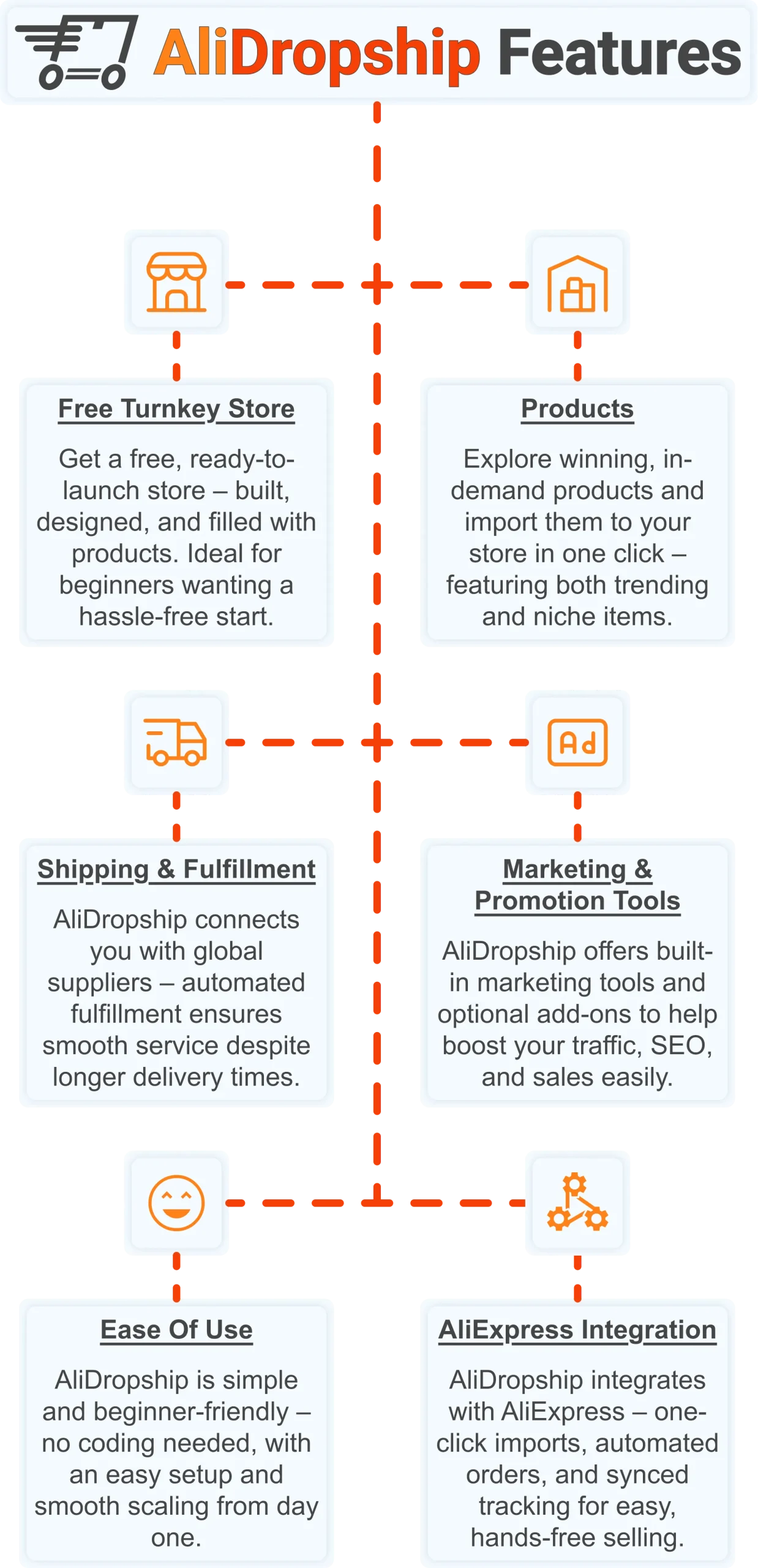
Free turnkey store 🛍️
Get a free turnkey store – built, designed, and filled with products. Ideal for beginners wanting a hassle-free start, the store comes fully optimized to attract customers right away, saving you time on setup. Plus, it includes professional design elements to give your business a polished, trustworthy look from day one. This ready-made foundation makes it easy to move seamlessly into product selection.
Products 📦
Once your store is set up, you can explore winning, in-demand products and import them in one click – featuring both trending and niche items. This wide selection lets you cater to diverse customer interests and test what works best. Regular updates ensure you always have fresh products, keeping your store competitive and relevant. With great products in place, smooth shipping becomes the next essential step.
Shipping & fulfillment 🚚
AliDropship connects you with global suppliers, and automated fulfillment ensures seamless order processing despite international delivery times. Customers receive real-time tracking updates, which builds confidence and trust in your store. Once shipping is handled reliably, you can focus on promoting your store and attracting traffic.
Marketing & promotion tools 📣
To maximize sales, AliDropship offers built-in marketing tools and optional add-ons that help boost traffic, SEO, and conversions. From email campaigns and discounts to social media integration, these tools empower you to reach and retain customers without needing prior marketing experience. With promotion strategies in place, managing your business becomes simpler and more efficient.
Ease of use 👌
AliDropship is beginner-friendly – no coding needed, with an intuitive dashboard that guides you through every step. Easy setup and smooth scaling let you expand your store without stress. As your business grows, adding new features, products, and marketing campaigns remains hassle-free, giving you more time to focus on sales.
AliExpress integration 🛒
Finally, AliDropship integrates seamlessly with AliExpress, enabling one-click imports, automated orders, and synced tracking. Your inventory stays up-to-date with the latest products and prices, while automated order processing frees you from manual tasks. Combined with the turnkey setup, reliable shipping, and built-in marketing tools, this integration ensures your dropshipping business is fully equipped for growth and success.
If you are serious about building income beyond a single sponsored post, adding an ecommerce store to your creator business is one of the smartest moves you can make in 2026. Get your free AliDropship turnkey store and start selling today.
How much money do influencers make per post?
How much money do influencers make on TikTok?
How many followers do you need to make money as an influencer?
What niche makes the most money for influencers?
How much money do influencers make per year on average?