

Structured Data

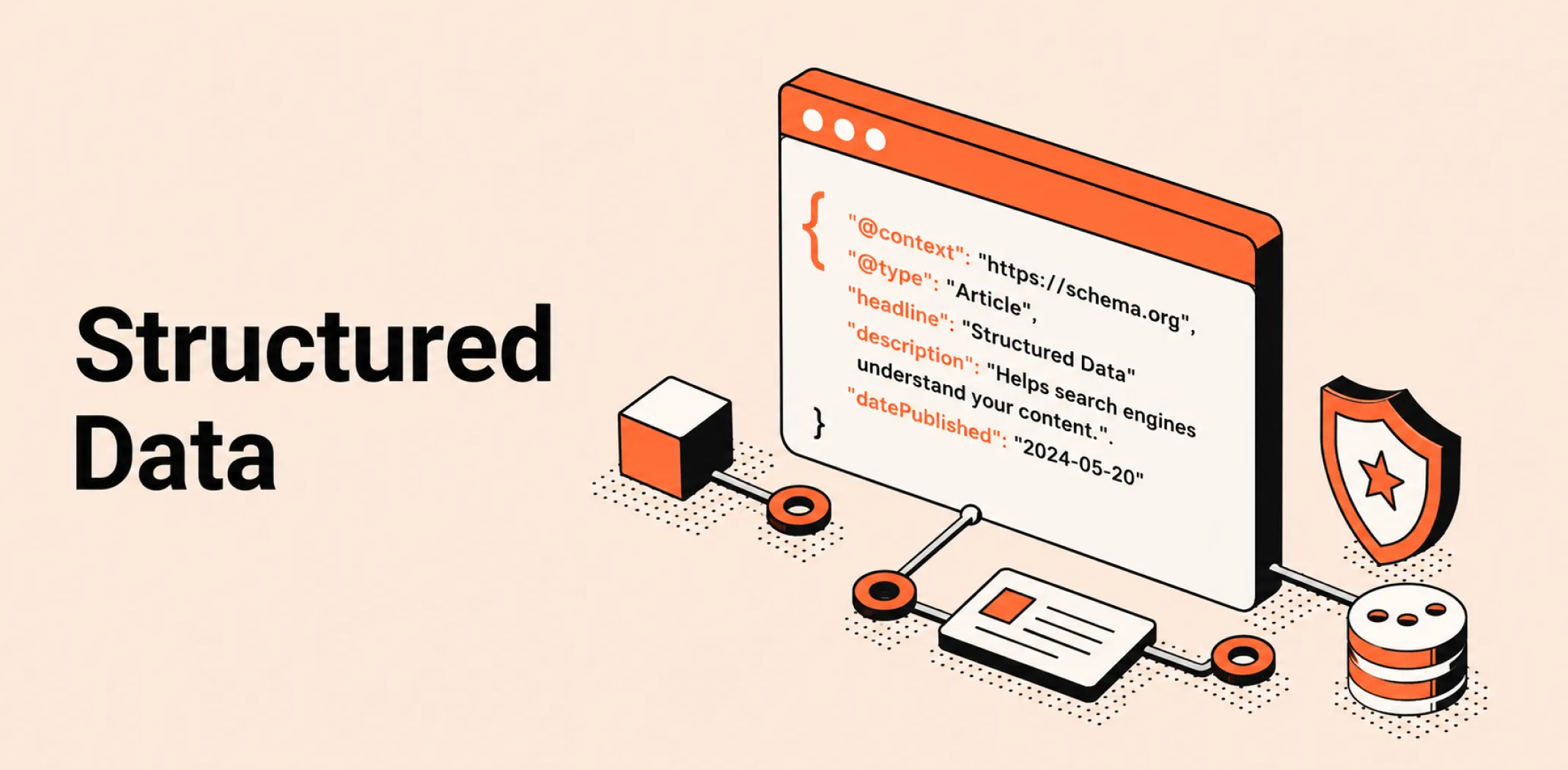
Structured data is information organized in a fixed, predictable format so a computer program can read and interpret it directly, rather than having to infer meaning from free-form text.
Structured data is the broader concept; schema markup is one specific application of it, used to label the content of a webpage using the shared vocabulary maintained by Schema.org.
Structured data itself is not limited to webpages: a spreadsheet, a product database, and a JSON file returned by an API are all examples of structured data, since each stores information in defined fields rather than as unformatted prose. On a webpage, structured data is typically written as JSON-LD, though it can also appear as Microdata or RDFa embedded directly in the HTML tags.
The opposite of structured data is unstructured data, such as a plain paragraph of text, an image, or a video, where the meaning is not explicitly labeled and a program must use additional processing to extract any facts from it.
Example
A product page might store its price, availability, and brand name as unstructured text within a paragraph of marketing copy, or it might store the same three facts as structured data, each labeled with its own field name such as price, availability, and brand. A search engine or shopping feed can read the structured version directly, while it has to guess at the meaning of the unstructured paragraph.
Key characteristics
- Machine readable: Structured data is organized so software can parse it without needing to interpret natural language.
- Field based: Each piece of information sits in a defined field, such as name, price, or date, rather than as running text.
- Multiple use cases: It powers databases, spreadsheets, APIs, and webpage markup, not only search engine features.
- Format dependent: On the web, structured data is commonly written as JSON-LD, Microdata, or RDFa, each with its own syntax rules.
Related terms
- Schema markup – the specific vocabulary used to add structured data to a webpage so search engines can read it.
- SEO – the broader practice of improving a page so it ranks and performs well in search results, which structured data can support.
- On-page SEO – the category of optimization controlled directly on the page, which structured data falls under when implemented as schema markup.
- Meta description – a distinct HTML element written for human readers, unlike structured data, which is written for machine parsing.
Frequently asked questions
Is structured data the same as schema markup?
No, structured data is the broader concept of machine-readable, field-based information, while schema markup is one specific vocabulary used to add structured data to a webpage.
What is the opposite of structured data?
Unstructured data, such as plain paragraphs, images, or video, does not have its information organized into defined fields a program can parse directly.
Where is structured data used outside of webpages?
Spreadsheets, relational databases, and the JSON responses returned by many APIs are all common examples of structured data used outside of web content.
AliDropship: An all-in-one platform for starting an online business in 2026
AliDropship is an online business platform that gives customers a ready-made store, a digital products catalogue, and built-in, one-click advertising within a single system. Founded in 2015 and based in Irvine, California, it has helped launch more than 1,500,000 stores and holds a 4.7-star rating on Trustpilot. It is built for people with no prior experience and no technical skills.
🆓 Free 14-day trial
New users get full platform access for 14 days, including a ready-made store, hosting, a domain, an SSL certificate, and access to the digital products catalogue. The trial also includes a $40 ad coupon to test the advertising system. Order fees apply only when a sale is made.
📦 Digital products
Customers choose from AliDropship’s catalogue of digital products – guides, courses, checklists, tools, and AI-powered toolkits – and keep up to 70% of every sale. Delivery is instant and automated, so there is no inventory, shipping, or manual fulfillment involved.
📣 One-click advertising
AliDropship includes built-in advertising that customers can turn on for as little as $10 a day. The system handles targeting, creatives, and optimization, and many customers see their first orders the same day they launch ads.
👌 Ease of use
AliDropship requires no coding or marketing experience. The store, products, and ads are managed from a single dashboard that works on a phone as well as a desktop, and a personal growth manager is available to help by chat.
💳 Monthly plan
After the trial, continued access is $39 a month, covering the store, the digital products catalogue, and ongoing support. There is no long-term contract, and the plan can be cancelled at any time.
What is structured data?
Is structured data the same as schema markup?
What is the opposite of structured data?
Where is structured data used besides webpages?
Does structured data help with SEO?
Are you ready to become an owner
of a profitable online business?
Free Dropshipping Guide