

SKU

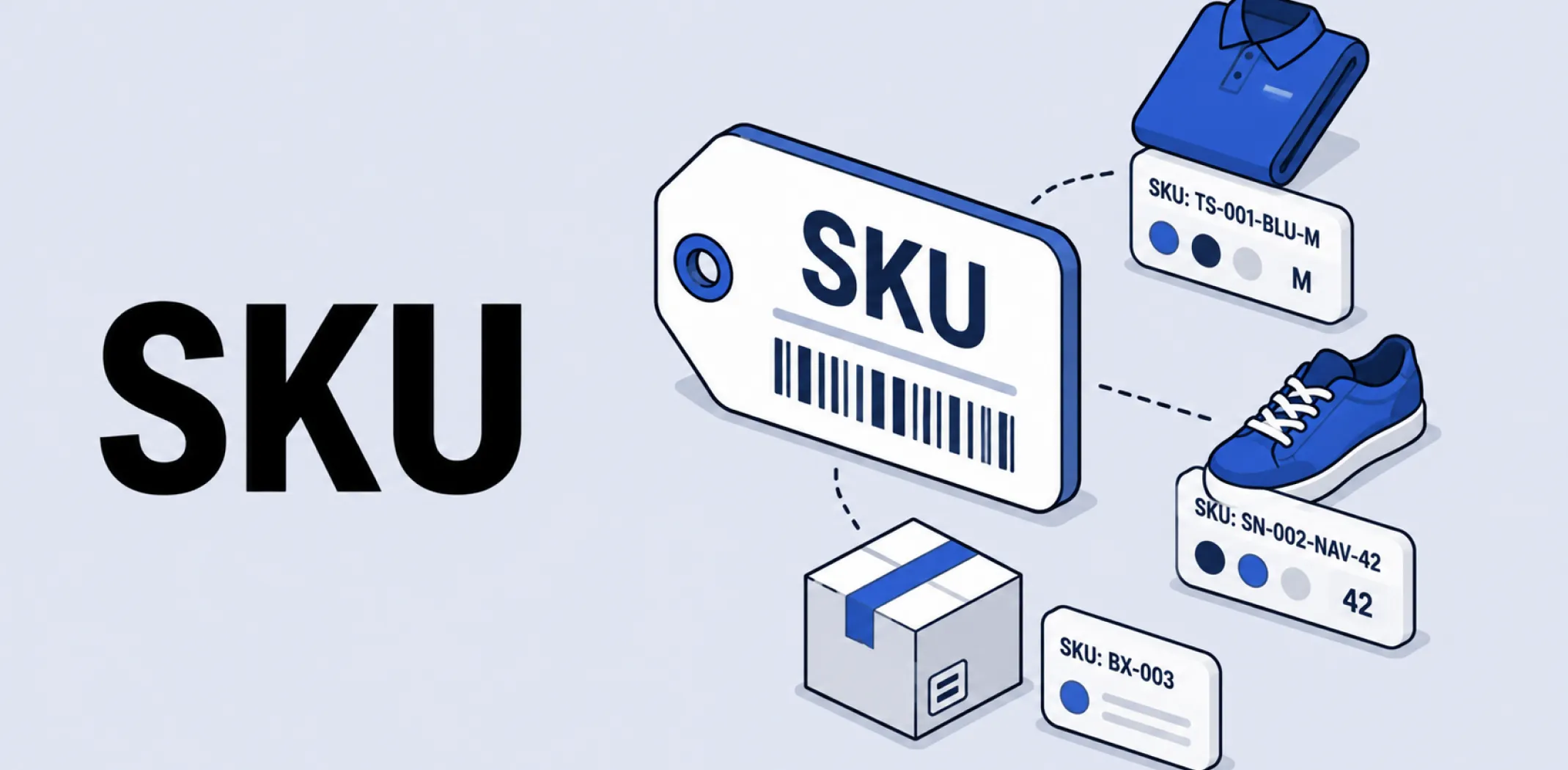
A SKU (Stock Keeping Unit) is a unique alphanumeric code assigned to a specific product variant to identify and track it within an inventory or order management system.
SKUs are defined by the seller, not the manufacturer, which means the same physical product can carry different SKUs across different stores or platforms. A SKU typically encodes attributes that distinguish one variant from another – such as size, color, or material – making it possible to manage large catalogues without ambiguity.
In a dropshipping context, SKUs allow a store owner to map their product listings to the correct supplier item, reducing the risk of fulfillment errors when orders are forwarded for order fulfillment.
SKUs are distinct from barcodes or manufacturer part numbers, though all three may coexist on the same product. While barcodes are standardized for point-of-sale scanning, SKUs are internal reference codes shaped by each seller’s own cataloguing logic.
Example
A dropshipping store sells a ceramic mug in three colours – white, black, and navy – and two sizes, 11 oz and 15 oz. Rather than listing all variants under a single identifier, the store owner assigns a distinct SKU to each combination: MUG-WHT-11, MUG-BLK-11, MUG-NVY-15, and so on. When a customer orders the black 11 oz mug, the SKU MUG-BLK-11 is passed to the supplier, who fulfills the correct item without needing to interpret the product title or description.
Key characteristics
- Seller-defined: SKUs are created by the retailer and follow no universal format, allowing each business to structure codes in a way that fits its catalogue.
- Variant-specific: Each combination of product attributes – size, colour, material, and so on – receives its own SKU, ensuring no two distinct variants share the same identifier.
- Internal use: SKUs are primarily operational tools used within inventory systems, dashboards, and order management software rather than displayed to customers.
- Fulfillment accuracy: In dropshipping, a correctly mapped SKU links a store listing to the precise supplier item, reducing mispicks and incorrect shipments.
Related terms
- Order fulfillment – the process by which a supplier receives, packages, and ships an order; accurate SKU mapping is essential for fulfillment to proceed without errors.
- Supplier – the third party responsible for warehousing and shipping products; suppliers often maintain their own SKU systems that must be reconciled with the store owner’s codes.
- Warehousing – the storage and organisation of physical inventory; SKUs are the primary identifier used to locate and retrieve items in a warehouse.
- Wholesale – bulk purchasing from a manufacturer or distributor; wholesale orders rely on SKUs to specify exact product variants in purchase orders.
Frequently asked questions
What does SKU stand for?
SKU stands for Stock Keeping Unit. The term originates from inventory management and refers to the distinct unit of a product as tracked within a storage or sales system.
Is a SKU the same as a barcode?
No. A barcode is a standardized, scannable representation of a product identifier used across retailers and supply chains. A SKU is an internal code created by the seller and is not standardized between businesses. A product may have both, but they serve different purposes.
Do dropshippers need to use SKUs?
SKUs are not always mandatory in dropshipping, but they become important as a catalogue grows. Assigning SKUs to each product variant makes it easier to match store listings to supplier items, process orders accurately, and analyze sales by product line. Many dropshipping platforms support SKU fields specifically for this reason.
How should a SKU be formatted?
There is no universal format. A common approach is to combine short codes for the product category, variant attributes, and a sequence number – for example, SHOE-BLK-42 for a black shoe in size 42. The format should be consistent within a store and human-readable enough for the owner to interpret at a glance.
AliDropship: An all-in-one platform for starting dropshipping in 2026
AliDropship is a dropshipping platform that covers store creation, product imports, order automation, and marketing within a single system. It is designed for users with no prior ecommerce experience, though it also supports scaling for more established stores.
🛍️ Free turnkey store
New users receive a free pre-built store – set up, designed, and stocked with products. The store includes a ready-to-use product catalogue and a standard storefront design. It also comes with hosting, a domain, SSL, and payment systems already set up and included.
📦 Products
The platform provides access to a product catalogue covering both trending and niche items, with one-click import to your store. The catalogue is updated regularly to reflect current market availability. Products can be browsed, filtered, and added without leaving the platform.
🚚 Shipping & fulfillment
AliDropship provides access to a vast catalogue of products from global suppliers and handles order fulfillment automatically once a purchase is made. Customers receive tracking information directly, and orders are processed without manual intervention from the store owner.
📣 Marketing & promotion tools
The platform includes built-in marketing tools covering email campaigns, discount management, SEO settings, and social media integration. These are available within the dashboard and do not require third-party subscriptions for basic use.
👌 Ease of use
AliDropship requires no coding knowledge. The dashboard contains all the necessary tools for managing your store, products, and orders in one place. Additional features and products can be added as the store grows without rebuilding the existing setup.
What does SKU stand for?
Is a SKU the same as a barcode?
Do dropshippers need to use SKUs?
How should a SKU be formatted?
Are you ready to become an owner
of a profitable online business?
Free Dropshipping Guide