

Sales Tax

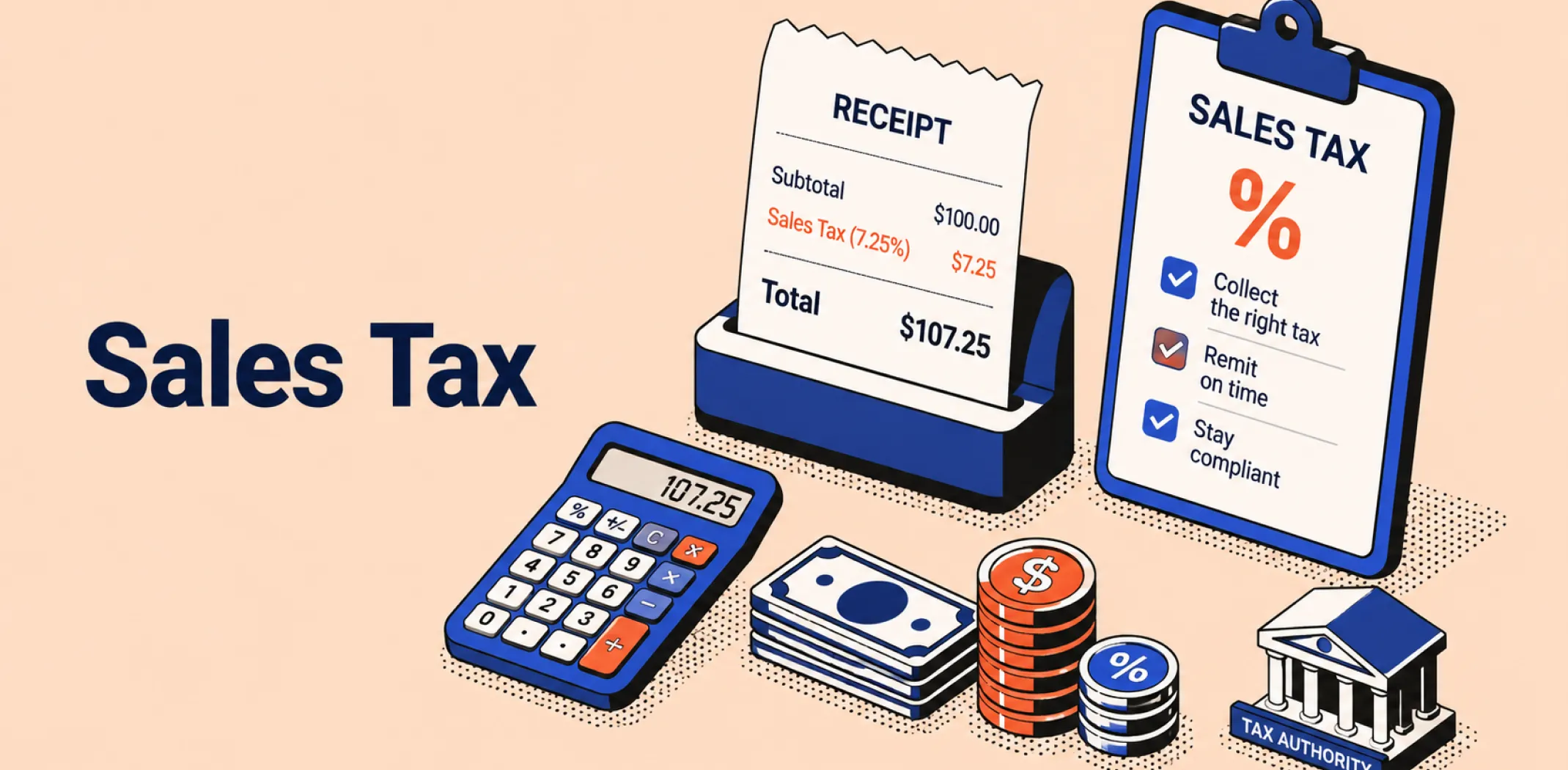
Sales tax is a percentage-based tax added to the price of a product or service at the point of sale, collected by the seller on behalf of a government and later remitted to the relevant tax authority.
Sales tax rules vary by country and, within some countries, by state, province, or local jurisdiction. In the United States, obligations are set at the state level and often depend on whether a seller has nexus, a legal connection to that state created by physical presence or sales volume.
Many other countries instead use value-added tax, applied at multiple stages of production rather than only at final sale. For dropshipping and ecommerce sellers, this means obligations can differ for every region a store sells into, separate from how a payment gateway processes the underlying payment.
Sales tax is a legal and financial obligation, not a feature a store chooses to enable, which sets it apart from optional pricing tools like multi-currency display.
Key characteristics
- Jurisdiction-dependent rates: The applicable rate depends on the buyer’s location, the seller’s location, or both, and can change between neighboring regions.
- Nexus-based obligation: In many systems, a seller only must collect sales tax in a jurisdiction once a legal connection, or nexus, is established there.
- Collected, not kept: The seller collects sales tax from the customer but does not retain it; the amount is remitted to the tax authority on a regular filing schedule.
- Platform-assisted calculation: Many ecommerce platforms and tax tools calculate the correct rate automatically based on the shipping address at checkout.
Example
A dropshipping store based in Texas sells a phone accessory for 20 dollars. A customer also located in Texas completes the purchase, and the store automatically adds the applicable Texas sales tax to the order total at checkout. The store owner collects that tax along with the payment, then later reports and remits it to the state tax authority during a periodic filing. A customer ordering the same product from a country with no equivalent requirement would not see this charge added.
Related terms
- Ecommerce – the broader retail category in which online sales tax obligations apply.
- Payment gateway – the service that processes the total charge, including any sales tax added.
- Multi-currency – a separate store feature for pricing, distinct from a jurisdiction’s tax requirements.
- Business plan – a planning document that should account for tax compliance costs and obligations.
Frequently asked questions
Do all online stores need to collect sales tax?
Not all online stores need to collect sales tax; the requirement depends on factors like the seller’s location, the buyer’s location, and whether the seller has established a legal connection, or nexus, to a taxing jurisdiction. Requirements vary widely between countries and, within the United States, between states.
How is sales tax different from value-added tax?
Sales tax is typically collected only at the final point of sale, while value-added tax is collected at multiple stages of production and distribution. Many countries outside the United States use value-added tax instead of, or alongside, traditional sales tax.
Who is responsible for remitting sales tax to the government?
The seller is generally responsible for collecting sales tax from the customer and remitting it to the appropriate tax authority on a set filing schedule. Some ecommerce platforms or marketplaces may handle this calculation and remittance automatically on behalf of the seller.
Does sales tax apply the same way to dropshipped products?
Sales tax generally applies to dropshipped products the same way it applies to any retail sale, based on customer location and the seller’s tax obligations there. Some jurisdictions add rules involving the supplier’s location, so sellers should confirm requirements for their specific setup.
What creates a sales tax obligation in a new state or region?
In the United States, a common nexus threshold is around 100,000 dollars in annual sales into a state, historically paired with a 200-transaction test, though several states have dropped the transaction rule. Crossing the applicable threshold can create a new collection obligation, and exact figures still vary by jurisdiction.
AliDropship: An all-in-one platform for starting dropshipping in 2026
AliDropship is a dropshipping platform that covers store creation, product imports, order automation, and marketing within a single system. It is designed for users with no prior ecommerce experience, though it also supports scaling for more established stores.
🛍️ Free turnkey store
New users receive a free pre-built store – set up, designed, and stocked with products. The store includes a ready-to-use product catalogue and a standard storefront design. It also comes with hosting, a domain, SSL, and payment systems already set up and included.
📦 Products
The platform provides access to a product catalogue covering both trending and niche items, with one-click import to your store. The catalogue is updated regularly to reflect current market availability. Products can be browsed, filtered, and added without leaving the platform.
🚚 Shipping & fulfillment
AliDropship provides access to a vast catalogue of products from global suppliers and handles order fulfillment automatically once a purchase is made. Customers receive tracking information directly, and orders are processed without manual intervention from the store owner.
📣 Marketing & promotion tools
The platform includes built-in marketing tools covering email campaigns, discount management, SEO settings, and social media integration. These are available within the dashboard and do not require third-party subscriptions for basic use.
👌 Ease of use
AliDropship requires no coding knowledge. The dashboard contains all the necessary tools for managing your store, products, and orders in one place. Additional features and products can be added as the store grows without rebuilding the existing setup.
Do all online stores need to collect sales tax?
How is sales tax different from value-added tax?
Who is responsible for remitting sales tax to the government?
What creates a sales tax obligation in a new state or region?
Can sales tax automation tools calculate rates automatically?
Are you ready to become an owner
of a profitable online business?
Free Dropshipping Guide