

Referral Traffic

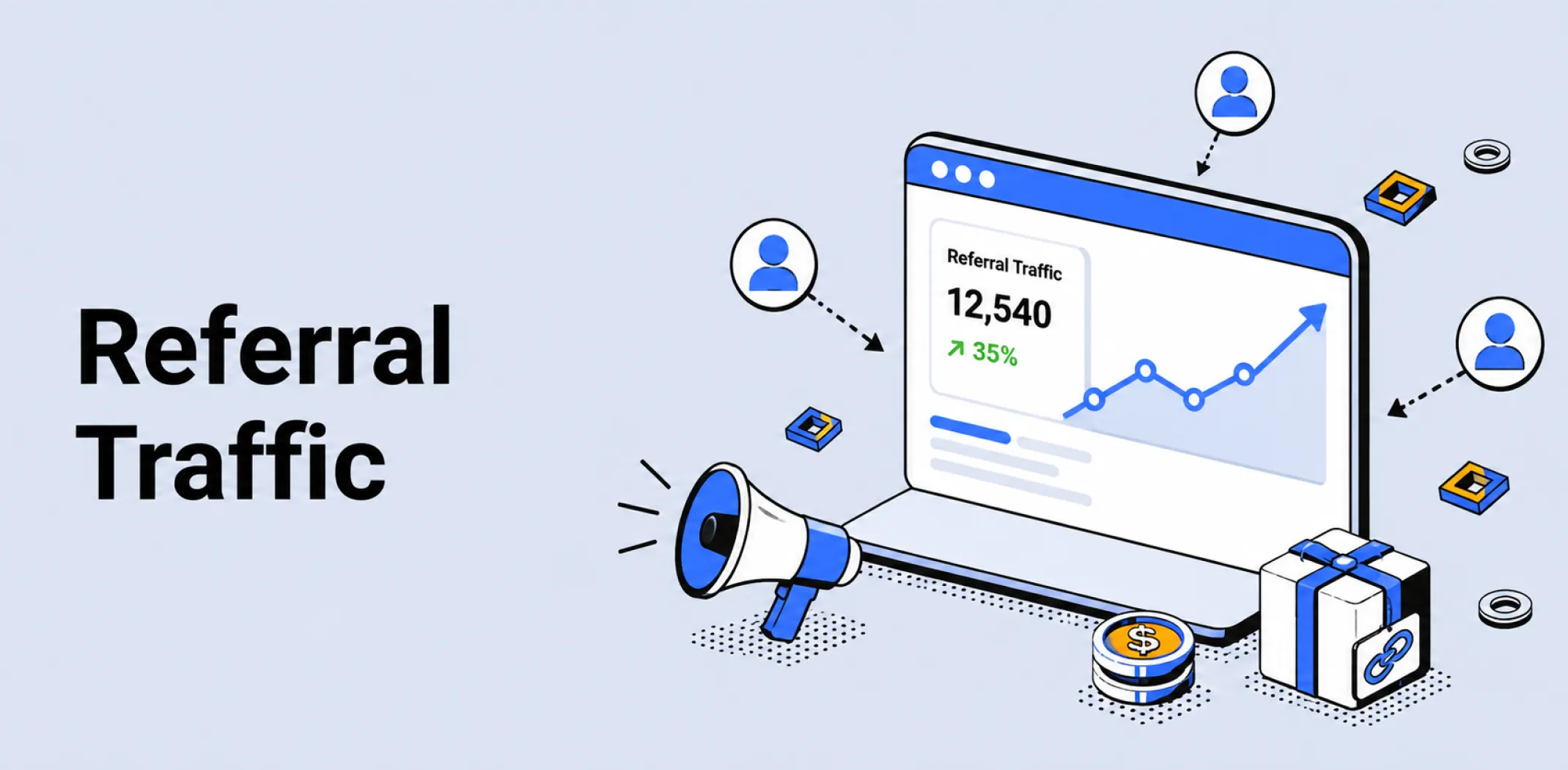
Referral traffic is the category of website visits that originates from a user clicking a link on an external website, causing the visitor’s browser to pass the source domain as a referrer to the destination site’s analytics platform.
When a user clicks a link that leads from one website to another, the browser transmits a referrer header identifying the originating page. Analytics platforms such as Google Analytics read this header and record the session under the referral channel, attributing the visit to the external domain that hosted the link.
Common referral sources include blog posts that link to a product page, directory listings, forum threads, review platforms, news articles, and partner or affiliate sites. Referral traffic is distinct from ecommerce traffic generated by search engines, paid advertisements, social media platforms, or email campaigns, each of which analytics tools classify separately.
For a dropship store, referral traffic is valuable both as a source of visitors and as a signal of how a store’s presence is spreading across the web. A high volume of referral traffic from authoritative or relevant external sites typically indicates that the store has earned external recognition – through content, partnerships, or press coverage – and those inbound links also contribute positively to the site’s organic search rankings.
Monitoring referral sources allows a store owner to identify which relationships and placements are producing the most commercially relevant visitors, as covered in more depth in the ecommerce marketing strategies section of the AliDropship blog.
Example
A dropshipping store selling outdoor camping gear is mentioned in a “best camping gear under $50” roundup published by a mid-sized outdoor lifestyle blog. The blog post includes a direct link to the store’s product page. Over the following two weeks, the store’s analytics platform records 640 sessions attributed to the referring domain, with a conversion rate notably higher than the site average. The store owner identifies this as a high-quality referral source and reaches out to the blog to discuss further collaboration, such as a dedicated product review or an ongoing affiliate arrangement.
Key characteristics
- Referrer header dependency: Referral traffic is recorded when a browser transmits the originating domain to the destination site; if this header is absent or blocked, the session may be misclassified as direct traffic instead.
- Source-level attribution: Analytics platforms record the specific external domain that sent each referral session, allowing store owners to evaluate the volume and quality of traffic from individual sources.
- SEO relationship: External links that generate referral traffic also function as inbound links, which search engines treat as authority signals; a single placement can therefore contribute to both referral traffic and improved organic rankings.
- Quality variation: Referral traffic quality varies considerably by source – a link from a highly targeted niche publication tends to produce visitors with stronger purchase intent than a link from a broad or unrelated directory.
- Social media exclusion: Clicks from social media platforms are typically classified by analytics tools as social traffic rather than referral, even though they technically originate from external links, because platforms such as Facebook and Instagram are recognized and categorized separately.
Related terms
- Conversion funnel – the staged path a visitor follows from first arriving at a store through to completing a purchase; referral traffic quality determines where in the funnel most referred visitors are likely to enter.
- Landing page – the first page a visitor reaches after clicking an external link; the relevance of the landing page to the referring source significantly affects whether a referral session converts.
- Influencer – a content creator whose platform can act as a referral source when they publish links to a store within reviews, recommendations, or sponsored content.
- Product advertising – paid promotional activity that drives traffic through ad placements; unlike referral traffic, paid traffic is tracked through ad platform parameters rather than referrer headers.
- Return on investment – a performance ratio used to evaluate marketing efficiency; referral partnerships and link placements can be assessed by comparing the revenue generated from referral sessions against any cost incurred to secure the placement.
Frequently asked questions
How is referral traffic different from organic traffic?
Organic traffic originates from a user clicking an unpaid listing in a search engine’s results page, while referral traffic originates from a user clicking a link on any other external website. Both arrive via inbound links, but analytics platforms attribute them differently: sessions from recognized search engine domains are classified as organic, while sessions from all other external domains are classified as referral.
A single external page can contribute to both channels simultaneously – its link generates referral traffic directly and strengthens the destination page’s organic rankings over time.
Why does referral traffic sometimes appear as direct traffic?
When a browser does not transmit a referrer header – which can occur when navigating from an HTTPS page to an HTTP page, clicking a link in certain desktop email clients or PDF documents, or following a link that has been shortened or redirected in a way that strips the header – the session arrives at the destination without a detectable source and is recorded as direct traffic instead.
This misattribution is part of the broader dark traffic problem in web analytics and means that referral figures in any analytics report are likely an undercount of actual referred visits.
How can a dropshipping store increase its referral traffic?
The most reliable methods involve earning or placing links on external sites that are relevant to the store’s product category. This includes outreach to bloggers and journalists for product coverage, submission to curated product directories, partnerships with complementary stores or content sites, and participation in influencer programs where creators link directly to product pages.
Ensuring that landing pages match the context of the referring source – in terms of product, messaging, and offer – improves the likelihood that referred visitors proceed through the conversion funnel.
Are affiliate links a source of referral traffic?
Yes. When an affiliate publishes a link to a store and a user clicks it, the resulting session is typically recorded as referral traffic in the store’s analytics, attributed to the affiliate’s domain.
Affiliate links often include additional tracking parameters appended to the URL so that the store owner’s affiliate platform can attribute the conversion and calculate the correct commission. In analytics reports, the referral domain and the affiliate platform may both appear as separate traffic sources depending on how the tracking is configured.
AliDropship: An all-in-one platform for starting dropshipping in 2026
AliDropship is a dropshipping platform that covers store creation, product imports, order automation, and marketing within a single system. It is designed for users with no prior ecommerce experience, though it also supports scaling for more established stores.
🛍️ Free turnkey store
New users receive a free pre-built store – set up, designed, and stocked with products. The store includes a ready-to-use product catalogue and a standard storefront design. It also comes with hosting, a domain, SSL, and payment systems already set up and included.
📦 Products
The platform provides access to a product catalogue covering both trending and niche items, with one-click import to your store. The catalogue is updated regularly to reflect current market availability. Products can be browsed, filtered, and added without leaving the platform.
🚚 Shipping & fulfillment
AliDropship provides access to a vast catalogue of products from global suppliers and handles order fulfillment automatically once a purchase is made. Customers receive tracking information directly, and orders are processed without manual intervention from the store owner.
📣 Marketing & promotion tools
The platform includes built-in marketing tools covering email campaigns, discount management, SEO settings, and social media integration. These are available within the dashboard and do not require third-party subscriptions for basic use.
👌 Ease of use
AliDropship requires no coding knowledge. The dashboard contains all the necessary tools for managing your store, products, and orders in one place. Additional features and products can be added as the store grows without rebuilding the existing setup.
How is referral traffic different from organic traffic?
Why does referral traffic sometimes appear as direct traffic?
How can a dropshipping store increase its referral traffic?
Are affiliate links a source of referral traffic?
Are you ready to become an owner
of a profitable online business?
Free Dropshipping Guide