

Product Sampling

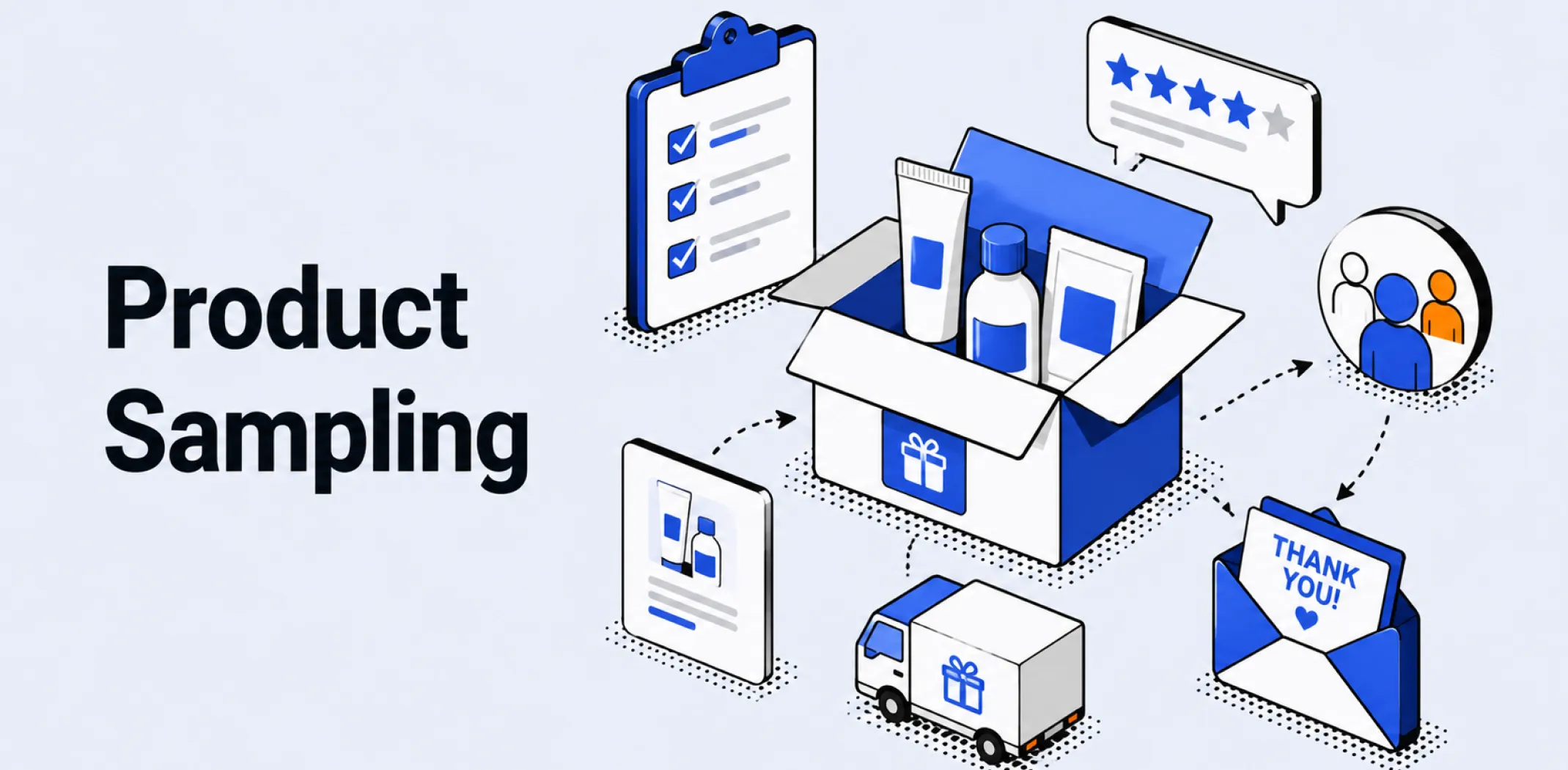
Product sampling is a marketing and validation practice in which a seller distributes free or heavily discounted units of a product to a targeted group of recipients in exchange for feedback, reviews, or word-of-mouth exposure.
In ecommerce and dropshipping contexts, product sampling serves two distinct purposes. The first is pre-launch validation – testing a product with a small audience before committing to a full marketing budget. The second is social proof generation – seeding a product listing with verified reviews or user-generated content to reduce buyer hesitation for subsequent shoppers.
It differs from general promotional discounting in that the primary goal is data and credibility, not immediate revenue. Sampling is closely linked to product advertising and is often used alongside influencer outreach to extend reach.
In marketplace environments such as Amazon, structured sampling programs can directly affect listing rank and conversion rate. In independent dropshipping stores, the practice is typically managed manually or through platform-specific review request tools.
How product sampling works
- The seller identifies a target recipient group – such as existing customers, micro-influencers, or verified buyers in a relevant niche – who are likely to provide useful feedback or share the product publicly.
- Units are sent at no charge or at a steep discount, with an explicit or implicit expectation that the recipient will leave a review or post about their experience.
- The recipient uses the product and, if the arrangement includes a review component, submits written or visual feedback through the relevant platform or channel.
- The seller collects the reviews, user-generated content, or usage data and incorporates it into the product listing, marketing materials, or future sourcing decisions.
- Performance metrics from the sample run – review scores, return rates, recipient comments – are used to decide whether to scale the product, modify it, or discontinue it.
Example
A dropshipping store owner sourcing a posture-correction device from a supplier on AliExpress sends ten units at cost price to verified buyers recruited through a Facebook group. Each recipient agrees to leave a detailed review on the store’s product page within two weeks. Seven of the ten reviews are published with photos, raising the listing’s average rating from zero to 4.6 stars. The store owner uses the written feedback to adjust the product description and update the sizing guidance, then launches paid ads with the review count visible in the ad creative.
Key characteristics
- Targeted distribution: Samples are sent to recipients chosen for their likelihood to engage, review, or share – not distributed at random.
- Cost as investment: The unit and shipping cost is treated as a marketing expense rather than a loss, measured against the reviews or data returned.
- Platform dependency: The value of collected reviews is shaped by platform policies; some marketplaces prohibit incentivised reviews, which affects how sampling programs are structured.
- Validation function: Beyond social proof, sampling provides direct product feedback that can inform listing copy, imagery, and supplier negotiations before a full launch.
- Influencer alignment: When recipients are influencers, sampling doubles as a content acquisition strategy, producing organic posts that reach an existing audience.
Related terms
- Product advertising – the use of paid or organic channels to promote a specific product to a defined audience, often deployed after a sampling run has produced review content.
- Product positioning – the strategy by which a product is framed relative to competing options in the market, informed by feedback gathered during a sampling campaign.
- Influencer – a content creator or public figure whose audience reach makes them a common target for product sampling outreach.
- Conversion funnel – the staged path from awareness to purchase; sampling activity typically targets the consideration stage by reducing hesitation through social proof.
- Niche market – a defined buyer segment; effective sampling targets recipients who belong to the niche the product is intended to serve.
Frequently asked questions
What is the difference between product sampling and a free trial?
A free trial typically refers to temporary access to a digital product or service, while product sampling involves distributing a physical unit that the recipient keeps. Sampling is used for tangible goods; free trials are the equivalent mechanism for software or subscription products.
Is product sampling legal on Amazon and other marketplaces?
Most major marketplaces, including Amazon, prohibit offering free products in exchange for a review, as this is classified as an incentivized review. Sellers who conduct sampling programs must ensure that recipients are not explicitly asked to leave positive feedback, and that the arrangement complies with the platform’s current review guidelines.
How many units should a dropshipper send for a product sampling run?
Sample sizes typically range from five to thirty units depending on budget and the level of data needed. Smaller runs of five to ten units are common for initial validation; larger runs are used when the seller needs statistically meaningful feedback or wants to seed a listing with enough reviews to affect conversion rate.
Can product sampling be used with dropshipping suppliers?
Yes. Many suppliers on platforms such as AliExpress and Alibaba will ship sample quantities at standard or near-cost pricing. The dropshipper pays for the units and shipping directly, then arranges distribution to recipients independently of the standard storefront order flow.
What metrics should a seller track from a product sampling campaign?
Core metrics include review submission rate, average review score, the proportion of reviews that include photos or video, return or complaint rate among recipients, and any qualitative themes in written feedback. These figures inform both the decision to scale the product and any adjustments to listing copy or supplier briefing.
AliDropship: An all-in-one platform for starting dropshipping in 2026
AliDropship is a dropshipping platform that covers store creation, product imports, order automation, and marketing within a single system. It is designed for users with no prior ecommerce experience, though it also supports scaling for more established stores.
🛍️ Free turnkey store
New users receive a free pre-built store – set up, designed, and stocked with products. The store includes a ready-to-use product catalogue and a standard storefront design. It also comes with hosting, a domain, SSL, and payment systems already set up and included.
📦 Products
The platform provides access to a product catalogue covering both trending and niche items, with one-click import to your store. The catalogue is updated regularly to reflect current market availability. Products can be browsed, filtered, and added without leaving the platform.
🚚 Shipping & fulfillment
AliDropship provides access to a vast catalogue of products from global suppliers and handles order fulfillment automatically once a purchase is made. Customers receive tracking information directly, and orders are processed without manual intervention from the store owner.
📣 Marketing & promotion tools
The platform includes built-in marketing tools covering email campaigns, discount management, SEO settings, and social media integration. These are available within the dashboard and do not require third-party subscriptions for basic use.
👌 Ease of use
AliDropship requires no coding knowledge. The dashboard contains all the necessary tools for managing your store, products, and orders in one place. Additional features and products can be added as the store grows without rebuilding the existing setup.
What is the difference between product sampling and a free trial?
Is product sampling legal on Amazon and other marketplaces?
How many units should a dropshipper send for a product sampling run?
Can product sampling be used with dropshipping suppliers?
What metrics should a seller track from a product sampling campaign?
Are you ready to become an owner
of a profitable online business?
Free Dropshipping Guide