

Product Catalog

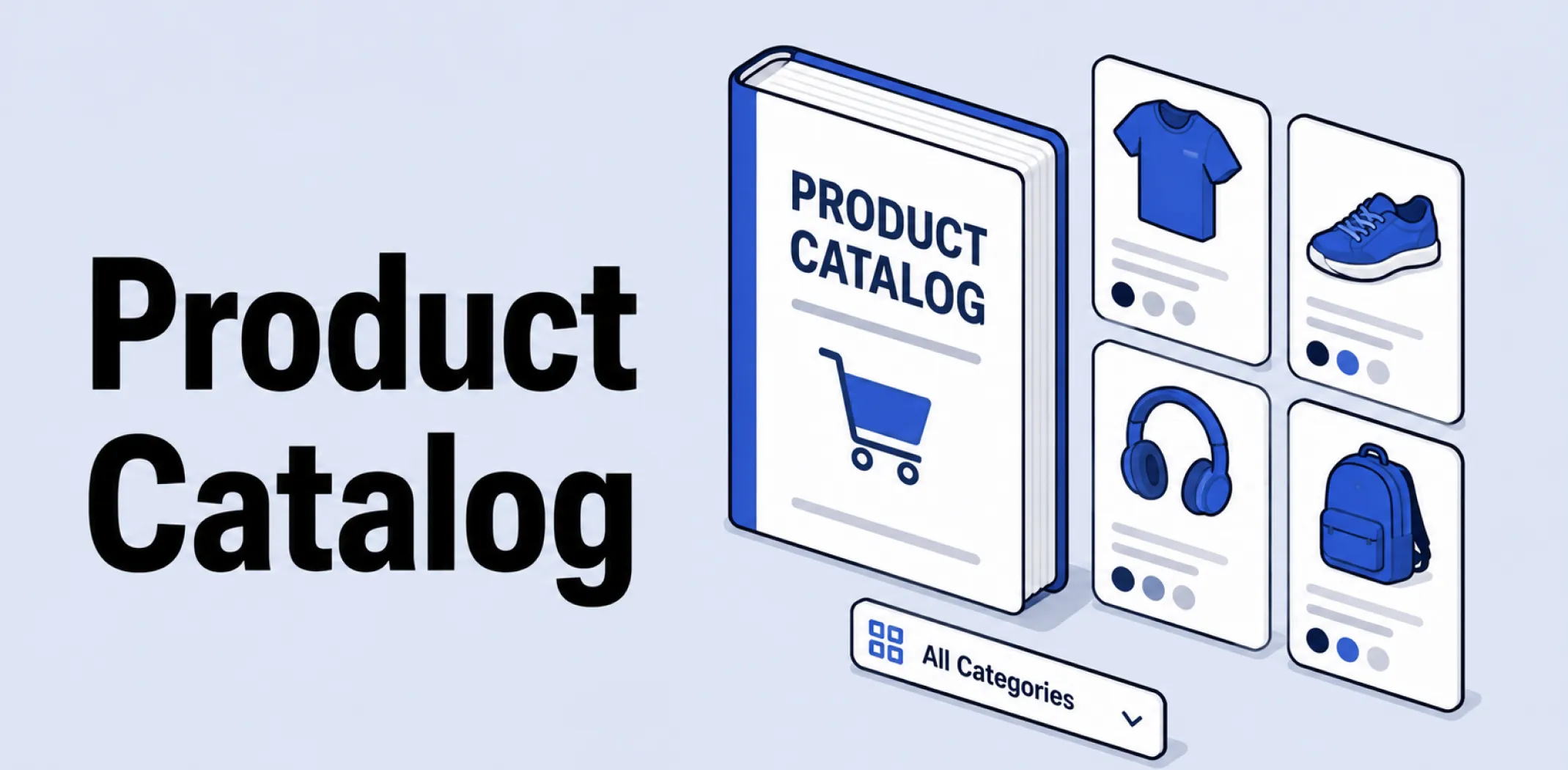
A product catalog is an organised collection of products available for sale, presenting each item with the information needed to identify, evaluate, and purchase it.
In ecommerce, a product catalog functions as the master record of everything a store sells. It encompasses individual ecommerce product entries – each with a title, description, images, pricing, and variant data – and organises them into a browsable structure through categories, filters, and search.
The catalog is distinct from a storefront: the storefront is what customers see and navigate, while the catalog is the underlying data set that populates it. Changes to the catalog – adding new items, updating prices, removing discontinued products – are reflected across the store automatically.
In dropshipping, the product catalog takes on additional significance because the seller does not hold inventory. A supplier or platform typically provides a source catalog from which the seller imports selected items into their own store catalog.
The seller’s catalog is therefore a curated subset of a larger supplier offering, shaped by niche market focus, demand research, and competitive positioning. Catalog management – keeping listings accurate, prices current, and out-of-stock items removed – is an ongoing operational task that directly affects both customer experience and order fulfillment accuracy.
Example
A dropshipping store focused on home office accessories maintains a catalog of 80 products imported from suppliers on AliExpress. The catalog is divided into four categories – desk organisation, lighting, seating accessories, and cable management – each containing 15–25 items. Each product entry includes a rewritten title and description, original pricing set by the store owner, and a mapped SKU linking the store listing to the correct supplier item. When a supplier discontinues a product or changes its price, the store owner updates the catalog entry to keep the storefront accurate. The catalog as a whole reflects the store’s niche positioning and ensures that every item a customer can browse is available and correctly priced.
Key characteristics
- Structured organisation: Products in a catalog are grouped by category, tag, or attribute, allowing customers to filter and browse by relevant criteria rather than scrolling through an undifferentiated list.
- Centralised product data: The catalog holds the authoritative record for each product’s title, description, images, pricing, and variant information; all store pages draw from this central data set.
- Dynamic scope: A catalog is not static – products are added, updated, and removed over time in response to supplier availability, market demand, and store strategy.
- Supplier mapping: In dropshipping, each catalog entry is linked to a specific supplier item, ensuring that customer orders can be forwarded to the correct source without manual lookup.
- Catalog size and focus: A narrowly focused catalog with fewer, well-chosen products typically outperforms a large unfocused one in search relevance, customer trust, and operational manageability.
Related terms
- SKU – the unique alphanumeric identifier assigned to each product variant within a catalog, used to distinguish items and link store listings to supplier records.
- Supplier – the source from which dropshippers import products into their store catalog; the supplier’s own catalog determines what is available for selection.
- Niche market – a defined buyer segment with specific needs; a store’s catalog is typically scoped to serve a particular niche rather than covering all product categories.
- Order fulfillment – the process of shipping a purchased item to the customer; accurate catalog data is a prerequisite for fulfillment to proceed without errors or delays.
- Wholesale – bulk purchasing from a manufacturer or distributor; wholesale suppliers publish their own product catalogs from which retailers source inventory.
Frequently asked questions
What is the difference between a product catalog and a product listing?
A product listing is a single entry for one product; a product catalog is the complete collection of all listings within a store or platform. The catalog is the container; listings are its contents.
How many products should a dropshipping catalog contain?
There is no fixed number. A focused niche store may perform well with 20–50 carefully selected products, while a broader store might carry several hundred. Catalog size should reflect the store’s niche, the seller’s capacity to manage listings accurately, and the depth of genuine demand in the target market. Guides such as dropshipping products to sell provide research frameworks for catalog curation.
How does catalog management work in dropshipping?
Catalog management in dropshipping involves monitoring supplier availability, updating prices when supplier costs change, removing items that are discontinued or out of stock, and periodically adding new products that align with store focus.
Many dropshipping platforms automate parts of this process – for example, flagging price changes or syncing stock status – but the store owner remains responsible for the overall accuracy and coherence of the catalog.
Is a product catalog the same as an inventory?
Not exactly. Inventory refers specifically to the physical stock a business holds, with quantities tracked at a warehouse or storage level. A product catalog is a data set of items available for sale, regardless of where or by whom they are stored. In dropshipping, the seller maintains a catalog but holds no inventory – stock is held by the supplier.
AliDropship: An all-in-one platform for starting dropshipping in 2026
AliDropship is a dropshipping platform that covers store creation, product imports, order automation, and marketing within a single system. It is designed for users with no prior ecommerce experience, though it also supports scaling for more established stores.
🛍️ Free turnkey store
New users receive a free pre-built store – set up, designed, and stocked with products. The store includes a ready-to-use product catalogue and a standard storefront design. It also comes with hosting, a domain, SSL, and payment systems already set up and included.
📦 Products
The platform provides access to a product catalogue covering both trending and niche items, with one-click import to your store. The catalogue is updated regularly to reflect current market availability. Products can be browsed, filtered, and added without leaving the platform.
🚚 Shipping & fulfillment
AliDropship provides access to a vast catalogue of products from global suppliers and handles order fulfillment automatically once a purchase is made. Customers receive tracking information directly, and orders are processed without manual intervention from the store owner.
📣 Marketing & promotion tools
The platform includes built-in marketing tools covering email campaigns, discount management, SEO settings, and social media integration. These are available within the dashboard and do not require third-party subscriptions for basic use.
👌 Ease of use
AliDropship requires no coding knowledge. The dashboard contains all the necessary tools for managing your store, products, and orders in one place. Additional features and products can be added as the store grows without rebuilding the existing setup.
What is the difference between a product catalog and a product listing?
How many products should a dropshipping catalog contain?
How does catalog management work in dropshipping?
Is a product catalog the same as an inventory?
Are you ready to become an owner
of a profitable online business?
Free Dropshipping Guide