

Outbound Marketing

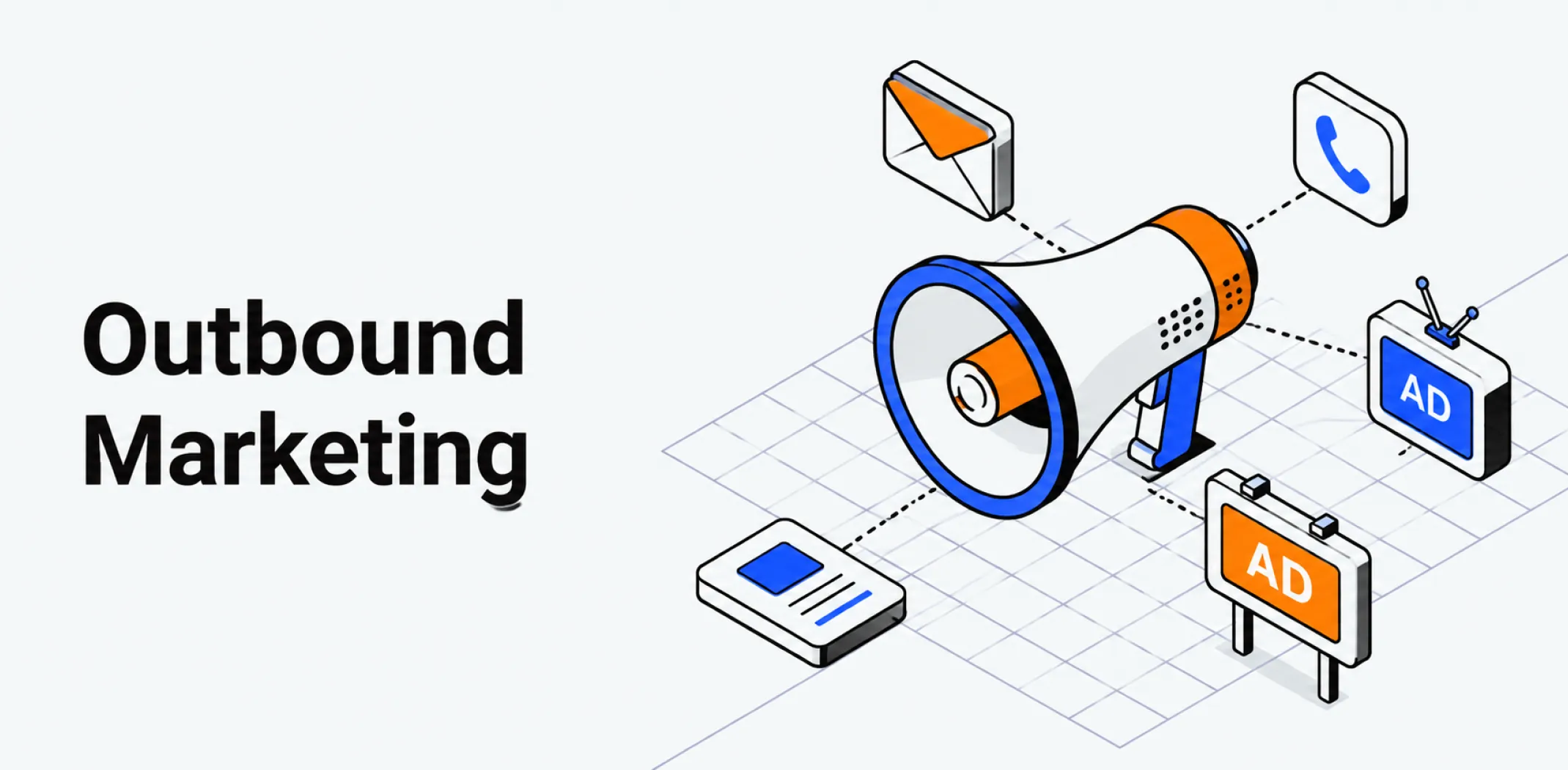
Outbound marketing is a marketing approach in which a business initiates contact with a target audience by pushing promotional messages through paid or broadcast channels, regardless of whether the audience has expressed prior interest in the product or brand.
Outbound marketing encompasses both traditional formats – television and radio advertising, print, direct mail, and cold calling – and digital formats such as paid social advertising, display ads, paid search, and cold email outreach. It is distinguished from inbound marketing by the direction of contact: outbound places messages in front of audiences, while inbound attracts audiences to content they are already seeking.
Because outbound activity purchases placement rather than earning it, results are typically faster to achieve than with organic channels – but cease when spend stops.
For ecommerce and dropshipping businesses, the most relevant outbound formats are paid social advertising on platforms such as Meta and TikTok, paid search campaigns through Google, and display retargeting that re-engages visitors who have already interacted with the store.
Outbound marketing is central to most early-stage dropshipping stores because it produces traffic and sales without requiring the months of organic asset-building that product advertising through inbound channels demands. A store can launch a paid social campaign, direct traffic to a landing page, and generate its first sales within days.
The trade-off is that outbound spend must be continuously justified by the revenue it produces – a channel that does not return a positive return on investment cannot be sustained indefinitely without eroding profitability.
Example
A dropshipping store selling kitchen gadgets launches a Meta campaign targeting users aged 25–45 with an interest in cooking, showing a video ad demonstrating a product in use. The campaign runs on a $40 daily budget and generates an average of 6 purchases per day at a cost per acquisition of $6.70. Each unit carries a margin of $18 after supplier costs and fees, producing a daily profit of $68 from the campaign. The store owner increases the daily budget incrementally while monitoring whether the cost per acquisition remains below the per-unit margin – the defining measure of whether the outbound spend is sustainable.
Key characteristics
- Interruption-based delivery: Outbound marketing places messages in front of audiences during activities unrelated to product search – scrolling social media, watching video content, or browsing other websites – rather than reaching them at the moment of active interest.
- Spend-dependent reach: Outbound channels generate results only while budget is actively allocated; pausing spend immediately stops traffic and impressions, unlike organic inbound assets that continue producing results after initial investment.
- Speed to results: Paid outbound campaigns can generate traffic and sales within hours of launch, making them the primary customer acquisition mechanism for new stores that have not yet built organic audiences or search rankings.
- Precise audience targeting: Digital outbound platforms allow advertisers to define audiences by demographics, interests, behaviours, and purchase intent, reducing wasted impressions compared to traditional broadcast formats.
- Measurable cost per result: Digital outbound campaigns produce trackable performance data – cost per click, cost per acquisition, and return on ad spend – allowing spend decisions to be made on the basis of measured efficiency rather than estimated reach.
Related terms
- Product advertising – the application of outbound marketing focused specifically on promoting individual products to audiences most likely to purchase them, typically through paid social or search channels.
- Conversion funnel – the staged path from awareness to purchase that outbound campaigns are designed to enter at the top, driving cold audiences toward a first interaction with the store.
- Landing page – the destination page to which outbound ad traffic is directed, optimised to convert visitors arriving from a specific campaign into buyers or leads.
- Return on investment – the primary metric against which outbound spend is evaluated, calculated by comparing revenue generated by a campaign against the total cost of running it.
- Customer lifetime value – the projected total revenue from a customer over time, used to determine the maximum viable cost per acquisition across outbound channels without eroding long-term profitability.
Frequently asked questions
What is the difference between outbound and inbound marketing?
Outbound marketing pushes promotional messages to audiences through paid or broadcast channels, initiating contact regardless of prior interest. Inbound marketing attracts audiences by publishing content they are already searching for, earning attention through search rankings, organic social, and email.
The core practical difference is that outbound produces faster results but requires continuous spend to sustain them, while inbound takes longer to build but generates traffic at lower marginal cost once organic assets are established.
Is paid social advertising outbound marketing?
Yes – paid social advertising is one of the most widely used outbound marketing formats for ecommerce businesses. Platforms such as Meta, TikTok, and Pinterest allow advertisers to place promotional content in front of defined audience segments who have not requested to see it, which fits the defining structure of outbound marketing.
The targeting precision of modern paid social platforms makes them more efficient than traditional broadcast outbound formats, but the underlying model – purchasing audience attention – remains the same.
When should a dropshipping store use outbound marketing?
Outbound marketing is most appropriate when a store needs to generate traffic and sales quickly – particularly at launch, when no organic audience or search rankings exist yet. It is also used to test new products before investing in long-term content or SEO activity, since paid campaigns can validate demand within days at relatively low cost.
As inbound assets develop over time, most stores reduce their reliance on outbound spend proportionally, using it to supplement organic traffic rather than replace it.
What are the main risks of outbound marketing for dropshipping stores?
The primary risk is that ad spend exceeds the margin generated by sales, producing a loss rather than a profit on each acquisition. This occurs when the cost per acquisition rises above the per-unit margin – a common outcome when campaigns are scaled too quickly, targeting becomes imprecise, or the product price is set too low relative to advertising costs.
A secondary risk is over-dependence on a single paid channel: if a platform changes its algorithm, raises prices, or suspends an account, a store with no inbound assets has no fallback traffic source.
AliDropship: An all-in-one platform for starting dropshipping in 2026
AliDropship is a dropshipping platform that covers store creation, product imports, order automation, and marketing within a single system. It is designed for users with no prior ecommerce experience, though it also supports scaling for more established stores.
🛍️ Free turnkey store
New users receive a free pre-built store – set up, designed, and stocked with products. The store includes a ready-to-use product catalogue and a standard storefront design. It also comes with hosting, a domain, SSL, and payment systems already set up and included.
📦 Products
The platform provides access to a product catalogue covering both trending and niche items, with one-click import to your store. The catalogue is updated regularly to reflect current market availability. Products can be browsed, filtered, and added without leaving the platform.
🚚 Shipping & fulfillment
AliDropship provides access to a vast catalogue of products from global suppliers and handles order fulfillment automatically once a purchase is made. Customers receive tracking information directly, and orders are processed without manual intervention from the store owner.
📣 Marketing & promotion tools
The platform includes built-in marketing tools covering email campaigns, discount management, SEO settings, and social media integration. These are available within the dashboard and do not require third-party subscriptions for basic use.
👌 Ease of use
AliDropship requires no coding knowledge. The dashboard contains all the necessary tools for managing your store, products, and orders in one place. Additional features and products can be added as the store grows without rebuilding the existing setup.
What is the difference between outbound and inbound marketing?
Is paid social advertising outbound marketing?
When should a dropshipping store use outbound marketing?
What are the main risks of outbound marketing for dropshipping stores?
How is outbound marketing performance measured?
Are you ready to become an owner
of a profitable online business?
Free Dropshipping Guide