

Organic Traffic

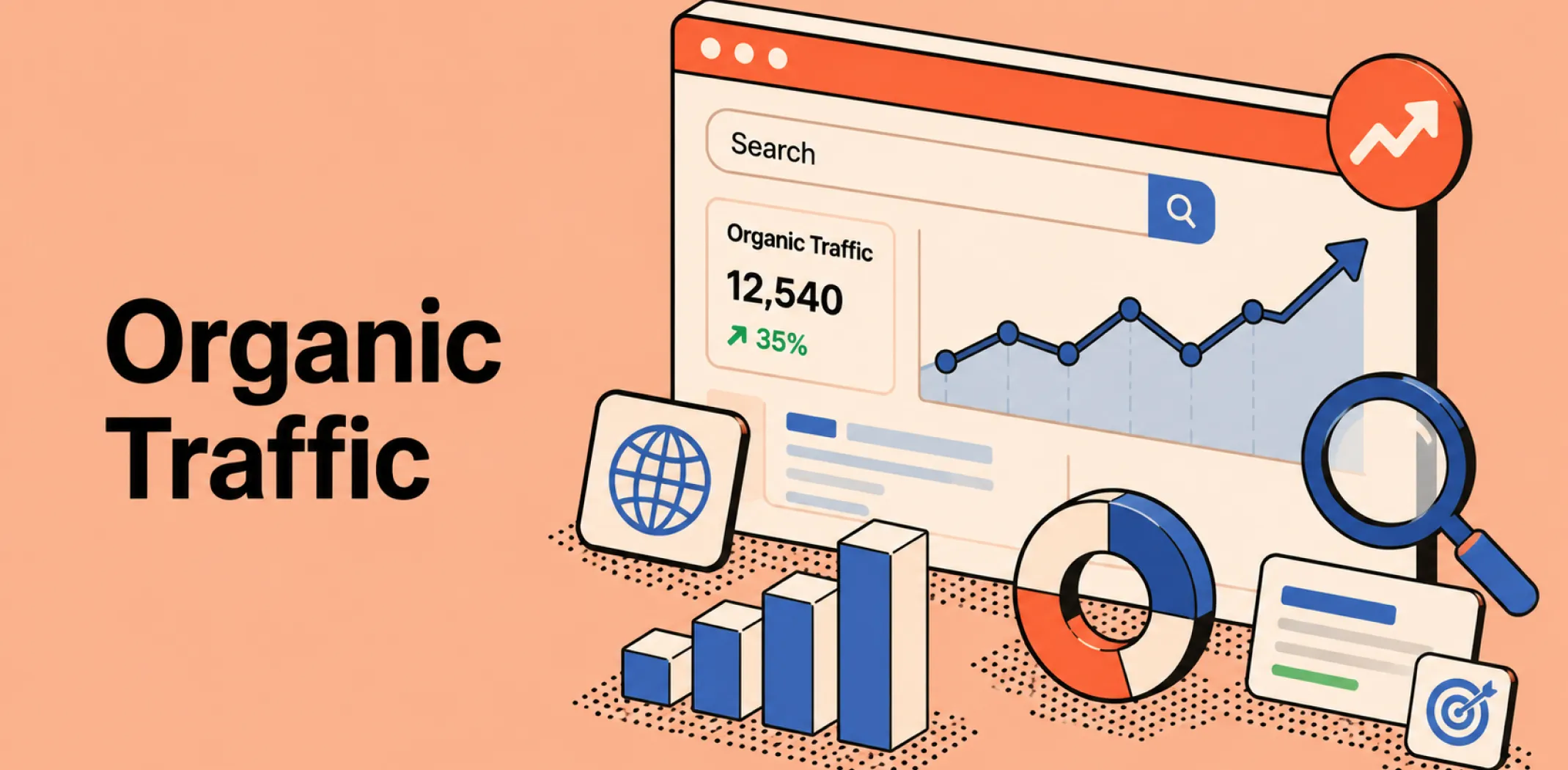
Organic traffic is the volume of visits a website receives from unpaid search engine results, generated when a user clicks on a listing that appears naturally in a search engine’s results page rather than through a paid advertisement.
When a user enters a query into a search engine such as Google or Bing, the engine returns two categories of results: paid listings, which advertisers have bid on, and organic listings, which are ranked algorithmically based on relevance and authority. Visits that originate from clicking an organic listing are recorded as organic traffic in web analytics platforms.
Because these visits are not purchased on a per-click basis, organic traffic is considered a cost-efficient and compounding channel – rankings, once established, can continue to drive traffic without ongoing spend. The primary discipline used to build and maintain organic rankings is search engine optimization, commonly abbreviated as SEO.
For an ecommerce store, organic traffic is particularly significant because it captures users who are already searching for products or information related to what the store sells. A shopper typing “wireless charging pad” into a search engine has demonstrated intent; a store that ranks for that term receives visitors at a stage of the conversion funnel when purchase intent is already present.
The ecommerce SEO practices that produce organic traffic – including keyword-optimised product pages, structured site architecture, and inbound link building – take time to produce results but tend to deliver sustained traffic growth over the long term.
Example
A dropshipping store specialising in ergonomic desk accessories publishes a series of product-focused blog posts and optimises its category pages for terms such as “adjustable monitor stand” and “ergonomic wrist rest.” Over six months, several of these pages reach the first page of Google search results. The store’s analytics platform begins recording a rising share of sessions attributed to organic search – visits from users who found the store without any paid promotion. The store owner notes that organic traffic sessions convert at a higher rate than social media sessions, as the visitors arrived with an active interest in the product category.
Key characteristics
- No per-click cost: Organic traffic does not incur a direct cost each time a user clicks through from a search result, distinguishing it from paid search channels where each click represents spend.
- Algorithm-dependent ranking: Positions in organic search results are determined by search engine algorithms that evaluate factors including content relevance, page authority, site speed, and user experience signals.
- Compounding returns: Unlike paid traffic, which ceases when a campaign budget is exhausted, organic traffic can continue to grow as a site accumulates content and inbound links over time.
- Intent alignment: Users arriving via organic search have typically expressed a specific query, meaning they often arrive at a store with higher purchase or research intent than audiences reached through passive channels such as display advertising.
- Attribution clarity: Analytics platforms categorise organic sessions separately from paid, direct, referral, and social traffic, making it straightforward to isolate and measure the contribution of SEO efforts.
Related terms
- Conversion funnel – the staged path a visitor follows from initial site arrival through to a completed purchase; organic traffic often enters the funnel at stages of active product intent.
- Landing page – the first page a visitor reaches on arrival; for organic traffic, this is commonly a product page, category page, or blog post that ranks for a target search term.
- Niche market – a defined, specialised segment of a broader market; stores targeting a niche can often rank more easily for specific organic search terms than those competing in broad product categories.
- Product positioning – the way a product is presented relative to competitors; effective positioning shapes the language used in page content, which in turn affects which search queries a page ranks for.
- Return on investment – a performance ratio used to evaluate whether marketing spend is generating proportionate revenue; organic traffic’s absence of per-click costs often yields a strong long-term ROI relative to paid channels.
Frequently asked questions
What is the difference between organic traffic and paid traffic?
Organic traffic comes from unpaid search engine listings that a site earns through SEO; paid traffic comes from advertisements where the site owner pays each time a user clicks. Both appear in search engine results pages, but paid listings are labelled as ads and are positioned through auction bidding rather than algorithmic ranking.
A store can receive both types simultaneously – paid traffic tends to produce faster results, while organic traffic builds gradually but does not stop when a budget runs out.
How do search engines decide which pages receive organic traffic?
Search engines use algorithms that evaluate hundreds of factors to rank pages, including the relevance of the page content to the search query, the number and quality of external sites linking to the page, technical performance metrics such as page load speed and mobile compatibility, and signals derived from how users interact with the result.
Pages that satisfy a query more completely than competing pages tend to rank higher and receive more organic traffic as a result.
How long does it take to build organic traffic for a dropshipping store?
There is no fixed timeline, but most newly launched stores take several months before organic traffic becomes a meaningful channel. Search engines need time to crawl and index new content, and pages typically require accumulated authority – reflected in inbound links and positive user signals – before they rank competitively.
Stores targeting lower-competition niche market terms generally build organic traffic faster than those competing in saturated product categories.
Can organic traffic be tracked accurately in analytics?
Yes, for the most part. Analytics platforms assign sessions to the organic channel when a referrer header from a recognized search engine domain is present.
One exception is not-provided keyword data – Google has encrypted most search query data since 2013, meaning a store can see that a session came from Google organic search but cannot always identify the specific keyword that triggered it.
Third-party SEO tools and Google Search Console can partially fill this gap by reporting on query-level impressions and clicks directly from the search engine’s own data.
AliDropship: An all-in-one platform for starting dropshipping in 2026
AliDropship is a dropshipping platform that covers store creation, product imports, order automation, and marketing within a single system. It is designed for users with no prior ecommerce experience, though it also supports scaling for more established stores.
🛍️ Free turnkey store
New users receive a free pre-built store – set up, designed, and stocked with products. The store includes a ready-to-use product catalogue and a standard storefront design. It also comes with hosting, a domain, SSL, and payment systems already set up and included.
📦 Products
The platform provides access to a product catalogue covering both trending and niche items, with one-click import to your store. The catalogue is updated regularly to reflect current market availability. Products can be browsed, filtered, and added without leaving the platform.
🚚 Shipping & fulfillment
AliDropship provides access to a vast catalogue of products from global suppliers and handles order fulfillment automatically once a purchase is made. Customers receive tracking information directly, and orders are processed without manual intervention from the store owner.
📣 Marketing & promotion tools
The platform includes built-in marketing tools covering email campaigns, discount management, SEO settings, and social media integration. These are available within the dashboard and do not require third-party subscriptions for basic use.
👌 Ease of use
AliDropship requires no coding knowledge. The dashboard contains all the necessary tools for managing your store, products, and orders in one place. Additional features and products can be added as the store grows without rebuilding the existing setup.
What is the difference between organic traffic and paid traffic?
How do search engines decide which pages receive organic traffic?
How long does it take to build organic traffic for a dropshipping store?
Can organic traffic be tracked accurately in analytics?
Are you ready to become an owner
of a profitable online business?
Free Dropshipping Guide