

Net Profit

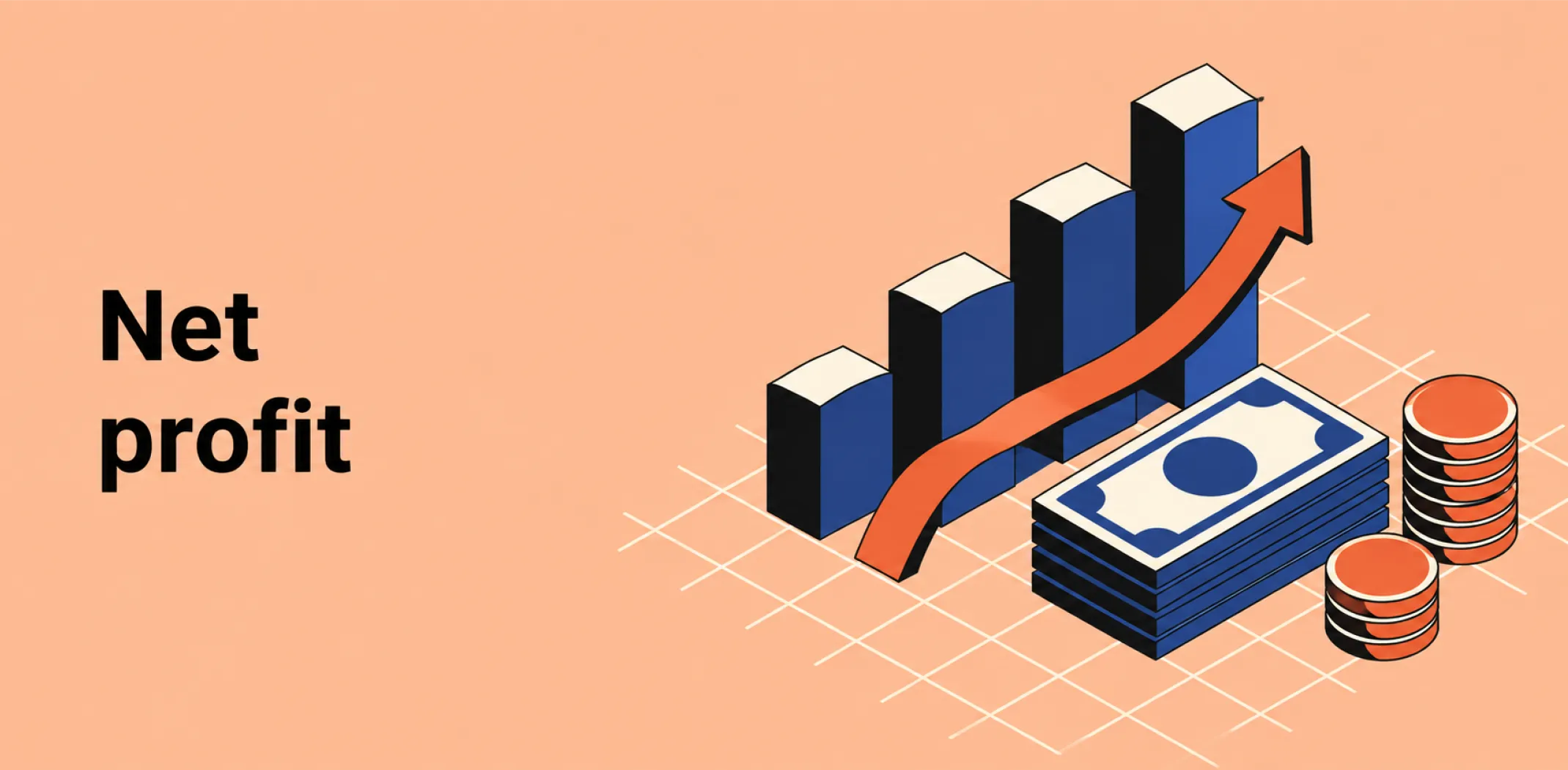
Net profit is the amount of money a business keeps after subtracting every expense, including cost of goods sold, overhead, and taxes, from total revenue, representing the actual profitability of the business over a given period.
Net profit differs from gross profit, which subtracts only the direct cost of goods sold and ignores broader expenses like advertising, software, and staff costs. A store can have strong gross profit on every sale while still posting little or no net profit if overhead costs consume most of that margin.
Net profit is typically calculated over a defined period, such as a month or quarter, rather than per individual order, since many of the expenses subtracted apply across the whole business rather than to a single sale.
For dropshipping store owners, net profit is the figure that ultimately determines whether the business is sustainable, since it accounts for every cost involved in running the store, not just sourcing the product.
Key characteristics
- Bottom-line figure: Net profit subtracts every business expense, making it the final profitability number after gross profit and overhead are both accounted for.
- Period-based calculation: Net profit is usually measured over a set time period, such as a month, rather than calculated per individual sale.
- Can be negative: A business can have positive revenue and positive gross profit while still posting a net loss if overhead exceeds gross profit for the period.
- Used for real profitability comparisons: Net profit allows fair comparison between businesses with different overhead structures, unlike revenue or gross profit alone.
Example
A dropshipping store generates 10,000 dollars in revenue in a month, with a total cost of goods sold of 4,000 dollars, leaving 6,000 dollars in gross profit. During that same month, the store spends 3,500 dollars on advertising, 200 dollars on software subscriptions, and 300 dollars on payment processing fees, totaling 4,000 dollars in overhead. Subtracting that overhead from the 6,000 dollar gross profit leaves a net profit of 2,000 dollars for the month, representing the actual amount the store owner keeps after every cost is accounted for.
Related terms
- Gross profit – the starting figure from which overhead is subtracted to calculate net profit.
- Overhead costs – the broader business expenses subtracted from gross profit to calculate net profit.
- Return on investment – a related profitability measure that compares net profit to the cost of an investment.
- Business plan – a planning document that typically projects expected net profit based on revenue and cost assumptions.
Frequently asked questions
How is net profit different from gross profit?
Net profit subtracts every business expense, including overhead and taxes, from revenue, while gross profit subtracts only the direct cost of goods sold. Net profit is always equal to or lower than gross profit for the same period.
Can a store have high revenue but low net profit?
Yes, a store can generate high revenue while still posting low or negative net profit if overhead costs such as advertising and fees consume most or all of its gross profit. Revenue alone does not indicate whether a business is actually profitable.
How often should net profit be calculated?
Net profit is commonly calculated monthly or quarterly, since many of the expenses involved, such as subscriptions and advertising budgets, are tracked over those periods rather than per individual sale. Some store owners also review it weekly during periods of rapid growth.
What expenses are typically subtracted to calculate net profit?
Net profit calculations typically subtract cost of goods sold, advertising spend, platform and software fees, payment processing charges, and any applicable taxes from total revenue. The specific expenses included can vary depending on how a business categorizes its costs.
AliDropship: An all-in-one platform for starting an online business in 2026
AliDropship is an online business platform that gives customers a ready-made store, a digital products catalogue, and built-in, one-click advertising within a single system. Founded in 2015 and based in Irvine, California, it has helped launch more than 1,500,000 stores and holds a 4.7-star rating on Trustpilot. It is built for people with no prior experience and no technical skills.
🆓 Free 14-day trial
New users get full platform access for 14 days, including a ready-made store, hosting, a domain, an SSL certificate, and access to the digital products catalogue. The trial also includes a $40 ad coupon to test the advertising system. Order fees apply only when a sale is made.
📦 Digital products
Customers choose from AliDropship’s catalogue of digital products – guides, courses, checklists, tools, and AI-powered toolkits – and keep up to 70% of every sale. Delivery is instant and automated, so there is no inventory, shipping, or manual fulfillment involved.
📣 One-click advertising
AliDropship includes built-in advertising that customers can turn on for as little as $10 a day. The system handles targeting, creatives, and optimization, and many customers see their first orders the same day they launch ads.
👌 Ease of use
AliDropship requires no coding or marketing experience. The store, products, and ads are managed from a single dashboard that works on a phone as well as a desktop, and a personal growth manager is available to help by chat.
💳 Monthly plan
After the trial, continued access is $39 a month, covering the store, the digital products catalogue, and ongoing support. There is no long-term contract, and the plan can be cancelled at any time.
How is net profit different from gross profit?
Can a store have high revenue but low net profit?
How often should net profit be calculated?
What expenses are typically subtracted to calculate net profit?
Is net profit the same across every dropshipping store?
Are you ready to become an owner
of a profitable online business?
Free Dropshipping Guide