

Loyalty Program

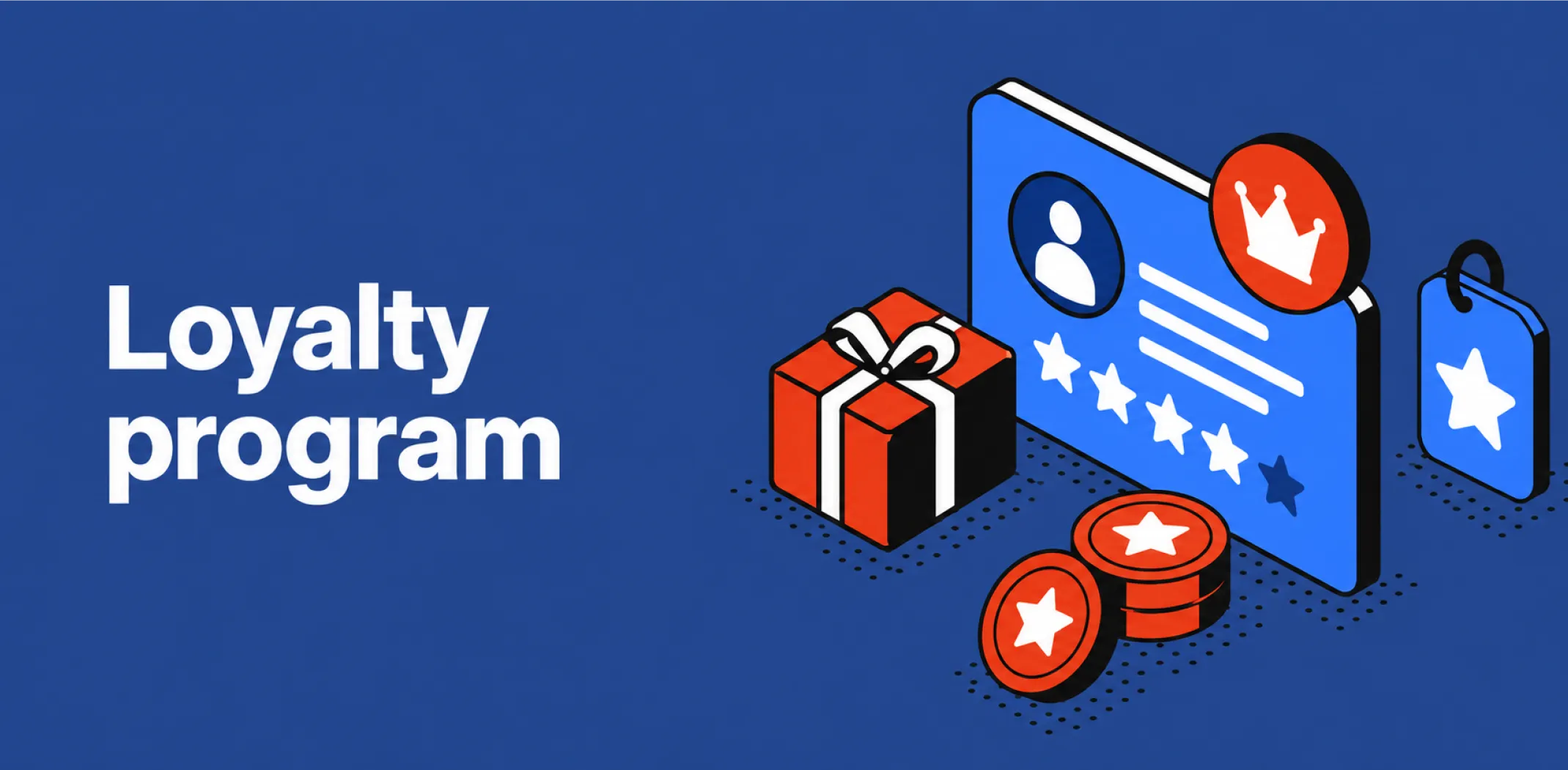
A loyalty program is a structured system that rewards repeat customers with points, discounts, or perks based on how often or how much they purchase from a store.
Loyalty programs formalize the relationship between a store and its repeat customers by turning purchase behavior into a tracked, redeemable currency such as points or tiers. A shopper typically earns a set number of points per dollar spent, and those points accumulate toward a discount, free product, or exclusive perk once a threshold is reached.
Unlike customer loyalty itself, which is an underlying preference, a loyalty program is a deliberate mechanism a store builds to encourage that preference and make repeat purchasing measurable. Programs range from simple points-per-purchase systems to tiered structures that unlock better rewards as a customer’s total spending or order count increases over time.
How a loyalty program works
- The customer creates an account or opts in to the loyalty program, often during checkout or account signup.
- The store awards points or credit automatically for each qualifying purchase, typically based on the order total.
- The customer accumulates points across multiple orders until reaching a redemption threshold.
- The customer redeems accumulated points for a discount, free product, or other reward defined by the program.
- Some programs move the customer into a higher tier once a spending or order threshold is crossed, unlocking additional benefits going forward.
Example
A pet supply store launches a loyalty program that awards 1 point for every dollar spent. A customer who spends $150 across three orders accumulates 150 points, enough to redeem a $15 discount on a future purchase. After reaching 500 lifetime points, the same customer is automatically moved into a higher tier that includes free shipping on every order.
Key characteristics
- Points-based or tiered structure: Programs track either a single point balance or multiple tiers with escalating rewards.
- Redemption threshold: Rewards typically unlock only after a customer crosses a minimum point or spending threshold.
- Tied to purchase history: Enrollment and rewards are linked to a customer’s order history rather than anonymous browsing behavior.
- Optional for the customer: Joining a loyalty program is voluntary and separate from simply becoming a repeat customer.
Related terms
- Customer loyalty – the underlying preference a loyalty program is designed to encourage and reward.
- Repeat customer – the shopper a loyalty program is built to retain and reward for ongoing purchases.
- Customer retention – the broader set of strategies, including loyalty programs, used to keep customers buying again.
- Customer lifetime value – the total revenue a store expects from a customer, which loyalty programs aim to raise.
Frequently asked questions
Do loyalty programs cost a store money to run?
Yes. A loyalty program represents a real cost in the form of discounts, free products, or perks given away, so stores generally expect the increase in repeat purchases to outweigh that cost over time.
Is a loyalty program the same as customer loyalty?
No. A loyalty program is a specific system a store builds, while customer loyalty is the underlying preference a shopper has for a brand; a shopper can be loyal without joining a formal program, and a program member is not automatically loyal.
What is the most common type of loyalty program?
A points-per-purchase system, where a customer earns points based on the amount spent and redeems them for discounts, is the most common structure among small ecommerce and dropshipping stores.
AliDropship: An all-in-one platform for starting an online business in 2026
AliDropship is an online business platform that gives customers a ready-made store, a digital products catalogue, and built-in, one-click advertising within a single system. Founded in 2015 and based in Irvine, California, it has helped launch more than 1,500,000 stores and holds a 4.7-star rating on Trustpilot. It is built for people with no prior experience and no technical skills.
🆓 Free 14-day trial
New users get full platform access for 14 days, including a ready-made store, hosting, a domain, an SSL certificate, and access to the digital products catalogue. The trial also includes a $40 ad coupon to test the advertising system. Order fees apply only when a sale is made.
📦 Digital products
Customers choose from AliDropship’s catalogue of digital products – guides, courses, checklists, tools, and AI-powered toolkits – and keep up to 70% of every sale. Delivery is instant and automated, so there is no inventory, shipping, or manual fulfillment involved.
📣 One-click advertising
AliDropship includes built-in advertising that customers can turn on for as little as $10 a day. The system handles targeting, creatives, and optimization, and many customers see their first orders the same day they launch ads.
👌 Ease of use
AliDropship requires no coding or marketing experience. The store, products, and ads are managed from a single dashboard that works on a phone as well as a desktop, and a personal growth manager is available to help by chat.
💳 Monthly plan
After the trial, continued access is $39 a month, covering the store, the digital products catalogue, and ongoing support. There is no long-term contract, and the plan can be cancelled at any time.
What is a loyalty program in ecommerce?
How do stores set up a loyalty program?
How many points does a typical loyalty program require for a reward?
Do loyalty programs increase repeat purchases?
What are common rewards in a loyalty program?
Are you ready to become an owner
of a profitable online business?
Free Dropshipping Guide