

Customer Loyalty

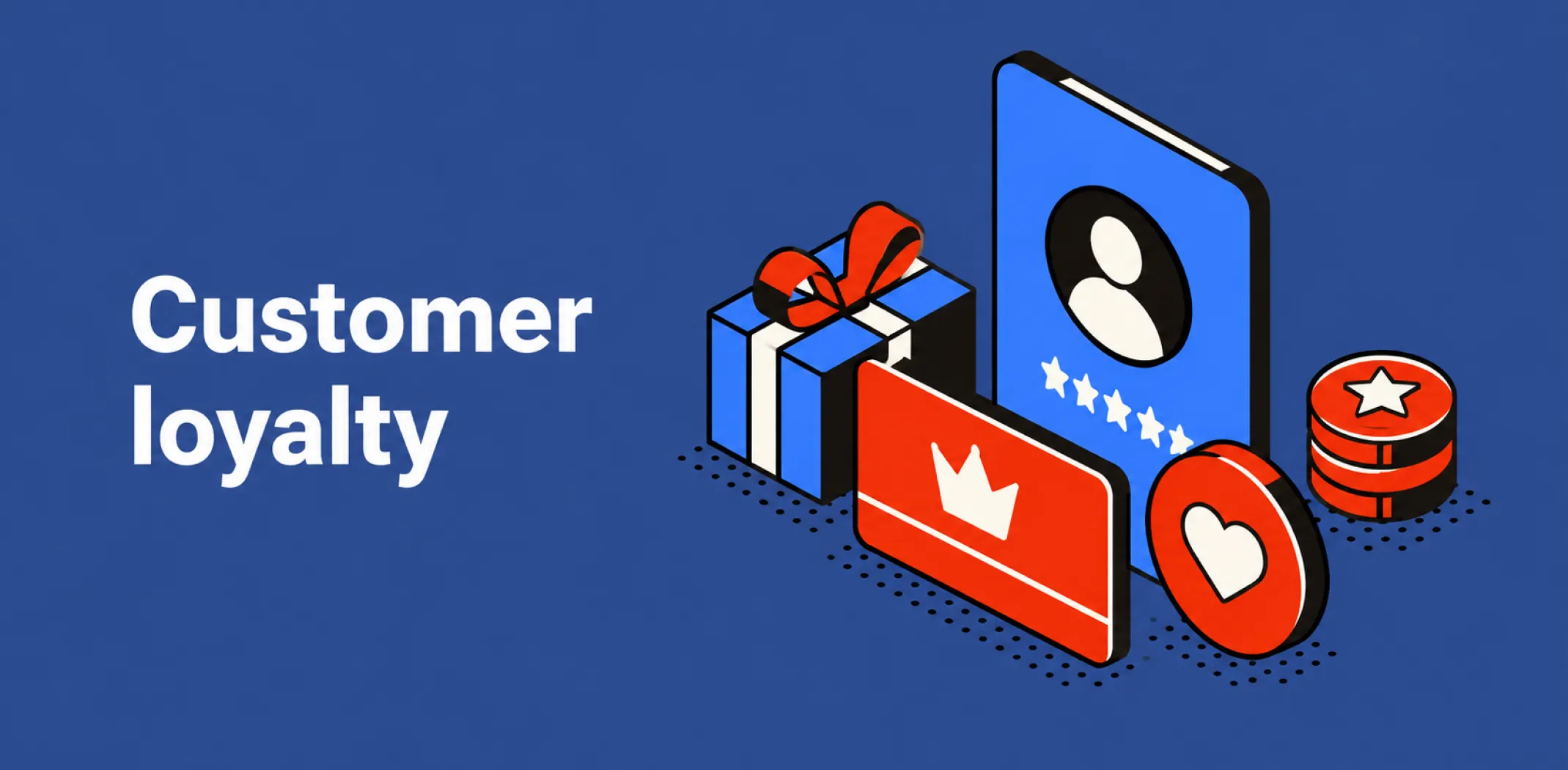
Customer loyalty is a buyer’s ongoing preference for one brand or store over competing options, shown through repeated purchases and reduced sensitivity to price or alternatives.
Customer loyalty develops when a shopper’s positive experiences with a store accumulate into trust, making them less likely to switch even when a competitor offers a lower price or faster shipping.
It differs from being a repeat customer, since repeat purchasing is an observed behavior while loyalty is the underlying preference that drives it: a shopper can buy again out of habit or convenience without being loyal, and a loyal customer can still shop elsewhere occasionally for a product the original store does not carry.
Stores measure loyalty indirectly through metrics such as customer lifetime value and repeat purchase frequency, since there is no single transaction that proves loyalty on its own.
Example
A shopper who has ordered from the same skincare store four times over a year, recommends the brand to friends, and continues buying even after a competitor launches a lower-priced alternative demonstrates customer loyalty. The store did not have to spend on paid ads to win back this shopper for any of the four orders, and the shopper’s continued preference persists despite a cheaper option being available elsewhere.
Key characteristics
- Price insensitivity: Loyal customers are less likely to switch to a cheaper competitor purely because of price.
- Voluntary advocacy: Loyal customers often recommend the store to others without being incentivized to do so.
- Built over multiple interactions: Loyalty accumulates gradually through consistent product quality, shipping, and support rather than forming after a single purchase.
- Distinct from repeat purchasing: A shopper can buy repeatedly out of convenience without being loyal, and a loyal shopper can still buy from a competitor occasionally.
Related terms
- Repeat customer – a shopper who buys again, the behavior that often but not always accompanies loyalty.
- Customer retention – the strategies and metrics used to keep customers, including loyal ones, buying again.
- Customer lifetime value – the total revenue a store expects from a customer, which rises with loyalty.
- Churn rate – the inverse measure of loyalty; the share of customers who stop buying.
Frequently asked questions
How is customer loyalty different from customer retention?
Customer loyalty is the underlying preference a shopper has for a brand, while customer retention is the set of strategies a store uses to keep that shopper buying, whether or not genuine loyalty is present.
Can a business measure customer loyalty directly?
There is no single metric that measures loyalty directly, so stores typically combine repeat purchase rate, referral behavior, and survey-based indicators such as Net Promoter Score to approximate it.
What builds customer loyalty in a dropshipping store?
Consistent product quality, reliable shipping times, and responsive customer service across multiple orders are the main factors that build loyalty in a dropshipping store.
AliDropship: An all-in-one platform for starting an online business in 2026
AliDropship is an online business platform that gives customers a ready-made store, a digital products catalogue, and built-in, one-click advertising within a single system. Founded in 2015 and based in Irvine, California, it has helped launch more than 1,500,000 stores and holds a 4.7-star rating on Trustpilot. It is built for people with no prior experience and no technical skills.
🆓 Free 14-day trial
New users get full platform access for 14 days, including a ready-made store, hosting, a domain, an SSL certificate, and access to the digital products catalogue. The trial also includes a $40 ad coupon to test the advertising system. Order fees apply only when a sale is made.
📦 Digital products
Customers choose from AliDropship’s catalogue of digital products – guides, courses, checklists, tools, and AI-powered toolkits – and keep up to 70% of every sale. Delivery is instant and automated, so there is no inventory, shipping, or manual fulfillment involved.
📣 One-click advertising
AliDropship includes built-in advertising that customers can turn on for as little as $10 a day. The system handles targeting, creatives, and optimization, and many customers see their first orders the same day they launch ads.
👌 Ease of use
AliDropship requires no coding or marketing experience. The store, products, and ads are managed from a single dashboard that works on a phone as well as a desktop, and a personal growth manager is available to help by chat.
💳 Monthly plan
After the trial, continued access is $39 a month, covering the store, the digital products catalogue, and ongoing support. There is no long-term contract, and the plan can be cancelled at any time.
What is customer loyalty in ecommerce?
How do stores build customer loyalty?
Why does customer loyalty matter for a dropshipping store?
What is the difference between customer loyalty and a repeat customer?
How is customer loyalty measured?
Are you ready to become an owner
of a profitable online business?
Free Dropshipping Guide