

Large Language Model (LLM)

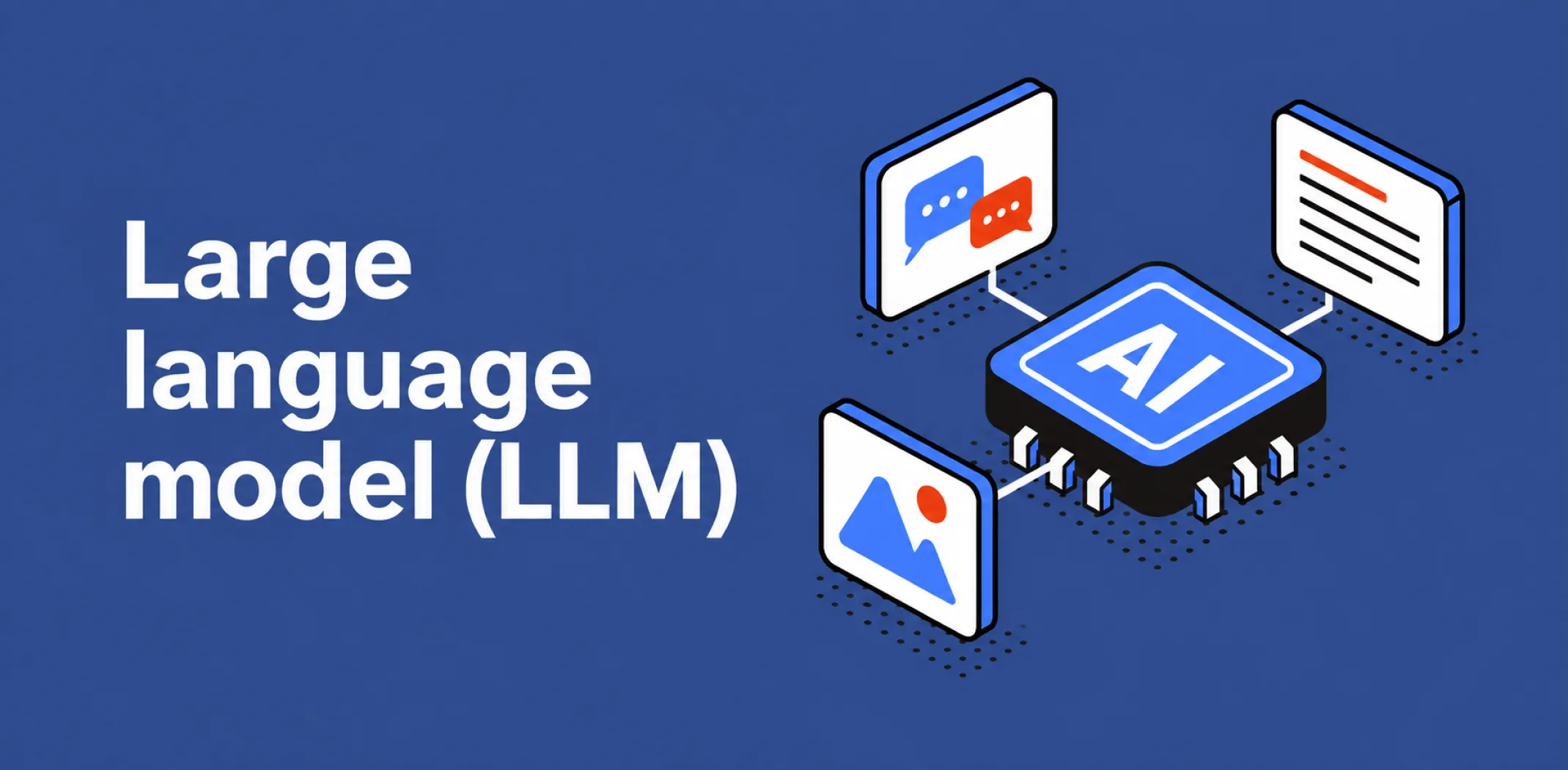
A large language model, or LLM, is an AI system trained on massive amounts of text data to understand and generate human language, allowing it to answer questions, write content, or hold a conversation.
An LLM learns statistical relationships between words and phrases by processing enormous volumes of text during training, which lets it predict likely continuations of a given prompt. It is the underlying technology behind most modern generative AI tools that work with text, including AI copywriting software and many chatbots.
An LLM differs from a narrow, task-specific model, since a single LLM can typically handle a wide range of language tasks without being retrained for each one.
Example
A store owner types “write a 2-sentence product description for a stainless steel water bottle” into an AI writing tool. Behind the scenes, an LLM processes the prompt and generates a short, relevant description based on patterns it learned from vast amounts of product and marketing text during training. The owner can immediately request a different tone or length, and the LLM produces a new version without any additional setup.
Key characteristics
- Trained on broad text data: Most LLMs learn from a wide mix of books, articles, websites, and other written material.
- General-purpose: A single model can handle writing, summarizing, translating, and answering questions without separate training for each task.
- Prompt-driven: Output depends heavily on how a request is phrased, and small wording changes can shift the result.
- Can be inaccurate: An LLM can generate plausible-sounding but incorrect information, so output often needs human review.
Related terms
- Generative AI – the broader category of technology that includes large language models.
- AI copywriting – a common ecommerce application built on top of an LLM.
- Chatbot – a tool that often uses an LLM to generate open-ended conversational responses.
- Machine learning in ecommerce – the broader field that LLMs and other AI systems belong to.
Frequently asked questions
Is an LLM the same as a chatbot?
No, an LLM is the underlying technology, while a chatbot is one type of application that can be built using an LLM.
Do small ecommerce stores use LLMs directly?
Most small stores access LLM capabilities through third-party apps and plugins rather than building or training a model themselves.
Can an LLM understand any language?
Not always, since capability varies by model, and some LLMs are trained mainly on one language or a limited set of languages.
AliDropship: An all-in-one platform for starting an online business in 2026
AliDropship is an online business platform that gives customers a ready-made store, a digital products catalogue, and built-in, one-click advertising within a single system. Founded in 2015 and based in Irvine, California, it has helped launch more than 1,500,000 stores and holds a 4.7-star rating on Trustpilot. It is built for people with no prior experience and no technical skills.
🆓 Free 14-day trial
New users get full platform access for 14 days, including a ready-made store, hosting, a domain, an SSL certificate, and access to the digital products catalogue. The trial also includes a $40 ad coupon to test the advertising system. Order fees apply only when a sale is made.
📦 Digital products
Customers choose from AliDropship’s catalogue of digital products – guides, courses, checklists, tools, and AI-powered toolkits – and keep up to 70% of every sale. Delivery is instant and automated, so there is no inventory, shipping, or manual fulfillment involved.
📣 One-click advertising
AliDropship includes built-in advertising that customers can turn on for as little as $10 a day. The system handles targeting, creatives, and optimization, and many customers see their first orders the same day they launch ads.
👌 Ease of use
AliDropship requires no coding or marketing experience. The store, products, and ads are managed from a single dashboard that works on a phone as well as a desktop, and a personal growth manager is available to help by chat.
💳 Monthly plan
After the trial, continued access is $39 a month, covering the store, the digital products catalogue, and ongoing support. There is no long-term contract, and the plan can be cancelled at any time.
What can a large language model do for an online store?
How much data is used to train a large language model?
Are large language models expensive to use?
Can a large language model make mistakes?
What is the difference between an LLM and a search engine?
Are you ready to become an owner
of a profitable online business?
Free Dropshipping Guide