

Generative AI

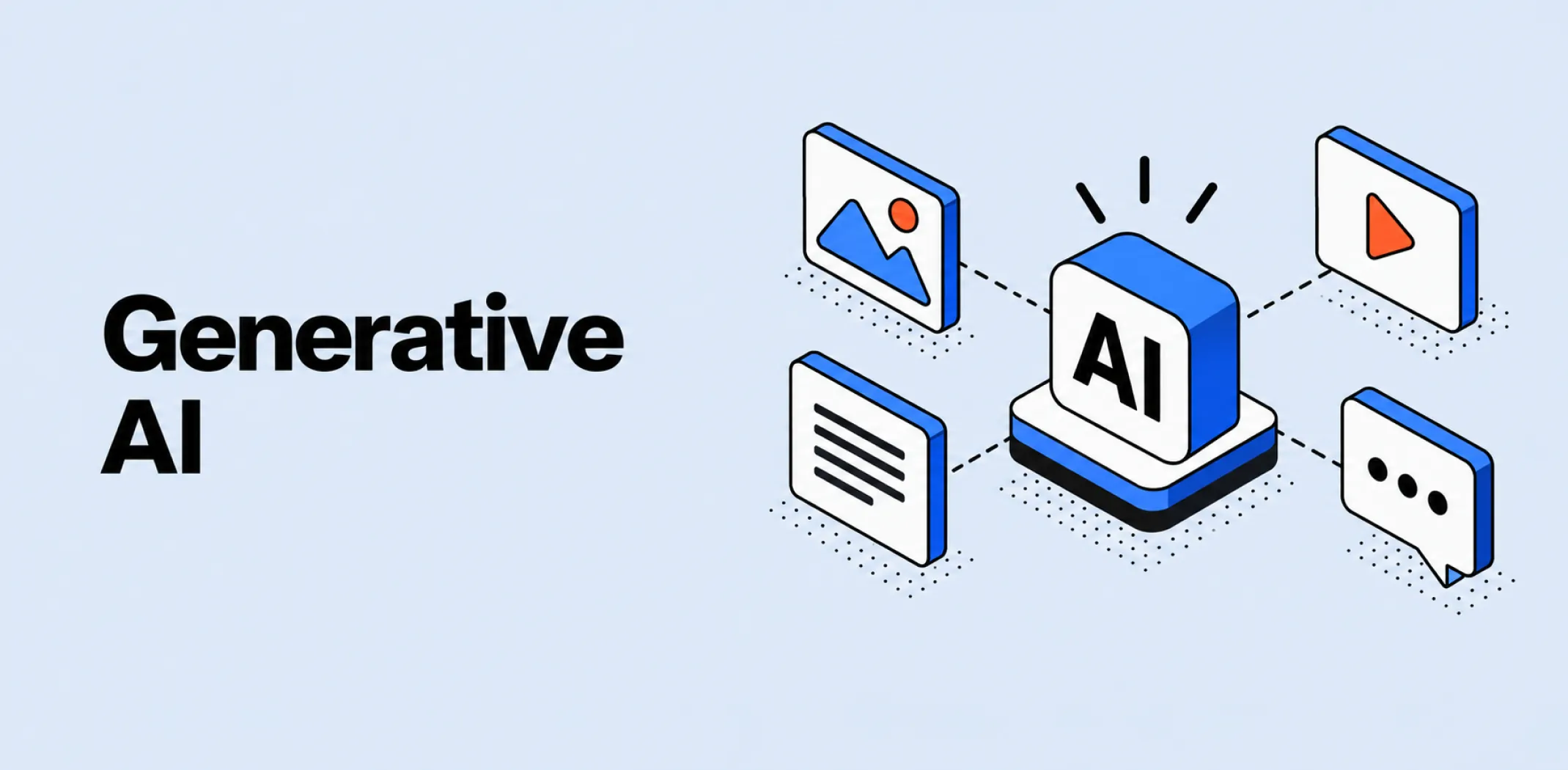
Generative AI is a technology that produces original text, images, audio, or other content from a prompt, rather than retrieving or displaying content that already exists.
Generative AI models are trained on large volumes of existing data, learning patterns that allow them to produce new output resembling that data without copying it directly. It is the technology behind tools such as AI copywriting and AI image generation, both of which are specific applications of generative AI within ecommerce.
Generative AI differs from other forms of machine learning, such as recommendation systems, which analyze existing data to make predictions rather than create new content.
Example
A store owner launching a new candle line needs product descriptions for 20 different scents but has no time to write them individually. Using a generative AI tool, the owner enters a short prompt describing the scent and target customer for each product, and the tool produces a unique description in seconds. The owner reviews and lightly edits each result before publishing it to the store.
Key characteristics
- Creates new content: Output is generated fresh each time rather than pulled from a fixed database.
- Multiple content types: The same underlying technology can produce text, images, audio, or video depending on the tool.
- Prompt-dependent: The quality and relevance of the output depends heavily on how the prompt is written.
- Requires human review: Output can contain errors or inconsistencies, so most workflows include a manual review step.
Related terms
- AI copywriting – a specific application of generative AI focused on written content.
- AI image generation – a specific application of generative AI focused on visual content.
- Machine learning in ecommerce – a broader field that includes generative AI alongside prediction-based systems.
- Chatbot – a tool that can use generative AI to produce open-ended conversational responses.
Frequently asked questions
Is generative AI the same as a chatbot?
No, a chatbot is one application that can use generative AI, but generative AI also powers image, audio, and text tools unrelated to conversation.
Does generative AI always produce accurate content?
Not always, since generated content can include factual errors or inconsistencies that require review before publishing.
Can generative AI be used for free?
Many tools offer a limited free tier, while higher usage volumes or advanced features typically require a paid subscription.
AliDropship: An all-in-one platform for starting an online business in 2026
AliDropship is an online business platform that gives customers a ready-made store, a digital products catalogue, and built-in, one-click advertising within a single system. Founded in 2015 and based in Irvine, California, it has helped launch more than 1,500,000 stores and holds a 4.7-star rating on Trustpilot. It is built for people with no prior experience and no technical skills.
🆓 Free 14-day trial
New users get full platform access for 14 days, including a ready-made store, hosting, a domain, an SSL certificate, and access to the digital products catalogue. The trial also includes a $40 ad coupon to test the advertising system. Order fees apply only when a sale is made.
📦 Digital products
Customers choose from AliDropship’s catalogue of digital products – guides, courses, checklists, tools, and AI-powered toolkits – and keep up to 70% of every sale. Delivery is instant and automated, so there is no inventory, shipping, or manual fulfillment involved.
📣 One-click advertising
AliDropship includes built-in advertising that customers can turn on for as little as $10 a day. The system handles targeting, creatives, and optimization, and many customers see their first orders the same day they launch ads.
👌 Ease of use
AliDropship requires no coding or marketing experience. The store, products, and ads are managed from a single dashboard that works on a phone as well as a desktop, and a personal growth manager is available to help by chat.
💳 Monthly plan
After the trial, continued access is $39 a month, covering the store, the digital products catalogue, and ongoing support. There is no long-term contract, and the plan can be cancelled at any time.
What can generative AI be used for in ecommerce?
Does generative AI require technical skills to use?
Is content made by generative AI protected by copyright?
How much does generative AI cost to use?
What is the difference between generative AI and traditional automation?
Are you ready to become an owner
of a profitable online business?
Free Dropshipping Guide