

Machine Learning In Ecommerce

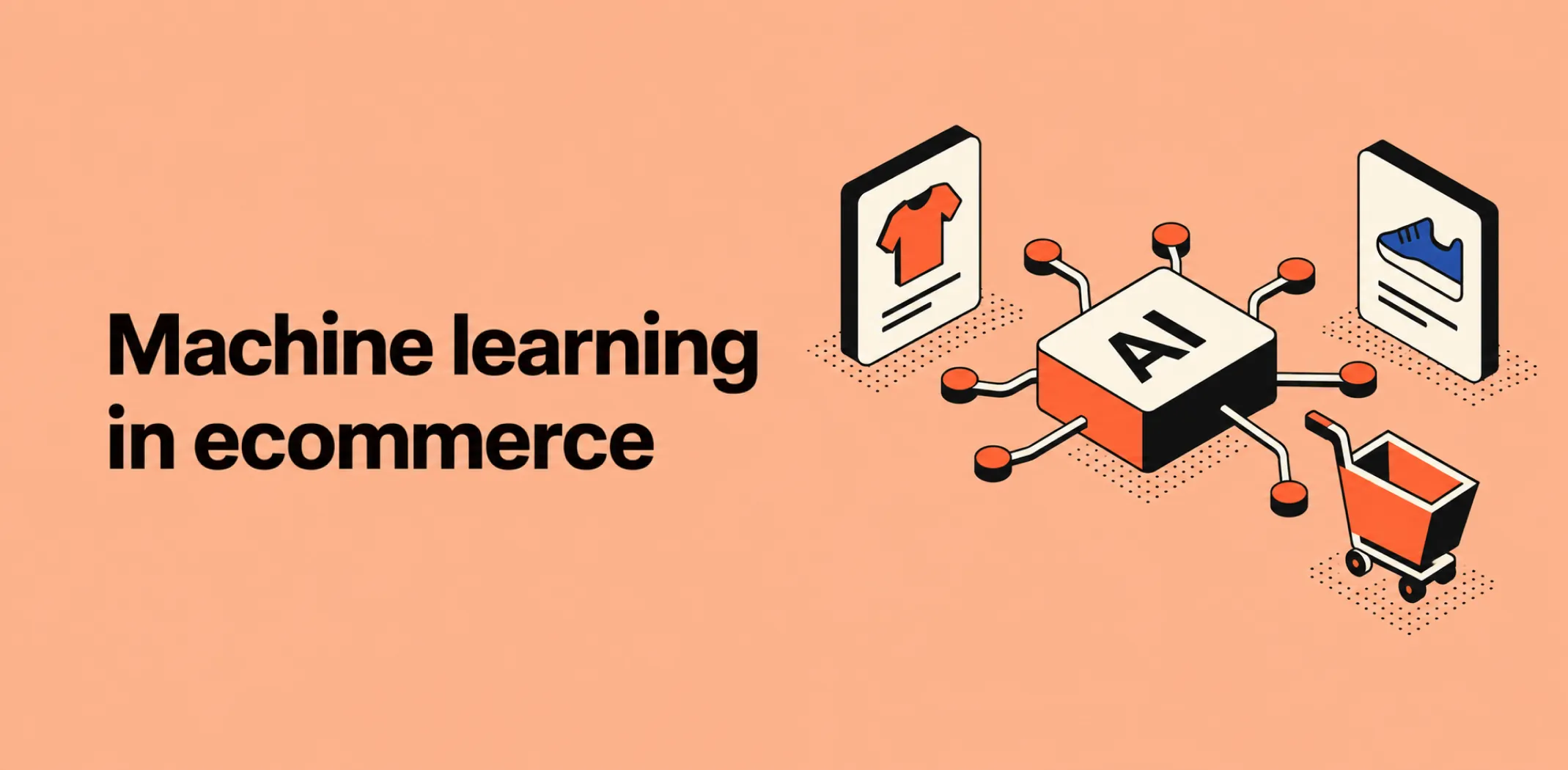
Machine learning in ecommerce is the application of algorithms that identify patterns in customer and product data to automate tasks such as product recommendations, pricing, and fraud detection without being explicitly programmed for each individual case.
Unlike rule-based automation, which follows fixed if-then logic set by a developer, a machine learning system improves its output as it processes more data over time. It is a subset of the broader field of AI-powered ecommerce, which also includes tasks such as AI copywriting that do not always rely on pattern-based learning from historical data.
In an online store, machine learning typically runs in the background, influencing what a shopper sees, what price they are shown, or whether a transaction is flagged for review.
Example
An online store selling running shoes uses a machine learning model to power its recommendation engine. The model reviews each shopper’s browsing history, past purchases, and the behavior of similar customers, then ranks which products to display first on the homepage. Over several months, the store owner notices that click-through rates on recommended products rise as the model processes more transaction data.
Key characteristics
- Pattern-based, not rule-based: The system infers relationships from historical data rather than following fixed logic written by a developer.
- Improves with data volume: Prediction accuracy generally increases as more customer and transaction data becomes available.
- Operates continuously: Models typically run in the background across browsing, checkout, and post-purchase touchpoints.
- Requires ongoing monitoring: Outputs can drift or degrade over time if not periodically retrained or reviewed.
Common applications
- Product recommendations: Suggesting items based on browsing history and the behavior of similar shoppers.
- Demand forecasting: Predicting future sales volume to guide inventory and restocking decisions.
- Dynamic pricing: Adjusting prices in response to demand, competitor pricing, or inventory levels.
- Fraud detection: Flagging transactions that deviate from a customer’s typical purchasing pattern.
Related terms
- AI-powered ecommerce – the broader use of artificial intelligence across store operations, including machine learning.
- AI product research – the use of AI tools, often built on machine learning, to identify products worth selling.
- AI image generation – a related AI application that produces visuals rather than analyzing customer or sales data.
- Dropshipping – a retail model where machine learning tools are commonly used for product research and pricing.
Frequently asked questions
Is machine learning the same as artificial intelligence?
No, machine learning is a subset of artificial intelligence that focuses specifically on learning patterns from data, while AI is the broader field.
Do small ecommerce stores use machine learning?
Many small stores use it indirectly through built-in features of ecommerce platforms, ad networks, and third-party apps rather than building models from scratch.
Does machine learning require a data science team to use?
Not necessarily, since most store owners access machine learning through pre-built platform features rather than developing custom models.
AliDropship: An all-in-one platform for starting an online business in 2026
AliDropship is an online business platform that gives customers a ready-made store, a digital products catalogue, and built-in, one-click advertising within a single system. Founded in 2015 and based in Irvine, California, it has helped launch more than 1,500,000 stores and holds a 4.7-star rating on Trustpilot. It is built for people with no prior experience and no technical skills.
🆓 Free 14-day trial
New users get full platform access for 14 days, including a ready-made store, hosting, a domain, an SSL certificate, and access to the digital products catalogue. The trial also includes a $40 ad coupon to test the advertising system. Order fees apply only when a sale is made.
📦 Digital products
Customers choose from AliDropship’s catalogue of digital products – guides, courses, checklists, tools, and AI-powered toolkits – and keep up to 70% of every sale. Delivery is instant and automated, so there is no inventory, shipping, or manual fulfillment involved.
📣 One-click advertising
AliDropship includes built-in advertising that customers can turn on for as little as $10 a day. The system handles targeting, creatives, and optimization, and many customers see their first orders the same day they launch ads.
👌 Ease of use
AliDropship requires no coding or marketing experience. The store, products, and ads are managed from a single dashboard that works on a phone as well as a desktop, and a personal growth manager is available to help by chat.
💳 Monthly plan
After the trial, continued access is $39 a month, covering the store, the digital products catalogue, and ongoing support. There is no long-term contract, and the plan can be cancelled at any time.
What is machine learning in ecommerce used for?
How much data does machine learning need to work in an online store?
Can machine learning lower advertising costs for a store?
Is machine learning accurate for a brand new store with no sales history?
What is the difference between machine learning and simple automation rules?
Are you ready to become an owner
of a profitable online business?
Free Dropshipping Guide