

Internal Link

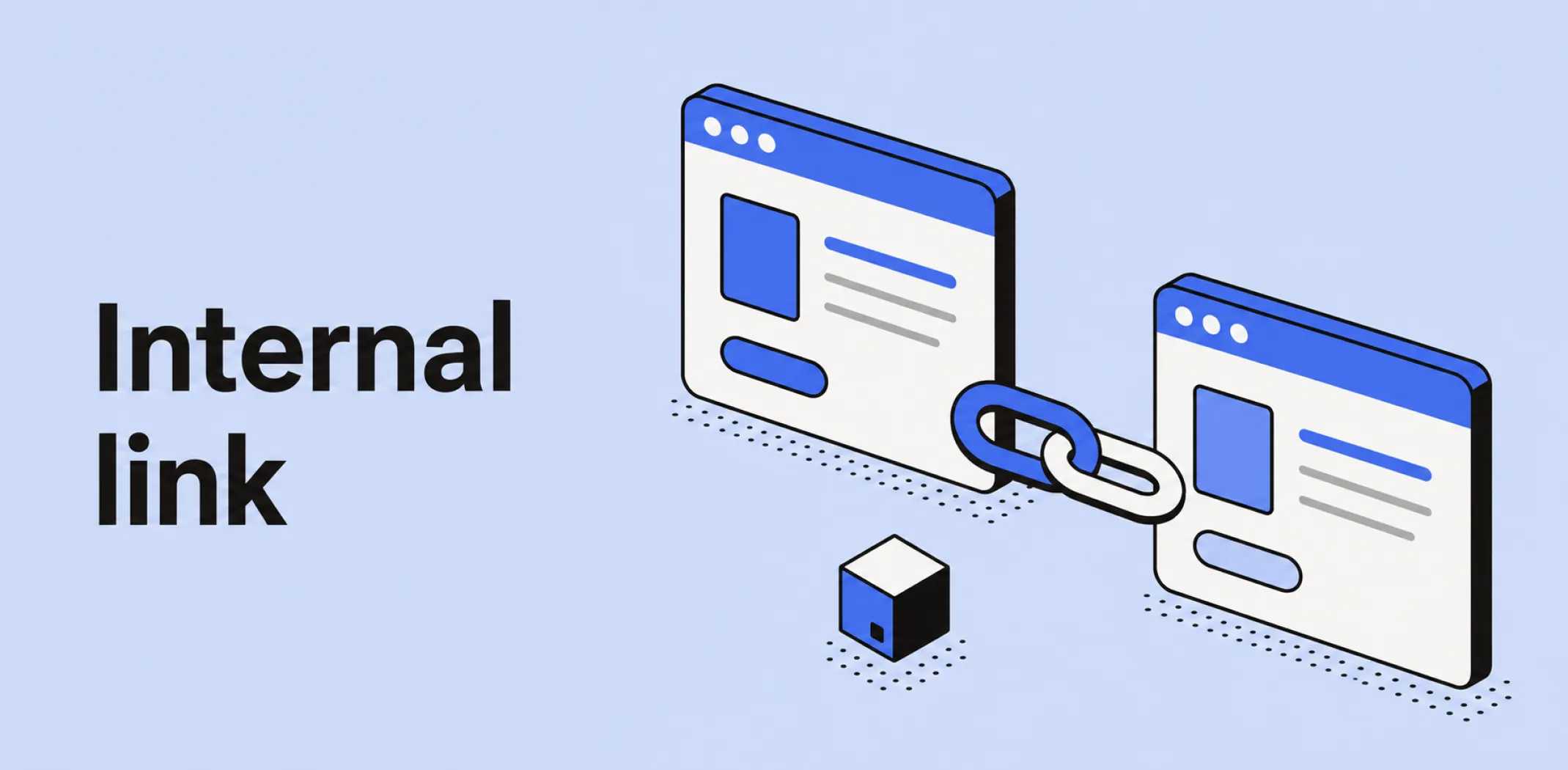
An internal link is a hyperlink that connects one page on a website to another page on that same website, as opposed to a backlink, which connects two different websites. Internal links are one of the main tools website owners use to guide visitors around a site and to help search engines discover and understand the relationships between pages.
Internal links serve two main purposes at once. For users, they create pathways between related content, such as linking from a blog post to a relevant product page or from one glossary entry to another.
For search engines, internal links act as a map of a site’s structure, showing which pages are most important based on how many other pages link to them and what anchor text is used to describe them. A well organized internal linking structure can help newer or less visible pages get discovered by search engine crawlers, since crawlers follow links to find and index content.
Example
A blog publishes a product roundup article and includes internal links to three individual product pages mentioned in the post, along with a link back to the site’s main category page. A visitor reading the roundup can click straight through to a product they are interested in, while a search engine crawling the roundup article discovers those three product pages through the links and gains a clearer sense of how the roundup and the product pages relate to each other.
Key characteristics
- Stays within one site: Internal links point to pages on the same domain, unlike backlinks, which point to a different website entirely.
- Supports navigation: Internal links help visitors move between related pages without relying on menus or search.
- Distributes ranking value: Pages that receive many internal links from other pages on the site tend to be treated as more important by search engines.
- Aids crawling and indexing: Search engine crawlers follow internal links to discover new or updated pages across a site.
- Anchor text matters: The clickable text of an internal link gives both users and search engines context about the linked page’s topic.
Related terms
- Backlink – a link from an external website, as opposed to an internal link, which stays within the same site.
- On-page SEO – page-level optimization that commonly includes internal linking as one of its core practices.
- Off-page SEO – the category of ranking factors, including backlinks, that sits outside a site’s own internal structure.
Frequently asked questions
Why are internal links important for SEO?
Internal links help search engines discover and understand the relationship between pages on a site, and they help distribute ranking value from well established pages to newer or less visible ones.
Do internal links affect how visitors use a website?
Yes, internal links give visitors a way to move between related pages, which can lower bounce rates and keep people engaged with more of a site’s content.
Is there a limit to how many internal links a page should have?
There is no strict limit, but a page with an excessive number of internal links can dilute the value passed to each linked page and make the page harder for visitors to read.
AliDropship: An all-in-one platform for starting an online business in 2026
AliDropship is an online business platform that gives customers a ready-made store, a digital products catalogue, and built-in, one-click advertising within a single system. Founded in 2015 and based in Irvine, California, it has helped launch more than 1,500,000 stores and holds a 4.7-star rating on Trustpilot. It is built for people with no prior experience and no technical skills.
🆓 Free 14-day trial
New users get full platform access for 14 days, including a ready-made store, hosting, a domain, an SSL certificate, and access to the digital products catalogue. The trial also includes a $40 ad coupon to test the advertising system. Order fees apply only when a sale is made.
📦 Digital products
Customers choose from AliDropship’s catalogue of digital products – guides, courses, checklists, tools, and AI-powered toolkits – and keep up to 70% of every sale. Delivery is instant and automated, so there is no inventory, shipping, or manual fulfillment involved.
📣 One-click advertising
AliDropship includes built-in advertising that customers can turn on for as little as $10 a day. The system handles targeting, creatives, and optimization, and many customers see their first orders the same day they launch ads.
👌 Ease of use
AliDropship requires no coding or marketing experience. The store, products, and ads are managed from a single dashboard that works on a phone as well as a desktop, and a personal growth manager is available to help by chat.
💳 Monthly plan
After the trial, continued access is $39 a month, covering the store, the digital products catalogue, and ongoing support. There is no long-term contract, and the plan can be cancelled at any time.
How many internal links should a page have?
Do internal links help with SEO rankings?
What is the difference between an internal link and a backlink?
Should internal links open in a new tab?
How often should a site review its internal linking?
Are you ready to become an owner
of a profitable online business?
Free Dropshipping Guide