

Interest Targeting

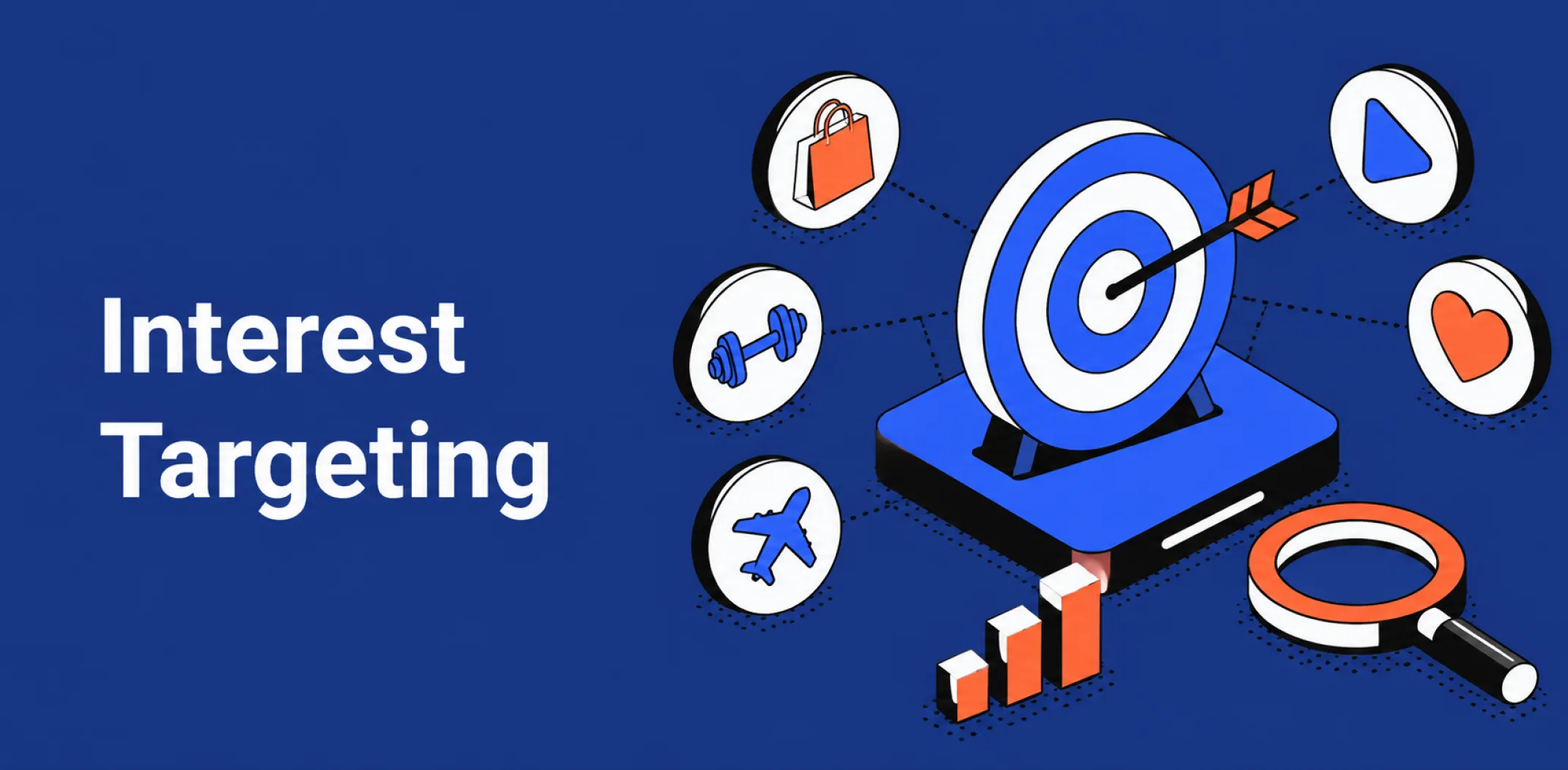
Interest targeting is an advertising method in which platforms display ads to users based on their expressed interests, hobbies, and online behavior rather than demographic data alone.
Platforms build interest categories from signals such as page likes, content engagement, searches, and app activity, then group users into categories such as fitness, pet care, or home decor. Advertisers select relevant categories when building a product advertising campaign, and the platform’s delivery system shows ads only to users whose activity matches those categories.
Interest targeting differs from demographic targeting, which relies on attributes like age or location, and from lookalike audiences, which are built from existing customer lists. Within dropshipping, it is commonly used in early ecommerce marketing strategies to reach potential buyers before a store has collected its own customer data.
How interest targeting works
- The advertiser opens the ad platform’s audience builder, such as Meta Ads Manager or TikTok Ads Manager.
- The platform presents a list of interest categories compiled from user activity signals.
- The advertiser selects interest categories relevant to the product being promoted.
- The platform matches these categories against user profiles and compiles an audience.
- Ads are served to users within the matched audience during the campaign period.
- The advertiser reviews performance data and narrows or expands the interest categories to improve results.
Example
A store selling yoga mats sets up a campaign on Meta Ads Manager and selects interest categories such as yoga, pilates, and wellness apps. The platform then shows the ad to users who follow yoga-related pages or have engaged with fitness content, rather than to a broad age-based audience. After a week, the store owner checks click-through rates and removes an underperforming category, keeping only yoga and pilates – a routine step in product advertising campaigns.
Key characteristics
- Behavior-based signals: Categories are built from likes, follows, searches, and content engagement rather than self-reported data.
- Platform-dependent categories: Available interest categories and their accuracy vary between ad platforms such as Meta, TikTok, and Google.
- No first-party data required: Stores can reach potential buyers without an existing customer list or website pixel history.
- Overlap risk: Broad or loosely related interest categories can widen the audience beyond genuinely interested buyers, raising cost per result.
Related terms
- Product advertising – the broader marketing strategy interest targeting is used to execute.
- Niche market – the narrow customer segment interest targeting is often used to reach.
- Customer segmentation – the practice of dividing an audience into groups, of which interest is one variable.
- Conversion funnel – the stages a targeted user moves through after seeing an ad.
- Influencer – a content creator whose audience is sometimes used as a proxy for interest-based targeting.
Frequently asked questions
Is interest targeting the same as behavioral targeting?
Interest targeting is one form of behavioral targeting. It focuses specifically on grouping users by stated or inferred interests, while behavioral targeting can also include purchase history and browsing patterns.
Which platforms support interest targeting?
Meta, TikTok, Pinterest, and Google Display all offer interest-based audience options, though the specific categories and data sources differ by platform.
Does interest targeting work without a website pixel?
Yes, interest targeting can be used before a store has collected pixel data, since it relies on the platform’s existing user activity rather than the advertiser’s own tracking.
AliDropship: An all-in-one platform for starting dropshipping in 2026
AliDropship is a dropshipping platform that covers store creation, product imports, order automation, and marketing within a single system. It is designed for users with no prior ecommerce experience, though it also supports scaling for more established stores.
🛍️ Free turnkey store
New users receive a free pre-built store – set up, designed, and stocked with products. The store includes a ready-to-use product catalogue and a standard storefront design. It also comes with hosting, a domain, SSL, and payment systems already set up and included.
📦 Products
The platform provides access to a product catalogue covering both trending and niche items, with one-click import to your store. The catalogue is updated regularly to reflect current market availability. Products can be browsed, filtered, and added without leaving the platform.
🚚 Shipping & fulfillment
AliDropship provides access to a vast catalogue of products from global suppliers and handles order fulfillment automatically once a purchase is made. Customers receive tracking information directly, and orders are processed without manual intervention from the store owner.
📣 Marketing & promotion tools
The platform includes built-in marketing tools covering email campaigns, discount management, SEO settings, and social media integration. These are available within the dashboard and do not require third-party subscriptions for basic use.
👌 Ease of use
AliDropship requires no coding knowledge. The dashboard contains all the necessary tools for managing your store, products, and orders in one place. Additional features and products can be added as the store grows without rebuilding the existing setup.
What is interest targeting in dropshipping?
How accurate is interest targeting?
How many interest categories should an ad campaign use?
Is interest targeting more expensive than demographic targeting?
Can interest targeting be combined with other targeting methods?
Are you ready to become an owner
of a profitable online business?
Free Dropshipping Guide