

Inbound Marketing

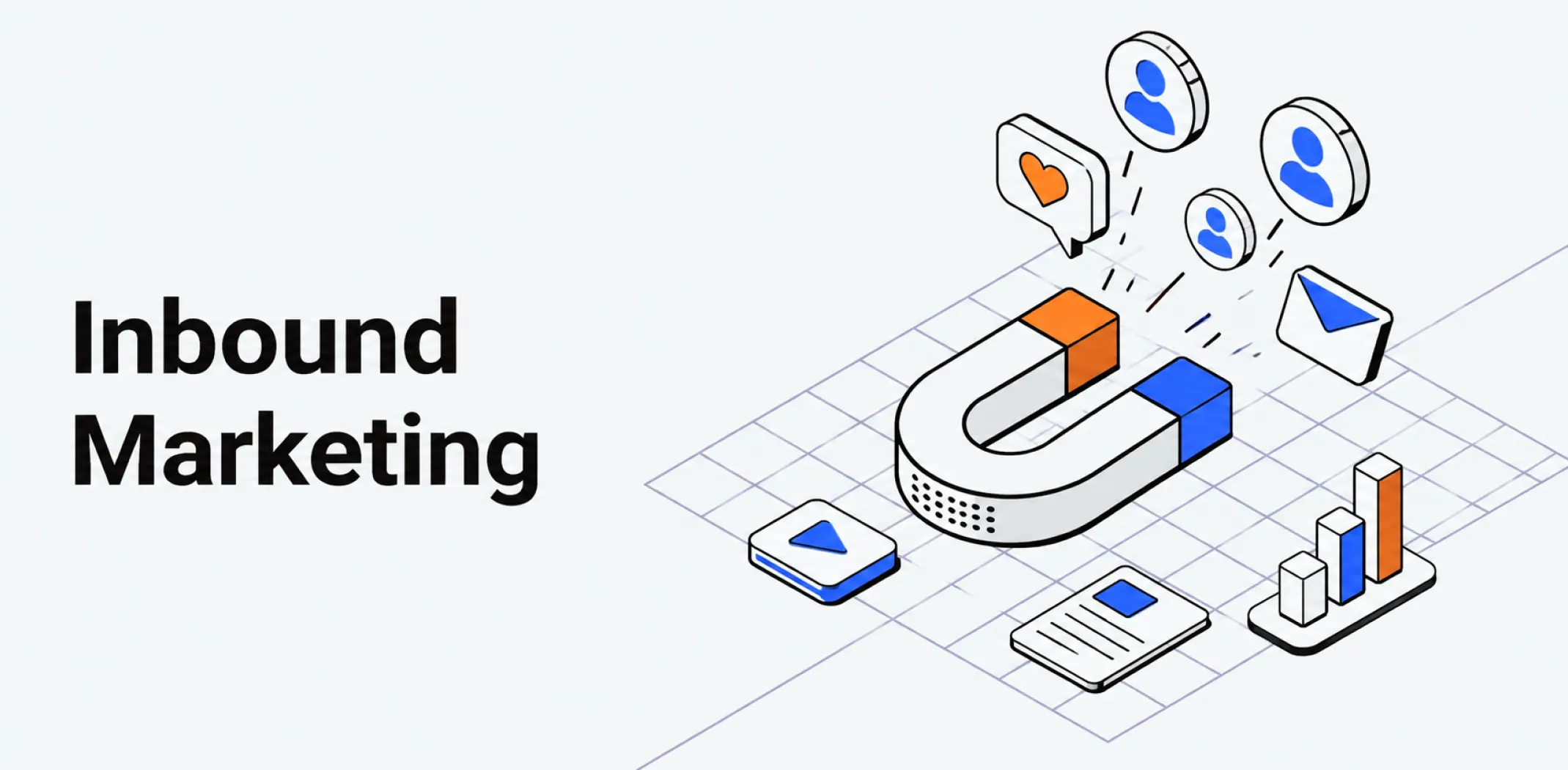
Inbound marketing is a strategy that attracts potential customers by creating and distributing content they actively seek out, rather than interrupting them with unsolicited advertising – drawing audiences toward a business through search, social media, and owned channels rather than pushing messages outward through paid placement.
The term was popularized in contrast to outbound marketing, which covers traditional and paid advertising formats – display ads, cold email, direct mail, and broadcast – where the business initiates contact with the audience. Inbound marketing inverts this model: the audience finds the business by searching for information, following social content, or subscribing to a newsletter.
Common inbound channels include SEO-driven blog content, organic social media, email marketing to opted-in subscribers, and video content. Because inbound activity earns rather than purchases audience attention, it typically requires a longer time investment before producing measurable traffic, but generates traffic at a lower marginal cost once rankings and audiences are established.
Inbound marketing overlaps significantly with product advertising and content marketing in practice, but the distinction lies in intent: inbound is audience-pull across the full relationship lifecycle – attracting, engaging, and retaining customers – rather than a single-channel tactic.
For dropshipping and ecommerce businesses, inbound marketing is most commonly implemented through SEO content targeting niche market search queries, organic social presence, and post-purchase email sequences that encourage repeat business.
A well-executed inbound strategy reduces dependence on paid channels over time by building owned audience assets – email lists, search rankings, and social followings – that continue generating traffic without ongoing ad spend.
Example
A dropshipping store selling home office furniture publishes a series of articles targeting searches such as “how to set up a home office on a budget” and “best ergonomic desk chairs under $300.” The articles rank in search results and generate consistent organic traffic. Visitors who do not purchase immediately are offered a discount in exchange for their email address, adding them to an automated nurture sequence that promotes relevant products over the following weeks. The store acquires customers through this sequence at a fraction of the cost of paid social campaigns, and the email list – built entirely through inbound activity – becomes one of its highest-returning owned marketing assets.
Key characteristics
- Pull rather than push: Inbound marketing draws audiences toward the business by providing content they are already looking for, rather than placing promotional messages in front of audiences who have not expressed interest.
- Owned channel focus: The primary outputs of inbound marketing – search rankings, email subscribers, and social followings – are assets owned or controlled by the business, unlike paid placements that cease when spend stops.
- Full lifecycle scope: Inbound marketing addresses attraction, engagement, and retention across the entire customer relationship, not only the acquisition stage targeted by most paid advertising.
- Long time horizon: Inbound channels such as SEO typically take three to six months or longer to produce measurable results, requiring sustained content output before organic traffic and audience growth become reliable.
- Compounding returns: Unlike paid campaigns where results cease with spend, inbound assets accumulate value over time – a well-ranked article or a large email list continues generating returns long after the initial investment in producing them.
Related terms
- Conversion funnel – the staged path from awareness to purchase that inbound marketing is structured to address at every stage, from attracting first-time visitors through search to re-engaging past customers through email.
- Landing page – a conversion-optimized destination page used to capture leads or purchases from inbound traffic arriving through search or social channels.
- Customer lifetime value – the metric most directly improved by inbound marketing’s retention and re-engagement activity, since owned channels such as email reduce the cost of driving repeat purchases from existing customers.
- Niche market – the defined audience segment around which an inbound marketing strategy is built, with content topics and channel selection determined by the search behavior and content preferences of that segment.
- Influencer – a content creator whose established audience represents a ready-made inbound channel, used by ecommerce brands to extend organic reach into audiences that have opted in to the influencer’s content.
Frequently asked questions
What is the difference between inbound and outbound marketing?
Outbound marketing initiates contact with an audience through paid or broadcast channels – display ads, cold email, direct mail, and television – regardless of whether the audience has expressed interest. Inbound marketing attracts audiences who are already searching for relevant information, products, or solutions, through channels such as search content, organic social, and email newsletters. The practical distinction is that outbound buys attention while inbound earns it, with different cost structures, time horizons, and audience quality profiles as a result.
Is inbound marketing the same as content marketing?
Content marketing is one of the primary tactics used within an inbound marketing strategy, but the two terms are not synonymous. Content marketing refers specifically to the creation and distribution of useful content to attract an audience.
Inbound marketing is the broader strategic framework that encompasses content marketing alongside SEO, lead nurturing, email automation, and conversion optimization – covering the full journey from first contact to repeat purchase rather than the attraction stage alone.
How does inbound marketing reduce customer acquisition costs?
Once inbound assets – search rankings, email lists, and social followings – are established, they generate traffic and sales without requiring ongoing spend proportional to results. A blog article that ranks for a high-volume search query may drive hundreds of visits per month at zero marginal cost per visit, compared to a paid ad that charges for every click.
Over time, as owned channels grow, the proportion of revenue attributable to zero- or low-cost inbound sources increases, reducing the average cost of acquiring each customer across all channels combined.
Can a dropshipping store rely solely on inbound marketing?
In principle yes, but in practice most stores combine inbound and paid channels, particularly in early stages when organic assets have not yet been built. Inbound marketing takes months to produce consistent traffic, meaning a store launched with no paid activity may see minimal sales during that period.
The more common approach is to use paid advertising to generate early revenue while building inbound assets in parallel, then gradually shift the traffic mix toward owned channels as rankings and subscriber lists develop.
AliDropship: An all-in-one platform for starting dropshipping in 2026
AliDropship is a dropshipping platform that covers store creation, product imports, order automation, and marketing within a single system. It is designed for users with no prior ecommerce experience, though it also supports scaling for more established stores.
🛍️ Free turnkey store
New users receive a free pre-built store – set up, designed, and stocked with products. The store includes a ready-to-use product catalogue and a standard storefront design. It also comes with hosting, a domain, SSL, and payment systems already set up and included.
📦 Products
The platform provides access to a product catalogue covering both trending and niche items, with one-click import to your store. The catalogue is updated regularly to reflect current market availability. Products can be browsed, filtered, and added without leaving the platform.
🚚 Shipping & fulfillment
AliDropship provides access to a vast catalogue of products from global suppliers and handles order fulfillment automatically once a purchase is made. Customers receive tracking information directly, and orders are processed without manual intervention from the store owner.
📣 Marketing & promotion tools
The platform includes built-in marketing tools covering email campaigns, discount management, SEO settings, and social media integration. These are available within the dashboard and do not require third-party subscriptions for basic use.
👌 Ease of use
AliDropship requires no coding knowledge. The dashboard contains all the necessary tools for managing your store, products, and orders in one place. Additional features and products can be added as the store grows without rebuilding the existing setup.
What is the difference between inbound and outbound marketing?
Is inbound marketing the same as content marketing?
How does inbound marketing reduce customer acquisition costs?
Can a dropshipping store rely solely on inbound marketing?
What are the most effective inbound marketing channels for ecommerce?
Are you ready to become an owner
of a profitable online business?
Free Dropshipping Guide