

Fees

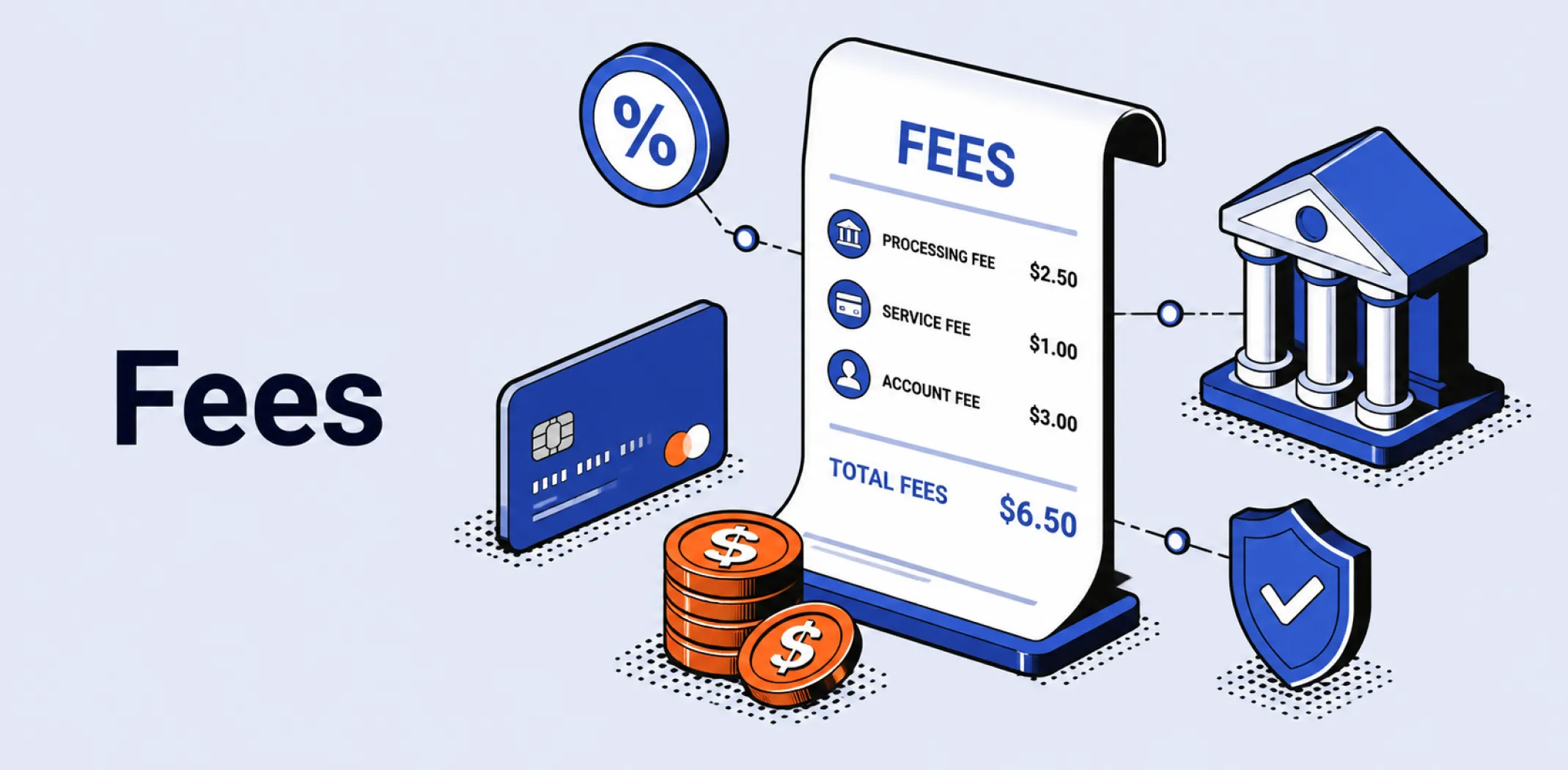
Fees are charges imposed on a seller by a platform, payment processor, or marketplace in exchange for access to their services, infrastructure, or customer base, and represent a direct reduction in the revenue retained from each sale or billing period.
In ecommerce and dropshipping, fees arise from multiple sources simultaneously. A store owner may pay a monthly subscription to an ecommerce platform, a percentage-based charge on each transaction processed through a payment gateway, and a listing or commission fee if selling through a third-party marketplace.
Each of these charges is distinct in structure and timing, but all reduce the margin available after the overhead costs and cost of goods are accounted for. Failing to account for the full range of applicable fees when setting retail prices is one of the most common causes of margin erosion in early-stage dropshipping stores.
Example
A dropshipping store sells a product for $35, with a supplier cost of $14. Before calculating profit, the store owner accounts for a 2.9% plus $0.30 payment processing fee ($1.32 on this transaction), a monthly platform subscription prorated to $0.25 per order at current sales volume, and a $0.80 transaction fee charged by the ecommerce platform. Total fees on the order come to $2.37, reducing the margin from a nominal $21.00 to $18.63 – a difference that compounds significantly at scale.
Key characteristics
- Platform fees: Recurring subscription charges paid to an ecommerce platform for access to store-building tools, hosting infrastructure, and related features – typically billed monthly or annually regardless of sales volume.
- Payment processing fees: Per-transaction charges levied by a payment processor or gateway for handling customer payments, commonly structured as a percentage of the transaction value plus a fixed amount per transaction.
- Transaction fees: Charges applied by some ecommerce platforms on each sale processed through a third-party payment provider rather than the platform’s own integrated payment system.
- Marketplace fees: Listing fees, referral fees, or commission percentages charged by third-party marketplaces such as Etsy when a seller lists or sells products through their platform.
Related terms
- Payment gateway – the system that processes customer payments online, typically charging a per-transaction fee that forms one of the most consistent fee costs for an ecommerce store.
- Overhead costs – recurring fixed expenses that include platform subscription fees and other charges that must be covered before a store reaches profitability.
- Average order value – the mean revenue per transaction, which determines how significantly fixed per-transaction fees affect the effective margin on each order.
- Etsy – a marketplace that applies listing fees and transaction fees to each sale, illustrating how marketplace fee structures layer on top of standard platform and processing costs.
Frequently asked questions
What types of fees does a dropshipping store typically pay?
A dropshipping store typically encounters platform subscription fees, payment processing fees on each transaction, and – if using a platform that charges for third-party payment providers – additional transaction fees per sale. Stores selling through third-party marketplaces also pay listing or referral fees on top of those baseline costs. The exact combination depends on the platform and payment provider chosen.
How do fees affect profit margin in dropshipping?
Fees reduce the amount of revenue retained after each sale, compressing the margin between the retail price and the cost of goods. Because many fees are percentage-based, their absolute impact grows with order value – a 3% processing fee on a $20 order costs $0.60, but on a $100 order it costs $3.00. Sellers must account for all applicable fees when setting retail prices to ensure the margin after fees remains viable.
Are ecommerce platform fees avoidable?
Platform subscription fees are generally unavoidable while the platform is in use, though the fee level varies between providers and plan tiers. Some transaction fees – charged when using a third-party payment processor instead of the platform’s own system – can be avoided by switching to the platform’s integrated payment solution.
Sellers should review the full fee structure of any platform before committing, as the combination of subscription and transaction fees varies significantly across providers.
Should fees be included in the break-even calculation?
Yes – fees must be included in any accurate break-even or margin calculation. Fixed fees such as platform subscriptions contribute to the fixed cost total that determines how many units must be sold to break even. Per-transaction fees function as variable costs and reduce the contribution margin on each unit sold, raising the break-even unit volume. Omitting either category produces an overstated margin and an understated break-even threshold.
AliDropship: An all-in-one platform for starting dropshipping in 2026
AliDropship is a dropshipping platform that covers store creation, product imports, order automation, and marketing within a single system. It is designed for users with no prior ecommerce experience, though it also supports scaling for more established stores.
🛍️ Free turnkey store
New users receive a free pre-built store – set up, designed, and stocked with products. The store includes a ready-to-use product catalogue and a standard storefront design. It also comes with hosting, a domain, SSL, and payment systems already set up and included.
📦 Products
The platform provides access to a product catalogue covering both trending and niche items, with one-click import to your store. The catalogue is updated regularly to reflect current market availability. Products can be browsed, filtered, and added without leaving the platform.
🚚 Shipping & fulfillment
AliDropship provides access to a vast catalogue of products from global suppliers and handles order fulfillment automatically once a purchase is made. Customers receive tracking information directly, and orders are processed without manual intervention from the store owner.
📣 Marketing & promotion tools
The platform includes built-in marketing tools covering email campaigns, discount management, SEO settings, and social media integration. These are available within the dashboard and do not require third-party subscriptions for basic use.
👌 Ease of use
AliDropship requires no coding knowledge. The dashboard contains all the necessary tools for managing your store, products, and orders in one place. Additional features and products can be added as the store grows without rebuilding the existing setup.
What types of fees does a dropshipping store typically pay?
How do fees affect profit margin in dropshipping?
Are ecommerce platform fees avoidable?
Should fees be included in the break-even calculation?
What is the difference between a platform fee and a transaction fee?
Are you ready to become an owner
of a profitable online business?
Free Dropshipping Guide