

Email Marketing

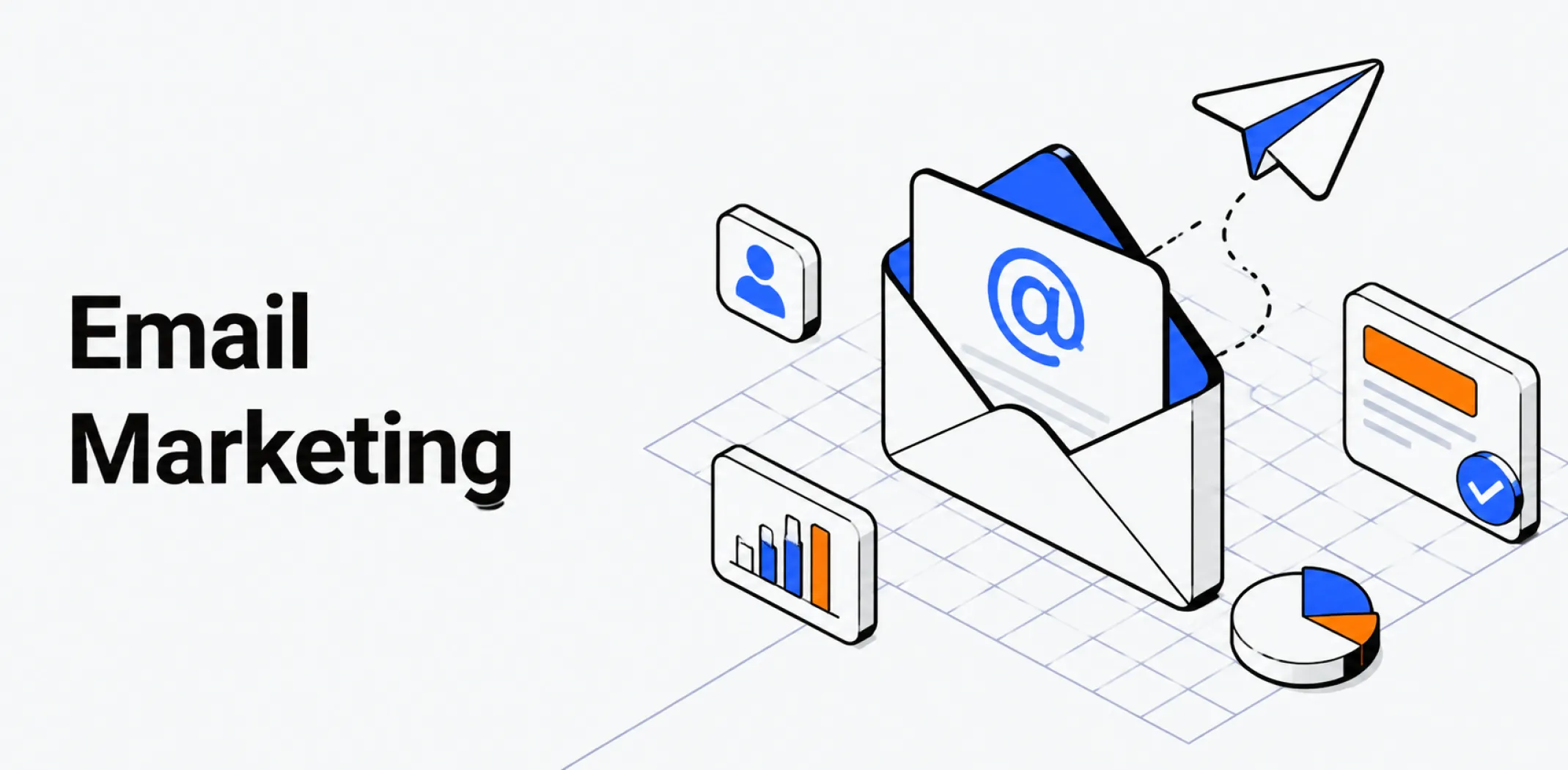
Email marketing is the practice of sending targeted messages to a list of opted-in subscribers to promote products, nurture customer relationships, and drive repeat purchases, using email as a direct owned channel that operates independently of paid advertising platforms or search engine rankings.
Email marketing sits within the broader category of inbound marketing and owned media – channels controlled by the business rather than rented from a platform. Unlike paid social or search advertising, an email list is an asset the business owns outright: it continues generating revenue regardless of algorithm changes, platform policy updates, or rising ad costs.
Subscribers have opted in to receive communications, meaning email reaches an audience that has already expressed interest in the brand or product, typically producing higher conversion rates than cold outbound channels.
Common email marketing formats in ecommerce include welcome sequences sent to new subscribers, abandoned cart emails sent to visitors who did not complete a purchase, promotional campaigns announcing sales or new products, and post-purchase sequences designed to encourage repeat orders and build customer lifetime value.
For dropshipping businesses, email marketing is particularly valuable because its marginal cost per send is near zero once a list is established – a promotional email sent to 5,000 subscribers costs the same to send as one sent to 500, making it one of the most scalable revenue channels available.
Platforms such as WooCommerce and most major ecommerce solutions integrate directly with email marketing tools, allowing automated sequences to be triggered by customer behaviour – a purchase, a cart abandonment, or a set number of days since the last order – without manual intervention from the store owner.
Example
A dropshipping store selling skincare products builds an email list of 3,200 subscribers over six months through a homepage sign-up offer. The store sends a weekly promotional email featuring two or three products, generating an average open rate of 28% and a click-through rate of 4.5%. Each weekly send produces between 18 and 30 sales at zero incremental ad cost. In parallel, an automated abandoned cart sequence – triggered when a visitor adds a product to their cart but does not complete checkout – recovers an average of 9 additional sales per week. Combined, the email channel contributes roughly 22% of total monthly revenue at a cost limited to the monthly platform subscription fee.
Key characteristics
- Owned channel: An email list is an asset controlled entirely by the business – unlike social media followers or search rankings, it cannot be affected by platform algorithm changes or account suspensions.
- Opt-in audience: Email marketing reaches subscribers who have actively chosen to receive communications, producing higher engagement and conversion rates than cold outbound channels targeting audiences with no prior brand relationship.
- Automation capability: Email sequences can be triggered automatically by subscriber behaviour – a sign-up, a purchase, a cart abandonment, or a period of inactivity – allowing a store to run complex nurture and retention programmes without manual effort per send.
- Near-zero marginal cost: Once a list is established and sequences are built, the cost of sending an additional email is effectively zero, making email one of the most cost-efficient channels for driving repeat revenue from an existing customer base.
- Measurable performance: Every email campaign produces trackable metrics – open rate, click-through rate, conversion rate, and revenue per send – allowing performance to be monitored and optimised systematically over time.
Related terms
- Customer lifetime value – the metric most directly increased by email marketing, since automated retention and re-engagement sequences drive repeat purchases from existing customers at near-zero acquisition cost.
- Conversion funnel – the staged path from awareness to purchase that email marketing addresses at the middle and lower stages, nurturing subscribers who have already expressed interest toward a completed transaction.
- Customer segmentation – the practice of dividing a subscriber list into groups based on behaviour, purchase history, or demographics, used in email marketing to send more relevant messages that produce higher engagement and conversion rates.
- Upselling – a revenue-growth tactic commonly executed through post-purchase email sequences, where existing customers are presented with higher-value products or upgrades relevant to their previous purchase.
- Average order value – a key metric in email marketing campaign performance, since promotional emails featuring product bundles or minimum spend incentives are a standard method for increasing the value of each transaction.
Frequently asked questions
How do ecommerce stores build an email list?
The most common list-building methods for ecommerce stores are sign-up incentives on the homepage or product pages – typically a discount code or free resource offered in exchange for an email address – and post-purchase opt-ins that invite buyers to subscribe at checkout.
Pop-up forms triggered by exit intent or time on page are widely used and can convert between 1% and 5% of site visitors into subscribers depending on the offer and placement. Paid traffic campaigns driving visitors to a dedicated lead capture page are also used to accelerate list growth.
What is an abandoned cart email?
An abandoned cart email is an automated message sent to a shopper who added one or more products to their cart but left the store without completing the purchase. It typically includes a reminder of the items left behind, sometimes accompanied by a limited-time discount to encourage completion.
Abandoned cart sequences are among the highest-returning automated email types in ecommerce, with average recovery rates of between 5% and 15% of abandoned carts depending on the timing, number of emails in the sequence, and the incentive offered.
What email metrics should a dropshipping store track?
The primary metrics are open rate, click-through rate, conversion rate, and revenue per email sent. Open rate indicates whether subject lines and sender reputation are effective at getting messages opened. Click-through rate measures how many openers engage with the content.
Conversion rate and revenue per send connect email activity directly to sales, making them the most commercially relevant indicators of list health and campaign quality. Unsubscribe rate should also be monitored – a rate consistently above 0.5% per send suggests content relevance or send frequency needs adjustment.
How often should a dropshipping store send marketing emails?
Send frequency depends on list size, content quality, and audience expectations, but most ecommerce stores send between one and three promotional emails per week to their full list.
Sending too infrequently reduces revenue opportunity and allows the audience to disengage; sending too frequently without sufficient content variation increases unsubscribe rates. Automated behavioural sequences – welcome, abandoned cart, post-purchase – operate independently of broadcast frequency and should be active regardless of how often manual campaigns are sent.
AliDropship: An all-in-one platform for starting dropshipping in 2026
AliDropship is a dropshipping platform that covers store creation, product imports, order automation, and marketing within a single system. It is designed for users with no prior ecommerce experience, though it also supports scaling for more established stores.
🛍️ Free turnkey store
New users receive a free pre-built store – set up, designed, and stocked with products. The store includes a ready-to-use product catalogue and a standard storefront design. It also comes with hosting, a domain, SSL, and payment systems already set up and included.
📦 Products
The platform provides access to a product catalogue covering both trending and niche items, with one-click import to your store. The catalogue is updated regularly to reflect current market availability. Products can be browsed, filtered, and added without leaving the platform.
🚚 Shipping & fulfillment
AliDropship provides access to a vast catalogue of products from global suppliers and handles order fulfillment automatically once a purchase is made. Customers receive tracking information directly, and orders are processed without manual intervention from the store owner.
📣 Marketing & promotion tools
The platform includes built-in marketing tools covering email campaigns, discount management, SEO settings, and social media integration. These are available within the dashboard and do not require third-party subscriptions for basic use.
👌 Ease of use
AliDropship requires no coding knowledge. The dashboard contains all the necessary tools for managing your store, products, and orders in one place. Additional features and products can be added as the store grows without rebuilding the existing setup.
How do ecommerce stores build an email list?
What is an abandoned cart email?
What email metrics should a dropshipping store track?
How often should a dropshipping store send marketing emails?
What is the return on investment for email marketing in ecommerce?
Are you ready to become an owner
of a profitable online business?
Free Dropshipping Guide