

Direct Traffic

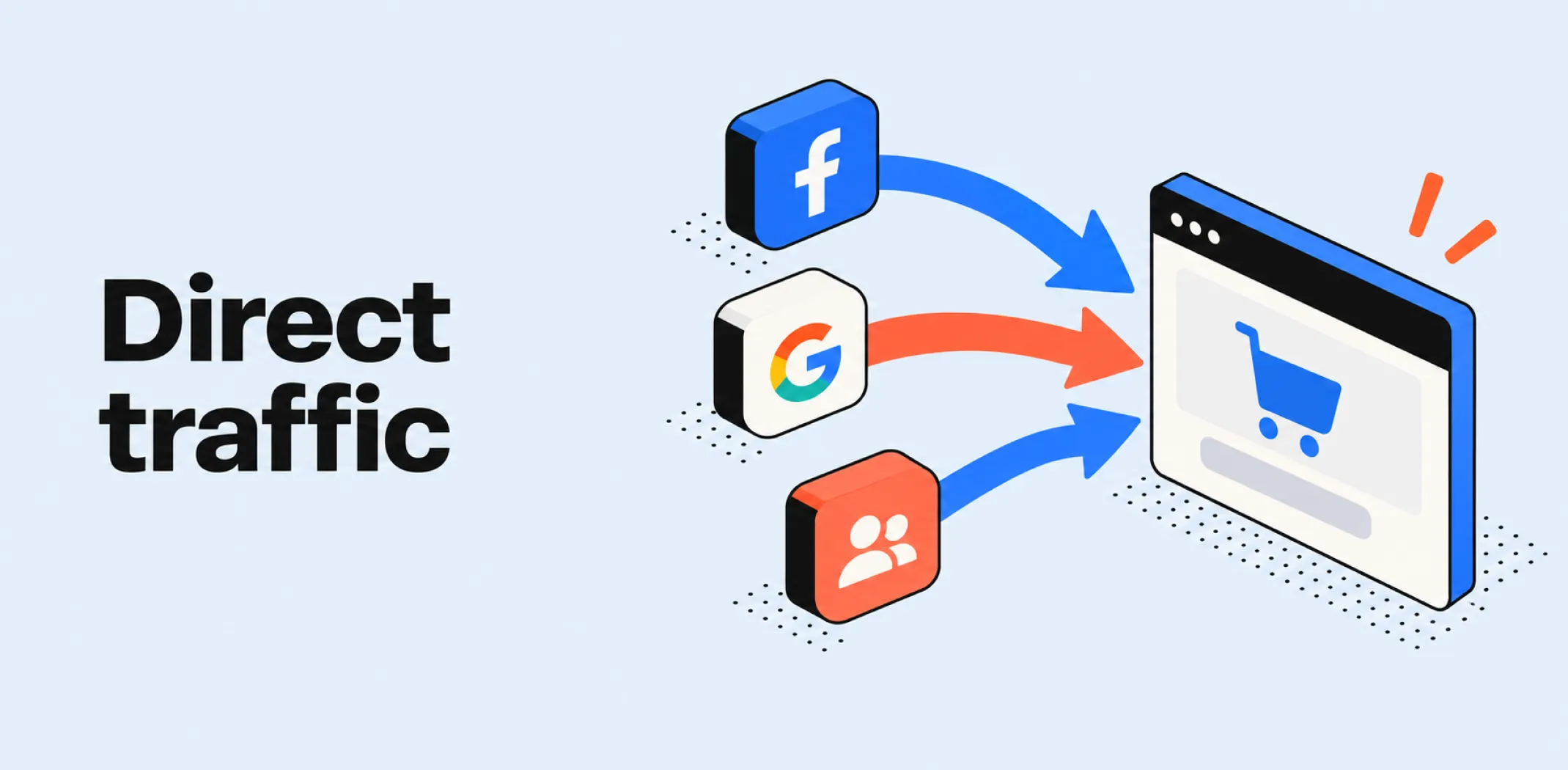
Direct traffic is a web analytics category that captures visits where no referring source can be identified by the analytics platform, typically occurring when a user types a URL directly into a browser, uses a saved bookmark, or arrives via a link that does not pass referral data.
In practice, direct traffic is not a single channel but a catch-all classification. When a browser makes a request without sending a referrer header – or when that header is stripped in transit – the visit is assigned to the direct category by default.
Common sources include typed or copy-pasted URLs, browser bookmarks, links opened from desktop applications such as email clients or document editors, and HTTPS-to-HTTP navigations where the referrer header is suppressed for security reasons.
This means direct traffic data can contain a mix of genuinely intentional direct visits alongside traffic whose true source could not be captured, a limitation sometimes described as dark traffic within the analytics industry.
For an ecommerce store, direct traffic is often interpreted as a signal of brand familiarity – users who type a store’s URL without prompting are likely returning customers or people who have seen the brand offline.
However, because miscategorized traffic inflates direct figures, analysts typically cross-reference direct traffic trends with other metrics before drawing conclusions about brand health. A useful reference for interpreting traffic channel data is available in the ecommerce marketing strategies section of the AliDropship blog.
Example
A kitchenware dropshipping store runs an offline promotion – discount codes printed on packaging inserts included with every order. In the weeks following the campaign, the store’s analytics platform records a 22% increase in direct traffic sessions. Because the insert directed customers to visit the store URL without any trackable link, those return visits register as direct. The store owner interprets the rise as evidence that existing customers are returning of their own accord, while also noting that some of the increase may include sessions from email links in clients that do not forward referrer data.
Key characteristics
- No referrer header: A visit is classified as direct when the HTTP request arrives at the server without a referrer field, or when the analytics tag cannot identify one.
- Brand intent signal: Typed URLs and bookmarks indicate that a user already knows the store’s address, making direct traffic a loose proxy for brand recognition and repeat intent.
- Dark traffic inclusion: A portion of direct traffic in most analytics reports consists of misattributed visits from sources such as mobile apps, secure email clients, and messaging platforms that strip referrer data.
- Campaign blind spot: Offline campaigns, word-of-mouth referrals, and some paid placements that lack UTM parameters can all result in traffic being recorded as direct, obscuring the true source.
Related terms
- Conversion funnel – the sequence of stages a visitor moves through from first arriving at a store to completing a purchase or other goal action.
- Landing page – the first page a visitor reaches on arrival; direct traffic visitors typically land on a store’s homepage rather than a campaign-specific page.
- Product advertising – paid promotional activity used to drive traffic to a store, which when untagged with tracking parameters can contribute to direct traffic misattribution.
- Customer lifetime value – the projected revenue a store earns from a single customer over time; direct traffic, as a returning-visitor channel, correlates with customers who contribute to this metric.
- Return on investment – a performance ratio used to evaluate whether marketing spend is generating proportionate revenue; direct traffic misattribution can distort channel-level ROI calculations.
Frequently asked questions
What causes traffic to be classified as direct?
Traffic is classified as direct when no referrer header is detected by the analytics platform. The most common causes are users typing a URL directly into a browser, clicking a bookmarked link, following a link in a desktop email client, or navigating from an HTTPS page to an HTTP page, where browsers suppress the referrer for security reasons.
Links shared in messaging apps and some mobile environments also frequently produce direct sessions.
Is direct traffic always a sign of strong brand awareness?
Not necessarily. While a portion of direct traffic does reflect users who know a brand and choose to visit it without a prompt, direct sessions also include misattributed visits from channels whose referral data was lost in transit.
Analysts generally treat direct traffic as a rough indicator of brand familiarity rather than a precise measurement, and look for corroborating signals such as returning visitor rates and repeat purchase frequency before drawing conclusions.
How can ecommerce stores reduce direct traffic misattribution?
The most effective method is consistent use of UTM parameters on all outbound links in email campaigns, social posts, and paid placements.
UTM-tagged links pass source and campaign data directly to the analytics platform regardless of whether a referrer header is transmitted, moving those sessions out of the direct category and into the correct channel. Some analytics platforms also offer server-side tracking and first-party data methods that reduce the volume of unattributable sessions.
How does direct traffic relate to a dropshipping store’s conversion funnel?
Direct traffic visitors tend to enter a store at the top of the funnel with higher baseline intent than cold-audience traffic, since many are returning customers or users already familiar with the brand.
As a result, direct traffic sessions often convert at a higher rate than sessions from paid or social channels. Monitoring changes in direct traffic volume alongside conversion rate can help a store owner assess whether their audience retention efforts are working over time.
AliDropship: An all-in-one platform for starting dropshipping in 2026
AliDropship is a dropshipping platform that covers store creation, product imports, order automation, and marketing within a single system. It is designed for users with no prior ecommerce experience, though it also supports scaling for more established stores.
🛍️ Free turnkey store
New users receive a free pre-built store – set up, designed, and stocked with products. The store includes a ready-to-use product catalogue and a standard storefront design. It also comes with hosting, a domain, SSL, and payment systems already set up and included.
📦 Products
The platform provides access to a product catalogue covering both trending and niche items, with one-click import to your store. The catalogue is updated regularly to reflect current market availability. Products can be browsed, filtered, and added without leaving the platform.
🚚 Shipping & fulfillment
AliDropship provides access to a vast catalogue of products from global suppliers and handles order fulfillment automatically once a purchase is made. Customers receive tracking information directly, and orders are processed without manual intervention from the store owner.
📣 Marketing & promotion tools
The platform includes built-in marketing tools covering email campaigns, discount management, SEO settings, and social media integration. These are available within the dashboard and do not require third-party subscriptions for basic use.
👌 Ease of use
AliDropship requires no coding knowledge. The dashboard contains all the necessary tools for managing your store, products, and orders in one place. Additional features and products can be added as the store grows without rebuilding the existing setup.
What causes traffic to be classified as direct?
Is direct traffic always a sign of strong brand awareness?
How can ecommerce stores reduce direct traffic misattribution?
How does direct traffic relate to the conversion funnel of a dropshipping store?
Are you ready to become an owner
of a profitable online business?
Free Dropshipping Guide