

Customer Retention

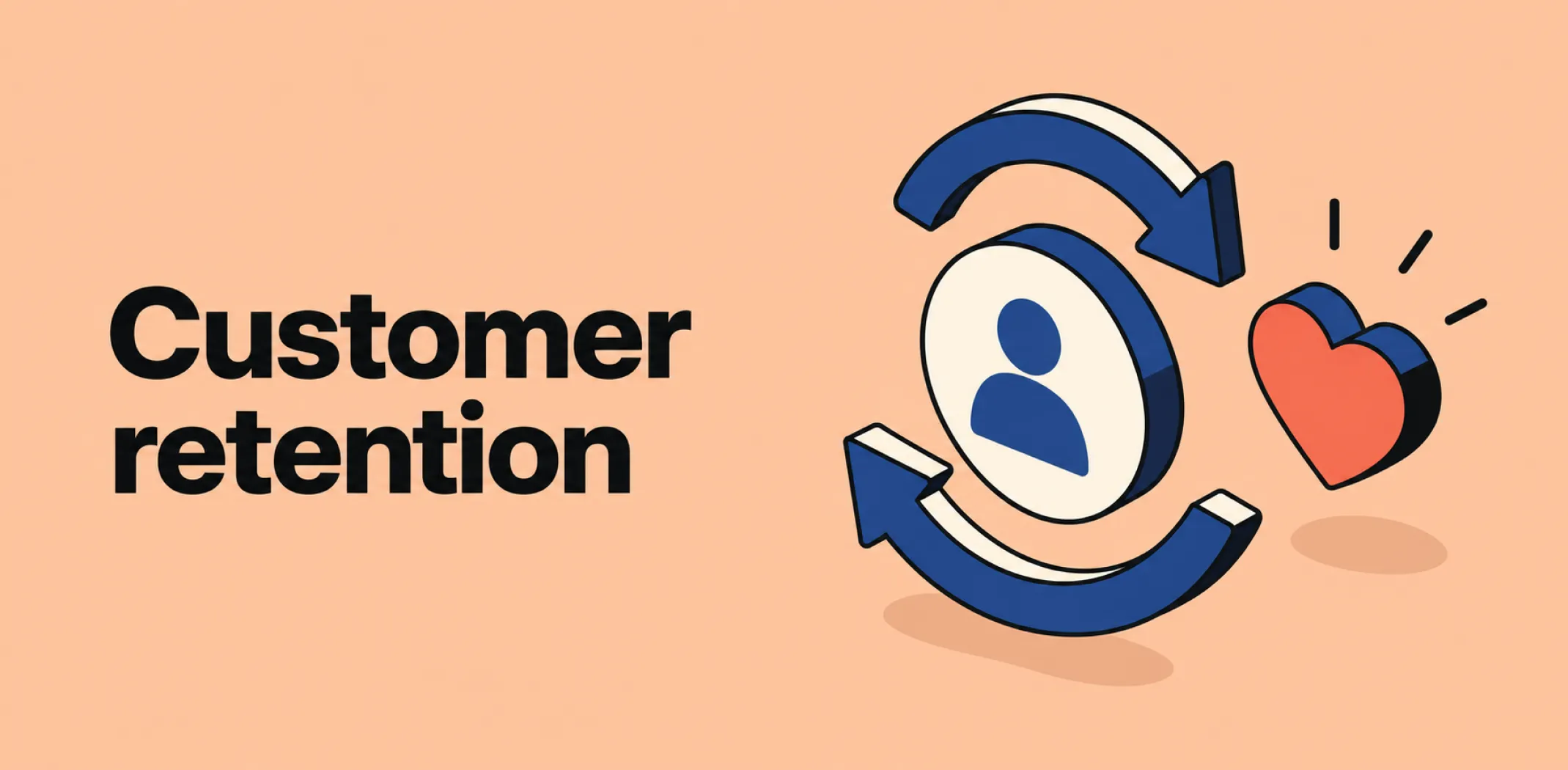
Customer retention is a business’s ability to keep customers making repeat purchases over time, rather than losing them after just one transaction.
Retention sits opposite acquisition in the customer lifecycle: acquisition is about bringing new customers in, while retention is about keeping the ones a business already has coming back. It is commonly measured as retention rate, the percentage of customers from a starting group who are still active after a given period, or its inverse, churn rate, the percentage who stop buying.
Retention directly drives customer lifetime value, since a customer who stays for years is worth far more than one who buys once and leaves, and it tends to track closely with customer experience, since customers who have a smooth, satisfying experience are more likely to come back.
Acquiring a new customer is also widely considered more expensive than retaining an existing one, which is part of why retention gets close attention even at growing stores.
Example
A store starts the quarter with 500 existing customers and tracks how many make another purchase before the quarter ends. Of that original 500, 440 buy again, giving a retention rate of 88%. The store compares this figure against the previous quarter to see whether a new loyalty program is having an effect.
Key characteristics
- Measured as a rate: Retention is commonly tracked as the percentage of a starting customer group still active after a set period.
- Inverse of churn: A retention rate of 85% means a churn rate of 15% over the same period, the two figures always add up to 100%.
- Cheaper than acquisition: Retaining an existing customer is widely considered less costly than acquiring a new one to replace them.
- Driven by experience and satisfaction: Retention tends to correlate closely with customer experience and satisfaction scores like NPS and CSAT.
Related terms
- Customer lifetime value – the total revenue a business expects from a customer, which retention directly increases the longer it holds.
- Customer experience – the cumulative impression a customer forms, a major driver of whether they stick around or leave.
- NPS – a loyalty metric that often correlates with retention, since promoters are more likely to keep buying.
- Customer feedback – input that can reveal the reasons behind declining retention before it shows up clearly in the numbers.
Frequently asked questions
How is customer retention calculated?
It’s typically the percentage of customers from a starting group who are still active or still purchasing after a defined period, such as a quarter or a year.
Is retention the same as churn?
They’re inverses of each other: a retention rate and its corresponding churn rate for the same period always add up to 100%.
Why is retention considered cheaper than acquisition?
Acquiring a new customer typically requires marketing spend to reach and convert someone unfamiliar with the brand, while retaining an existing one does not.
AliDropship: An all-in-one platform for starting an online business in 2026
AliDropship is an online business platform that gives customers a ready-made store, a digital products catalogue, and built-in, one-click advertising within a single system. Founded in 2015 and based in Irvine, California, it has helped launch more than 1,500,000 stores and holds a 4.7-star rating on Trustpilot. It is built for people with no prior experience and no technical skills.
🆓 Free 14-day trial
New users get full platform access for 14 days, including a ready-made store, hosting, a domain, an SSL certificate, and access to the digital products catalogue. The trial also includes a $40 ad coupon to test the advertising system. Order fees apply only when a sale is made.
📦 Digital products
Customers choose from AliDropship’s catalogue of digital products – guides, courses, checklists, tools, and AI-powered toolkits – and keep up to 70% of every sale. Delivery is instant and automated, so there is no inventory, shipping, or manual fulfillment involved.
📣 One-click advertising
AliDropship includes built-in advertising that customers can turn on for as little as $10 a day. The system handles targeting, creatives, and optimization, and many customers see their first orders the same day they launch ads.
👌 Ease of use
AliDropship requires no coding or marketing experience. The store, products, and ads are managed from a single dashboard that works on a phone as well as a desktop, and a personal growth manager is available to help by chat.
💳 Monthly plan
After the trial, continued access is $39 a month, covering the store, the digital products catalogue, and ongoing support. There is no long-term contract, and the plan can be cancelled at any time.
How is customer retention calculated?
Is customer retention the same thing as churn?
Why is retention considered cheaper than acquisition?
What counts as a good customer retention rate?
Can falling retention predict a future drop in revenue?
Are you ready to become an owner
of a profitable online business?
Free Dropshipping Guide