

Customer Experience (CX)

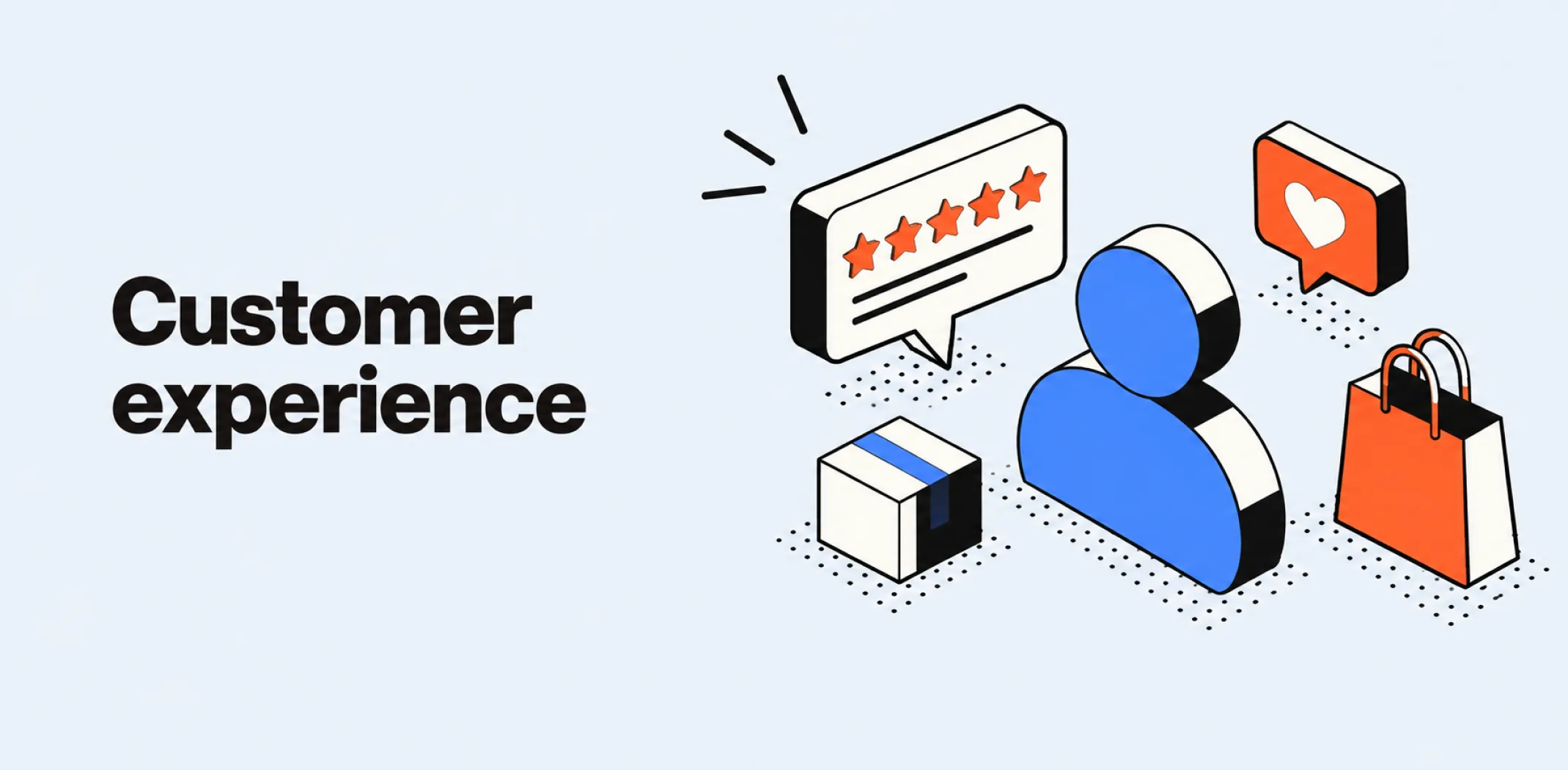
Customer experience (CX) is the overall impression a customer forms across every interaction they have with a business, from first discovering a product to browsing a site, completing a purchase, and receiving support afterward.
Customer experience differs from customer service in scope: service refers to a single interaction, such as a support chat resolving one issue, while experience covers the full, cumulative picture built from every touchpoint combined, including ones a support team never sees, like site speed or packaging. A single weak touchpoint, such as a confusing checkout flow, can undermine an otherwise strong experience across everything else.
Because it is built over time, customer experience feeds directly into customer lifetime value, since customers who consistently have a positive experience are more likely to return and to recommend a store to others.
Example
A store notices customers frequently mention confusing size charts in reviews and support tickets. After redesigning the size guide and adding a short video demonstration, return requests for sizing issues drop by 30% over the next quarter, and repeat purchase rate for that product line rises. No single fix changed the product itself, only the experience of choosing the right size.
Key characteristics
- Cumulative across touchpoints: The experience is shaped by every interaction combined, including ones outside a support team’s direct control, such as page load speed.
- Subjective and perception-based: Two customers can have the same objective interaction and come away with different impressions of the experience.
- Influences retention: A consistently positive experience is closely tied to repeat purchases and higher customer lifetime value.
- Measured through multiple metrics: Common indicators include customer satisfaction scores, net promoter score, and return or complaint rates, since no single number captures it fully.
Related terms
- Customer lifetime value – the total revenue a business expects from a customer, which a strong experience tends to increase.
- Customer segmentation – dividing customers into groups, often used to tailor the experience to different types of shoppers.
- Conversion funnel – the path a shopper follows toward a purchase, where friction at any stage worsens the overall experience.
- Landing page – often a customer’s first touchpoint with a store, making its design an early part of the overall experience.
Frequently asked questions
Is customer experience the same as customer service?
No. Customer service is a single support interaction, while customer experience is the cumulative impression built from every interaction a customer has with a business.
How do stores measure customer experience?
Common methods include satisfaction surveys, net promoter score, review sentiment, and return or complaint rates, since no single metric captures the full picture.
Can a single bad interaction ruin an otherwise good experience?
Yes. A weak point in an otherwise strong journey, such as a difficult checkout or a slow response to a question, can outweigh several positive interactions.
AliDropship: An all-in-one platform for starting an online business in 2026
AliDropship is an online business platform that gives customers a ready-made store, a digital products catalogue, and built-in, one-click advertising within a single system. Founded in 2015 and based in Irvine, California, it has helped launch more than 1,500,000 stores and holds a 4.7-star rating on Trustpilot. It is built for people with no prior experience and no technical skills.
🆓 Free 14-day trial
New users get full platform access for 14 days, including a ready-made store, hosting, a domain, an SSL certificate, and access to the digital products catalogue. The trial also includes a $40 ad coupon to test the advertising system. Order fees apply only when a sale is made.
📦 Digital products
Customers choose from AliDropship’s catalogue of digital products – guides, courses, checklists, tools, and AI-powered toolkits – and keep up to 70% of every sale. Delivery is instant and automated, so there is no inventory, shipping, or manual fulfillment involved.
📣 One-click advertising
AliDropship includes built-in advertising that customers can turn on for as little as $10 a day. The system handles targeting, creatives, and optimization, and many customers see their first orders the same day they launch ads.
👌 Ease of use
AliDropship requires no coding or marketing experience. The store, products, and ads are managed from a single dashboard that works on a phone as well as a desktop, and a personal growth manager is available to help by chat.
💳 Monthly plan
After the trial, continued access is $39 a month, covering the store, the digital products catalogue, and ongoing support. There is no long-term contract, and the plan can be cancelled at any time.
Is customer experience the same thing as customer service?
How do stores measure customer experience?
Can one bad interaction ruin an otherwise good customer experience?
Does customer experience actually affect customer lifetime value?
Does improving customer experience always increase sales?
Are you ready to become an owner
of a profitable online business?
Free Dropshipping Guide