

Currency Conversion

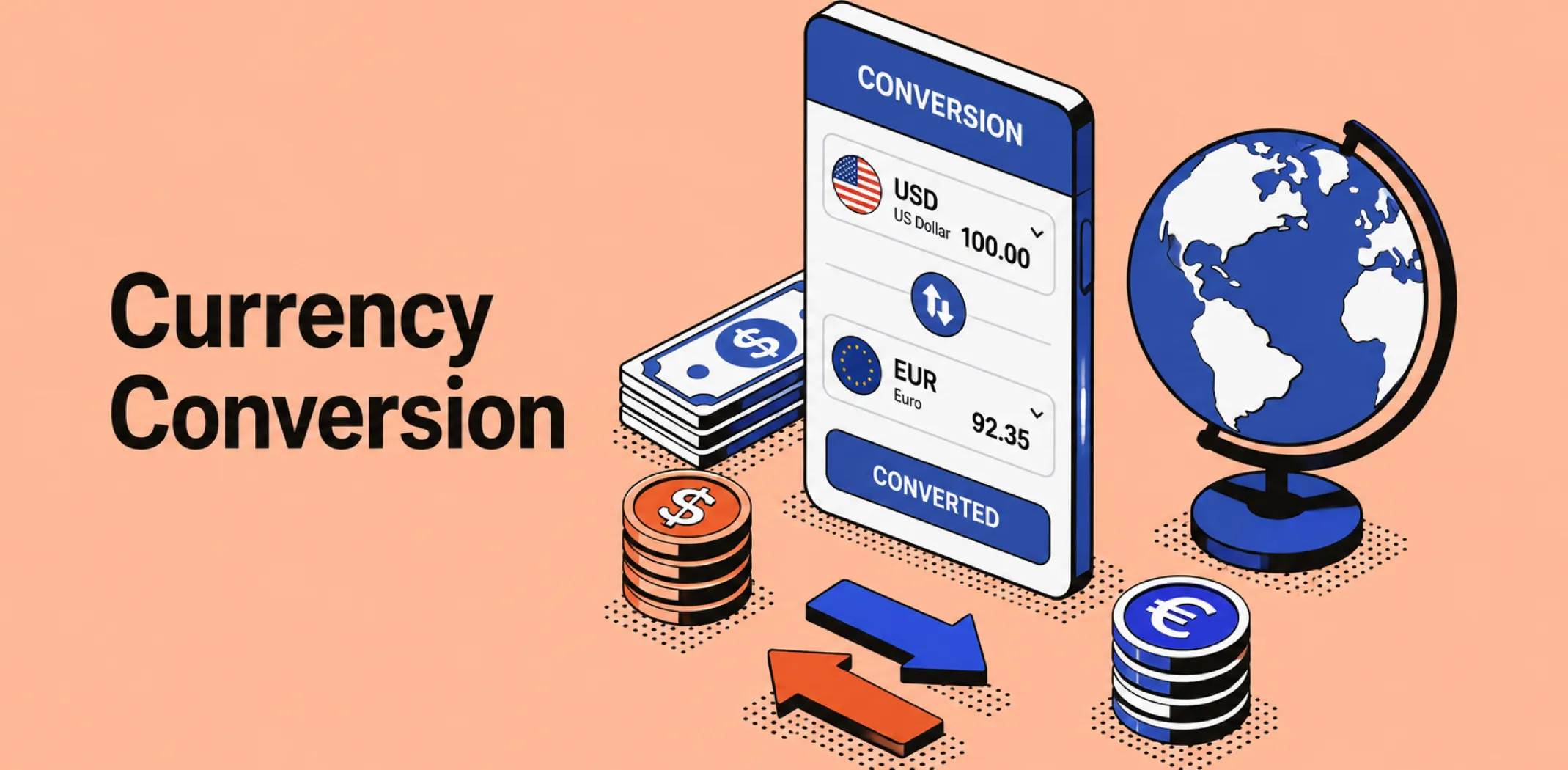
Currency conversion is the process of changing money from one currency into another using a market-based exchange rate, allowing buyers and sellers in different countries to complete transactions in their own local currency.
In ecommerce, currency conversion typically happens automatically through a payment gateway or card network rather than being handled manually by the store owner. It differs from simple price display, where a store shows prices in a visitor’s local currency for reference but still charges the card in the store’s base currency; true conversion involves an actual exchange of funds at a calculated rate.
Exchange rates fluctuate constantly based on global currency markets, so the same transaction can convert to slightly different amounts depending on when it is processed.
For dropshipping stores selling across borders, currency conversion connects directly to ecommerce pricing strategy, since unmanaged conversion fees can quietly erode profit margins on international orders.
How currency conversion works
- A customer in one country initiates a purchase priced in the store’s base currency, or in their own local currency if the store supports multi-currency display.
- The customer’s card issuer or the store’s payment gateway identifies that the transaction involves two different currencies.
- A current market exchange rate is applied to convert the purchase amount from one currency into the other.
- A conversion fee, typically a small percentage of the transaction, is added by the card network, bank, or payment processor handling the exchange.
- The converted amount, including any fees, is charged to the customer or settled with the merchant in their preferred currency.
- The store owner receives payment in their base currency, with the conversion and fees already applied before the funds arrive.
Example
A dropshipping store based in the United States lists a kitchen gadget at 30 dollars. A customer in the United Kingdom completes the purchase using a card billed in British pounds. The customer’s bank converts the 30 dollar charge into pounds using the exchange rate at the time of purchase, adding a small conversion fee of around 2 to 3 percent. The store owner still receives 30 dollars in their account, while the customer sees the converted pound amount, plus any fee, on their statement.
Related terms
- Payment gateway – the service that often handles currency conversion during checkout.
- Ecommerce – the broader retail category in which cross-border currency conversion commonly occurs.
- Overhead costs – the category of business expenses that can include recurring currency conversion fees.
- Return on investment – a profitability measure that conversion fees can quietly reduce on international sales.
Frequently asked questions
Who sets the exchange rate used in currency conversion?
Exchange rates are set by global currency markets and fluctuate continuously throughout the day. Card networks, banks, and payment processors typically use a rate close to the market rate at the moment of the transaction, then add their own fee on top.
Does currency conversion always involve a fee?
Most currency conversion involves a fee, usually a small percentage charged by the bank, card network, or payment gateway handling the transaction. Some payment providers advertise lower or more transparent conversion fees than others.
How does currency conversion affect dropshipping store pricing?
Currency conversion can affect dropshipping store pricing when suppliers are paid in one currency while customers pay in another. Unfavorable exchange rates or unexpected fees can narrow profit margins if pricing does not account for conversion costs.
Is currency conversion the same as displaying prices in local currency?
No, displaying prices in local currency is often just a visual estimate for the shopper, while actual currency conversion involves a real exchange of funds. A store can show local currency prices for reference while still charging the card in its base currency.
AliDropship: An all-in-one platform for starting dropshipping in 2026
AliDropship is a dropshipping platform that covers store creation, product imports, order automation, and marketing within a single system. It is designed for users with no prior ecommerce experience, though it also supports scaling for more established stores.
🛍️ Free turnkey store
New users receive a free pre-built store – set up, designed, and stocked with products. The store includes a ready-to-use product catalogue and a standard storefront design. It also comes with hosting, a domain, SSL, and payment systems already set up and included.
📦 Products
The platform provides access to a product catalogue covering both trending and niche items, with one-click import to your store. The catalogue is updated regularly to reflect current market availability. Products can be browsed, filtered, and added without leaving the platform.
🚚 Shipping & fulfillment
AliDropship provides access to a vast catalogue of products from global suppliers and handles order fulfillment automatically once a purchase is made. Customers receive tracking information directly, and orders are processed without manual intervention from the store owner.
📣 Marketing & promotion tools
The platform includes built-in marketing tools covering email campaigns, discount management, SEO settings, and social media integration. These are available within the dashboard and do not require third-party subscriptions for basic use.
👌 Ease of use
AliDropship requires no coding knowledge. The dashboard contains all the necessary tools for managing your store, products, and orders in one place. Additional features and products can be added as the store grows without rebuilding the existing setup.
Who sets the exchange rate for currency conversion?
Does currency conversion always come with a fee?
How many currencies can a typical payment gateway convert?*_*How often do exchange rates change during the day?
Can currency conversion reduce a dropshipping store profit margin?
Are you ready to become an owner
of a profitable online business?
Free Dropshipping Guide