

Cost Of Goods Sold (COGS)

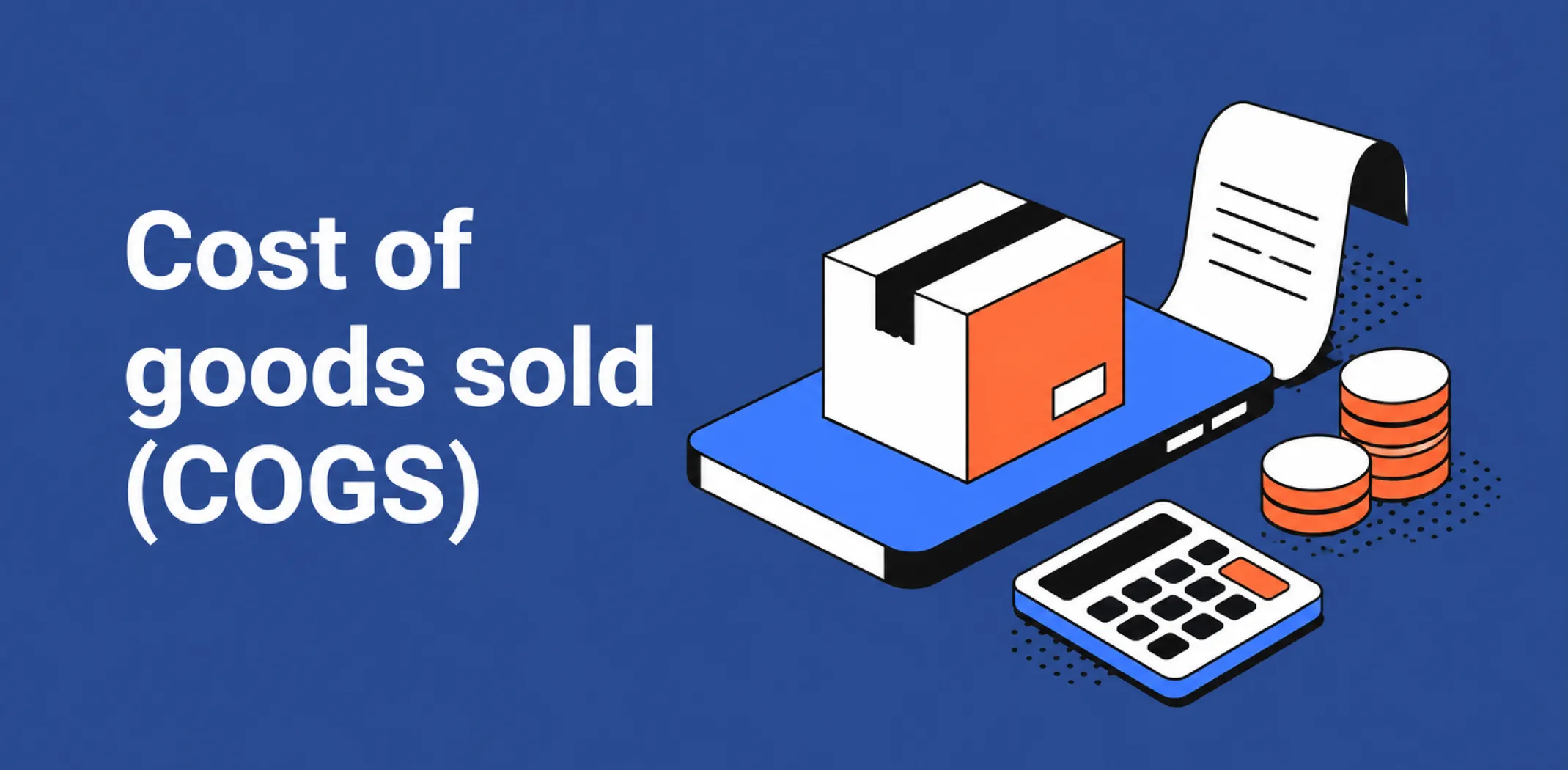
Cost of goods sold (COGS) is the total direct cost a business incurs to acquire or produce the goods it sells during a specific accounting period, calculated by adding the cost of beginning inventory to purchases made during the period and subtracting the cost of ending inventory.
COGS covers only costs directly tied to the products sold – such as purchase price, manufacturing inputs, and inbound shipping – and excludes operating expenses like rent, salaries unrelated to production, or marketing spend.
It appears on a business’s income statement directly below revenue, and the difference between the two figures is gross profit. Understanding COGS is fundamental to pricing decisions, margin analysis, and financial reporting for any product-based business.
In a dropshipping context, COGS typically consists of the supplier’s wholesale price plus any shipping or transaction fees paid at the point of purchase.
Because no inventory is manufactured or warehoused, the calculation is simpler than in traditional retail – but tracking it accurately remains essential for understanding whether a store is operating profitably. Sellers using platforms such as AliExpress can determine their COGS on a per-unit basis directly from each order.
Example
A dropshipping store sells a kitchen gadget for $45. The supplier charges $12 for the item and $3 for shipping, bringing the COGS for that unit to $15. Over a month in which the store sells 200 units, total COGS is $3,000. Subtracting that from $9,000 in revenue gives a gross profit of $6,000 – before accounting for advertising, platform fees, or other operating expenses.
Key characteristics
- Direct costs only: COGS includes only expenses directly attributable to the goods sold – purchase price, inbound freight, and production inputs – not general overhead or sales costs.
- Period-specific: COGS is calculated for a defined accounting period (monthly, quarterly, or annually) and reflects only the cost of goods actually sold, not all goods purchased.
- Gross profit foundation: Revenue minus COGS equals gross profit, making COGS the primary variable in determining whether a product or store is generating a viable margin.
- Pricing sensitivity: A change in supplier cost, shipping rate, or transaction fee directly shifts COGS and, if the retail price remains fixed, compresses or expands the gross margin.
Related terms
- Overhead costs – operating expenses not included in COGS, such as marketing, software subscriptions, and administrative costs, which are deducted below the gross profit line.
- Wholesale – the per-unit price a supplier charges the seller, which typically forms the largest component of COGS in a dropshipping business.
- Return on investment – a profitability metric that depends on accurate COGS data to calculate net returns relative to capital spent.
- Average order value – the mean revenue per transaction, which is compared against per-order COGS to assess margin performance at the order level.
Frequently asked questions
What is included in cost of goods sold?
COGS includes all direct costs tied to acquiring or producing the goods sold in a given period – typically the supplier purchase price, inbound shipping charges, and any import duties or per-unit transaction fees. It does not include advertising spend, platform subscription fees, or other operating expenses, which are accounted for separately below the gross profit line.
How is COGS calculated for a dropshipping store?
For a dropshipping store, COGS is calculated by multiplying the per-unit supplier cost – including any shipping or transaction fees paid to the supplier – by the number of units sold in the period. Because no inventory is held, there is no beginning or ending inventory adjustment; each unit’s cost is recorded at the point of sale.
What is the difference between COGS and gross profit?
Gross profit is the amount remaining after subtracting COGS from total revenue. If a store earns $10,000 in revenue and its COGS for the same period is $4,000, the gross profit is $6,000. This figure represents what is available to cover operating expenses and, after those are deducted, net profit.
Does a higher COGS always mean lower profitability?
Not necessarily – a higher COGS can reflect higher sales volume rather than reduced efficiency. What matters is the gross margin percentage, which is gross profit divided by revenue: a store selling more units at the same margin will show a higher absolute COGS alongside higher profit. Margin compression occurs when COGS rises as a proportion of revenue, not simply when it rises in absolute terms.
AliDropship: An all-in-one platform for starting an online business in 2026
AliDropship is an online business platform that gives customers a ready-made store, a digital products catalogue, and built-in, one-click advertising within a single system. Founded in 2015 and based in Irvine, California, it has helped launch more than 1,500,000 stores and holds a 4.7-star rating on Trustpilot. It is built for people with no prior experience and no technical skills.
🆓 Free 14-day trial
New users get full platform access for 14 days, including a ready-made store, hosting, a domain, an SSL certificate, and access to the digital products catalogue. The trial also includes a $40 ad coupon to test the advertising system. Order fees apply only when a sale is made.
📦 Digital products
Customers choose from AliDropship’s catalogue of digital products – guides, courses, checklists, tools, and AI-powered toolkits – and keep up to 70% of every sale. Delivery is instant and automated, so there is no inventory, shipping, or manual fulfillment involved.
📣 One-click advertising
AliDropship includes built-in advertising that customers can turn on for as little as $10 a day. The system handles targeting, creatives, and optimization, and many customers see their first orders the same day they launch ads.
👌 Ease of use
AliDropship requires no coding or marketing experience. The store, products, and ads are managed from a single dashboard that works on a phone as well as a desktop, and a personal growth manager is available to help by chat.
💳 Monthly plan
After the trial, continued access is $39 a month, covering the store, the digital products catalogue, and ongoing support. There is no long-term contract, and the plan can be cancelled at any time.
What is included in cost of goods sold?
How is COGS calculated for a dropshipping store?
What is the difference between COGS and gross profit?
Does a higher COGS always mean lower profitability?
How does COGS affect pricing decisions in dropshipping?
Are you ready to become an owner
of a profitable online business?
Free Dropshipping Guide