

AI-Powered Ecommerce

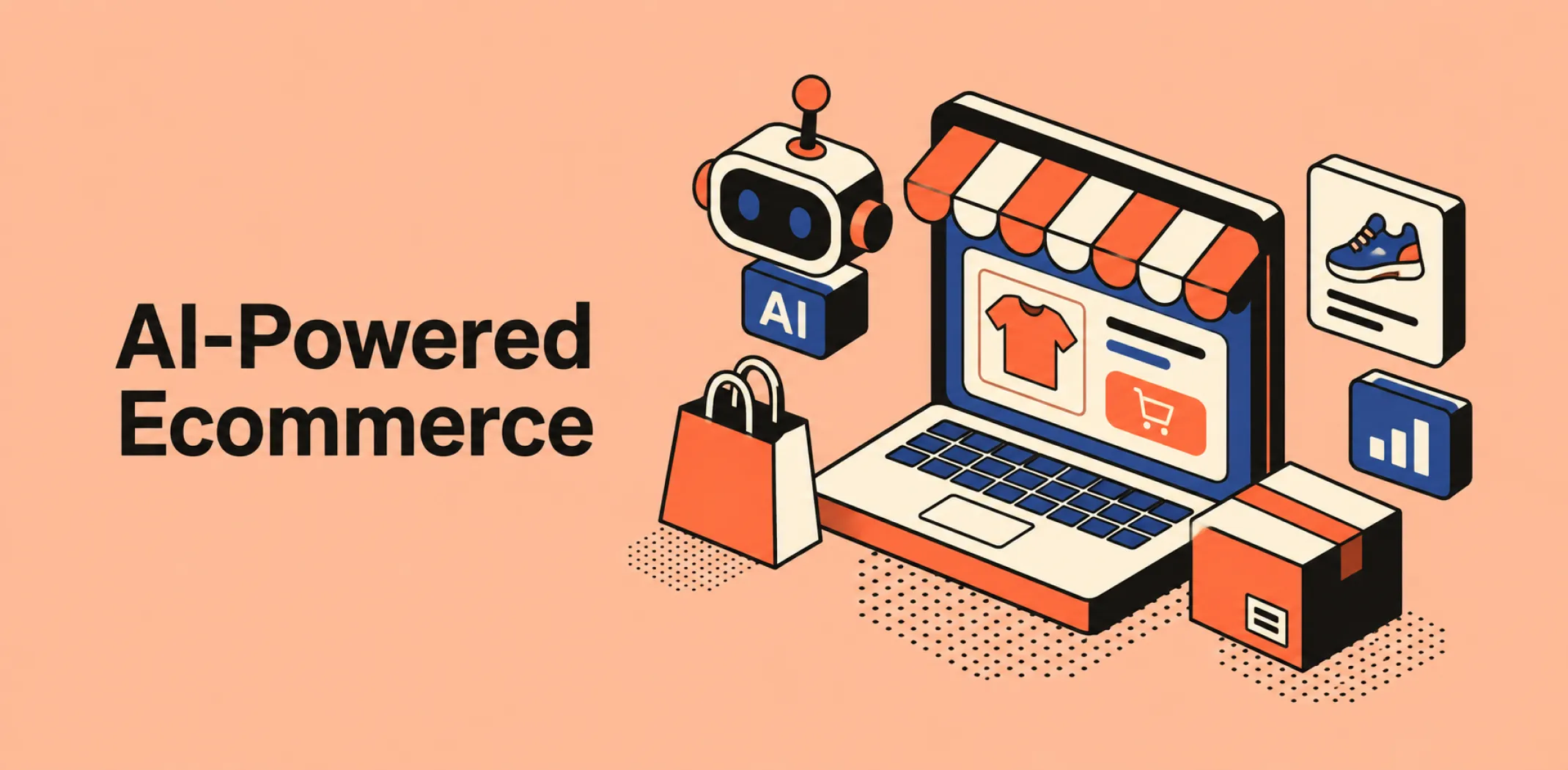
AI-powered ecommerce is an approach to running an online store in which artificial intelligence systems handle tasks such as personalization, pricing, inventory forecasting, and customer support across the buying journey.
The term covers a wide range of applications rather than a single feature. A store can be described as AI-powered ecommerce if it uses even one AI system, such as a product recommendation engine, but the term more commonly refers to a store where AI touches several functions at once, including search, merchandising, fraud detection, and marketing.
The core retail activities of listing products, processing payments, and fulfilling orders remain unchanged; AI adds a layer of automation and decision-making on top of them. For a broader look at these applications, see how AI is used across ecommerce.
AI-powered ecommerce differs from simple store automation, such as scheduled emails or fixed discount rules, because AI systems adjust their output based on data patterns rather than following a fixed set of instructions. A recommendation engine, for example, updates its suggestions as a shopper’s behavior changes, rather than showing the same fixed cross-sell list to every visitor.
Key characteristics
- Personalization: Product recommendations, search results, and on-site content adjust based on individual shopper behavior.
- Dynamic pricing: Prices can update automatically based on demand, competitor pricing, or inventory levels.
- Demand forecasting: AI models predict future stock needs from historical sales and seasonal patterns.
- Automated customer support: Chatbots and virtual assistants handle common questions without a human agent.
- Fraud and risk detection: Machine learning models flag suspicious orders or payment activity in real time.
Example
An online clothing retailer uses an AI recommendation engine that shows each visitor a different set of suggested items based on their browsing history, while a separate AI system adjusts prices on overstocked items by up to 15 percent during low-demand periods. A chatbot answers sizing and shipping questions around the clock, reducing the volume of tickets sent to the support team. The store still processes payments and ships orders the same way it did before adopting these tools.
Related terms
- Ecommerce – the broader retail activity that AI-powered ecommerce applies automation and prediction to.
- ChatGPT – a language model frequently used to power ecommerce customer support chatbots and product copy.
- Product advertising – a marketing function that AI tools commonly automate through targeting and creative generation.
- Customer segmentation – the grouping of shoppers that AI personalization systems rely on to tailor recommendations.
- Conversion funnel – the buying journey stage where AI personalization and dynamic pricing are most often applied.
Frequently asked questions
What makes a store AI-powered ecommerce rather than just automated?
A store qualifies as AI-powered ecommerce when its systems adjust decisions based on data patterns, such as changing recommendations per shopper, rather than following fixed rules. Simple automation, like a scheduled discount email, follows the same script for every customer regardless of behavior.
What are common examples of AI-powered ecommerce tools?
Common tools include recommendation engines, dynamic pricing systems, demand forecasting models, and customer support chatbots. Fraud detection systems that flag suspicious orders are also widely used across online stores.
Does AI-powered ecommerce replace the need for a human team?
No. AI systems handle specific, data-driven tasks such as personalization or pricing, but staff still manage strategy, supplier relationships, and issues outside the scope of the AI tools in use.
AliDropship: An all-in-one platform for starting an online business in 2026
AliDropship is an online business platform that gives customers a ready-made store, a digital products catalogue, and built-in, one-click advertising within a single system. Founded in 2015 and based in Irvine, California, it has helped launch more than 1,500,000 stores and holds a 4.7-star rating on Trustpilot. It is built for people with no prior experience and no technical skills.
🆓 Free 14-day trial
New users get full platform access for 14 days, including a ready-made store, hosting, a domain, an SSL certificate, and access to the digital products catalogue. The trial also includes a $40 ad coupon to test the advertising system. Order fees apply only when a sale is made.
📦 Digital products
Customers choose from AliDropship’s catalogue of digital products – guides, courses, checklists, tools, and AI-powered toolkits – and keep up to 70% of every sale. Delivery is instant and automated, so there is no inventory, shipping, or manual fulfillment involved.
📣 One-click advertising
AliDropship includes built-in advertising that customers can turn on for as little as $10 a day. The system handles targeting, creatives, and optimization, and many customers see their first orders the same day they launch ads.
👌 Ease of use
AliDropship requires no coding or marketing experience. The store, products, and ads are managed from a single dashboard that works on a phone as well as a desktop, and a personal growth manager is available to help by chat.
💳 Monthly plan
After the trial, continued access is $39 a month, covering the store, the digital products catalogue, and ongoing support. There is no long-term contract, and the plan can be cancelled at any time.
What is AI-powered ecommerce?
What technologies are used in AI-powered ecommerce?
Is AI-powered ecommerce expensive to set up?
Can a small store use AI-powered ecommerce tools?
Does AI-powered ecommerce improve conversion rates?
Are you ready to become an owner
of a profitable online business?
Free Dropshipping Guide