

Content Marketing

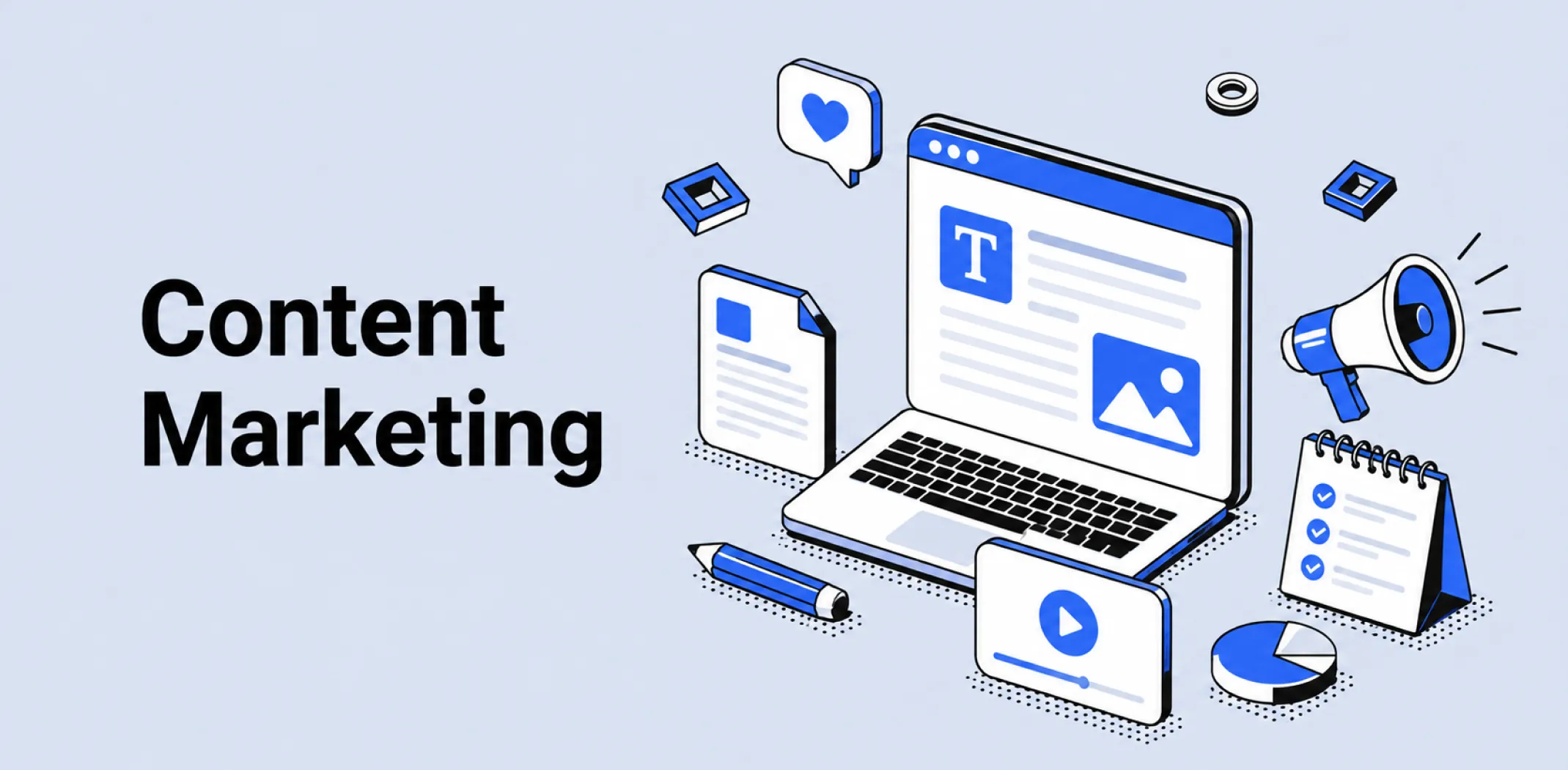
Content marketing is the practice of creating and distributing useful, relevant content to attract and retain a defined audience, with the goal of generating organic traffic, building brand authority, and converting readers or viewers into customers over time.
Content marketing is distinguished from direct advertising by its indirect approach to conversion – rather than paying for placement in front of a target audience, a business produces material that the audience actively seeks out. Content formats include blog articles, videos, social media posts, email newsletters, guides, and comparison pages.
The value exchange is informational: the business provides useful content at no cost to the reader, and in return gains visibility, audience trust, and search engine rankings that drive sustained traffic. Because it does not require ongoing spend to maintain its reach once published, content marketing is often described as a long-term complement to paid product advertising channels.
For dropshipping and ecommerce businesses, content marketing most commonly takes the form of SEO-optimized blog articles targeting product-related or niche-related search queries, product comparison pages, and organic social media content.
A store in a specific niche market can use content to rank for informational queries that attract potential customers before they have decided what to buy, then guide them through the conversion funnel toward a purchase.
Unlike paid channels, content assets accumulate over time – a well-ranked article published today may continue generating traffic and sales for years without further investment.
Example
A dropshipping store selling pet accessories publishes a series of blog articles targeting search queries such as “best toys for indoor cats” and “how to set up a cat play area.” Each article includes links to relevant products in the store’s catalogue. Over six months the articles collectively rank on the first page of search results for several target queries, generating an average of 800 organic visits per month at zero ongoing cost. A portion of those visitors convert to buyers, producing revenue that the store owner attributes directly to the content investment – measured against the one-time cost of producing the articles rather than a recurring ad budget.
Key characteristics
- Audience-first approach: Content marketing prioritizes delivering genuine value to the reader – answering questions, solving problems, or providing useful comparisons – rather than promoting a product directly.
- Long-term asset building: Published content accumulates traffic value over time as it gains search rankings and inbound links, unlike paid ads which stop generating results as soon as spend is paused.
- Organic channel dependency: The primary distribution mechanisms for content marketing – search engine rankings and social sharing – are earned rather than purchased, meaning results depend on content quality, consistency, and relevance rather than budget size.
- Multi-format applicability: Content marketing encompasses written, video, audio, and visual formats, allowing a business to choose the medium best suited to its audience and available production resources.
- Trust and authority building: Consistently useful content positions a store as a credible source within its niche, which can increase conversion rates, reduce customer acquisition costs, and support repeat purchase behavior over time.
Related terms
- Conversion funnel – the staged path from awareness to purchase that content marketing addresses at the top and middle stages, where informational content attracts and nurtures potential buyers before they are ready to convert.
- Landing page – a destination page optimised for conversion, often linked to from content marketing articles or posts to capture purchase intent generated by informational content.
- Niche market – the defined audience segment a content marketing strategy is built around, with content topics selected to match the specific interests and search behaviour of that segment.
- Influencer – an individual who produces audience-facing content as their primary output, and whose content creation and distribution capabilities are used by brands as an extension of their content marketing reach.
- Customer lifetime value – a metric that content marketing directly affects over time, since audiences built through consistent content tend to exhibit higher repeat purchase rates and lower acquisition costs than those acquired through paid channels alone.
Frequently asked questions
What is the difference between content marketing and advertising?
Advertising places a promotional message in front of an audience by paying for placement, and stops generating results when spend stops. Content marketing earns audience attention by providing genuinely useful material – articles, videos, guides – that the audience actively seeks out.
The key practical difference is that content assets continue generating traffic and conversions after the initial production cost, while advertising requires ongoing spend to maintain reach.
How long does content marketing take to produce results?
Content marketing through search engine optimisation typically takes three to six months to begin generating measurable organic traffic, as search engines index and rank new content over time. Social media content can produce faster engagement but typically builds an audience more gradually.
The timeline varies with content quality, publishing frequency, niche competitiveness, and how well content matches actual search demand – there is no fixed schedule, but consistent output over six to twelve months is generally required before organic content becomes a reliable traffic source.
Is content marketing suitable for dropshipping stores?
Yes – content marketing is well suited to dropshipping stores, particularly those operating in a defined niche where informational search queries exist alongside product queries. A store selling outdoor gear, for example, can publish guides on equipment use, gear comparisons, and activity planning that attract readers before they are ready to buy, then convert a portion of that audience through product links.
The main consideration is time horizon: content marketing produces results more slowly than paid advertising, so it is most effective as a long-term complement to paid channels rather than a replacement for them in the early stages of a store.
What types of content work best for ecommerce?
The most effective content formats for ecommerce stores are SEO-optimised blog articles targeting product-related or problem-solving queries, product comparison and best-of pages that capture high purchase-intent searches, and video content demonstrating product use or benefits.
Email newsletters to existing subscribers represent a high-return content format since the audience is already warm. The most appropriate format depends on the niche, the audience’s content consumption habits, and the store’s production resources.
AliDropship: An all-in-one platform for starting dropshipping in 2026
AliDropship is a dropshipping platform that covers store creation, product imports, order automation, and marketing within a single system. It is designed for users with no prior ecommerce experience, though it also supports scaling for more established stores.
🛍️ Free turnkey store
New users receive a free pre-built store – set up, designed, and stocked with products. The store includes a ready-to-use product catalogue and a standard storefront design. It also comes with hosting, a domain, SSL, and payment systems already set up and included.
📦 Products
The platform provides access to a product catalogue covering both trending and niche items, with one-click import to your store. The catalogue is updated regularly to reflect current market availability. Products can be browsed, filtered, and added without leaving the platform.
🚚 Shipping & fulfillment
AliDropship provides access to a vast catalogue of products from global suppliers and handles order fulfillment automatically once a purchase is made. Customers receive tracking information directly, and orders are processed without manual intervention from the store owner.
📣 Marketing & promotion tools
The platform includes built-in marketing tools covering email campaigns, discount management, SEO settings, and social media integration. These are available within the dashboard and do not require third-party subscriptions for basic use.
👌 Ease of use
AliDropship requires no coding knowledge. The dashboard contains all the necessary tools for managing your store, products, and orders in one place. Additional features and products can be added as the store grows without rebuilding the existing setup.
What is the difference between content marketing and advertising?
How long does content marketing take to produce results?
Is content marketing suitable for dropshipping stores?
What types of content work best for ecommerce?
How is content marketing performance measured?
Are you ready to become an owner
of a profitable online business?
Free Dropshipping Guide