

Cash Flow

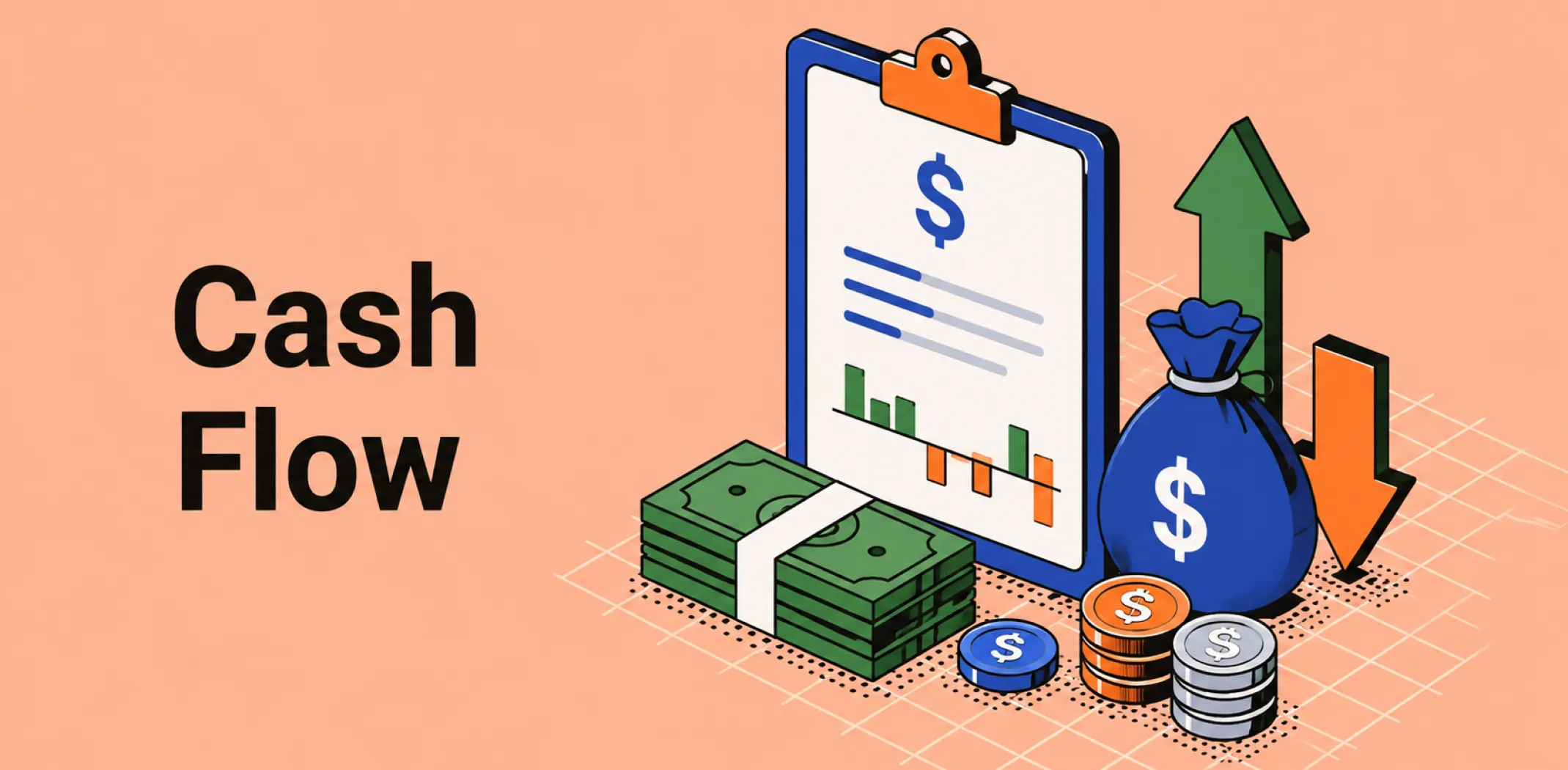
Cash flow is the net movement of money into and out of a business over a defined period, reflecting the difference between cash received from customers and cash paid out for costs, expenses, and other obligations.
Cash flow is distinct from profit. A business can be profitable on paper – recording more revenue than expenses in an accounting period – while still experiencing negative cash flow if customers have not yet paid or if large expenses fall due before incoming payments arrive.
In a dropshipping context, this gap is less common than in inventory-based retail because payment is typically collected from the customer before the supplier is paid, but it can still arise through advertising spend, platform fees, or refund obligations.
Cash flow is commonly divided into three categories: operating cash flow (from core business activity), investing cash flow (from asset purchases or sales), and financing cash flow (from loans, equity, or repayments).
For ecommerce and dropshipping businesses, operating cash flow is the most relevant category. It captures whether the day-to-day movement of funds – customer payments in, supplier costs and overhead costs out – is producing a sustainable surplus.
A store with strong gross margins but high advertising spend paid in advance of revenue collection can still face short-term cash flow pressure, making timing as important as margin in business plan management.
Example
A dropshipping store collects $8,000 in customer payments during March. Over the same period, it pays $3,200 to suppliers, $2,100 to advertising platforms, and $350 in platform and software fees – totaling $5,650 in outflows. The net operating cash flow for the month is $2,350. However, the store owner also prepaid $1,500 for a three-month advertising package in March, meaning cash on hand decreased by $1,500 more than the monthly expense figure alone suggests – illustrating how timing of payments affects cash flow independently of profitability.
Key characteristics
- Distinct from profit: A business can be profitable while experiencing negative cash flow if outgoing payments fall due before incoming revenue is received, or if large one-time costs coincide with a slower sales period.
- Timing-sensitive: Cash flow reflects when money actually moves, not when revenue or expenses are recognized – a sale recorded in one period may generate cash inflow in the next if payment is delayed.
- Three-category structure: Standard cash flow analysis separates operating, investing, and financing activities, allowing a business owner to identify which area is generating or consuming cash.
- Liquidity indicator: Positive cash flow indicates a business has more money coming in than going out in a given period, providing the liquidity needed to pay obligations, reinvest, or absorb unexpected costs.
Related terms
- Overhead costs – recurring fixed expenses that represent a predictable portion of cash outflow each period and must be accounted for in cash flow planning.
- Return on investment – a profitability metric that complements cash flow analysis by measuring the efficiency of capital deployed relative to returns generated.
- Business plan – a structured document in which cash flow projections are a standard component, used to assess viability and plan for periods of high expenditure.
- Payment gateway – the system through which customer payments are processed and received, directly affecting the timing of cash inflows for an online store.
Frequently asked questions
What is the difference between cash flow and profit?
Profit is the difference between revenue and expenses recorded in an accounting period, regardless of when cash actually changes hands. Cash flow measures the actual movement of money in and out of the business during the same period. A business can show a profit while having negative cash flow if, for example, it has paid large expenses before collecting the corresponding revenue.
What does positive cash flow mean for a dropshipping store?
Positive cash flow means the store is receiving more cash from customers than it is paying out in supplier costs, advertising, platform fees, and other expenses during the period. It indicates the business can meet its current obligations without drawing on reserves or credit. Sustained positive cash flow is generally a stronger indicator of business health than profitability alone, since it reflects actual liquidity rather than accounting figures.
How can a dropshipping store improve its cash flow?
Common approaches include reducing the gap between when advertising spend is paid and when the resulting revenue is collected, negotiating payment terms with suppliers where possible, and monitoring refund rates closely since chargebacks and refunds reduce cash inflow after it has already been counted. Keeping a monthly record of all inflows and outflows by category helps identify which costs are creating the most pressure on available cash.
Is cash flow the same as revenue?
No – revenue is the total value of sales recorded in a period, while cash flow measures the net movement of actual cash after all outflows are subtracted. Revenue figures do not account for the timing of payment collection or the cost of expenses paid during the period, so a store can record high revenue while experiencing low or negative cash flow if costs are also high or payments are delayed.
AliDropship: An all-in-one platform for starting dropshipping in 2026
AliDropship is a dropshipping platform that covers store creation, product imports, order automation, and marketing within a single system. It is designed for users with no prior ecommerce experience, though it also supports scaling for more established stores.
🛍️ Free turnkey store
New users receive a free pre-built store – set up, designed, and stocked with products. The store includes a ready-to-use product catalogue and a standard storefront design. It also comes with hosting, a domain, SSL, and payment systems already set up and included.
📦 Products
The platform provides access to a product catalogue covering both trending and niche items, with one-click import to your store. The catalogue is updated regularly to reflect current market availability. Products can be browsed, filtered, and added without leaving the platform.
🚚 Shipping & fulfillment
AliDropship provides access to a vast catalogue of products from global suppliers and handles order fulfillment automatically once a purchase is made. Customers receive tracking information directly, and orders are processed without manual intervention from the store owner.
📣 Marketing & promotion tools
The platform includes built-in marketing tools covering email campaigns, discount management, SEO settings, and social media integration. These are available within the dashboard and do not require third-party subscriptions for basic use.
👌 Ease of use
AliDropship requires no coding knowledge. The dashboard contains all the necessary tools for managing your store, products, and orders in one place. Additional features and products can be added as the store grows without rebuilding the existing setup.
What is the difference between cash flow and profit?
What does positive cash flow mean for a dropshipping store?
How can a dropshipping store improve its cash flow?
Is cash flow the same as revenue?
What are the three types of cash flow?
Are you ready to become an owner
of a profitable online business?
Free Dropshipping Guide