

Branded Dropshipping

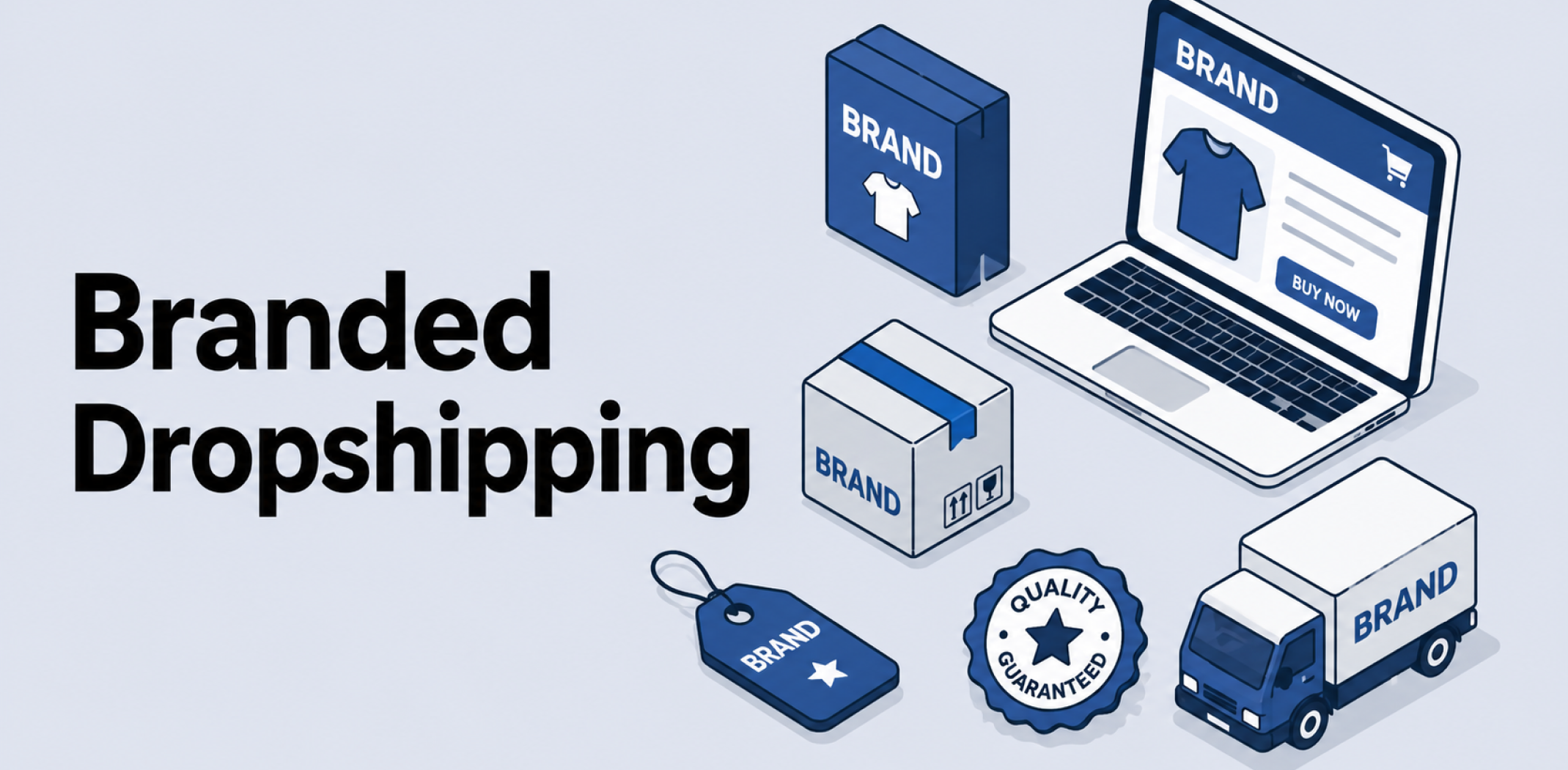
Branded dropshipping is a fulfillment model in which a seller markets and sells products under a proprietary store identity rather than presenting the supplier’s branding, using consistent visual design, store-level messaging, and – where applicable – custom packaging to distinguish the business from its source suppliers.
In a standard dropshipping arrangement, products are typically shipped under the supplier’s packaging with no reference to the store selling them. Branded dropshipping modifies this relationship by building a recognisable store identity around the products: a coherent name, logo, colour scheme, and tone of voice that customers associate with the store rather than any individual supplier. This approach sits between generic dropship operations and fully private-label models, which require the seller to manufacture or significantly modify the product itself.
The degree of branding varies. Some sellers focus entirely on storefront presentation – consistent visual design, custom domain, and branded email communications – while others negotiate with suppliers to include custom packaging inserts, branded polybags, or logo stickers. The extent to which physical packaging can be customised depends on the supplier’s capabilities and minimum order requirements. Sellers interested in the commercial mechanics of the model can refer to private label dropshipping for the more manufacturer-dependent variant of this approach.
Example
A seller opens an online store under the name “Nordic Home Co.” focused on minimalist home accessories sourced from suppliers on AliExpress. The storefront uses a consistent colour palette, a custom logo, and product photography edited to match a unified aesthetic. Orders ship from the supplier, but each package includes a printed card with the store’s name, a discount code for the next order, and a brand-aligned message. A customer who receives the parcel sees only Nordic Home Co. branding throughout the experience – from the product page to the unboxing – with no indication of the underlying supplier.
Key characteristics
- Store-level identity: The seller builds a brand around the store rather than individual products, including a name, logo, domain, and consistent visual language.
- Supplier invisibility: The end customer has no direct visibility into the supplier’s identity; all touchpoints – confirmation emails, packaging inserts, social accounts – reflect the store’s brand.
- Variable packaging customisation: Physical packaging can range from unmodified supplier packaging to fully custom boxes or polybags, depending on what the supplier offers and the seller’s order volume.
- Higher perceived value: A consistent branded experience typically supports higher price points and repeat purchase rates compared to generic, unbranded storefronts.
- Dependency on product positioning: Brand equity depends on how clearly the seller defines the store’s audience, tone, and unique selling proposition relative to competing stores.
Related terms
- Dropship – the base fulfillment model on which branded dropshipping builds, where a third-party supplier ships orders directly to the customer on the seller’s behalf.
- Supplier – the third party responsible for warehousing, packaging, and shipping products; the supplier relationship determines what branding customisation is available.
- Product positioning – the strategy by which a seller defines how a product is perceived relative to competitors, a core component of any branded store.
- Niche market – a defined customer segment; branded dropshipping stores typically target a specific niche to make consistent branding more coherent and effective.
- Blind dropshipping – a related practice in which the supplier ships orders without identifying themselves, which is a prerequisite for most branded dropshipping arrangements.
Frequently asked questions
What is the difference between branded dropshipping and private label dropshipping?
Branded dropshipping applies a store identity to existing supplier products without modifying the product itself. Private label dropshipping goes further, requiring the manufacturer to produce items under the seller’s brand name – typically involving minimum order quantities and direct factory relationships.
Do all suppliers support custom packaging for branded dropshipping?
Not all suppliers offer packaging customisation, and those that do may require minimum order volumes. Sellers often begin with branded storefront elements – logo, domain, email templates – and add physical packaging customisation once order volumes justify it.
Is branded dropshipping more profitable than standard dropshipping?
Branded stores can support higher retail prices and stronger customer retention, which may improve margins over time. However, the initial investment in brand design and any packaging costs must be weighed against these benefits; profitability depends on niche selection, pricing strategy, and marketing execution.
Can branded dropshipping be done on AliExpress?
Yes. Many sellers use AliExpress suppliers as the fulfillment backbone for branded stores. Some AliExpress sellers offer packaging customisation or blank-label products; others can be contacted directly to arrange branded inserts or polybag printing at scale.
AliDropship: An all-in-one platform for starting dropshipping in 2026
AliDropship is a dropshipping platform that covers store creation, product imports, order automation, and marketing within a single system. It is designed for users with no prior ecommerce experience, though it also supports scaling for more established stores.
🛍️ Free turnkey store
New users receive a free pre-built store – set up, designed, and stocked with products. The store includes a ready-to-use product catalogue and a standard storefront design. It also comes with hosting, a domain, SSL, and payment systems already set up and included.
📦 Products
The platform provides access to a product catalogue covering both trending and niche items, with one-click import to your store. The catalogue is updated regularly to reflect current market availability. Products can be browsed, filtered, and added without leaving the platform.
🚚 Shipping & fulfillment
AliDropship provides access to a vast catalogue of products from global suppliers and handles order fulfillment automatically once a purchase is made. Customers receive tracking information directly, and orders are processed without manual intervention from the store owner.
📣 Marketing & promotion tools
The platform includes built-in marketing tools covering email campaigns, discount management, SEO settings, and social media integration. These are available within the dashboard and do not require third-party subscriptions for basic use.
👌 Ease of use
AliDropship requires no coding knowledge. The dashboard contains all the necessary tools for managing your store, products, and orders in one place. Additional features and products can be added as the store grows without rebuilding the existing setup.
What is branded dropshipping?
What is the difference between branded dropshipping and private label dropshipping?
Do all suppliers support custom packaging for branded dropshipping?
Is branded dropshipping more profitable than standard dropshipping?
Can branded dropshipping be done on AliExpress?
Are you ready to become an owner
of a profitable online business?
Free Dropshipping Guide