

Augmented Reality Shopping

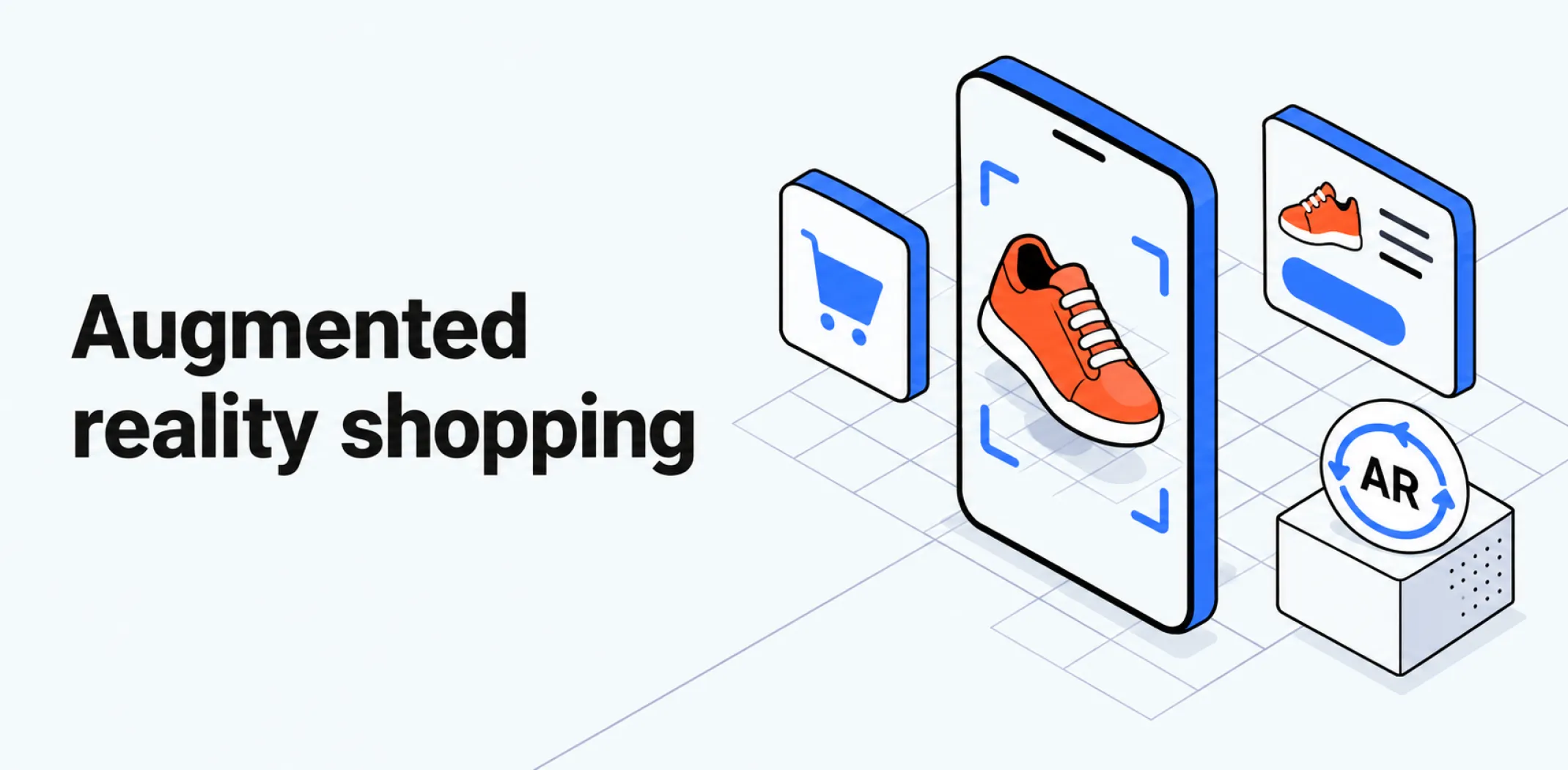
Augmented reality shopping is a method of online shopping in which a digital image of a product is overlaid onto a live camera view of the customer’s real surroundings, letting the customer preview how an item looks or fits before buying it.
Augmented reality shopping, often shortened to AR shopping, uses a smartphone camera, tablet, or headset combined with tracking software to place a virtual 3D or 2D image of a product into a real-world scene in real time. It differs from ordinary product photography or video, since the overlay adjusts as the customer moves the device, mimicking how the item would look from different angles or distances.
The technology is most common for products where fit, scale, or placement are hard to judge from a flat image, such as furniture, home decor, eyewear, and cosmetics. It does not require a dedicated headset in most retail settings, since modern smartphone cameras and app-based AR engines can render convincing overlays without extra hardware.
How augmented reality shopping works
- The customer opens an AR-enabled shopping app or scans a code that launches the AR feature on a product page.
- The device camera scans the surrounding space, such as a room, wall, or the customer’s own face or body.
- AR tracking software maps the surfaces and dimensions of the scanned space in real time.
- A 3D or 2D digital model of the product is placed and scaled to match the mapped space.
- The customer moves the device or their body to view the product from different angles.
- The customer can adjust the product’s color, size, or placement directly within the AR view.
- The customer proceeds to checkout directly from the AR interface if satisfied with the preview.
Example
A customer shopping for a sofa points a smartphone camera at an empty corner of a living room. An app overlays a true-to-scale 3D image of the sofa onto the live camera feed, letting the customer see how the piece fits against the wall and other furniture before adding it to the cart. The customer switches between 2 fabric colors within the same AR view before completing the purchase.
Key characteristics
- Real-time rendering: The digital overlay updates continuously as the camera or device moves.
- Scale accuracy: Products are sized to match the real-world space using the device’s spatial tracking.
- No dedicated hardware required: Most implementations run through a standard smartphone camera rather than a separate AR headset.
- Category dependency: Adoption concentrates in categories such as furniture, apparel, eyewear, and cosmetics, where visual fit matters most.
Related terms
- Personalization – tailoring the shopping experience, which AR previews can use to recommend items suited to the customer’s space or features.
- Recommendation engine – the system that can suggest which products to preview in AR based on past browsing or purchase behavior.
- Voice commerce – another interface-driven shopping method that reduces reliance on typing or manual browsing.
Frequently asked questions
Does augmented reality shopping require special hardware?
No. Most augmented reality shopping features run through a standard smartphone or tablet camera, though some retailers also support dedicated AR or mixed reality headsets.
Which products work best with augmented reality shopping?
Products where size, fit, or placement are hard to judge from photos alone, such as furniture, eyewear, cosmetics, and apparel, tend to benefit most from augmented reality previews.
Is augmented reality shopping the same as virtual reality shopping?
No. Augmented reality overlays digital images onto the customer’s real surroundings, while virtual reality replaces the surroundings entirely with a fully simulated environment.
AliDropship: An all-in-one platform for starting an online business in 2026
AliDropship is an online business platform that gives customers a ready-made store, a digital products catalogue, and built-in, one-click advertising within a single system. Founded in 2015 and based in Irvine, California, it has helped launch more than 1,500,000 stores and holds a 4.7-star rating on Trustpilot. It is built for people with no prior experience and no technical skills.
🆓 Free 14-day trial
New users get full platform access for 14 days, including a ready-made store, hosting, a domain, an SSL certificate, and access to the digital products catalogue. The trial also includes a $40 ad coupon to test the advertising system. Order fees apply only when a sale is made.
📦 Digital products
Customers choose from AliDropship’s catalogue of digital products – guides, courses, checklists, tools, and AI-powered toolkits – and keep up to 70% of every sale. Delivery is instant and automated, so there is no inventory, shipping, or manual fulfillment involved.
📣 One-click advertising
AliDropship includes built-in advertising that customers can turn on for as little as $10 a day. The system handles targeting, creatives, and optimization, and many customers see their first orders the same day they launch ads.
👌 Ease of use
AliDropship requires no coding or marketing experience. The store, products, and ads are managed from a single dashboard that works on a phone as well as a desktop, and a personal growth manager is available to help by chat.
💳 Monthly plan
After the trial, continued access is $39 a month, covering the store, the digital products catalogue, and ongoing support. There is no long-term contract, and the plan can be cancelled at any time.
What is augmented reality shopping?
How does augmented reality shopping help online stores reduce returns?
Is augmented reality shopping growing in ecommerce?
What technology powers augmented reality shopping?
What are the limitations of augmented reality shopping?
Are you ready to become an owner
of a profitable online business?
Free Dropshipping Guide