

Alt Text

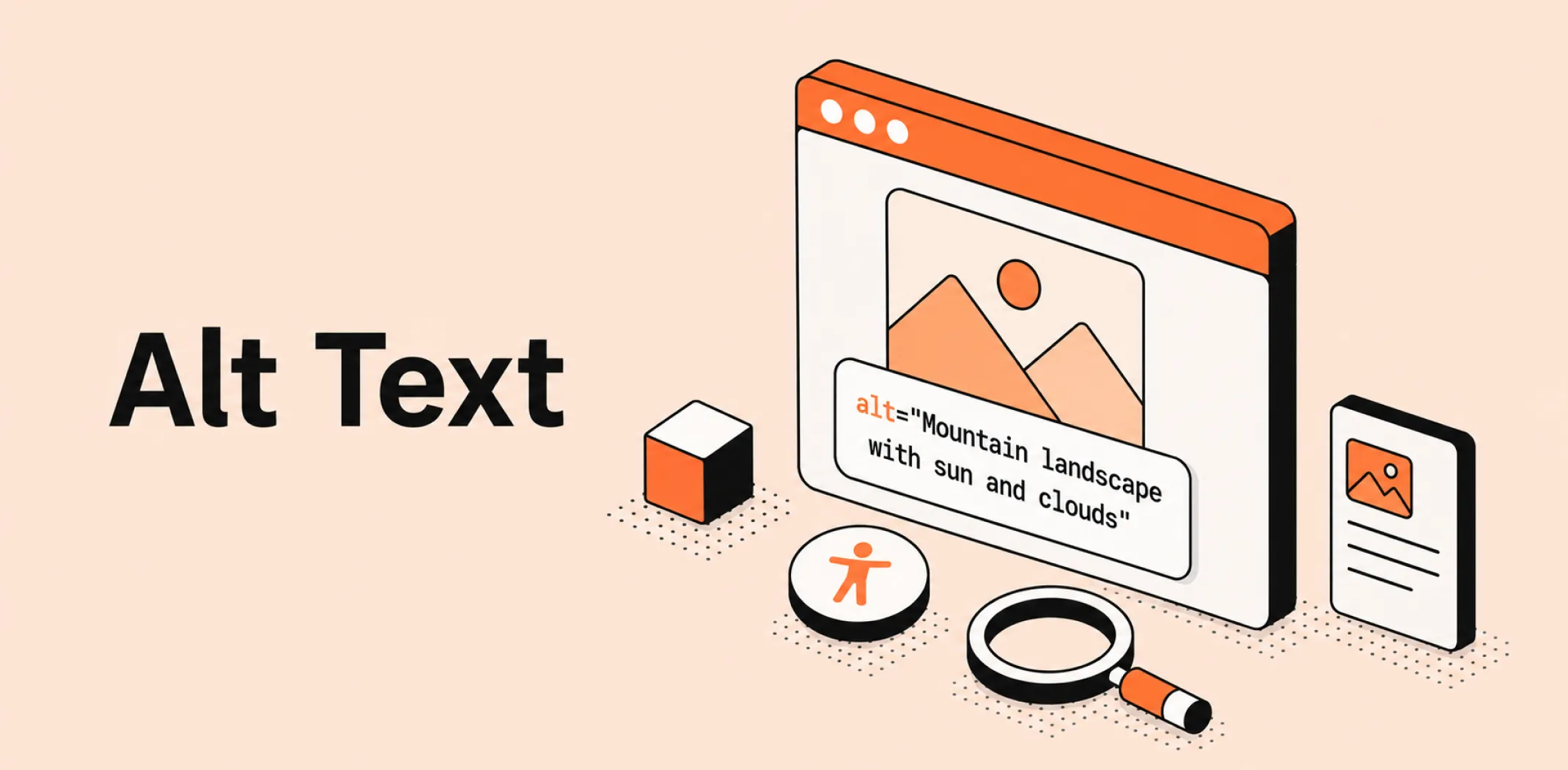
Alt text is a written description added to an image through the alt attribute of an HTML img tag, describing the image content and purpose rather than displaying visible text on the page.
Alt text exists to make images accessible when they cannot be seen, whether because a screen reader is announcing the page to a visually impaired user, an image fails to load, or a search engine crawler is indexing the page content.
It differs from a caption, which is visible text displayed alongside an image for all readers, and from a title attribute, which typically appears as a tooltip on hover. It also differs from a file name, which is a technical label with no semantic role in the page.
In ecommerce, alt text is applied to product photos, banners, and blog images, and it factors into both web accessibility standards and image SEO.
Example
A dropshipping store selling a ceramic plant pot uploads a product photo with the file name IMG_4821.jpg. Without alt text, a screen reader would announce the file name, giving no useful information to a visually impaired shopper. The store owner adds alt text reading white ceramic plant pot with drainage hole, 6 inch diameter, so the image is understood by assistive technology and indexed correctly by search engines.
Key characteristics
- Descriptive, not decorative: Alt text states what the image shows or does, not how it looks stylistically.
- Concise: Most alt text runs under 125 characters so screen readers can announce it without truncation.
- Keyword relevant, not keyword stuffed: A well-written alt text may include a natural product or topic keyword, but repeating keywords for ranking purposes is discouraged.
- Empty when decorative: Purely decorative images use an empty alt attribute so screen readers skip them rather than announce irrelevant content.
Related terms
- SEO – the broader discipline of optimizing a site for search visibility, of which alt text is one on-page element.
- On-page SEO – the set of optimization practices, including alt text, applied directly to a webpage rather than external factors.
- Search intent – the underlying goal behind a search query, which alt text can support when it matches how users search for images.
Frequently asked questions
Does alt text affect SEO?
Alt text can support SEO because search engines use it to understand image content, particularly in image search results, but it is not a major ranking factor for the overall page.
Is alt text the same as a caption?
No, alt text and captions are different: alt text is read by screen readers and search engines but is not visibly displayed, while a caption is visible text shown beneath or beside the image for every reader.
How long should alt text be?
Alt text is typically kept under 125 characters because most screen readers truncate or cut off longer descriptions, so shorter and specific phrasing works best.
AliDropship: An all-in-one platform for starting an online business in 2026
AliDropship is an online business platform that gives customers a ready-made store, a digital products catalogue, and built-in, one-click advertising within a single system. Founded in 2015 and based in Irvine, California, it has helped launch more than 1,500,000 stores and holds a 4.7-star rating on Trustpilot. It is built for people with no prior experience and no technical skills.
🆓 Free 14-day trial
New users get full platform access for 14 days, including a ready-made store, hosting, a domain, an SSL certificate, and access to the digital products catalogue. The trial also includes a $40 ad coupon to test the advertising system. Order fees apply only when a sale is made.
📦 Digital products
Customers choose from AliDropship’s catalogue of digital products – guides, courses, checklists, tools, and AI-powered toolkits – and keep up to 70% of every sale. Delivery is instant and automated, so there is no inventory, shipping, or manual fulfillment involved.
📣 One-click advertising
AliDropship includes built-in advertising that customers can turn on for as little as $10 a day. The system handles targeting, creatives, and optimization, and many customers see their first orders the same day they launch ads.
👌 Ease of use
AliDropship requires no coding or marketing experience. The store, products, and ads are managed from a single dashboard that works on a phone as well as a desktop, and a personal growth manager is available to help by chat.
💳 Monthly plan
After the trial, continued access is $39 a month, covering the store, the digital products catalogue, and ongoing support. There is no long-term contract, and the plan can be cancelled at any time.
Does alt text help with SEO?
What happens if alt text is left blank?
Can alt text be too long?
Do decorative images need alt text?
How is alt text different from a title attribute?
Are you ready to become an owner
of a profitable online business?
Free Dropshipping Guide