Do I Need A Website To Start A Business?


The idea is ready and the first move is always the same: a name, a logo, a website, possibly a company registration. None of it can be skipped, apparently, because otherwise it does not look like a real business. Six weeks and a few hundred pounds later there is a website with no visitors, and the actual work has not started.
The quick answer
Honest answer: almost nobody checks. What a customer looks at before trusting somebody is whether you reply, whether you sound like you know the job, and whether somebody else has used you – and none of those cost anything. There are situations where registration or a licence is legally required, which is a separate matter worth confirming, but the appearance of a business is not what wins the first customers. Working out what yours actually needs takes minutes.
Below: where this myth came from, where it quietly breaks, what actually creates trust, and what building the appearance first really costs you.
Where the “look real first” myth comes from
Because everything sold to new businesses is sold as a prerequisite. Domains, logos, templates, courses, company formation packages, all advertised in the order that suits whoever is selling them, which is before you have any customers and therefore before you can tell what you actually need.
Two quiet fears keep it going. The first is embarrassment: sending somebody an ordinary message from an ordinary address feels amateur. The second is more useful to notice, because building the appearance is comfortable work and finding the first customer is not. Setting up a site feels like progress and postpones the frightening part, and seeing what genuinely comes first tends to end that.

So the real question was never “does this look like a business?” It is “what does the person deciding whether to pay me actually check?” That has a short and slightly deflating answer.
Where the rule quietly breaks
Look at how somebody decides to hand over money and the myth comes apart. They ask whether you can do the thing, whether you turn up, and whether anybody they trust has used you. A polished site does not answer any of the three, which is why plenty of well-designed businesses never sell anything and plenty of scruffy ones are booked out. Putting the effort where the decision is made costs nothing but reordering.
| What you are told | What actually works |
|---|---|
| Set up properly, then find customers | Find one customer, then set up what they needed |
| A website makes you credible | Replying quickly makes you credible |
| Buy the tools you will need | Buy the tool the eleventh customer needs |
| Look established from day one | Look reachable from day one |
That is the trap inside the phrase “set up a business.” It describes an appearance, and the appearance is the last thing customers examine and the first thing founders buy. The order is exactly backwards, and it is expensive in the one currency a new business has least of.
So what actually creates trust?
Here is the part people miss: everything that genuinely reassures a customer is free and behavioural rather than visual. That is a slightly uncomfortable discovery, because it means the work cannot be bought, and checking which of the three you are weakest on is more useful than any purchase.
Three things do almost all of the reassuring.
What customers check · all three are free
How fast you reply. The single strongest signal, and the cheapest. Answering within a few hours beats a professional website by a distance, because it suggests the job will also be done promptly.
Whether you sound like you know the work. Specific questions about their situation do this instantly. Vague enthusiasm does the opposite, and no amount of design covers it.
Whether anybody has used you before. One sentence from a real person carries more weight than a page of copy you wrote about yourself. The first one is the hardest and is worth asking for.
Three signals, none of them purchasable. This is why a scruffy responsive business beats a polished silent one.
Notice that none of this says appearance never matters. It matters later, and it matters more in some fields than others. The argument is about sequence: build what the customers you already have have asked for, rather than what you imagined they would want.
What building the appearance first really costs
It costs the runway, and it costs it before any of it can be recovered. Money spent on a site, a logo and a set of tools before the first sale is money spent on assumptions, and the assumptions are usually wrong because nobody has yet told you what the work involves.
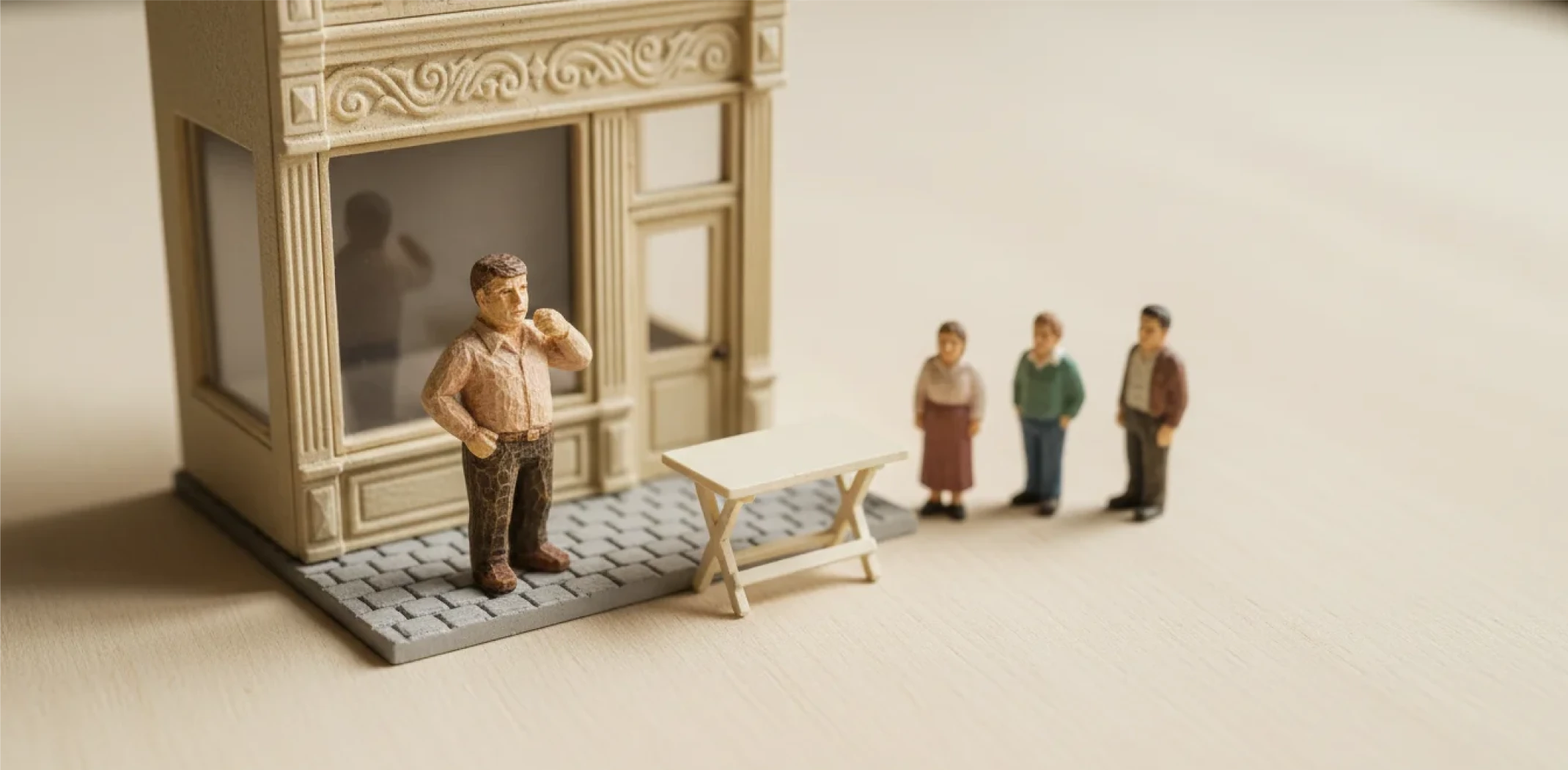
The second cost is subtler. Weeks of setting things up feel productive while producing nothing checkable, so the first real test keeps receding, and by the time it arrives there is sunk money making it harder to change direction. Spending only where a customer is already blocked is general educational guidance rather than business or legal advice, and requirements vary by country.
Set up first vs wing it vs spend where blocked
You can settle this yourself, for free, by asking what your last customer actually needed. Here is how the usual approaches compare with spending only where somebody is blocked.
| Way to plan it | Cost | Dated milestones for you? | Time |
|---|---|---|---|
| Build the full setup first | $200–1,000 | No – assumptions before evidence | Weeks, often unused |
| Wing it entirely | Free | Partly – until something genuinely blocks a sale | Ongoing |
| A start-a-business course | $100–400 | Sometimes – usually sells the setup order | Weeks |
| Zero Cost Online Biz Starter | $9 | Yes – free limits mapped, spend only when blocked | About 15 min |
“Surely some things are genuinely required?” They are, and this is the part to be precise about rather than breezy. Registering a business, holding particular insurance, or having a licence is a legal requirement in many places and for many activities, and none of that is optional or postponable. Some clients, particularly larger organisations, also genuinely will not engage without an invoice from a registered entity. Those are real constraints and quite different from a logo. Requirements vary considerably by country, activity and turnover, so confirm yours with the relevant authority before trading. This is general educational guidance and not business, legal or tax advice.
If it still sounds risky, two people started at opposite ends of the same spend.
Two people, two different orders
One spent six weeks building the setup. The other took four customers before buying anything at all.

“Six weeks on a site and a logo, and the first person who called found me through a noticeboard and never looked at either. The money I spent up front bought nothing that got me a single customer.”
Tobias N. · mobile bike mechanic, Erie PA

“I took four jobs with nothing but an email address and a fast reply, then bought the one tool the fifth job actually needed. Everything I own was paid for by work that came before it.”
Halina K. · proofreader, Lincoln NE
Once money starts moving, keeping the costs straight becomes the next thing, and the Side Hustle Expense Tracker is built for that from the first invoice. Results vary; this is general guidance rather than business or legal advice.
Five short answers, and a map of your own free limits comes back the same day: what you can genuinely run at zero, where the first real constraint sits, and what would have to happen before spending anything is worth it. It starts with whether your activity requires registration or a licence, because that part is not optional, and everything after it is ordered by when a customer would actually be blocked rather than by what looks established.
*Individual results may vary.
Do I need a website to start a business?
What do customers actually check before trusting somebody?
Are any of the setup costs genuinely required?
When is the right time to spend?
Why does setting up feel so productive?
Is this business or legal advice?


Recommended for You