Delivery Services To Make Money In 2026: Full Guide

Delivery driving is one of the most accessible ways to earn extra income right now. You sign up, get approved in 24–48 hours in most markets, and you can be earning the same week. No interview, no boss, no set schedule. That sounds pretty close to ideal – and for millions of people, it is. But if you are wondering whether delivery services to make money are worth your time in 2026, the honest answer is: it depends on what you are trying to achieve.
Quick Answer: Yes, delivery services can make you real money in 2026 – most drivers earn $15–$25 per hour before expenses, and strategic multi-apping can push that higher. But fuel, wear, and market saturation mean your net take-home is lower than the headline figures suggest.
This guide covers the top platforms, realistic earning ranges, smarter strategies to maximize your time, and – for those who want to build something bigger – what it looks like to step beyond gig work entirely.

What are delivery services to make money?
Delivery services to make money are gig economy platforms that pay independent contractors – that is, you – to pick up and drop off orders on behalf of customers or businesses. These range from food and grocery delivery to packages, alcohol, and even oversized furniture, all coordinated through an app on your phone.
In 2026, the gig delivery market is well established and still growing. According to a Penny Hoarder survey conducted this year, transportation and delivery is tied with creative services as the single most popular side hustle category in the US, with 25% of side hustlers working in this space. The infrastructure is solid, the apps are mature, and the barrier to entry is about as low as it gets.
What makes delivery work genuinely appealing is the flexibility. You choose your hours, your zone, and how hard you push on any given day.
There is no minimum commitment on most platforms, and you can cash out same-day on several apps. For anyone needing quick income or a reliable side hustle that fits around a full-time job, this model genuinely works.
Why this works in 2026: Consumer demand for on-demand delivery has not slowed – and with more platforms competing for drivers, sign-up bonuses and guaranteed pay windows have become common incentives to attract new contractors.
How much can you realistically earn from delivery services?
Earnings vary a lot depending on the platform, your city, and how strategically you work. The numbers you see in ads are almost always best-case figures – peak hours, busy zones, no dead miles. Here is what the data actually shows:
Food delivery offers the most flexible entry point, while grocery platforms tend to reward careful shoppers with stronger tips. Package delivery sits in the middle – steadier pay, but you need the right vehicle and physical capacity for larger loads.
One note on the title figures: Gross hourly rates do not account for fuel, vehicle maintenance, or self-employment taxes (typically 15.3% in the US). Most experienced drivers report that realistic net earnings fall 20–35% below gross. Planning around $12–$18/hr net is more accurate for most markets and conditions. Most casual drivers make $200–$600/month; full-time drivers pushing 40+ hours per week in busy urban markets can reach $2,500–$3,500/month before expenses.
Timeline matters too. Building up to consistent $200+/week earnings typically takes 30–60 days of learning your market – which hours pay best, which restaurants are fast, which zones get tipped well. Treat the first few weeks as a learning curve, not a benchmark.
Best delivery services to make money in 2026
Not all platforms are built the same. Some dominate in urban areas but are thin in suburbs. Others pay steadily but require a bigger vehicle. Here is a breakdown of the top options across three categories – food, grocery, and packages – so you can match the right platform to your setup.
Food delivery apps
DoorDash
DoorDash is the market leader in North America, operating in over 5,000 cities. Sign-up takes about five minutes, and approval in many markets comes within 24–48 hours. As a Dasher, you pick up orders from restaurants and deliver to customers – either handed off at the door or left contactless.
Pay is weekly by default, with same-day Fast Pay available for a small fee. DoorDash has expanded well beyond restaurant food and now covers groceries, pet supplies, and convenience stores, which increases the volume of available orders.
Earning potential: $15–$25/hr gross in most US markets; peak hours (lunch, dinner, weekend evenings) consistently push toward the higher end.
Uber Eats
Uber Eats ranks as one of the most popular food delivery platforms globally, and its strength in dense urban markets is hard to beat. The app is well-designed, the support is adequate, and many drivers appreciate being able to toggle between Uber rideshare and Uber Eats delivery depending on demand.
One downside noted by experienced drivers: competition for orders has increased significantly in high-population areas, and some report lower per-order rates than in previous years. Multi-apping alongside DoorDash is the standard workaround recommended by the driver community.
Earning potential: $14–$22/hr gross; works best in dense cities and near college campuses.
Grubhub
Grubhub was one of the first food delivery platforms and maintains a strong presence in major US cities. It offers scheduled blocks, which gives your day more predictability – useful if you are juggling delivery with another job.
Pay is competitive, and Grubhub has a history of offering sign-up incentives in markets where it is trying to grow driver supply. It is a solid third platform to add once you are comfortable with DoorDash or Uber Eats.
Earning potential: $13–$20/hr gross; strongest in cities where Grubhub has established restaurant partnerships.
Grocery delivery apps
Instacart
Instacart offers two working models: full-service shopper (you shop and deliver) or in-store shopper (you shop only, no vehicle required).
The full-service model typically pays more and gives you the independence of an independent contractor. Instacart operates in over 5,500 cities across North America and partners with more than 25,000 stores – meaning consistent order volume in most suburban and urban areas.
Large grocery orders from wealthier neighborhoods tend to generate strong tips, which is where experienced Instacart shoppers focus their time.
Earning potential: $13–$37/hr depending on order size, tips, and location – top earners report $200–$300 on focused weekend shifts.
Shipt
Shipt is Instacart’s main competitor and works similarly – you shop and deliver groceries, keeping 100% of tips. Shipt is available in thousands of US cities but has less national coverage than Instacart.
Glassdoor data puts average Shipt Shopper earnings at $13–$15/hr base, with tips on top. The platform has a reputation for a positive community culture among its shoppers, and Target partnership orders can drive consistent volume in suburban markets.
Earning potential: $13–$25/hr with tips; reliable part-time income in markets with Target and major grocery chain coverage.
Package delivery apps
Amazon Flex
Amazon Flex is one of the standout package delivery options because of its block scheduling system – you reserve delivery windows in advance rather than waiting for orders to come in. This makes income planning much easier.
You deliver Amazon.com packages, Amazon Fresh orders, and Prime Now items depending on your market.
Requirements vary by delivery type: Prime Now and Amazon Fresh deliveries need any car, while standard Amazon.com deliveries require a mid-sized four-door sedan or larger. Pay is transparent and competitive.
Earning potential: $18–$25/hr; block scheduling makes this one of the more consistent-earning delivery options.
Roadie (a UPS company)
Roadie is a UPS-owned platform that connects drivers with same-day and oversized delivery jobs. It pays up to $12 per local trip for standard deliveries, with higher rates for multi-stop or large-item hauls through its RoadieXD program for drivers with bigger vehicles.
Roadie is particularly useful for drivers who have a truck, SUV, or van – those vehicles unlock higher-paying jobs that smaller cars cannot take.
Instant cashout is available, and the platform partners with Stride for health insurance access, which is a meaningful perk for full-time gig workers.
Earning potential: $12–$30+ per delivery trip; larger-vehicle drivers can earn significantly more on oversized hauls.
How to maximize your earnings as a delivery driver
Signing up is easy – but consistently earning at the higher end of the range requires strategy. Here is what separates drivers who treat this as a real income stream from those who burn out after a few weeks.
Multi-app simultaneously
The single most impactful thing you can do is run multiple delivery apps at the same time. Because you are an independent contractor on every platform, there is no conflict.
Most experienced drivers run DoorDash and Uber Eats simultaneously, accepting whichever order comes in first and switching between platforms during slow periods. This dramatically reduces idle time – the biggest profit killer in delivery work. Always have at least two apps active during your shift.
Work peak windows, not random hours
Delivery demand is not spread evenly across the day. The highest-earning windows are lunch (11am–2pm), dinner (5pm–9pm), and weekend evenings. Platforms often offer surge pricing or promotional guarantees during these windows to attract drivers.
Targeting these windows with focused 3–4 hour sessions tends to yield better hourly rates than longer scattered shifts during off-peak times.
Optimize your acceptance and completion rate
On most platforms, maintaining a healthy acceptance rate unlocks priority queuing and promotional pay bonuses. This does not mean taking every low-paying order – it means being selective within the platform’s thresholds.
Learn the minimum pay-per-mile threshold that keeps delivery profitable in your market. Many drivers use a $1.50–$2.00 per mile rule as a baseline for deciding which orders to accept.
Track your expenses carefully
As an independent contractor, every mile you drive for work is potentially tax-deductible. The IRS standard mileage rate in recent years has sat around $0.67 per mile – that adds up meaningfully over a full year of delivery work.
Use a mileage-tracking app like Stride or Everlance from day one. Not tracking expenses is one of the most common mistakes new delivery drivers make, and it can cost you hundreds at tax time.
Build tip-friendly habits
Tips account for a significant portion of take-home pay on food and grocery platforms. On most apps, the tip is set before delivery, but customers can adjust it afterward.
Communicating clearly – a quick message when the order is picked up, prompt drop-off, and careful handling of food – genuinely moves the needle on post-delivery adjustments. Experienced drivers consistently note that polite, professional interactions lead to better tip retention over time.
Legal and ethical considerations for delivery drivers
Delivery driving is a legitimate, well-regulated income method – but there are a few areas where drivers can get into trouble, either legally or with the platforms themselves.
What to avoid
Important: Falsifying delivery confirmations – marking an order as delivered before it actually is, or submitting fraudulent completion claims – results in permanent deactivation on all major platforms and can expose you to legal liability. Platforms cross-reference GPS data, and anomalies are reviewed automatically.
Manipulating the referral or bonus system by creating fake accounts, using another person’s identity to bypass background checks, or gaming promotional thresholds also constitutes fraud and is treated seriously by platforms like DoorDash and Uber Eats.
On the tax side, failing to report gig income is both illegal and unnecessary – the legitimate deductions available to self-employed contractors (mileage, phone use, insulated bags, platform fees) often offset a substantial portion of your tax liability when tracked properly.
What to do instead
Stay within platform terms, track all expenses from day one, and treat this like a real business – because legally, that is what it is. You are a self-employed contractor. File a Schedule C at tax time, deduct legitimate business expenses, and keep clean records. The IRS expects it, and platforms are required to issue 1099 forms to drivers earning $600 or more in a calendar year.
Key principle: The best delivery drivers run their gig work like a business – clean records, legitimate deductions, and sustainable practices that protect both their platform access and their tax standing.
Which delivery service is right for you – and what comes next
The best platform depends on your vehicle, your city, and what kind of work fits your lifestyle. Here is a quick breakdown by reader profile.
Complete beginner with a standard car
Start with DoorDash. It has the widest coverage, the easiest onboarding, and the most active driver community for tips and support. Add Uber Eats within your first two weeks to begin multi-apping. Aim for 10–15 hours per week in peak windows to earn $150–$250/week as you learn your market.
Part-time driver looking to maximize hourly rate
Add Instacart or Amazon Flex to your rotation. Grocery deliveries tend to yield stronger tips for efficient shoppers, while Amazon Flex gives you scheduling control that reduces idle time.
Running three platforms – DoorDash, Instacart, and Amazon Flex – and selecting orders strategically gives you the best chance of consistently hitting the $20–$25/hr gross range.
Full-time income goal ($2,500–$3,500/month)
Full-time delivery income is achievable in dense urban markets with the right vehicle and schedule discipline. Focus 40+ hours per week on peak windows, multi-app aggressively, and supplement with Roadie or Amazon Flex for block-scheduled income.
Be clear-eyed about expenses: at full-time miles, vehicle depreciation and fuel costs are real. Budget conservatively, track every mile, and reassess quarterly.
One note on full-time delivery: Most driver communities – including active threads on Reddit’s r/doordash and r/UberDrivers – are candid that delivery driving as a sole full-time income is sustainable in the short term but difficult to scale or grow over time. The income ceiling is set by your physical hours. Many experienced gig workers use delivery as a bridge income while building a parallel income stream that does not depend on them being behind the wheel every day.
The driver who wants to go beyond the gig
If you have been doing delivery for a while and you are asking yourself whether there is a smarter way to use the same entrepreneurial energy – there is. Ecommerce, and specifically dropshipping, has a fundamentally different income structure: you build something once, and it keeps working.
Your earnings are not capped by the number of hours you can drive. That shift in structure is what draws a growing number of ex-gig workers toward building an online store as their next move.
AliDropship: Your complete all-in-one solution for starting dropshipping in 2026
If you want the simplest possible way to start dropshipping – especially if you’re brand new – AliDropship remains one of the most beginner-friendly tools available in 2026. It brings together store creation, product imports, automation, and marketing into a single streamlined system designed to help you launch quickly and grow confidently.
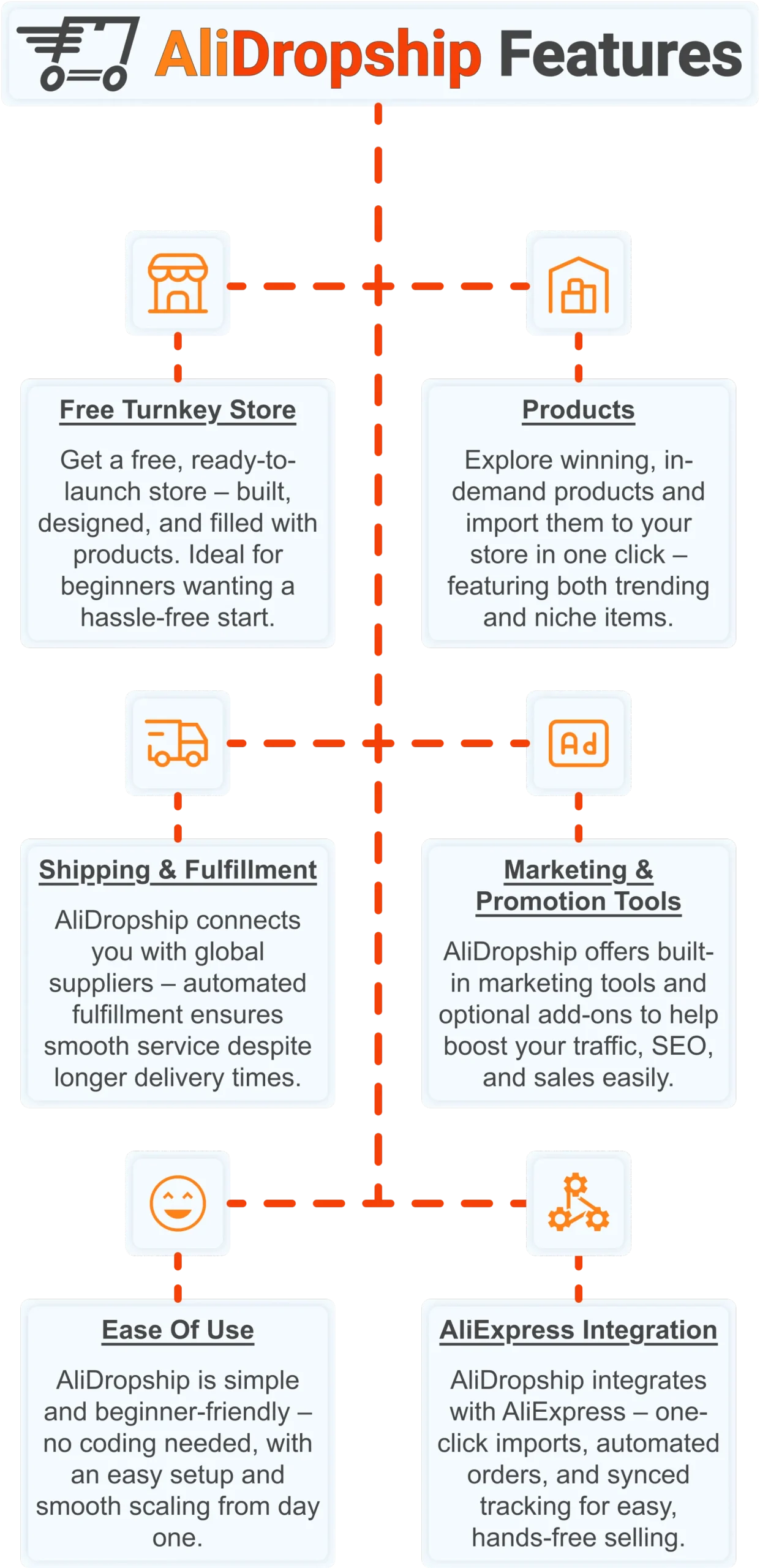
Free turnkey store 🛍️
Get a free turnkey store – built, designed, and filled with products. Ideal for beginners wanting a hassle-free start, the store comes fully optimized to attract customers right away, saving you time on setup. Plus, it includes professional design elements to give your business a polished, trustworthy look from day one. This ready-made foundation makes it easy to move seamlessly into product selection.
Products 📦
Once your store is set up, you can explore winning, in-demand products and import them in one click – featuring both trending and niche items. This wide selection lets you cater to diverse customer interests and test what works best. Regular updates ensure you always have fresh products, keeping your store competitive and relevant. With great products in place, smooth shipping becomes the next essential step.
Shipping & fulfillment 🚚
AliDropship connects you with global suppliers, and automated fulfillment ensures seamless order processing despite international delivery times. Customers receive real-time tracking updates, which builds confidence and trust in your store. Once shipping is handled reliably, you can focus on promoting your store and attracting traffic.
Marketing & promotion tools 📣
To maximize sales, AliDropship offers built-in marketing tools and optional add-ons that help boost traffic, SEO, and conversions. From email campaigns and discounts to social media integration, these tools empower you to reach and retain customers without needing prior marketing experience. With promotion strategies in place, managing your business becomes simpler and more efficient.
Ease of use 👌
AliDropship is beginner-friendly – no coding needed, with an intuitive dashboard that guides you through every step. Easy setup and smooth scaling let you expand your store without stress. As your business grows, adding new features, products, and marketing campaigns remains hassle-free, giving you more time to focus on sales.
AliExpress integration 🛒
Finally, AliDropship integrates seamlessly with AliExpress, enabling one-click imports, automated orders, and synced tracking. Your inventory stays up-to-date with the latest products and prices, while automated order processing frees you from manual tasks. Combined with the turnkey setup, reliable shipping, and built-in marketing tools, this integration ensures your dropshipping business is fully equipped for growth and success.
Delivery services are a great first income move – but if you are ready to build something that earns without you clocking in, dropshipping gives you that next level. Get your free turnkey store and start building income that does not depend on miles driven.
What are the best delivery services to make money in 2026?
How much do delivery drivers make per hour?
Most food and grocery delivery drivers earn between 15 and 25 dollars per hour gross before expenses. After accounting for fuel, vehicle wear, and self-employment taxes, net pay typically falls in the 10 to 18 dollars per hour range for most drivers. Government data puts average food delivery driver earnings at around 22 dollars per hour depending on location. Top drivers using multiple platforms during peak hours in dense urban markets can push gross earnings above 30 dollars per hour. Planning around net figures, not gross, is the more realistic way to evaluate delivery income.
Can you make 200 dollars a day doing delivery?
Reaching 200 dollars in a day is possible but requires full-day commitment during peak hours in a busy market. Drivers who consistently hit this figure typically multi-app across DoorDash and Uber Eats, focus on lunch and dinner rushes, and work 8 to 10 hours. GoPuff drivers in high-demand areas have reported earning close to 200 dollars in an 8-hour shift. For most casual drivers, 80 to 140 dollars per day on a focused weekend shift is a more realistic target. The key is minimizing idle time between orders by running multiple platforms simultaneously.
Is it worth doing multiple delivery apps at once?
Yes, using multiple delivery apps at the same time is one of the most effective ways to increase earnings. Since all major platforms treat drivers as independent contractors, there is no policy against working for several at once. Running DoorDash alongside Uber Eats, for example, reduces dead time between orders and lets you pick higher-paying jobs from whichever platform has demand. Many experienced drivers report that multi-apping raises their effective hourly rate by 20 to 40 percent compared to single-platform driving. Start with 2 platforms and expand from there as you get comfortable managing notifications and routes.
What are the pros and cons of using delivery services to make money?
The main advantages of delivery services as an income method are low barriers to entry, flexible hours, same-day or next-day pay options, and no experience required. Most drivers can be earning within 48 hours of signing up. The downsides include fuel and vehicle maintenance costs that reduce net earnings, no employer benefits, income that depends entirely on hours worked, and increasing competition in saturated urban markets. Delivery income is best suited as a side hustle or bridge income rather than a standalone long-term career, since there is limited earning ceiling without investing in additional vehicles or scaling into a delivery business.