Which Blogging Platform Pays The Most In 2026?


Blogging is a $107 billion industry in 2026 – and that number is only going up. Yet most people who start a blog never earn a single dollar from it. The difference between the blogs that make money and the ones that don’t usually comes down to two decisions made at the very beginning: picking the right platform and using the right monetization strategy. Get those two things right, and you’ve got a real foundation to build on.
Quick answer: WordPress.org (self-hosted) is the best blogging platform to make money for most people in 2026 – it gives you full ownership, unlimited monetization options, and the strongest SEO capabilities. For newsletter-first creators, Substack or Ghost are solid alternatives. For beginners who want zero setup friction, WordPress.com or Wix get you started fast.
This guide covers the leading platforms side by side, what you can realistically earn from each, and the monetization methods that actually move the needle – whether you’re starting from scratch or already have a blog and want to grow it.
Before we get into the platforms, it’s worth understanding what separates a money-making blog from a hobby blog. Spoiler: it’s not talent. It’s structure, ownership, and consistency.

What is a blogging platform – and why does your choice matter so much?
A blogging platform is the software or hosted service you use to publish content online. It handles things like page layout, content storage, and how your articles get indexed by Google. Some platforms give you full control over your site – hosting, design, plugins, and monetization. Others handle the technical side for you in exchange for a cut of your revenue or restrictions on what you can do.
Your platform choice matters because it directly affects three things: how well your blog ranks in search engines, what monetization methods are available to you, and how much of your income you actually get to keep. A free platform with no ad network support or affiliate link restrictions can cap your earnings at almost nothing even if your content is good. A self-hosted platform with full SEO control and no revenue share has no ceiling at all.
Why this works in 2026: Search traffic remains the primary driver of blogging income, and platforms that support advanced SEO plugins, fast load speeds, and clean site structure consistently outperform closed ecosystems in organic rankings.
How much can you realistically earn from blogging?
Here’s an honest breakdown. Most beginners earn close to nothing in their first six months. That’s not because blogging doesn’t work – it’s because Google takes time to trust new sites, and monetization methods like ad networks have traffic thresholds. The blogs that stick with it and treat the process like a business, not a hobby, do reach real income levels.
Each method scales differently. Ads need high page views to pay well. Affiliate marketing pays more per visit but requires buyer-intent content and keyword strategy. Digital products and subscriptions have the highest upside but demand audience trust built over time.
One note on the headline figures: Veteran bloggers with 10+ years of experience average around $5,600 per month according to 2026 survey data. For most new bloggers, the realistic window to reach $500–$1,000 per month is 12–24 months of consistent, strategic publishing. “Full-time effort” here means treating your blog like a business from day one – keyword research, regular publishing, SEO optimization, and at least one active monetization stream.
Now let’s look at where to actually build that blog.
The best blogging platforms to make money in 2026: platform-by-platform breakdown
Each platform below suits a different type of blogger. The best choice depends on your goals, technical comfort level, and how you plan to earn. Here’s what you need to know about each one.
Self-hosted platforms – maximum control, maximum earning potential
WordPress.org
WordPress.org is the most widely used blogging platform on the internet – it powers around 43% of all websites. The core software is free, but you pay separately for hosting (typically $3–$15/month) and a domain name (around $10–$15/year). That’s a small cost for what you get: complete ownership of your content, unlimited plugin options including industry-standard SEO tools like Yoast and Rank Math, and zero restrictions on how you monetize.
You can run display ads, insert affiliate links, sell digital products, build an ecommerce store, offer paid memberships, or do all five at the same time. No platform takes a cut of your revenue. No algorithm decides whether your content gets seen. Your SEO is entirely in your hands.
The learning curve is real – setting up a self-hosted WordPress site involves choosing a host, installing WordPress, configuring plugins, and managing your own security and updates. But for serious bloggers aiming at long-term income, this remains the best blogging platform to make money at scale.
Earning potential: Unlimited – bloggers on WordPress.org commonly reach $2,000–$10,000+/month within 2–3 years of consistent effort and solid SEO.
Ghost
Ghost is a professional blogging platform built specifically for content creators who want to monetize through paid subscriptions and newsletters. It’s cleaner and faster than WordPress out of the box, with built-in membership and subscription tools, a native email newsletter system, and a minimalist editor that stays out of your way.
Ghost can be self-hosted (free software, you pay for hosting) or managed through Ghost’s own hosting plans starting at around $9/month. It’s a strong pick for writers who want Substack-level ease but more control – particularly because Ghost doesn’t take a percentage of your subscription revenue the way Substack does.
Earning potential: $500–$5,000+/month for newsletters with an engaged subscriber base; scales well beyond that for established creators.
Hosted platforms – beginner-friendly with trade-offs
WordPress.com
WordPress.com is a hosted service run by Automattic that removes the technical setup from WordPress. You don’t buy separate hosting – it’s all managed for you. The free plan gives you a basic blog but includes ads you don’t earn from and no custom domain. The paid plans (starting at around $4/month) unlock custom domains, remove forced ads, and let you connect Google AdSense.
It’s a decent starting point if you want to get a blog live quickly without technical overhead, but most serious bloggers migrate to WordPress.org once they’re ready to scale monetization. The platform limits which plugins you can install, which restricts your SEO and ecommerce options compared to the self-hosted version.
Earning potential: $50–$500/month as a starter platform; moves toward the WordPress.org ceiling once migrated.
Wix
Wix is one of the most beginner-friendly website builders available, with a drag-and-drop interface and over 900 design templates. For bloggers, it offers solid built-in SEO tools, Google AdSense integration, affiliate link support, and some ecommerce functionality for selling digital products.
The main limitation is SEO ceiling. Wix has improved significantly in recent years, but self-hosted platforms still tend to outperform it in competitive keyword rankings. It also lacks the plugin ecosystem that makes WordPress so powerful for monetization. Wix works well as a starting platform or for bloggers who prioritize design and ease of use over maximum SEO control.
Earning potential: $100–$1,000/month for consistent bloggers; strongest in visual niches where design matters more than deep SEO.
Squarespace
Squarespace is known for polished design templates and a straightforward setup process. It handles hosting and security automatically, and you can connect affiliate links and AdSense. The blogging tools are functional but limited – there’s no plugin ecosystem, and Squarespace consistently ranks slower in page load speed tests than WordPress or Ghost, which has a measurable impact on SEO and ad revenue.
It’s a reasonable choice for service-based businesses that want a professional-looking blog alongside their main site, but it’s not the first pick for bloggers whose primary goal is to maximize search traffic and ad or affiliate income.
Earning potential: $100–$800/month for bloggers using ads and affiliates; most effective as a secondary channel for businesses with existing audiences.
Creator-focused platforms – built-in audiences, shared revenue
Substack
Substack lets you publish a newsletter-style blog and charge readers directly for paid subscriptions. It’s free to start, but Substack takes a 10% cut of all subscription revenue. There’s no upfront cost, which makes it genuinely accessible for writers who want to test paid content without building infrastructure first.
The platform has a built-in discovery network, which gives new writers some organic exposure. The trade-off is limited customization, almost no automation tools, and a revenue share that grows more costly as your subscriber base scales. Writers with large paid audiences often migrate to Ghost to keep more of what they earn.
Earning potential: $200–$3,000+/month for newsletter writers with a dedicated niche audience; Substack’s top publications earn seven figures annually, but that’s the exception.
Medium
Medium is a platform that pays writers based on how much time paying Medium members spend reading their articles. You join the Partner Program to start earning, and payouts are calculated monthly. There’s no ad setup required – you just write and publish.
The ceiling here is low for most writers. Average monthly earnings on Medium tend to sit in the $50–$300 range, with only a small number of prolific writers earning more. You don’t own your audience or your SEO – Medium’s domain ranks, not yours. It’s a low-friction way to start writing and earning small amounts immediately, but it’s not a long-term foundation for serious blogging income.
Earning potential: $50–$500/month for active writers; best used as a distribution channel rather than a primary income platform.
Beehiiv
Beehiiv is a newer newsletter platform that’s gained serious traction among creators looking for a Substack alternative with better tools. The key advantages: Beehiiv has a built-in ad marketplace that connects you with brand advertisers directly, a referral program that lets you earn by recommending Beehiiv to other creators, and more advanced automation features than Substack offers.
Beehiiv’s free plan is generous, and paid plans start at $39/month. Unlike Substack, Beehiiv doesn’t take a percentage of subscription revenue. It’s worth considering for newsletter-focused bloggers who want to monetize through a combination of paid subscriptions and brand sponsorships.
Earning potential: $300–$5,000+/month for newsletters with consistent growth; stronger monetization ceiling than Substack for writers at scale.
Platform comparison: which blogging platform is best for each goal?
Here’s a quick side-by-side breakdown to help you match a platform to your situation:
The higher your long-term income ambitions, the more a self-hosted solution like WordPress.org or Ghost makes sense. If you just want to start writing and earning small amounts quickly, Medium, Substack, or WordPress.com all let you publish in under an hour.
Blogging monetization methods that actually work in 2026
The platform is only half the equation. How you make money from your blog matters just as much. Here are the methods with the best return for the effort in 2026.
Display advertising
Display ads are the simplest monetization method – you install an ad code once and earn passively based on page views. Google AdSense is accessible to any blog but pays relatively little (RPM rates of $1–$5 for most niches). Premium ad networks like Mediavine and Raptive pay significantly more ($12–$30+ RPM) but require minimum traffic thresholds – Mediavine requires 50,000 monthly sessions, Raptive requires 100,000 monthly page views.
Why this works in 2026: Once you qualify for a premium ad network, display ads become genuinely passive income – the blog earns around the clock without ongoing effort beyond keeping traffic stable.
Affiliate marketing
Affiliate marketing is the highest-ROI monetization method for most bloggers who aren’t yet at premium ad network traffic thresholds. You recommend products or services with a unique link, and earn a commission each time someone buys through it. Commission rates vary widely – Amazon Associates pays 1–10%, software companies often pay 20–50% recurring, and some premium products pay $100–$500 per referred customer.
The key to making affiliate marketing work is writing content that targets buyer intent keywords – comparisons, reviews, “best X for Y” articles, and product guides. These posts attract readers who are already close to making a purchase, which translates directly to clicks and commissions.
Sponsored posts and brand partnerships
Brands pay bloggers to write content that features their products or services. Rates range widely – a blog with 10,000 monthly readers in a specific niche might charge $200–$500 per post, while established blogs with 100,000+ monthly readers can command $1,000–$5,000 per post. The niche matters as much as the traffic – a finance or tech blog commands far higher rates than a general lifestyle blog.
To attract sponsors, you usually need a media kit that shows your audience size, demographics, and engagement metrics. Platforms like Passionfroot, Cooperatize, and direct outreach to relevant brands are the main routes in.
Selling digital products
Selling your own products – ebooks, online courses, templates, presets, printables – has the highest margin of any monetization method. There’s no ad network revenue share, no affiliate commission split, and no brand setting your rates. You set the price, keep nearly all of it, and the product keeps selling indefinitely.
The challenge is that digital products require you to have an audience that trusts you. That trust takes time to build. But once it exists, product launches become the most reliable path to significant income spikes – it’s not uncommon for bloggers to make $3,000–$20,000 from a single product launch to a warm email list.
Paid subscriptions and memberships
If you publish consistently high-value content in a specific niche, charging readers directly for access is a legitimate path to reliable monthly income. Substack and Beehiiv handle the subscription infrastructure; Ghost gives you the same plus more control. Typical paid subscription prices range from $5–$20/month, meaning a list of 500 paying subscribers at $10/month is $5,000 in monthly recurring revenue.
This model rewards depth and specificity over breadth. A newsletter about a very specific topic – B2B SaaS growth, options trading, independent game development – converts paying subscribers far better than a general interest blog ever will.
Legal and ethical things to know before you monetize
Monetizing a blog comes with a few compliance requirements that are easy to overlook when you’re starting out. Getting these right from day one protects you from penalties, platform bans, and credibility damage.
Key principle: Disclosure is not optional. In most countries, including the US, UK, and EU, you are legally required to disclose paid partnerships, sponsored posts, and affiliate links to your readers. The FTC in the US is clear: if you earn money from a recommendation, your readers need to know that. A simple “this post contains affiliate links” at the top of relevant articles is all it takes.
Beyond legal requirements, here are a few things to avoid absolutely:
- Fake reviews or manufactured testimonials – platforms ban accounts for this, and it destroys reader trust permanently
- Cloaking affiliate links in a way that disguises their destination – most affiliate programs explicitly prohibit this
- Buying backlinks to rank faster – Google penalizes sites for this, and the penalty can wipe months of organic progress overnight
- Copying competitor content or using AI-generated text without meaningful editing – thin or duplicate content hurts rankings and can trigger manual Google penalties
What works instead: original content based on real experience and research, transparent disclosures, natural link acquisition through quality outreach and value-first content, and honest product recommendations that you’d stand behind even if there were no commission involved.
How to choose the best blogging platform based on where you are right now
The “best” platform is the one that fits your current situation and your 12-month goals. Here’s how to think about it by profile:
Complete beginner with no technical background
Start on WordPress.com (free plan) or Wix to get your first posts live without any setup friction. Focus on writing consistently for 3–6 months before worrying about monetization at all. Once you’ve found your voice and niche, migrate to WordPress.org or Ghost when you’re ready to take income seriously. The migration is straightforward and there are step-by-step guides for both platforms.
Intermediate blogger – writing consistently, ready to earn
If you’re already publishing regularly and have some traffic, the move to a self-hosted WordPress.org setup should be your next step if you haven’t made it yet. Install Yoast or Rank Math, apply to Google AdSense, join a relevant affiliate program in your niche, and start building an email list. Email is the most valuable asset you can own as a blogger – it’s your audience that no algorithm can take away from you.
Advanced blogger targeting full-time income
At this stage, diversification is the strategy. Most bloggers earning $3,000–$10,000+/month aren’t relying on a single revenue stream – they’re combining a premium ad network, 3–5 affiliate programs, at least one digital product, and in some cases a paid newsletter or sponsored post rate card. The blogs that reach and maintain full-time income also tend to invest in SEO tools (Ahrefs, Semrush), systematic content planning, and occasionally paid writers or editors to maintain publishing frequency.
The forward-looking reality for bloggers in 2026 is this: the blogging industry keeps growing, but the bar for what qualifies as useful, rankable content keeps rising too. Generic AI-written posts don’t cut it. Readers and search engines both reward specific, experience-backed content from a recognizable voice. The blogs that build that reputation now are the ones that will be most valuable three years from now.
AliDropship: Your complete all-in-one solution for starting dropshipping in 2026
If you want the simplest possible way to start dropshipping – especially if you’re brand new – AliDropship remains one of the most beginner-friendly tools available in 2026. It brings together store creation, product imports, automation, and marketing into a single streamlined system designed to help you launch quickly and grow confidently.
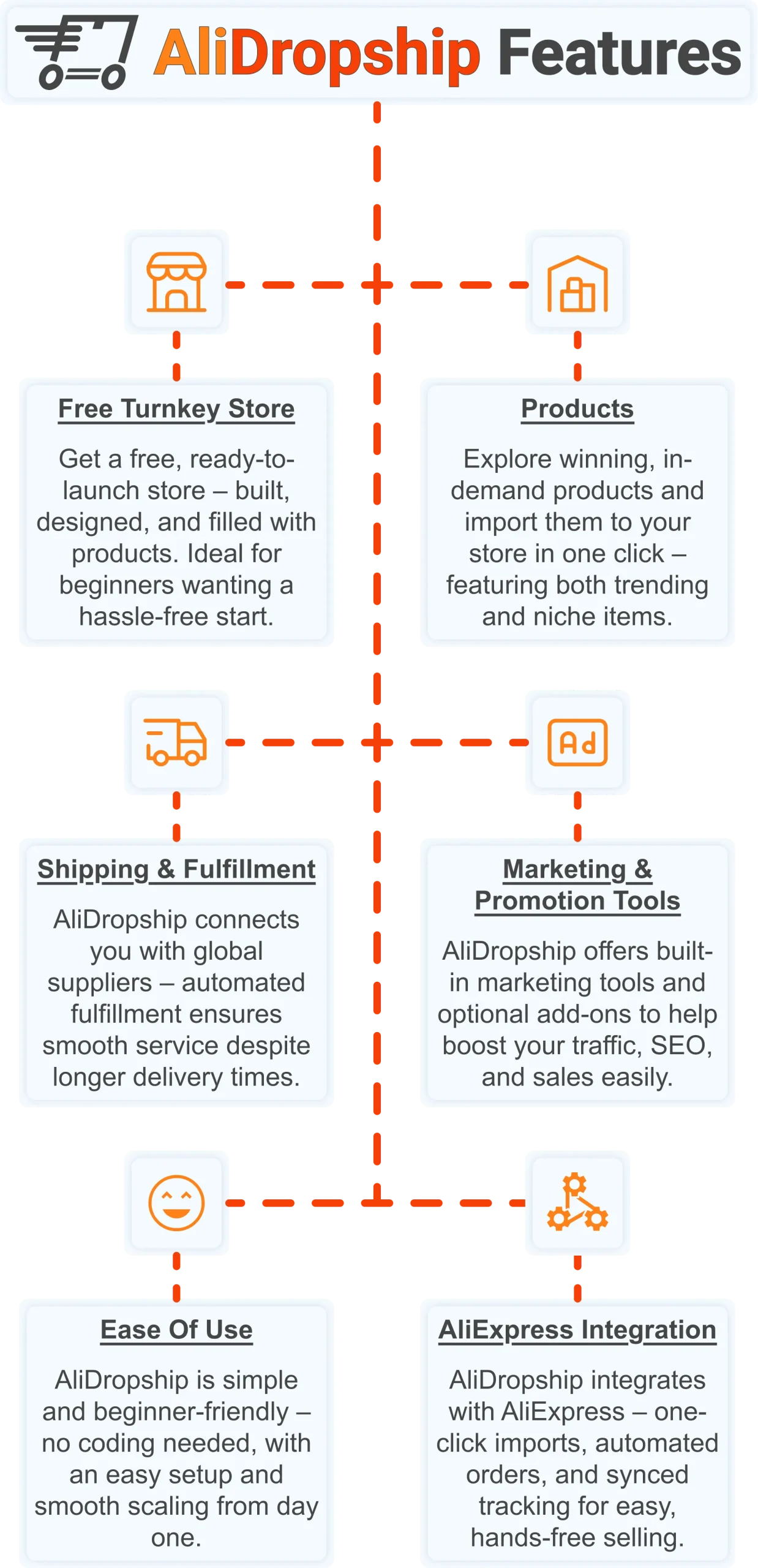
Free turnkey store 🛍️
Get a free turnkey store – built, designed, and filled with products. Ideal for beginners wanting a hassle-free start, the store comes fully optimized to attract customers right away, saving you time on setup. Plus, it includes professional design elements to give your business a polished, trustworthy look from day one. This ready-made foundation makes it easy to move seamlessly into product selection.
Products 📦
Once your store is set up, you can explore winning, in-demand products and import them in one click – featuring both trending and niche items. This wide selection lets you cater to diverse customer interests and test what works best. Regular updates ensure you always have fresh products, keeping your store competitive and relevant. With great products in place, smooth shipping becomes the next essential step.
Shipping & fulfillment 🚚
AliDropship connects you with global suppliers, and automated fulfillment ensures seamless order processing despite international delivery times. Customers receive real-time tracking updates, which builds confidence and trust in your store. Once shipping is handled reliably, you can focus on promoting your store and attracting traffic.
Marketing & promotion tools 📣
To maximize sales, AliDropship offers built-in marketing tools and optional add-ons that help boost traffic, SEO, and conversions. From email campaigns and discounts to social media integration, these tools empower you to reach and retain customers without needing prior marketing experience. With promotion strategies in place, managing your business becomes simpler and more efficient.
Ease of use 👌
AliDropship is beginner-friendly – no coding needed, with an intuitive dashboard that guides you through every step. Easy setup and smooth scaling let you expand your store without stress. As your business grows, adding new features, products, and marketing campaigns remains hassle-free, giving you more time to focus on sales.
AliExpress integration 🛒
Finally, AliDropship integrates seamlessly with AliExpress, enabling one-click imports, automated orders, and synced tracking. Your inventory stays up-to-date with the latest products and prices, while automated order processing frees you from manual tasks. Combined with the turnkey setup, reliable shipping, and built-in marketing tools, this integration ensures your dropshipping business is fully equipped for growth and success.
Blogging is a proven path to online income, but pairing your content with a real ecommerce store gives you a second revenue stream that earns from day one. Claim your free turnkey store and start building both income streams today.
What is the best blogging platform to make money for beginners?
How long does it take to make money from a blog?
Which blogging platform has the best SEO tools?
Can you make money blogging without showing your face or personal brand?
What is the most profitable blogging niche in 2026?