AliDropship VS YouTube Monetization: Which Starts Faster?

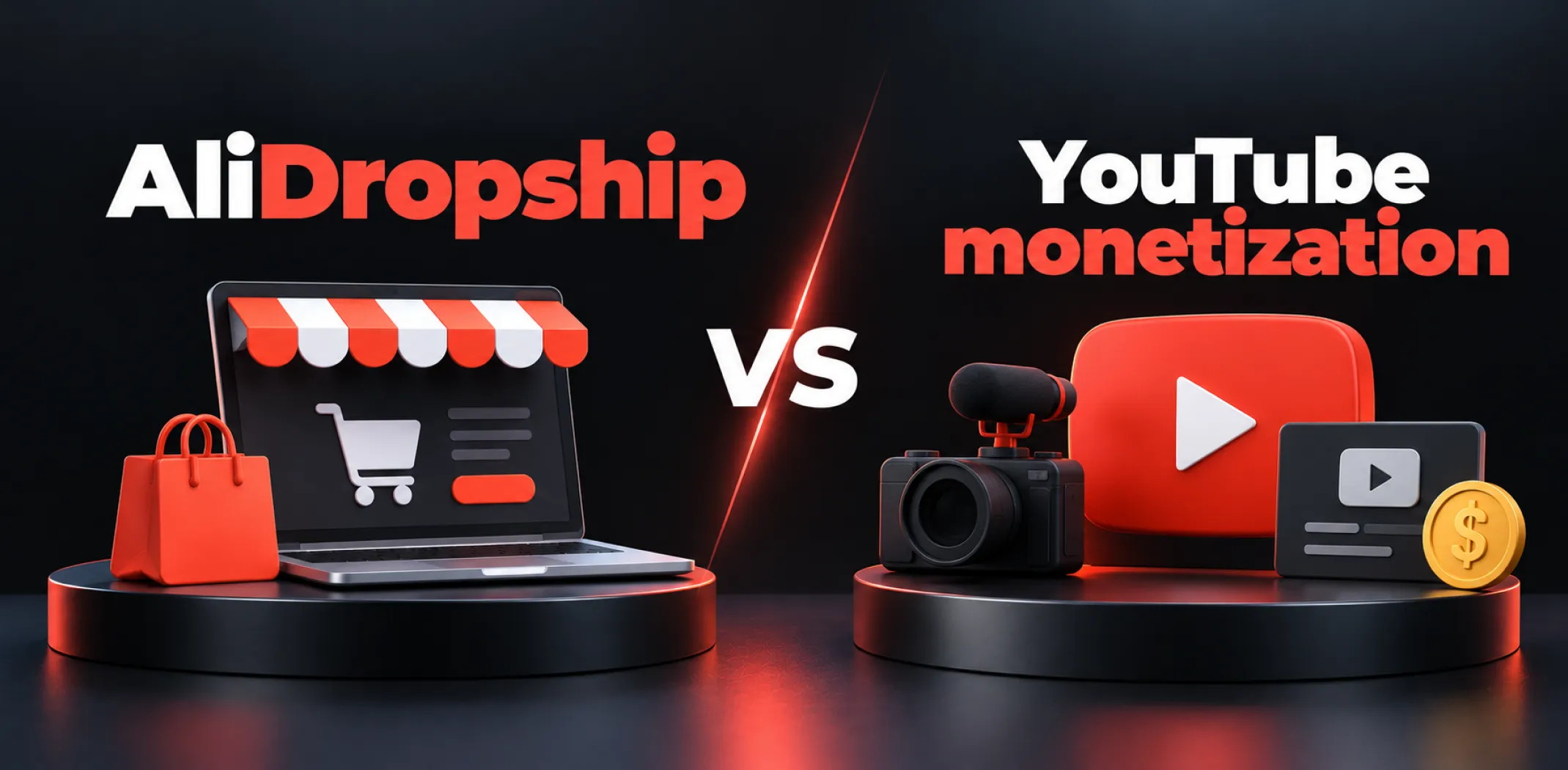
AliDropship vs YouTube monetization compares two ways to earn online: building an audience that YouTube pays you for, or opening a ready-made store that sells products. One route earns through ads, memberships, and shopping once a channel qualifies. The other earns when a store sells a product. Both are open to beginners, but they ask for very different things before the first dollar.
In 2026, the biggest difference is the entry bar. The standard YouTube ad-revenue route needs 1,000 subscribers plus 4,000 watch hours today, and from February 1, 2027 new applicants will need 8,000 watch hours. AliDropship costs $39 a month after a 14-day free trial and starts with a store that is already built. This comparison covers where each route wins, what a first year really costs, and which one fits your starting point.
Key takeaways
- YouTube monetization means earning through the YouTube Partner Program, which gives creators 55% of long-form ad revenue once a channel qualifies.
- Today a channel needs 1,000 subscribers plus 4,000 watch hours or 10 million Shorts views for ad revenue; from February 1, 2027, new applicants will need 8,000 watch hours or 20 million Shorts views.
- Early access at 500 subscribers unlocks memberships and Shopping but not ad revenue, and YouTube pays only once earnings reach the payment minimum.
- AliDropship costs $39 a month after a 14-day free trial and includes a ready-made store, loaded products, and a built-in ad system.
- The two routes reward different things: YouTube rewards audience and content, while AliDropship stores sell a ready-made catalog through ads.
The most useful way to compare them is to ask what you would be doing in your first three months. A YouTube creator plans, films, and publishes videos while the audience slowly builds toward the monetization thresholds. An AliDropship store owner chooses products and sets an ad budget for a store that already exists. Here is how YouTube monetization works first, and then how the two compare.
What is YouTube monetization and how does it work?
In 2026, YouTube monetization mostly means joining the YouTube Partner Program, which shares ad and Premium revenue with creators whose channels meet size and policy requirements. Creators receive 55% of the revenue share on long-form videos and 45% on Shorts, according to YouTube. More than 3 million creators are in the program, so the route is well established.
Eligibility has two levels. Early access starts at 500 subscribers with 3 public uploads in 90 days and either 3,000 public watch hours or 3 million Shorts views, and it unlocks memberships, Super Chat, and YouTube Shopping.
Full ad revenue requires 1,000 subscribers plus 4,000 qualified watch hours in 12 months or 10 million Shorts views in 90 days. Earnings finalize the month after they accrue, and payment follows once the balance reaches the payment minimum.
That makes YouTube monetization an audience business first and a revenue business second. It rewards consistency and a topic people want to watch, so the next section looks at where it beats a ready-made store.
Where does YouTube monetization win?
In 2026, a fair comparison has to start with what YouTube does better, because several of its strengths are structural and a catalog store cannot copy them.
Those strengths come with trade-offs. The entry bar is high and rising, income starts late, and results depend on whether viewers show up. YouTube also keeps 45% of long-form ad revenue, and a first payment can arrive more than a month after the first earnings.
How does AliDropship compare to YouTube monetization?
In 2026, AliDropship is an ecommerce platform for people just starting an online business, built so dropshipping and digital product sales work with no experience and no tech skills. You get a fully built store with products already loaded and a built-in ad system, and you pay $39 a month after a 14-day free trial. The table below shows how that compares with building a channel for YouTube monetization.
The table favors AliDropship on setup, finding customers, and the eligibility gate, but it favors YouTube on entry cost and variety of income streams, and those rows matter. YouTube is free to join and can pay from several streams, while an AliDropship store earns per sale from a catalog you do not control. The next section adds the time cost that neither price shows.
Year-1 cost breakdown: Which is actually cheaper?
As of 2026, the cost side of AliDropship vs YouTube monetization comes down to money versus time. YouTube is free to join, while AliDropship costs $39 a month after the free trial, or $468 over 12 months.
Money is only part of the picture. At a 4-minute average view duration, 4,000 watch hours is about 60,000 views and 8,000 hours is about 120,000, so the threshold is an audience target, not a fee. YouTube then pays 55% of long-form ad revenue, with payment once the balance reaches the payment minimum, typically $100 in the US.
AliDropship ads run $10 to $50 a day if you choose to use them, with a $40 coupon during the trial, and store sales still depend on products and testing.
What do real users say about YouTube monetization and AliDropship?
Based on the 2026 Partner Program rules, YouTube monetization rewards months of consistent publishing, while AliDropship is positioned for first-time store owners. The two composite examples below, one per route, reflect those patterns rather than any one real customer.
Which path is right for you?
Based on 2026 rules, match the route to your starting point rather than to the entry fee. If you enjoy making videos and can publish consistently for months, YouTube is worth the wait, and if you want a store running before an audience exists, a ready-made store has fewer moving parts.
Best for patient video creators
If you enjoy making videos and can publish on a steady schedule, YouTube rewards that habit with ads, memberships, and Shopping. Joining costs nothing, and the work builds your own brand. Expect months of effort before the thresholds are met.
Best for beginners without an audience
If you have no audience and no video experience, a ready-made store has fewer moving parts. AliDropship builds the store, loads products, and includes one-click ads, so you spend your time on choices instead of content.
Best if you prefer selling products
If selling products appeals more than being on camera, a catalog store matches that preference. Digital products deliver instantly, and physical items ship directly from suppliers, so you never handle a box.
Best for people with a built audience
If you already have subscribers or a following, YouTube monetization can turn that attention into revenue sooner. Early access opens at 500 subscribers, and ad revenue follows at 1,000 subscribers plus the watch-hour bar.
None of these profiles says one route is better in general. Each depends on what you already have: an audience, comfort on camera, and how long you can wait before income starts. If the beginner profiles sound like you, the next option is aimed at you.
What factors should you consider before choosing?
As of 2026, five factors decide which route fits, and each one can be checked before you spend anything.
How much time you can wait
YouTube income starts only after the thresholds are met, which for new applicants means 8,000 watch hours from February 1, 2027. A store can open the day you sign up, though sales still depend on products and testing. Be honest about your timeline.
Whether you want to be on camera
YouTube success depends on making videos people choose to watch, week after week. AliDropship stores sell from a catalog, so no content creation is required. Pick the work you can keep doing.
Cash you can commit
YouTube costs $0 to join, while AliDropship costs $39 a month after a 14-day trial, plus optional ads at $10 to $50 a day. Compare the cash you can spare with the months you can wait.
How income arrives
YouTube finalizes earnings the month after they accrue and pays once the balance reaches the payment minimum, typically $100 in the US. Store sales happen order by order, so each sale starts with a new buyer.
How much you depend on the platform
YouTube can change its rules, as the August 2026 update to Partner Program thresholds shows, and it keeps 45% of long-form ad revenue. AliDropship owners sell from its catalog and cannot add products of their own. Read the terms of either option.
If you are still undecided, run a small test of each. A new YouTube channel can publish a few videos at no cost to see whether you enjoy the process, and AliDropship offers a 14-day free trial that is long enough to look at a ready-made store. Count the hours each test takes, because time is the cost that neither price tag shows.
Whichever route you choose, price the full first year, not just the entry fee. Add platform cost, ad spend or equipment, and the months it takes to reach your first customers or payout. A realistic timeline protects you better than a low headline price.
AliDropship and YouTube monetization are not direct substitutes, so the better question is which problem you want to solve first. The next section explains where AliDropship fits for readers starting from zero.
What is AliDropship, and who is it built for in 2026?
No experience? No problem. If you want the simplest way to start an online business in 2026, AliDropship is one of the most beginner-friendly platforms out there. It brings your store, your products, your fulfillment, and your marketing together in one place, so you can launch fast and grow with confidence.
Over 1,500,000 stores have already been built on AliDropship, and the platform has been featured by Forbes, Entrepreneur, Inc., NBC, Business, and Fox News.
AliDropship does not require an audience or on-camera content. It gives beginners a ready-made store with products loaded, so you sell from a catalog instead of building a channel first. It also has limits worth stating plainly: you sell from its catalog and cannot add your own products, ads cost money once the free coupon is used, and results depend on the time and effort you put in.
Starting any online business takes time and effort, and neither route removes the work of finding customers. The 14-day trial lets you look around before the monthly fee starts, and you can cancel anytime. If a store is the route you want to test, you can do it without making videos and without a large fixed fee.
Back to the question behind this comparison: AliDropship vs YouTube monetization. YouTube is the stronger fit if you enjoy making videos, can publish for months, and want to build a channel of your own, while AliDropship is the faster-to-launch fit if you are starting from zero and prefer selling a ready-made catalog. Neither removes the work of finding customers, so choose the work you are more willing to do.
Whichever you choose, test before you commit: use the free trial, count your hours, and check current requirements on each platform, since YouTube rules and store plans change often. Readers who want a ready-made store to look at can start with the free store below and decide during the 14-day trial.
How does AliDropship compare to YouTube monetization?
Which is cheaper, AliDropship or YouTube monetization?
Is AliDropship better than YouTube monetization for beginners?
What does YouTube monetization do better than AliDropship?
Can I switch from YouTube monetization to AliDropship?