AliDropship vs Shopify: Which Is Better For Beginners In 2026?


Choosing between AliDropship vs Shopify is one of the first decisions you face when you start an online store in 2026. Both can power a real business, but they are built around different ideas. AliDropship gives you a ready-made store with digital products. Shopify gives you a flexible platform where you build the store and bring the products.
Quick Answer: AliDropship is the faster start if you want a store that AI configures for you, with 60+ digital products and no suppliers, shipping or inventory. Try it free for 14 days, then pay $39 a month; ad spend, add-ons and the fee on each sale are separate. Shopify is the better fit if you want full control, physical products or your own brand, and you are ready to choose your theme, apps and suppliers yourself.
This guide compares setup, products, delivery, hosting, fees, marketing and total cost, then shows which platform fits which kind of seller.
A note on who wrote this: AliDropship publishes this comparison, so we have an interest in the result. We have tried to be fair to Shopify. Where Shopify is the better choice, we say so, and its prices are the US list prices at the time of writing.
AliDropship vs Shopify at a glance
If you only have a minute, this table covers the main differences. The sections below explain each one.
What is the difference between AliDropship and Shopify?
The two platforms solve different problems, and that shapes everything else in this comparison.
AliDropship is an online business platform for beginners. AI configures your store, stocks it with 60+ digital products and gives you one-click ads to promote it. Because the products are digital, there are no suppliers, no shipping and no inventory. Every plan includes a Personal Business Growth manager.
You start with a 14-day free trial. After that the plan is $39 a month, about $1.30 a day, and it covers the store, a domain from a list, hosting, SSL and a store design template. Your ad budget, paid add-ons and the fee on each sale are separate.
Shopify is a general ecommerce platform that powers a large share of online stores. You choose a theme, add products and connect apps for anything extra, such as dropshipping suppliers or email marketing. Since 2025 it has also had an AI store builder that drafts a store design from a few keywords, plus an AI assistant called Sidekick.
Why the difference matters: AliDropship removes decisions, which helps if you are new and want to test quickly. Shopify keeps every decision open, which helps if you already know what you want to sell and how you want your brand to look.
How much can you realistically earn with each platform?
Neither platform decides what you earn. Your products, your marketing and the time you put in do. What the platform changes is your starting cost, how fast you can test, and how much of each sale you keep.
These are patterns, not promises. Neither platform guarantees income, and many new stores earn little in their first months.
One note on expectations: the platform affects how smoothly you get through the learning period, not whether you succeed. Treat your first ad budget as a test you can afford to lose.
AliDropship vs Shopify: Head-to-head comparison
Here is how the two compare on the things a new seller deals with first.
Getting started and initial setup
AliDropship setup
When you start the free trial, AI configures your store before you log in for the first time. You pick a domain from a list, and hosting, SSL and a design template are included while your plan is active. The store is mobile-ready, and the products are already loaded.
Shopify setup
Shopify starts with a 3-day free trial, followed by an introductory offer of $1 a month (check the current terms on Shopify’s pricing page). Its AI store builder can draft a design from a few keywords, but you still choose a theme, add products, set up payments and shipping, and install apps for anything else you need.
Products and catalog
AliDropship products
Your store comes with 60+ digital products already loaded, such as guides, courses, checklists and online tools. You choose which to promote. You can also browse a catalog of 100+ AI toolkits; each one you add to your store is a paid add-on.
Shopify products
Shopify lets you sell almost anything: physical goods, digital downloads, print-on-demand or services. The trade-off is that you find or make the products yourself, often through supplier or dropshipping apps, and you manage their quality, stock and pricing.
Order delivery and automation
AliDropship delivery
Everything you sell is digital, so delivery is instant and automatic after each purchase. There is no order to forward to a supplier and no parcel to track.
Shopify fulfilment
On Shopify, fulfilment depends on what you sell. Physical dropshipping usually means an app that sends orders to your supplier, while you handle tracking questions and delays. Digital products need a download app.
Shipping and returns
AliDropship: no shipping
There are no parcels, carriers or delivery times to manage, and no physical returns. Refund requests can still happen, so publish clear refund terms.
Shopify shipping
With physical products, shipping times and costs depend on your supplier and the destination. Shopify offers shipping tools and discounted labels with some carriers, but slow deliveries and returns are still yours to manage and explain to customers.
Hosting, domain and ownership
AliDropship hosting
Hosting, SSL and a domain from a list AliDropship provides are included for as long as your plan is active. You don’t manage servers, updates or security yourself.
Shopify hosting
Shopify is fully hosted and includes SSL on every plan. You get a free myshopify.com address, and you can buy or connect your own domain. Your store runs on Shopify’s platform, so its rules and plan limits apply.
Payment processing and transaction fees
AliDropship fees
AliDropship charges a transaction fee on each processed sale, on top of the $39 monthly plan. Check the current fee in the plan terms before you start, and include it in your margin math.
Shopify payments and fees
With Shopify Payments, US online card rates run from about 2.9% plus 30 cents on Basic to 2.5% plus 30 cents on Advanced. If you use a third-party payment provider instead, Shopify adds its own fee of 2% on Basic, 1% on Grow or 0.6% on Advanced, on top of the provider’s charges.
Marketing tools and analytics
AliDropship marketing
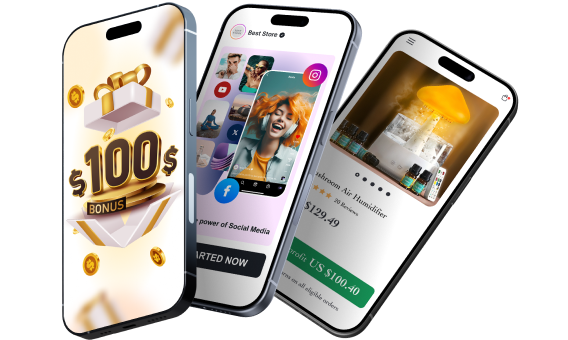
One-click ads let you promote your store on Google, Instagram, TikTok and Amazon. The AI writes the ad copy and launches the campaigns, and you set a daily budget, typically $10 to $50, which is your own spend. A $40 ad coupon comes with the trial, and your Personal Business Growth manager can help with strategy.
Shopify marketing
Shopify includes basic marketing and analytics, an email tool with a free monthly allowance, and connections to Google and Meta. You set up and manage campaigns yourself or with apps, which gives you more control and more work.
AliDropship vs Shopify for AI dropshipping
Both platforms use AI, but for different jobs. Shopify’s AI helps you build a store that you then stock, fulfil and promote yourself. AliDropship’s AI configures a store that already comes stocked with 60+ digital products, and its one-click ads promote it.
So the real question is not which platform has more AI. It is how much of the work you want done for you. If you want AI to handle the setup and keep you away from suppliers, AliDropship fits. If you want AI to speed up a store you design and stock yourself, Shopify fits. For more on the model, read our AI dropshipping guide and what an AI dropshipping store builder does.
Pricing breakdown: What does each platform actually cost?
Both platforms start at the same headline price, $39 a month, but that price buys different things.
On Shopify, the plan is rarely the whole bill: apps, a premium theme and payment fees add up, and they depend on what you install. On AliDropship, the extras are the ad budget, the AI toolkits you add and the fee on each sale.
Important note: prices change, so check both platforms’ current pricing before you decide. Shopify’s figures here are its US list prices at the time of writing.
Pros and cons of each platform
AliDropship pros and cons
- Pro: the store and products are ready during the free trial, so you can test quickly.
- Pro: no suppliers, shipping or inventory, because everything you sell is digital.
- Pro: costs are listed up front: the plan, your ad budget and the fee on each sale.
- Pro: a Personal Business Growth manager and one-click ads come with every plan.
- Con: digital products only, so it is not for physical goods.
- Con: less control over design and products than a general store builder.
- Con: you still need an ad budget, and results are not guaranteed.
Shopify pros and cons
- Pro: you can sell almost anything, under your own brand.
- Pro: a very large choice of themes and apps, plus AI tools such as the store builder and Sidekick.
- Pro: it scales to large businesses and many sales channels.
- Con: more setup and more decisions before your first sale.
- Con: apps and premium themes add to the monthly bill.
- Con: with physical products, suppliers, shipping and returns are yours to manage.
Legal and ethical considerations for sellers in 2026
Whichever platform you choose, the same honesty rules apply to your store, your ads and your product pages.
Be accurate about delivery
If you sell physical products on Shopify, give customers realistic delivery times. In the US, the FTC’s Mail, Internet, or Telephone Order Merchandise Rule requires you to ship within the time you state, or within 30 days if you state none, and to offer a refund if you can’t. With digital products, describe exactly what the buyer receives.
Respect platform and product terms
Follow each platform’s acceptable use rules and the terms for the products you sell. Don’t use brand names, images or claims you have no right to use, and never promise income or results in your ads.
Handle customer data properly
You collect names, emails and payment details, so publish a privacy policy, collect only what you need and keep it secure. Rules such as GDPR in the EU and state privacy laws in the US may apply, depending on where your customers live.
Which platform is right for you? Recommendations by profile
There is no single winner. It depends on what you want to sell and how much you want to set up yourself.
Complete beginner
AliDropship is the easier start: the store and products are ready, delivery is automatic, and a Personal Business Growth manager helps with your first steps. Use the trial to learn with a small ad budget.
Intermediate seller with ecommerce experience
If you already know your niche and want physical products or your own brand, Shopify gives you more room. If you want to test digital products without building a store, AliDropship is a quick second project.
Full-time income goal
Either can be part of a full-time business, and neither guarantees it. Build your plan on margin after ad spend, plan and fees, and on repeat customers, not on platform features.
Advanced seller focused on flexibility
Shopify wins on flexibility: custom themes, thousands of apps, physical inventory and multiple sales channels. AliDropship is narrower by design: digital products in a ready-made store.
AliDropship: Your complete all-in-one solution for starting an online store in 2026
If you want the simplest way to start an online business, especially if you are brand new, AliDropship puts store creation, a starting catalog of digital products and one-click ads in one place.
AI-configured store 🛍️
AI configures, designs and stocks your store before you log in for the first time. A domain from a list, hosting, SSL and a store design template are included while your plan is active, and the store is mobile-ready.
60+ digital products 📦
Your store comes with 60+ digital products already loaded, with margins on product sales of 50–70% before ad spend and fees. You can also browse 100+ AI toolkits, which are paid add-ons.
Instant delivery ⚡
Everything you sell is digital, so delivery is instant and automatic. There is no inventory, no shipping and no physical returns, and each processed order carries a transaction fee.
One-click ads 📣
Promote your store on Google, Instagram, TikTok and Amazon with one-click ads. Your daily budget, typically $10 to $50, is your own spend, and a $40 ad coupon comes with the trial.
Ease of use 👌
No coding is needed, and every plan includes a Personal Business Growth manager who helps with strategy and onboarding. Want the full picture first? Read what AliDropship is and what it costs.
What it costs 💳
The trial lasts 14 days, with no subscription fee before day 15. After that the plan is $39 a month, about $1.30 a day. Ad spend beyond the coupon, paid add-ons and the fee on each sale are separate, and results vary.
A card is needed to start the trial, and the monthly plan is charged to it automatically after the trial unless you cancel. Optional extras, such as ad spend beyond the ad credit, and transaction fees on sales can still be charged during the trial. If you cancel within the first 14 days, you pay no subscription fee.
What is the main difference between AliDropship vs Shopify?
Is AliDropship cheaper than Shopify for dropshipping?
In most cases, yes. AliDropship offers a 14-day free trial, then charges one flat subscription of 39 dollars per month that covers hosting, store setup, product importing, order automation, and core marketing tools. Shopify starts with a lower headline plan price but quickly becomes more expensive once you add the apps needed to run a proper dropshipping operation. A functional Shopify dropshipping setup typically costs between 100 and 175 dollars per month once apps are included, not counting transaction fees for sellers outside Shopify Payments supported countries. AliDropship also charges no additional transaction fees regardless of which payment gateway you use.
Can I use Shopify for dropshipping without extra apps?
Not effectively. Shopify does not include a native AliExpress product import tool, so you need a third-party app like DSers to handle importing, inventory syncing, and order routing. DSers has a free tier but full automation requires a paid plan. You will also need separate apps for advanced email marketing, SEO tools, and abandoned cart recovery if you want those capabilities. The result is that a dropshipping store on Shopify almost always requires multiple additional subscriptions to function at the same level as AliDropship out of the box.
Does AliDropship include hosting like Shopify does?
Yes, hosting is included in the AliDropship subscription. The platform is built on WordPress, which means your store is hosted and maintained for you while still giving you full ownership of your data and complete control over your site. Shopify also includes hosting, but it is a closed proprietary system, meaning you cannot move your store to a different hosting provider or access the server-level settings that WordPress allows. For sellers who value ownership and flexibility, AliDropship hosting is the stronger option.
Which platform is better for a beginner starting dropshipping in 2026?
AliDropship is generally the better choice for beginners in 2026. The store is built and configured for you from the start, so you do not need technical skills or prior ecommerce experience to get up and running. The 14-day free trial means you can test everything at zero risk. Everything from hosting to product importing and order fulfilment works inside one dashboard without requiring extra apps or integrations. Shopify can also work for beginners, but the setup process involves more steps, more decisions, and higher ongoing costs before the store is fully operational. Most new dropshippers find the AliDropship path faster and less stressful.