AliDropship VS Oberlo: Oberlo Alternatives After Shutdown

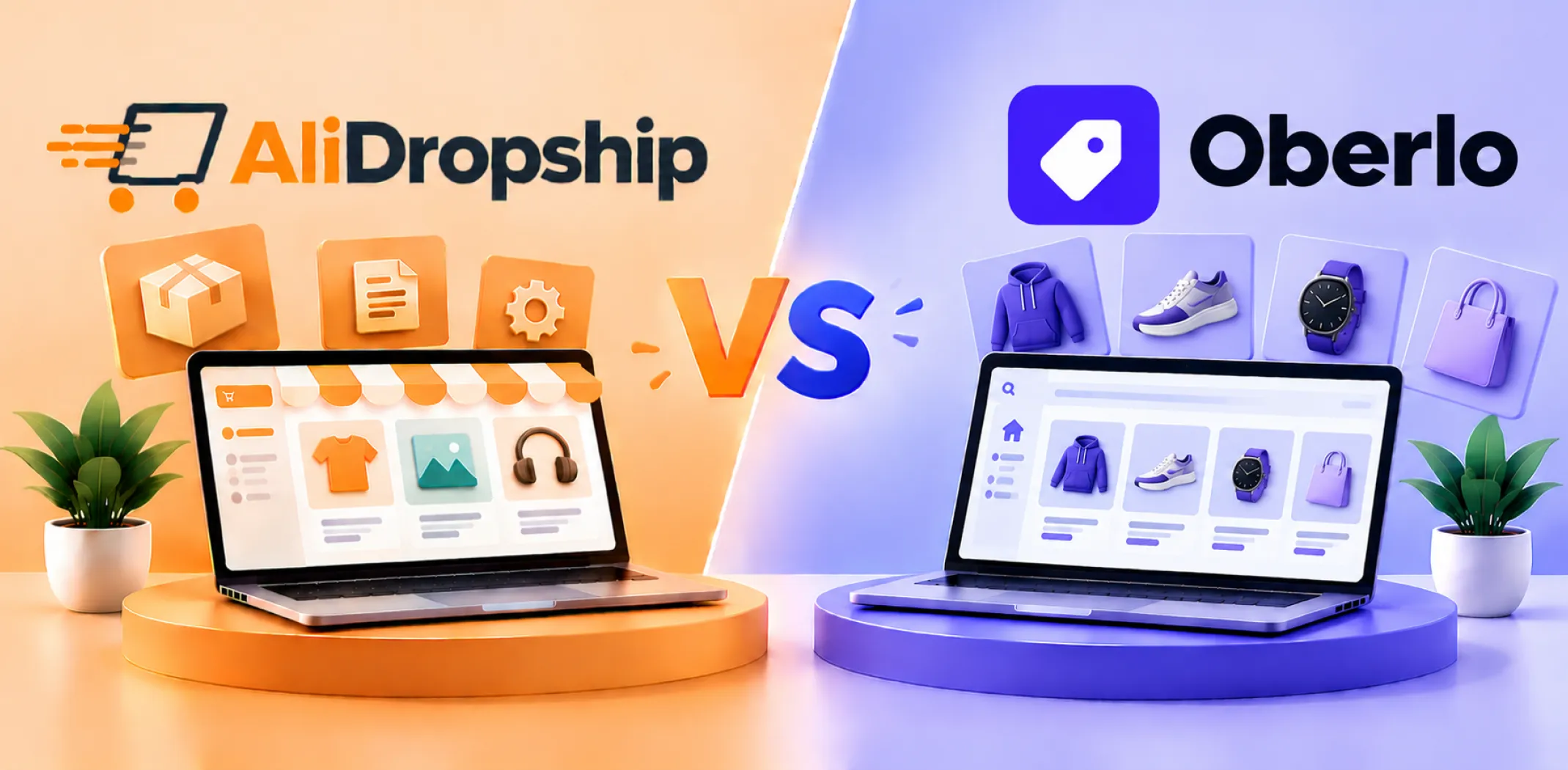
If you searched for AliDropship vs Oberlo in 2026, the most important fact comes first: Oberlo no longer exists. Shopify removed the app from its App Store on May 12, 2022, and it stopped working within two months, so this comparison is really between an active platform and a retired one.
That does not make the question pointless. Oberlo taught a lot of people how dropshipping works, and old tutorials still send new readers to it. This guide explains what Oberlo did well, where AliDropship is stronger as of October 2026, how the first-year costs compare, and who should pick what.
Key takeaways
- Oberlo was a Shopify-owned dropshipping app founded in 2015 that Shopify delisted on May 12, 2022 and shut down in June 2022.
- Oberlo imported AliExpress products into Shopify stores, offered a free Starter plan, and priced its Pro plan at $79.90 per month.
- AliDropship provides a ready-made store, a built-in ad system with budgets of $10 to $50 per day, and a $39 monthly plan after a 14-day free trial.
- Over 12 months, Oberlo Pro cost about $958.80 before Shopify fees, while AliDropship costs $468 with the store included.
- Shopify pointed former Oberlo merchants to DSers, so current Shopify owners who want to stay on Shopify still have an active option.
One note on scope before the details. When people type Oberlo today, they usually mean one of two things: the app itself, which is gone, or the kind of tool it was, an AliExpress import plugin for a store you already own. This article covers both meanings, so you can decide whether you need a replacement app for an existing store or a different starting point altogether.
What is Oberlo and is it still available?
As of October 2026, Oberlo is not available. It began in 2015 in Vilnius, Lithuania, as a Shopify app that let merchants import products from AliExpress and pass orders to suppliers, who shipped directly to the buyer. Shopify acquired the company in 2017, when merchants had already sold more than 85 million products through the app.
In May 2022 Shopify delisted Oberlo and then shut it down in June, pointing merchants to a partner app called DSers. Industry coverage at the time put Oberlo at more than 100,000 active stores. Shopify described the closure as a routine product deprecation and did not publish a detailed explanation, so the reasons behind it remain partly speculative.
How did Oberlo make money? It ran as a subscription app with a free Starter plan and paid tiers, so the company earned monthly fees while store owners earned the gap between supplier cost and their own retail price. That model is simple and familiar, but it left the hard parts of the business, such as store design, advertising, and finding customers, entirely on the seller.
Where does Oberlo win over AliDropship?
In fairness to Oberlo, and based on how the app worked before 2022, it had real strengths. Skipping that part would make this comparison one-sided, and readers who land on a page like this tend to notice when a platform is only praised.
If you already ran a Shopify store with traffic and a brand you liked, Oberlo was the shortest path to adding dropshipped products. A free plan also meant you could test a few listings without a monthly app fee. Those advantages were genuine. The problem in 2026 is simply that you cannot use them: the app is closed, and the Shopify-side costs it never covered are still there with any replacement.
How does AliDropship compare to Oberlo?
As of October 2026, AliDropship is an active platform, and the core difference between AliDropship and Oberlo is scope. Oberlo was an add-on: it assumed you already had a Shopify store, a theme, a domain, and a plan for finding customers. AliDropship is an ecommerce platform for people who are just starting an online business, making dropshipping and digital product sales possible with no experience and no tech skills needed.
In practice, that means the store is built for you and stocked from the AliDropship catalog, and a built-in ad system promotes it with a daily budget you choose between $10 and $50. Oberlo handled product import and order automation, but advertising, store design, and pricing strategy stayed with you. The table below puts the two side by side.
The table shows a clear pattern. Oberlo wins on entry price and on being native to Shopify, while AliDropship wins on completeness and, most simply, on still existing. Neither list of strengths is long, which is typical of a comparison between a focused add-on and an all-in-one platform.
The Oberlo year-1 range excludes the separate Shopify subscription, so the real gap is wider than the row suggests. If you want to test AliDropship against your own situation, the free trial is the quickest way to do it.
Year-1 cost: Which is actually cheaper?
Based on the last published prices from 2022, the first-year cost gap is large once you add everything up. Oberlo offered a free Starter plan, and its top Pro plan cost $79.90 per month. AliDropship costs $39 per month after a 14-day free trial, which works out to about $1.30 per day.
Notice what the tiles leave out. The Oberlo figures cover only the app, because a Shopify subscription was billed separately, and themes or other paid apps could add more. The AliDropship figure of $468 covers the store itself, but ads are extra: the built-in system runs on a $10 to $50 daily budget that you set, and a $40 ad coupon is included during the trial.
To be fair, a free plan beats a 39-dollar plan on pure app cost, and a seller who only wanted to test a handful of products could do that cheaply on Oberlo. That advantage disappeared with the app, and the cheapest replacement still needs a Shopify subscription underneath it. The honest question today is not which app costs less, but which route gets you to a working store with the least total spend and setup.
What do real users say about Oberlo vs AliDropship?
In 2026, current reviews of Oberlo are scarce because the app closed in 2022. Most of what remains is shutdown coverage and old merchant discussion on forums and Reddit. For AliDropship, Trustpilot shows an average rating of 4.7★. The two profiles below are realistic composites based on how each platform works, not reports about named customers.
Which platform is right for you?
As of October 2026, the right pick depends less on features than on your starting point. The four buyer profiles below keep the AliDropship vs Oberlo comparison honest, including the case where AliDropship is not the closest fit.
Best for first-time sellers
If you have never built a store, an all-in-one platform removes the most intimidating steps. AliDropship builds the store, loads the products, and includes the ad system, so your first job is choosing what to promote rather than wiring tools together.
Best for hands-off marketing
For many beginners, advertising is harder than the store itself. AliDropship runs one-click ads from a daily budget you choose, with no Google Ads or Facebook Ads account to manage. You still decide what to promote, and results depend on the time you put in.
Best for current Shopify owners
If you already run a Shopify store and want to stay on it, Oberlo is not an option anymore. Shopify pointed former Oberlo merchants to DSers, so an active Shopify import app is the closer match here than a platform switch.
Best for low-budget testing
The free Oberlo Starter plan was one of the cheapest ways to try dropshipping, but it needed a Shopify subscription underneath. On AliDropship the closest equivalent is the 14-day free trial, which includes a $40 ad coupon and charges order processing fees only if you make sales.
None of these profiles needs a perfect answer today. If you are a first-time seller, the simplest test is to count how many separate things you would need to set up yourself: a store, products, supplier connections, and advertising. Each item you can skip lowers the chance that setup work eats your motivation before your first sale. That is the practical logic behind choosing an all-in-one platform over an import app.
What factors should you weigh before choosing?
In 2026, five factors decide most of these comparisons. They apply whether you are weighing AliDropship vs Oberlo or any other pair of dropshipping options.
Is the platform still operating?
Oberlo was delisted from the Shopify App Store on May 12, 2022 and stopped working within two months. Before you commit to any tool, check for recent updates, active support, and current reviews. A platform with no activity in the last year is a warning sign, not a bargain.
What is the full monthly cost?
Oberlo Pro cost $79.90 per month on top of a separate Shopify subscription. AliDropship costs $39 per month with the store included, plus an ad budget of $10 to $50 per day if you turn the ad system on. Add up the real monthly total, not just the headline price.
Do you already own a store?
If you run a Shopify store that already gets traffic, moving platforms means rebuilding it, and an active Shopify app may be the better fit. If you have no store yet, a done-for-you store removes the design, coding, and setup steps. Be honest about which group you are in.
Who handles the marketing?
Oberlo focused on product import and order automation, so advertising was your job. AliDropship includes a built-in ad system that works as one-click ads, so you do not need to set up Google Ads or Facebook Ads yourself. If marketing is the part you fear most, this factor can outweigh the other four.
How are products sourced and delivered?
Oberlo imported products from AliExpress suppliers, and long overseas delivery times are a common pain point in that model. AliDropship offers digital products that deliver instantly, plus a smaller lineup of physical items shipped by suppliers. Decide how much delivery time and customer support you want to manage.
If you weigh the five factors honestly, a pattern shows up. Sellers who already own a store, have traffic, and want only a product import tool are the audience Oberlo was built for, and they now need a different Shopify app. Sellers who are starting from nothing and want the store, the products, and the ads handled together are the audience AliDropship was built for. Most readers of a page like this are in the second group.
A fair last check before you decide: look at what happens if the tool you rely on disappears. Oberlo users in 2022 had weeks, not months, to export their lists and move to a replacement. Choosing an active platform with a clear subscription and a free trial does not remove that kind of risk entirely, but it does let you test the product before paying anything beyond order processing fees.
Why is AliDropship the stronger Oberlo alternative in 2026?
No experience? No problem. If you want the simplest way to start an online business in 2026, AliDropship is one of the most beginner-friendly platforms out there. It brings your store, your products, your fulfillment, and your marketing together in one place, so you can launch fast and grow with confidence.
Over 1,500,000 stores have already been built on AliDropship, and the platform has been featured by Forbes, Entrepreneur, Inc., NBC, Business, and Fox News.
Those five features explain why the platform suits beginners: they remove the setup tasks that usually come before a first sale. The safety features matter just as much for a skeptical reader, so here they are in one place before you decide anything.
AliDropship does not remove the work of running a business. You still choose which products to promote, set a daily ad budget, and pay attention to what sells. What changes is the starting line: instead of assembling a store, a catalog, and an ad account from separate tools, you begin with all three already connected.
To sum up the AliDropship vs Oberlo question: Oberlo earned its reputation, but it is closed, and its shutdown shows the risk of building a business on a single add-on that someone else controls. Anyone who relied on it in 2022 had to start the migration work from scratch within weeks.
If you already live on Shopify and want to stay there, look at an active Shopify import app. If you are starting from zero, the all-in-one route is the one this comparison supports, and the free trial lets you check that conclusion yourself instead of taking it on trust.
How does AliDropship compare to Oberlo?
Which is cheaper: AliDropship or Oberlo?
Is AliDropship better than Oberlo for beginners?
What does Oberlo do better than AliDropship?
Can I switch from Oberlo to AliDropship?