AI Dropshipping In El Salvador: How To Start And Get Paid
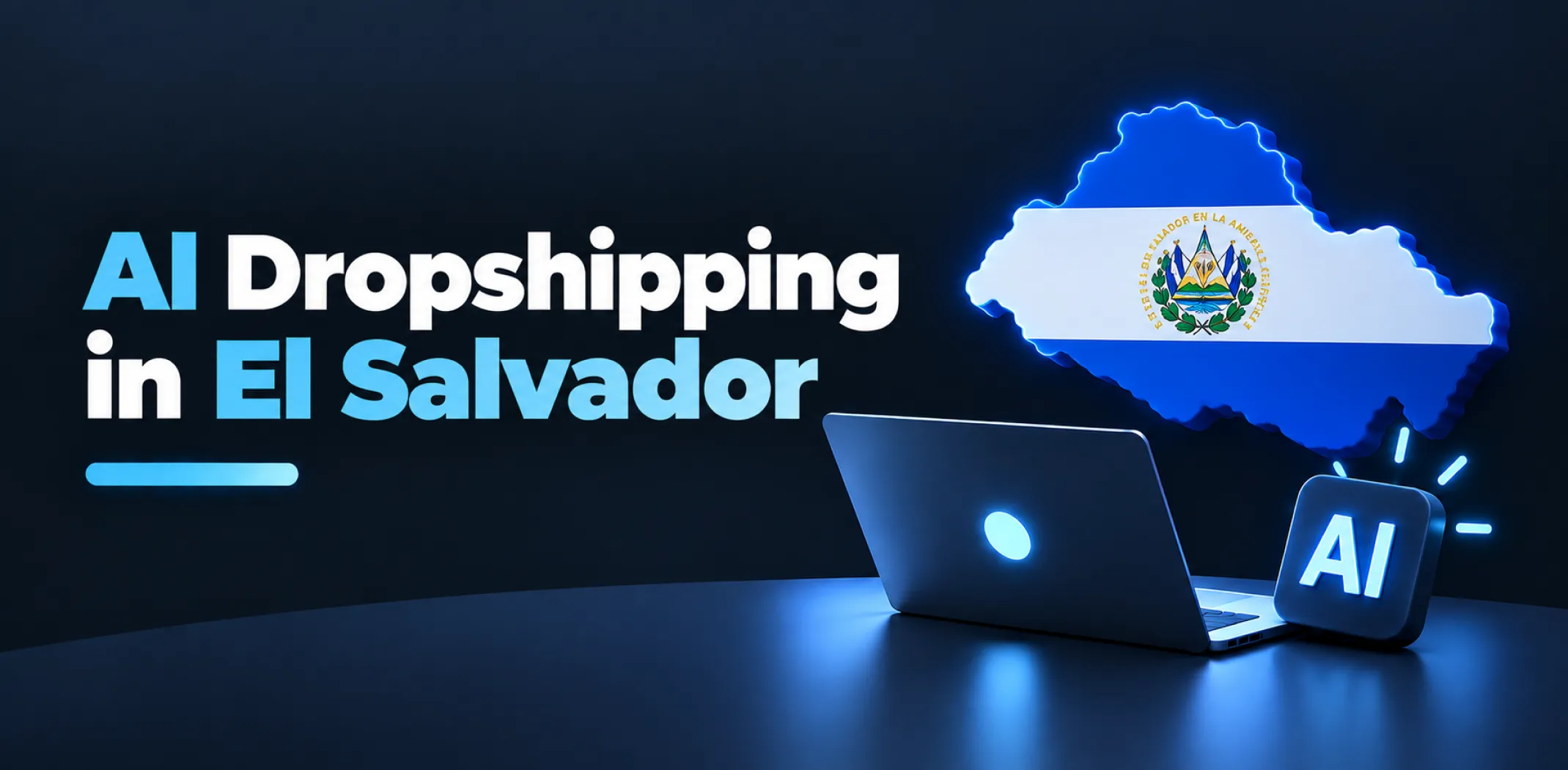
Yes, you can run an AI-powered dropshipping business from El Salvador, and like Ecuador, the payout math here is simpler than in most of this series: El Salvador has used the US dollar as its official currency since 2001, so there is no currency conversion step between what PayPal pays out and what lands in your Salvadoran bank account.
You get paid through PayPal, which supports sending, receiving, and withdrawing money for Salvadoran account holders without restriction. Starting the AI Dropshipping Fast-Track Bundle costs 39 US dollars a month after a 14-day free trial that already includes a 40-dollar ad credit – no conversion, no local-currency estimate, just the number itself.
El Salvador’s tax side has a genuinely strong advantage: a 2024 legislative reform specifically exempts income earned from activities performed outside the country for foreign clients, which is exactly the situation of a seller here taking payouts from customers abroad. Last verified: September 16, 2026.
This guide is built specifically for someone selling from El Salvador, not a generic dropshipping checklist. Every number below is in US dollars, since that is El Salvador’s own currency, with PayPal as the payout route and the digital-products side of AliDropship rather than physical shipping. If you already know the basics of AI dropshipping and just want the El Salvador-specific numbers, jump straight to how you get paid.
Who your customers will be
Selling digital products means your customers are wherever your ads run – typically the United States, United Kingdom, Canada, and Australia, not necessarily El Salvador itself. El Salvador’s own market size, payment habits, and ecommerce maturity do not limit this business.
For a seller based in El Salvador, that matters in a practical way: El Salvador sits in Central Standard Time, six hours behind UTC year-round with no daylight saving, which overlaps closely with the US business day and reaches comfortably into the UK and EU afternoon.
Spanish is the official language, but AliDropship’s platform, product catalog, and the major ad platforms all run in English, and your customers abroad expect English ad copy regardless of what you speak day to day. As with Ecuador, there is no currency conversion to plan for – El Salvador adopted the US dollar as legal tender in 2001, and it remains the dominant day-to-day currency for wages, prices, and tax payments.
Can you run AI dropshipping from El Salvador
Before you spend anything, run through the six things that actually determine whether this business works from El Salvador. All six clear cleanly for a seller here – confirm the specifics below before you commit a full month of ad spend.
Hw you get paid in El Salvador
PayPal is the payout provider that works here: Salvadoran account holders can send, receive, and withdraw money through PayPal without the restrictions that block some payout providers in other countries. There is no second option you need to research – PayPal alone is enough to run this business.
Money typically lands in your PayPal balance within minutes of a sale, and a withdrawal to a Salvadoran bank account usually clears within one to three business days. Because El Salvador’s own currency is the US dollar, there is no currency conversion spread to lose.
The fee you pay is PayPal’s own receiving and withdrawal fee alone, typically 3 to 5 percent, without the extra 2 to 3 percent that a currency conversion adds in most other countries in this series.
On a 39-dollar digital product sale at a 60 percent margin, a seller in El Salvador receives approximately 22.45 US dollars after PayPal’s fee. Because there is no local currency to convert to, that figure is exactly what lands in your account, not an estimate that shifts with the exchange rate.
El Salvador has no capital controls or withdrawal limits on this kind of income. You do not need a business bank account to get started – a personal Salvadoran bank account linked to PayPal is enough for the withdrawal side, though a dedicated business account becomes worth opening once you register formally.
One thing worth knowing, even though it does not change anything about how this business runs: El Salvador made Bitcoin legal tender in 2021, but under IMF-linked reforms in 2025 the requirement for businesses to accept it was repealed, and Bitcoin is now an optional payment method rather than mandatory.
The US dollar remains the dominant currency for wages, prices, and tax payments, and PayPal payouts here are in dollars regardless – no Bitcoin wallet or crypto step is involved in this business at any point.
How AI dropshipping works
AI dropshipping breaks into three layers, and each one does something specific for a seller based in El Salvador.
AI configures the store: pick a niche, and the platform builds a live storefront around it, no coding and no design decisions to agonize over. AI stocks it with digital products: your store launches with more than 60 tested digital products already loaded from AliDropship’s own catalog, so there is no product research phase before you can start selling.
AI runs the ads: campaigns across Google, Instagram, TikTok, and Amazon are written, launched, and optimized by AI, which matters in El Salvador specifically because all three major ad platforms are fundable here with a standard international card – there is no local ad-account restriction to work around.
Because the products are digital, there is no shipping from El Salvador, no customs, no stock, and no failed deliveries. Orders are fulfilled the moment they are placed, wherever the customer is. Read more about how the model works on the AI dropshipping hub.
What it costs to start in El Salvador
Here is what a realistic first month looks like – and just like Ecuador, there is only one column of numbers to read, since El Salvador’s currency is the US dollar.
Tax and legal requirements in El Salvador
El Salvador’s standard personal income tax is progressive with a top rate of 30 percent, applied above an exempt threshold of a few thousand dollars a year. On its own, that would put El Salvador in the middle of this series rather than at either end – but a 2024 legislative reform changes the picture for exactly this kind of business.
That reform specifically exempts income earned from activities performed outside El Salvador for foreign clients, replacing an older rule that could tax locally performed work even when the client was abroad.
An AI dropshipping seller based in El Salvador, taking PayPal payouts from customers in the US, UK, or elsewhere, fits the situation this exemption was written for. This is a clearer, more directly legislated advantage than the territorial tax rules in some other countries in this series, where whether platform income counts as foreign-sourced is more of an open question.
Business registration is not required to make your first sale, but once you are earning real income, the standard path is registering with the Dirección General de Impuestos Internos (DGII) under the Ministerio de Hacienda for a NIT (Número de Identificación Tributaria), which carries no significant government fee.
El Salvador’s standard IVA runs at 13 percent, but exports are zero-rated and foreign-source income is not subject to IVA at all – which covers a seller whose customers are entirely outside the country.
Here is the rule sellers in El Salvador most often miss on top of the local rules: if your ads reach customers in the European Union or the United Kingdom, VAT applies from your very first sale to a consumer there, regardless of El Salvador’s own tax treatment.
Non-EU sellers register once through the Non-Union OSS scheme in any single EU member state and file one quarterly return covering all 27 countries; UK sales need a separate UK VAT registration.
What AI does and does not solve for El Salvador sellers
AI handles the parts that used to take the most time: it configures your store layout, selects and loads the digital products, writes ad copy and creative, optimizes campaigns as they run, writes product descriptions, and sends follow-up emails. That covers store setup, product selection, ads, and content end to end.
What it does not handle, for a seller in El Salvador specifically: PayPal’s payout fee still applies to every sale, even without a conversion spread on top of it. Confirming that your specific setup qualifies for the 2024 foreign-income exemption, and registering a NIT with the DGII once you are earning real income, is still yours to work out – a brief conversation with a local accountant is worth it given how much the exemption can save you.
And funding your ad accounts – linking a card that Meta, TikTok, or Google will actually accept for recurring international billing – is a one-time setup step AI cannot complete on your behalf. None of these are logistics problems, since there is no physical inventory here – they are payment and paperwork problems, and they are the honest reason this is not a fully hands-off business.
Getting started from El Salvador
Step 1: Start the 14-day free trial. Sign up for the AI Dropshipping Fast-Track Bundle, connect a PayPal account for payouts, and let AI configure your store around a niche.
Step 2: Fund your ad accounts. Link an international card to Meta, TikTok, and Google Ads, then use the 40-dollar credit to launch your first AI-managed campaign.
Step 3: Register once sales become regular. Get a NIT from the DGII, confirm your foreign-income exemption applies, and set aside PayPal’s typical 3 to 5 percent fee when you plan your numbers.
That is the complete picture for a seller based in El Salvador: PayPal for payouts with no currency conversion to worry about, since El Salvador uses the US dollar outright, and a 2024 tax reform that specifically exempts income earned from foreign clients while working from here. Everything above assumes you are starting from zero – no existing store, no products sourced, nothing built yet.
If you are comparing this to other dollar-based markets, AI dropshipping in Ecuador and AI dropshipping in Panama share the same no-conversion advantage.
Can I do AI dropshipping from El Salvador?
How do I get paid as a dropshipper in El Salvador?
Do I need to register a business in El Salvador to sell digital products?
Do I pay tax on digital product sales in El Salvador?
Can I sell to customers outside El Salvador?