How To Make Money With Your Car: 11 Real Methods


Your car is sitting in the driveway for 22 hours a day on average. That is a depreciating asset doing nothing for your finances – and in 2026, there are more legitimate ways to fix that than ever before. Whether you want a side income boost or a proper part-time hustle, the options have genuinely expanded thanks to apps, gig platforms, and local service demand.
Quick answer: The most practical ways to make money with your car include rideshare driving, food and parcel delivery, renting your car out, car advertising, and mobile service businesses. Earning potential ranges from $150 to $2,000+ per month depending on your hours and method.
This guide covers 11 real methods – with honest income ranges, effort levels, and what each one actually requires to get started.

What does making money with your car actually mean in 2026?
When people search for ways to make money with your car, they are usually thinking about rideshare or delivery driving – and those are legitimate options. But the category is much broader than that. In 2026, your car can function as a service vehicle, a passive income tool, a mobile billboard, or the base of operations for a small business.
The shift that has made this possible is the proliferation of app-based platforms that connect service providers with local customers. You no longer need to advertise yourself, manage bookings manually, or build a client list from scratch. Platforms like Uber, Turo, Instacart, and Wrapify handle most of the logistics – you just show up with your car.
That said, car-based income is almost never truly passive. Most methods require your active time, fuel costs eat into profits, and vehicle wear-and-tear is a real expense that many income estimates ignore. The methods in this guide are ranked and assessed with those realities in mind.
How much can you realistically earn from your car?
Earnings vary enormously depending on your city, how many hours you commit, and which method you choose. Below is an honest breakdown of effort versus earning potential for the main categories covered in this guide.
These ranges reflect part-time to full-time effort in medium-to-large US cities. Drivers in rural areas typically earn 20–35% less due to lower demand and longer distances between jobs. Fuel costs, platform fees, and maintenance can reduce take-home pay by 25–40% depending on the method.
One note on the top figures: The ceiling numbers above assume consistent full-time hours in a high-demand city. Most part-time drivers working 15–20 hours per week earn toward the lower half of each range.
11 ways to make money with your car in 2026
Here are the most practical and well-documented methods available right now – broken down by category so you can find the best fit for your schedule, vehicle, and income goal.
Rideshare and passenger transport
Uber and Lyft
Rideshare remains the most widely available way to earn with your car. Uber and Lyft both operate in hundreds of US cities, and the barrier to entry is relatively low – you need a vehicle that meets their age and condition requirements, a clean driving record, and a valid license. Most drivers earn between $18 and $28 per hour before expenses in busy urban markets, with surge pricing pushing that higher during peak windows.
The realistic net income after fuel and maintenance comes in at roughly $12–$20 per hour for most drivers. That said, many Reddit r/uberdrivers members report that the profitability gap between cities is significant – a driver in New York or Chicago consistently outearns one in a mid-size suburban area.
Earning potential: $600–$1,800/month working 20–35 hours per week in a mid-to-large city.
HopSkipDrive (school transport)
HopSkipDrive is a niche rideshare platform focused on transporting children to school and activities. It pays more per ride than standard rideshare and operates during predictable daytime hours – which suits parents or anyone who prefers structured shifts. You need to be at least 23 years old, have five-plus years of caregiving or childcare experience, and pass an extensive background check. Earnings tend to run $20–$32 per hour active.
Earning potential: $400–$900/month part-time, depending on city availability and shift hours.
Delivery services
DoorDash and Instacart
Food and grocery delivery is one of the most flexible car income methods available. DoorDash and Instacart let you set your own hours with no minimum commitment. DoorDash pays per delivery plus tips, with most drivers earning $15–$22 per active hour before costs. Instacart shoppers who also deliver can earn more per trip but spend time in-store – which reduces the number of jobs per hour.
Both platforms use algorithmic batching to assign orders, so earnings depend on proximity to restaurants and stores, time of day, and how the platform weights your acceptance rate. Working lunch and dinner peaks reliably outperforms off-peak windows by 30–50%.
Earning potential: $400–$1,000/month working 20–25 hours per week during peak windows.
Amazon Flex
Amazon Flex hires independent contractors to deliver Amazon packages using their personal vehicles. You claim delivery blocks through the app – typically 3–5 hour shifts – and earn a flat rate per block regardless of the number of packages. Block rates range from $72 to $120 in most markets. The catch is availability: blocks fill quickly and the app requires fast reflexes to grab them. Drivers in dense residential areas with high package volume tend to earn the most per hour.
Earning potential: $300–$900/month working 2–4 blocks per week.
Roadie (large item delivery)
Roadie, a UPS subsidiary, connects drivers with senders who need oversized or heavy items delivered locally and regionally. Unlike food delivery, you can earn $20–$100+ per single haul depending on item size and distance. This works well if you have an SUV, truck, or van. Jobs are posted in advance, giving you time to plan routes and select high-value hauls rather than chasing small-ticket deliveries.
Earning potential: $200–$700/month working selectively on higher-value hauls.
Car rental and peer-to-peer platforms
Turo
Turo is the largest peer-to-peer car rental marketplace in the US. If you have a vehicle that sits unused for several days per week, listing it on Turo is one of the more passive ways to make money with your car. You set your own pricing, availability, and delivery preferences. Turo takes 15–40% depending on your chosen protection plan, and hosts in high-demand cities or near airports typically earn the most.
Popular vehicles for Turo listing include compact SUVs, sedans under five years old, and distinctive models that travelers specifically seek out. According to Turo data, top-performing hosts earn $700–$1,200/month per vehicle. That said, wear-and-tear and the occasional difficult renter are real considerations – most experienced hosts recommend the higher-tier protection plan despite the higher commission.
Earning potential: $300–$900/month per vehicle, depending on location and booking frequency.
Getaround
Getaround is a Turo competitor with a unique feature: keyless entry via an in-car device called Connect, which lets renters access your car without a handoff. This makes it genuinely more hands-off than Turo. The tradeoff is that Getaround requires you to install their hardware and operates in fewer cities. Earnings tend to be slightly lower per booking but require less active management.
Earning potential: $200–$600/month in supported markets with consistent availability.
Car advertising
Wrapify and Carvertise
Car wrap advertising is one of the most genuinely low-effort ways to earn with your car. Companies like Wrapify and Carvertise pay drivers to wrap their vehicle – partially or fully – with brand advertising, then drive their normal routes. You are paid based on distance driven and campaign type, typically $100–$400/month.
Wrapify uses a GPS-based tracking app to log your miles and verify driving patterns before matching you with campaigns. Carvertise works similarly and tends to focus on regional brand campaigns. The main requirement is a clean, undamaged vehicle and consistent urban driving – most campaigns require a minimum of 30–50 miles per day.
Important note: Car wrapping is not available in all markets and campaign availability varies significantly. You may sit on a waitlist for 30–90 days before a matching campaign becomes available.
Earning potential: $100–$400/month as a true add-on to your existing driving routine.
Mobile service businesses
Mobile car detailing
A mobile car detailing business is one of the highest-earning ways to use your car as a base of operations. You drive to the customer, perform the service in their driveway or lot, and charge $80–$250+ per vehicle depending on service level. Startup costs are manageable – a pressure washer, vacuum, cleaning supplies, and basic equipment can be assembled for $300–$800.
The business model scales well: experienced detailers with a returning client base can complete 3–5 jobs per day on weekends, earning $300–$700 in a single day. Platforms like TaskRabbit, Yelp, and Google Business Profile are the primary discovery channels for new clients.
Earning potential: $800–$2,500/month with consistent bookings and a growing repeat client base.
Mobile pet grooming
If you have a van or larger vehicle, mobile pet grooming is a fast-growing niche with strong demand and loyal repeat customers. A converted grooming van can be acquired for $15,000–$40,000 new, but used conversions are available from $5,000 upward. Groomers charge $60–$150+ per dog depending on breed and size, and a full day can include 6–8 appointments.
The barrier to entry is higher than most methods on this list due to equipment and certification requirements, but the recurring nature of pet grooming (most pets are groomed every 6–8 weeks) creates a reliable income base once you have built a client list.
Earning potential: $1,200–$3,000+/month once fully booked.
Moving and hauling
Dolly and TaskRabbit (moving help)
If you own a truck, van, or SUV, platforms like Dolly and TaskRabbit connect you with people who need help moving furniture, appliances, or boxes locally. Dolly specifically targets small moves and single-item hauls, which is a sweet spot for drivers who want to earn good hourly rates without taking on full-scale moving jobs.
Typical rates on Dolly run $30–$50/hour, and most jobs last 1–3 hours. TaskRabbit lets you set your own rate and tends to attract clients willing to pay premium prices for reliable, well-reviewed helpers. Both require a vehicle large enough to transport furniture – a sedan alone will not qualify for most jobs.
Earning potential: $200–$700/month working evenings and weekends.
What to watch out for: legal and practical considerations
Most car-based income methods are completely legitimate, but there are a few areas where people run into problems – usually because they did not read the fine print before getting started.
Insurance gaps
This is the single most important issue for anyone using their personal vehicle to earn money. Standard personal auto insurance policies typically exclude commercial use. If you get into an accident while delivering food or transporting passengers and have not informed your insurer, your claim can be denied. Most major platforms provide their own coverage during active trips, but there are coverage gaps during the waiting phase.
Key principle: Always inform your insurer before using your vehicle commercially, and consider a rideshare endorsement or commercial vehicle policy if you drive regularly for income.
Tax obligations
Gig income from car-based work is self-employment income and is taxable. The IRS requires you to report earnings from platforms like Uber, Turo, and DoorDash, and to pay self-employment tax on top of income tax. The good news is that business-related expenses – mileage, fuel, maintenance, phone use for navigation – are deductible. Keeping a mileage log from day one will save you money at tax time.
Important note: The IRS standard mileage deduction rate for 2026 is worth tracking carefully – it has changed multiple times in recent years. Use an app like MileIQ or Everlance to automate your tracking.
Vehicle eligibility requirements
Every platform has minimum vehicle requirements – typically around model year 2008 or newer for delivery, and 2012 or newer for rideshare. Some platforms require specific vehicle classes for certain job types. Always check the current requirements on the platform’s website before investing time in the application process.
How to choose the right method for you
Not every car income method works for every person. Here is a quick breakdown by reader profile to help you match your situation with the right approach.
If you are completely new to this
Start with food delivery. DoorDash and Instacart have the lowest barrier to entry, the most flexible hours, and require no passenger interaction. You can test whether gig driving suits your lifestyle with a single weekend before committing to a platform long-term. Aim for $150–$300 in your first 10–15 hours to calibrate your realistic earning rate.
If you want extra income without changing your daily routine
Car advertising through Wrapify or Carvertise is worth looking into – especially if you already drive 30+ miles per day commuting or running errands. It requires zero additional time and converts existing mileage into income. The monthly amounts are modest, but they are genuinely hands-off once the wrap is installed.
If you have a van, truck, or second vehicle
Turo, Getaround, mobile detailing, or a moving/hauling side hustle will get you the best return on your asset. A second car listed on Turo even 10–12 days per month can generate $300–$600 in relatively passive income. A truck used for Dolly or TaskRabbit jobs on weekends can yield $300–$600/month with just a few hours of work.
If you want to build a real income stream
Mobile service businesses – detailing, grooming, handyman services – offer the strongest combination of hourly rate, scaling potential, and repeat business. These require upfront effort to build a client base, but once established, they produce more reliable income than platform-dependent gig work. Most successful mobile service operators reach $2,000+/month within 90–120 days of consistent marketing and service delivery.
Why this works in 2026: Demand for convenient, come-to-you services has continued to rise post-pandemic, and local service businesses face less platform-driven competition than delivery or rideshare drivers.
AliDropship: Your complete all-in-one solution for starting dropshipping in 2026
If you want the simplest possible way to start dropshipping – especially if you are brand new – AliDropship remains one of the most beginner-friendly tools available in 2026. It brings together store creation, product imports, automation, and marketing into a single streamlined system designed to help you launch quickly and grow confidently.
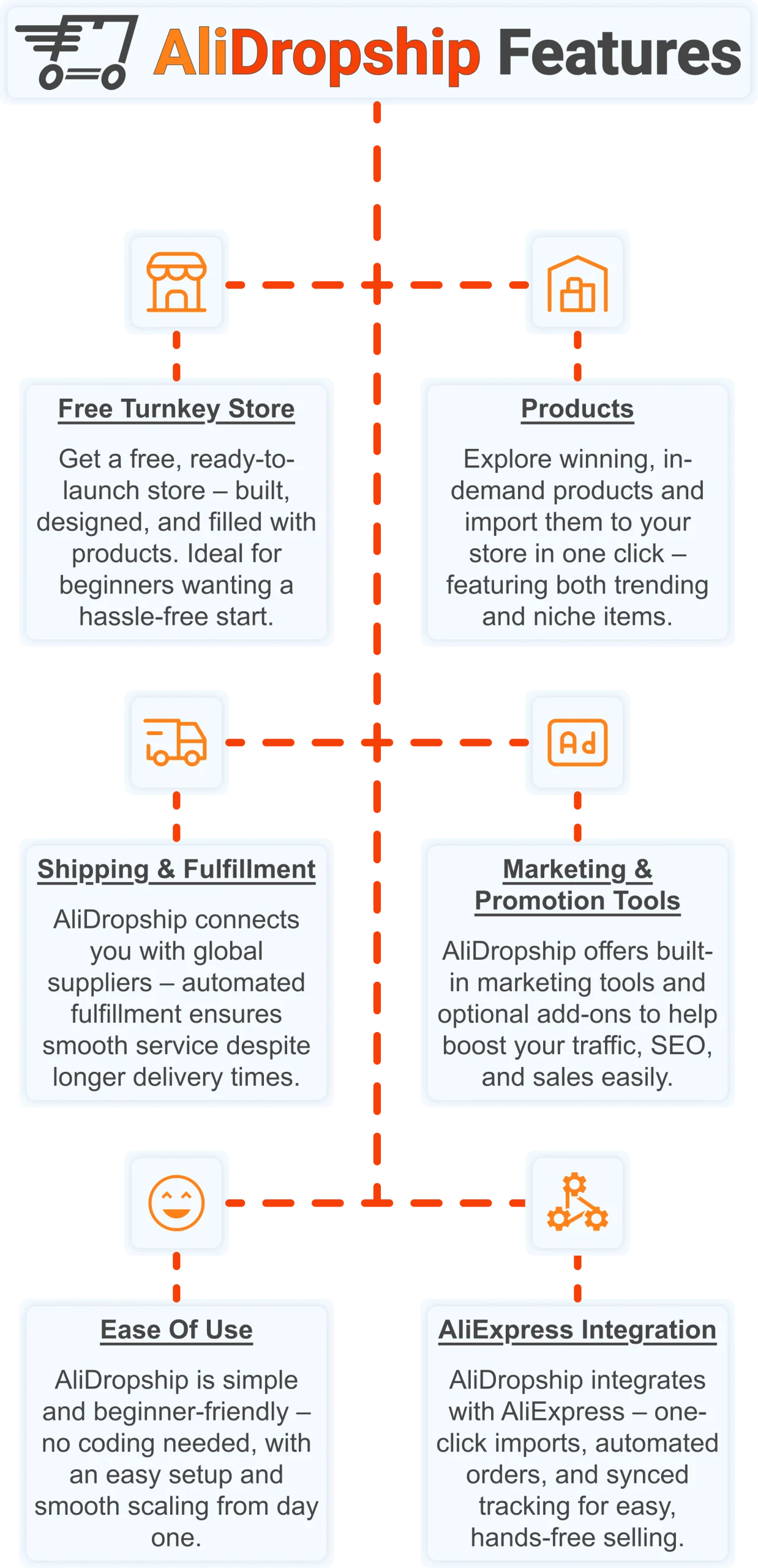
Free turnkey store 🛍️
Get a free turnkey store – built, designed, and filled with products. Ideal for beginners wanting a hassle-free start, the store comes fully optimized to attract customers right away, saving you time on setup. Plus, it includes professional design elements to give your business a polished, trustworthy look from day one. This ready-made foundation makes it easy to move seamlessly into product selection.
Products 📦
Once your store is set up, you can explore winning, in-demand products and import them in one click – featuring both trending and niche items. This wide selection lets you cater to diverse customer interests and test what works best. Regular updates ensure you always have fresh products, keeping your store competitive and relevant. With great products in place, smooth shipping becomes the next essential step.
Shipping & fulfillment 🚚
AliDropship connects you with global suppliers, and automated fulfillment ensures seamless order processing despite international delivery times. Customers receive real-time tracking updates, which builds confidence and trust in your store. Once shipping is handled reliably, you can focus on promoting your store and attracting traffic.
Marketing & promotion tools 📣
To maximize sales, AliDropship offers built-in marketing tools and optional add-ons that help boost traffic, SEO, and conversions. From email campaigns and discounts to social media integration, these tools empower you to reach and retain customers without needing prior marketing experience. With promotion strategies in place, managing your business becomes simpler and more efficient.
Ease of use 👌
AliDropship is beginner-friendly – no coding needed, with an intuitive dashboard that guides you through every step. Easy setup and smooth scaling let you expand your store without stress. As your business grows, adding new features, products, and marketing campaigns remains hassle-free, giving you more time to focus on sales.
AliExpress integration 🛒
Finally, AliDropship integrates seamlessly with AliExpress, enabling one-click imports, automated orders, and synced tracking. Your inventory stays up-to-date with the latest products and prices, while automated order processing frees you from manual tasks. Combined with the turnkey setup, reliable shipping, and built-in marketing tools, this integration ensures your dropshipping business is fully equipped for growth and success.
If you are looking for ways to make money beyond the hours you spend driving, AliDropship gives you a ready-built online store with no coding, no inventory, and no upfront stock costs. Claim your free turnkey store and $100 welcome gift to start selling today.
What are the best ways to make money with your car?
How much can you earn driving for DoorDash or Uber?
Can you make money with your car without driving for a rideshare app?
Is renting your car on Turo worth it?
What car do you need to make money with your car on gig platforms?