How Much Does A Shopify Website Cost? Full 2026 Breakdown

If you’ve been Googling “how much does a Shopify website cost,” you’ve probably landed on a few articles that mention $39 a month and call it a day. The reality is a bit more complicated. The actual Shopify website cost in 2026 stacks up fast – subscription fees, transaction charges, apps, themes, and domain costs all pile on top of each other before you’ve made a single sale. This article breaks down exactly what you’ll pay, what surprises to expect, and why a growing number of beginners are skipping Shopify entirely in favor of something that costs them a lot less to get started.
Quick Answer: The base Shopify website cost starts at $39/month (Basic plan), but most real-world stores spend $80–$300+ per month once apps, payment fees, and a custom domain are factored in. If you want a lower-cost entry point, there are alternatives that let you launch a fully functional ecommerce store for free.

What is the Shopify website cost structure?
Shopify is a hosted ecommerce platform – meaning you rent access to their infrastructure rather than owning it outright. The pricing is built in layers: a monthly subscription sits at the base, then transaction fees, payment processing rates, app subscriptions, and optional theme costs all compound on top. Understanding this layered structure is the only way to budget accurately for a Shopify store in 2026.
Here is how the core plans break down as of 2026:
Most beginners start on Basic. The Starter plan at $5 a month only lets you sell through social channels – you do not get a standalone online store. That means the real entry point for a proper Shopify website is $39 a month, and that is before any extras.
What are the hidden costs of a Shopify website?
The subscription fee is just the starting point. The costs that catch new store owners off guard are the ones that do not show up on Shopify’s pricing page. Here is what actually pushes your Shopify website cost well above the advertised rate.
Payment processing fees
Every time a customer pays, Shopify takes a cut. If you use Shopify Payments (their built-in gateway), you pay the credit card processing rate – 2.9% + $0.30 per transaction on the Basic plan, dropping slightly on higher tiers. If you use a third-party gateway like PayPal or Stripe, Shopify adds an additional transaction fee on top of whatever that gateway charges. On the Basic plan, that surcharge is 2%. On a store doing $5,000 in monthly sales, that is an extra $100 out of your pocket every single month – just for not using their preferred payment tool.
Apps
Shopify’s core feature set is intentionally lean. Most real-world stores rely on third-party apps from the Shopify App Store to add functionality – email marketing, product reviews, upsells, abandoned cart recovery, SEO optimization, and more. Individual apps typically cost $9–$99 per month each. It is not unusual for a store with 3–5 apps installed to add $50–$200 to its monthly running cost. Some functions that competing platforms include by default are paid add-ons on Shopify.
Themes
Shopify offers a handful of free themes, but they are limited in design flexibility and features. Premium themes in the Shopify Theme Store cost $100–$400 as a one-time purchase. Many store owners also hire a Shopify developer to customize their theme, which can run anywhere from $500 to several thousand dollars depending on the scope of the work.
Domain name
A custom domain (e.g. yourbrand.com) is not included in any Shopify plan. Purchasing a domain through Shopify costs around $14–$20 per year, or you can buy one from a third-party registrar. Either way, it is another line item. Without a custom domain, your store URL ends in “.myshopify.com” – which looks unprofessional and hurts customer trust.
Email hosting
Shopify does not include a professional email address (e.g. hello@yourbrand.com). You will need to set up Google Workspace or a similar service, which starts at around $6 per user per month. Small cost individually, but it adds up across a year.
Annual total: what does a Shopify website actually cost?
When you add everything together – Basic plan subscription ($39/mo), two or three essential apps ($50–$100/mo), payment processing on $3,000 in monthly revenue (roughly $90/mo), a domain ($1.50/mo amortized), and email hosting ($6/mo) – you are looking at $186–$236 per month in real operating costs. That is $2,200–$2,800 per year, and your store has not turned a profit yet. The Grow plan ($105/mo) pushes that annual figure closer to $3,500–$4,500.
One note on the $39 figure: Shopify’s advertised Basic price assumes annual billing. Month-to-month, the same plan costs $39 regardless, but the annual rate locks you in. If you cancel early, you do not get a refund for unused months.
Shopify vs. cheaper alternatives: which platform gives you more for less?
Shopify is a powerful platform – there is no denying that. But powerful does not always mean the right fit, especially for someone who is just getting started and wants to test ecommerce without committing hundreds of dollars a month. Here is how Shopify stacks up against three commonly considered alternatives.
WooCommerce
WooCommerce is a free plugin that turns a WordPress site into a fully functional online store. There are no monthly platform fees and no built-in transaction charges. However, you need to pay for web hosting ($5–$30/mo), a domain name, and often a premium theme and additional plugins. The bigger cost here is time: WooCommerce requires meaningful technical setup and ongoing maintenance. If you are not comfortable with WordPress, plugin updates, and server management, the “free” label can be misleading. Real-world setup cost runs $15–$60/mo for hosting and essentials, plus your time.
BigCommerce
BigCommerce starts at $39/mo (Standard plan) and has a notable advantage over Shopify: zero transaction fees on all plans, regardless of which payment gateway you use. It also includes more built-in features out of the box, which can reduce your app spend. The trade-off is a smaller ecosystem of themes and apps compared to Shopify. For sellers already doing volume, BigCommerce is worth comparing seriously. For absolute beginners, it is not meaningfully cheaper than Shopify at the entry level.
Wix eCommerce
Wix eCommerce plans start at around $17/mo for the Core plan, making it genuinely cheaper than Shopify at the subscription level. Wix is easier to use visually and requires no technical knowledge. The limitations show up at scale: Wix is not designed for high-volume stores, its ecommerce feature set is less sophisticated than Shopify’s, and the app ecosystem is smaller. It is a reasonable choice for hobby sellers or small local businesses, but not ideal if you are building a serious ecommerce operation.
AliDropship (free turnkey store)
This is where the comparison gets interesting. AliDropship offers something none of the above platforms do: a completely free turnkey store, built for you, along with a $100 welcome gift to help you get started. You do not pay a monthly subscription to the platform in the same way. You get a real, operational ecommerce store with products already imported, professional design, and the infrastructure to start selling – without putting your credit card on the table before you have earned anything. For someone whose primary concern is the Shopify website cost and whether it is justified before they know the business works, this is a fundamentally different proposition.
Platform comparison: Shopify website cost vs. alternatives at a glance
The table above uses realistic estimates, not advertised minimums. When you factor in all the recurring costs required to actually run a store, Shopify’s total cost of ownership is consistently higher than most alternatives at the beginner stage.
Tips for keeping your ecommerce costs low in 2026
Whether you go with Shopify or a different platform, there are ways to manage your running costs smartly – especially in the early stages when every dollar saved is a dollar you can reinvest in marketing or products.
Use built-in payment tools
On Shopify specifically, using Shopify Payments instead of a third-party gateway eliminates the extra transaction fee entirely. On the Basic plan, that 2% surcharge can cost you hundreds of dollars a year if you are doing reasonable volume. If you are committed to the Shopify ecosystem, this is one of the easiest ways to reduce your real Shopify website cost.
Start with free themes
Shopify’s free theme selection has improved significantly. Unless you have a specific design requirement that free themes cannot meet, start with what is available at no cost. You can always upgrade later once the store is generating revenue. Spending $300 on a premium theme before you have made your first sale is money you cannot get back.
Audit your apps regularly
App subscription creep is real. It is easy to install five apps in your first month, forget about two of them, and keep paying $30–$40/mo for features you are not actively using. Set a calendar reminder every 90 days to review every active app subscription and cut anything that is not delivering measurable value. This single habit can save $200–$500 a year.
Pay annually once you are committed
Shopify offers roughly 25% off all main plans when you pay annually instead of month-to-month. On the Grow plan, that saves you around $312 a year. The trade-off is commitment – you will not get a refund if you change your mind. Only switch to annual billing once you are confident the store is working and you plan to stick with the platform.
Prioritize platforms with fewer mandatory fees
Before committing to any platform, map out the total cost scenario at your expected sales volume. A platform with a slightly higher monthly subscription but no transaction fees can easily be cheaper overall once you are processing real orders. BigCommerce and WooCommerce both have zero platform transaction fees, which matters more and more as your sales grow. And if you are starting from scratch with no revenue yet, a free store option removes the financial pressure of the early stage entirely.
Which platform is right for you?
There is no one-size-fits-all answer here – but there are clear patterns depending on where you are starting from.
Complete beginner
If you have never run an online store before, your main risk is spending money before you know the business model works. Shopify at $39/mo – plus apps, fees, and a domain – commits you to $150–$250/mo before your first sale. A free turnkey store through AliDropship removes that financial risk entirely. You get a real operational store, products already loaded, and a $100 welcome gift to use toward early growth. If the store works, you reinvest profits. If it does not work out, you have not burned through hundreds of dollars finding out.
Intermediate / part-time seller
If you have some ecommerce experience and a specific product niche in mind, Shopify’s ecosystem and app library become genuinely valuable. At the intermediate stage, the higher cost is easier to justify because you have a clearer idea of what tools you need and what revenue you can generate. The Grow plan at $79/mo (annual) is the sweet spot for part-time sellers doing $5,000–$20,000 in monthly revenue – the lower transaction fee and additional staff accounts start earning their cost back at that volume.
Advanced / full-time goal
At high volume, Shopify’s infrastructure, uptime reliability, and deep app ecosystem are genuinely worth the investment. The Advanced plan at $299/mo (annual) starts making financial sense once you are processing $50,000+ per month – the lower processing rates offset the subscription cost. Shopify Plus at $2,300/mo is enterprise territory and only relevant if you are running a multi-channel, high-volume operation with complex operational requirements.
For most people reading this article – especially those asking about the Shopify website cost because they are evaluating whether it is worth it – the honest answer is: start somewhere cheaper, prove the concept, and upgrade when the numbers justify it. There is no prize for paying the most expensive platform fee before you have made your first hundred dollars.
AliDropship: Your complete all-in-one solution for starting dropshipping in 2026
If you want the simplest possible way to start dropshipping – especially if you’re brand new – AliDropship remains one of the most beginner-friendly tools available in 2026. It brings together store creation, product imports, automation, and marketing into a single streamlined system designed to help you launch quickly and grow confidently.
Free turnkey store 🛍️
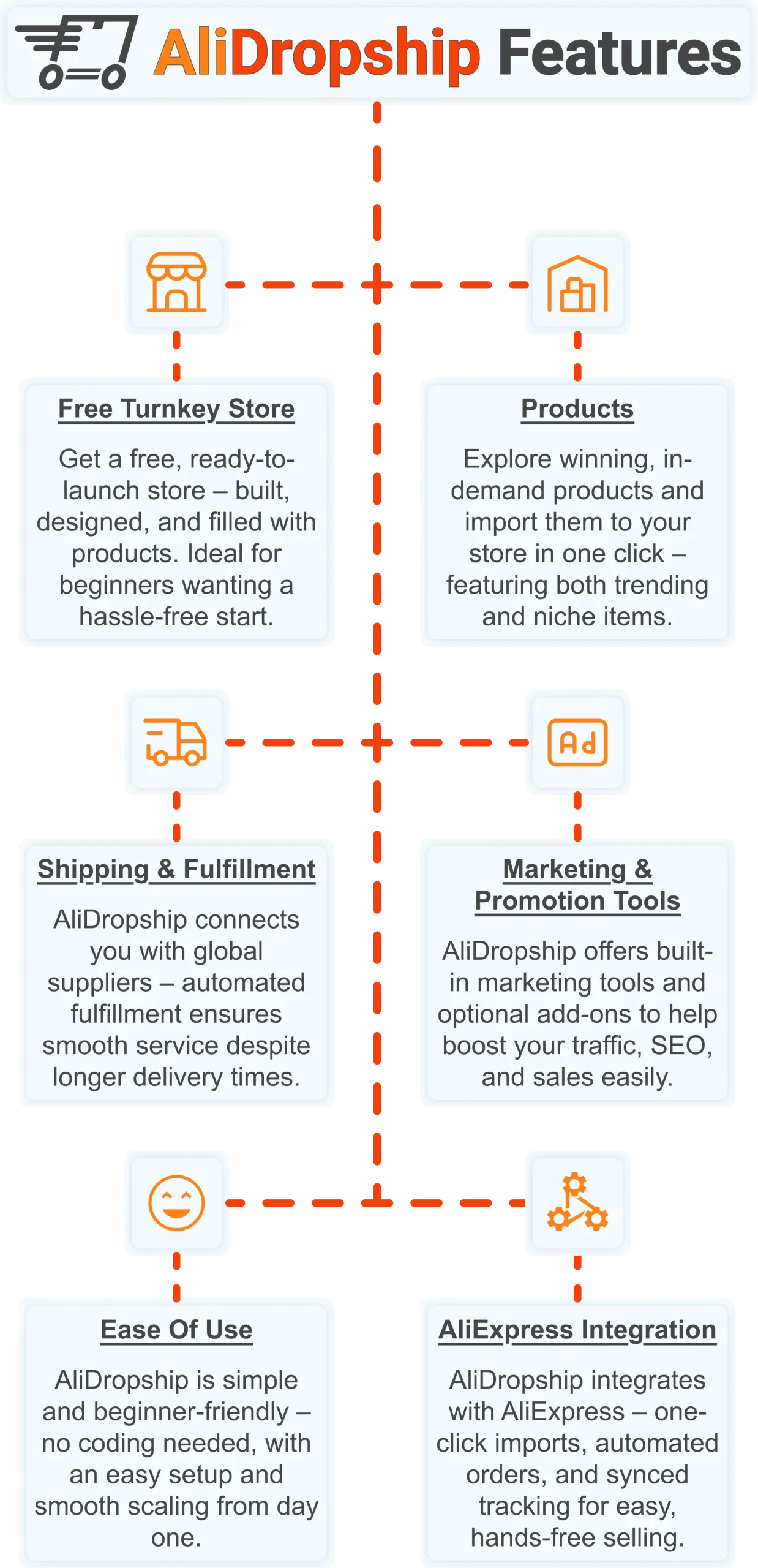
Get a free turnkey store – built, designed, and filled with products. Ideal for beginners wanting a hassle-free start, the store comes fully optimized to attract customers right away, saving you time on setup. Plus, it includes professional design elements to give your business a polished, trustworthy look from day one. This ready-made foundation makes it easy to move seamlessly into product selection.
Products 📦
Once your store is set up, you can explore winning, in-demand products and import them in one click – featuring both trending and niche items. This wide selection lets you cater to diverse customer interests and test what works best. Regular updates ensure you always have fresh products, keeping your store competitive and relevant. With great products in place, smooth shipping becomes the next essential step.
Shipping & fulfillment 🚚
AliDropship connects you with global suppliers, and automated fulfillment ensures seamless order processing despite international delivery times. Customers receive real-time tracking updates, which builds confidence and trust in your store. Once shipping is handled reliably, you can focus on promoting your store and attracting traffic.
Marketing & promotion tools 📣
To maximize sales, AliDropship offers built-in marketing tools and optional add-ons that help boost traffic, SEO, and conversions. From email campaigns and discounts to social media integration, these tools empower you to reach and retain customers without needing prior marketing experience. With promotion strategies in place, managing your business becomes simpler and more efficient.
Ease of use 👌
AliDropship is beginner-friendly – no coding needed, with an intuitive dashboard that guides you through every step. Easy setup and smooth scaling let you expand your store without stress. As your business grows, adding new features, products, and marketing campaigns remains hassle-free, giving you more time to focus on sales.
AliExpress integration 🛒
Finally, AliDropship integrates seamlessly with AliExpress, enabling one-click imports, automated orders, and synced tracking. Your inventory stays up-to-date with the latest products and prices, while automated order processing frees you from manual tasks. Combined with the turnkey setup, reliable shipping, and built-in marketing tools, this integration ensures your dropshipping business is fully equipped for growth and success.
When the Shopify website cost is the thing standing between you and getting started, a free turnkey store changes the whole equation. Get your free store with a $100 welcome gift and launch your ecommerce business today.
How much does a Shopify website cost per month?
What is the cheapest way to start a Shopify store?
Does Shopify charge transaction fees on all plans?
What are the hidden costs of running a Shopify website?
Is there a free alternative to Shopify for starting an online store?