What Products To Sell From Home And Actually Earn?

More people are running businesses from their living rooms than ever before – and not as a side hustle. As a main income source. If you have been wondering which products to sell from home actually make money in 2026, you are in the right place. This guide cuts through the noise and gives you a concrete, realistic picture: what sells, how much you can earn, and how to get started without a warehouse, a team, or a large upfront investment.
Quick Answer: The best products to sell from home in 2026 include home decor, beauty and skincare, pet supplies, fitness gear, and tech accessories – all of which can be dropshipped without holding any inventory, making them ideal for a low-risk home-based business.
Whether you are researching product ideas to sell for the first time or you have already tried a few things that did not work out, the categories below are chosen based on real 2026 demand data, low barrier to entry, and strong profit margin potential when selling products online from home.

What does it mean to sell products from home?
Selling products from home means running an ecommerce operation using your home as your base – no office, no retail space, no commute. But it does not necessarily mean you are making or storing anything physically. Thanks to models like dropshipping, print-on-demand, and wholesale reselling, you can run a fully functional online store from a laptop, with suppliers handling fulfillment on your behalf.
In 2026, this model has matured significantly. Platforms are more accessible, supplier networks are more reliable, and customer trust in online shopping is at an all-time high. The question is no longer whether selling products online from home is viable – it clearly is. The real question is which products give you the best shot at building consistent income.
There are a few key approaches to selling from home:
- Dropshipping – you list products in your store, a supplier ships directly to your customer. No inventory, no upfront stock cost.
- Print-on-demand – you design products (t-shirts, mugs, wall art), a partner prints and ships them per order.
- Reselling – you source products at wholesale or clearance prices and resell at a markup through your own store or marketplaces.
- Handmade – you create and sell your own products, typically through Etsy or your own website.
For most beginners, dropshipping is the most practical entry point – zero upfront inventory cost, fast to launch, and easy to test multiple product ideas to sell before committing to a niche.
How much can you realistically earn selling products from home?
Earnings from home-based product selling vary enormously depending on the model you use, the niche you pick, and how much time you invest. Here is an honest overview based on real seller benchmarks:
Dropshipping consistently offers the best combination of low effort and scalable earning potential, which is why it remains the go-to model for people new to selling products online from home. Handmade has a ceiling because your time is finite – dropshipping does not have that same constraint.
One note on the figures above: these are ranges for stores that have gone through 60–90 days of optimization, not day-one results. New stores typically see their first meaningful sales within 30–45 days and reach consistent daily income between months two and three. Full-time-equivalent earnings ($100+/day) generally require sustained effort over 90–180 days, including product testing, ad iteration, and SEO work.
The ceiling, however, is genuinely high. Many dropshippers operating in strong niches like home decor, pet supplies, or fitness gear report monthly revenues in the $5,000–$20,000 range once their store is established and traffic channels are dialed in.
Best products to sell from home in 2026
Below are the strongest product categories for home-based sellers this year – chosen for consistent demand, strong margins, and compatibility with the dropshipping model. Each one gives you real product ideas to sell without needing to manufacture or warehouse anything yourself.
Home decor and lifestyle products
Home decor is one of the most reliable niches for selling products online from home. With remote work still widespread and people spending more time at home than ever, demand for items that improve and personalize living spaces has remained strong year after year. The category is broad, which means you can niche down significantly – and niching down is exactly what separates profitable stores from generic ones.
Wall art and canvas prints
Wall art is a high-volume, low-return niche – customers rarely send it back, and it photographs well for social media, making it ideal for organic and paid traffic alike. In 2026, searches for moody, oversized, and framed canvas art have risen sharply, driven by the work-from-home aesthetic movement. Products in this category sell well at $25–$80 margins, especially when positioned around interior design themes or room aesthetics.
Why this works in 2026: Over 40% of the global workforce is still working remotely, creating steady demand for home upgrade products that are affordable and visually impactful.
Throw blankets and cozy home textiles
Weighted blankets, chunky-knit throws, and fleece loungewear blankets are consistently strong sellers across multiple demographics – from wellness shoppers to gift buyers to home stylists. They photograph beautifully, lend themselves to seasonal campaigns, and carry healthy margins in the $20–$55 range per unit. Bamboo and organic cotton variants command premium prices and appeal to the growing eco-conscious buyer segment.
Earning potential: $25–$55 per sale with average order values rising when bundled with pillow covers or bedroom sets.
Aesthetic table decor and artificial plants
Artificial plants and aesthetic table decor items – think sculptural vases, LED mood lamps, and minimalist shelf decor – occupy a sweet spot between impulse buy and considered purchase. They are lightweight, easy to ship, and appeal to the home-styling audience that dominates Pinterest and Instagram. Searches for aesthetic home decor have grown consistently, driven largely by younger buyers decorating their first apartments.
Beauty, skincare, and personal care
Beauty is one of the most resilient ecommerce categories – it sells through downturns, seasonal shifts, and algorithm changes because people simply never stop buying it. The skincare segment in particular has undergone a major shift toward ingredient-driven, results-focused products, which opens up significant opportunity for targeted stores.
Skincare serums and K-beauty products
K-beauty remains a dominant force in 2026. Snail mucin serums, vitamin C formulations, and multi-use tints have proven staying power – not just as trend products, but as repeat-purchase staples. The snail mucin market alone is projected to reach $2.93 billion by 2034. Customers who buy once tend to rebuy, which makes this an excellent niche for building lifetime customer value rather than chasing one-off sales.
Why this works in 2026: Ingredient-educated skincare buyers actively search for specific products online rather than browsing in-store, which means SEO-optimized product listings convert well.
Pimple patches and spot treatments
Pimple patches are a genuine viral product that has achieved mainstream staying power. Products like Mighty Patch have accumulated over 140,000 global ratings on Amazon with near-90% positive scores. More importantly for home-based sellers, they are lightweight, inexpensive to source, and easy to position under multiple angles – skincare, self-care, makeup-under-patch aesthetics. Margin per unit is modest ($5–$12), but volume potential is high.
Bath and body essentials
Bath salts, bath bombs, body scrubs, and natural soap are among the most popular product ideas to sell from home, partly because they have a long history as handmade products – but they work equally well as dropshipped items. The natural ingredients trend continues to push demand, and the home spa experience has become a defined consumer category rather than a niche interest.
Pet supplies
Pet owners are reliably passionate buyers – they spend more per month on their pets than on many categories of personal care. Pet supply is also one of the most stable ecommerce niches, relatively immune to economic fluctuations because pet ownership itself rarely declines. Pet shampoo sales rose 37% year-on-year in 2025, and the broader pet care market shows no sign of plateauing.
Pet grooming products
Grooming tools – deshedding brushes, nail grinders, ear cleaning solutions, and pet shampoos – are among the best product ideas to sell online because they combine frequent repeat purchases with strong organic search volume. Pet owners Google specific problems (“dog shedding brush,” “cat nail grinder quiet”) which makes SEO-driven store traffic highly targeted and conversion-friendly.
Earning potential: $15–$45 margin per grooming product, with high reorder rates making average customer lifetime value well above the acquisition cost.
Pet accessories and comfort items
Orthopedic pet beds, travel carriers, interactive toys, and personalized pet accessories are strong performers in the mid-to-premium price range. The personalization trend has reached pet products strongly – custom name tags, embroidered harnesses, and monogrammed blankets command significant premiums and generate strong social sharing, which lowers your effective customer acquisition cost over time.
Fitness and wellness gear
Health consciousness has reached an all-time high, and it shows in product demand. A 2025 survey found that 55% of people prefer to work out at home, which has sustained the at-home fitness equipment market well beyond the initial pandemic surge. This is not a temporary spike – it reflects a structural shift in how people approach exercise.
Resistance bands and compact training equipment
Resistance bands, ab rollers, foam rollers, and balance boards are perennial bestsellers in the home fitness niche. They are lightweight, inexpensive to ship, easy to bundle, and they photograph well. They also appeal to multiple segments – beginners, yoga practitioners, physical therapy patients, and performance athletes – which means your targeting options are broad.
Why this works in 2026: Home gym investment is shifting away from large equipment toward compact, multi-use tools that fit real apartment living – exactly what these products deliver.
Athleisure and activewear
Athleisure has evolved from a trend into a default wardrobe category. Leggings, joggers, sports bras, and athletic hoodies generate consistent year-round demand, with specific sub-styles – foldover leggings, barrel-fit joggers, butt-lifting designs – driving seasonal surges. Searches for athleisure have remained consistently elevated in Google Trends for several years running. As a dropshipping category, activewear benefits from strong visual marketing potential on Instagram and TikTok.
Earning potential: $20–$60 margin per apparel item with bundling opportunities (matching sets, gym kit bundles) pushing average order values higher.
Tech accessories
Tech accessories occupy a unique position in the home-seller product mix: they combine broad appeal with high impulse purchase rates. Everyone with a smartphone, laptop, or smartwatch is a potential customer. The global power bank market is projected to grow from $16.46 billion in 2026 to $27.17 billion by 2034, and that is just one sub-category in a much larger space.
Phone stands, mounts, and MagSafe accessories
Compact phone accessories are among the best products to sell from home because they are lightweight, inexpensive to source, easy to ship globally, and have near-universal audience appeal. Phone stands, ring lights, car mounts, and MagSafe wallet cases all benefit from the remote-work and content-creator economy. They are also natural upsells – someone buying a phone stand will often buy a ring light or cable organizer in the same session.
Portable chargers and fast-charging cables
Portable power banks and fast-charging cables are among the most searched tech products in 2026. They solve a genuine daily problem, have repeat purchase potential (cables break, power banks age), and work across all demographics. Bundling a power bank with a cable and a phone stand into a “travel kit” product bundle is a reliable way to increase average order value without adding complexity to your store.
Smart home devices
Over 69% of households are expected to have at least one smart home device by 2026. Smart plugs, mini projectors, LED light strips, and budget smart speakers are accessible entry points into this category – priced within the impulse buy range ($20–$60) while still feeling like a meaningful upgrade. The category performs exceptionally well during gifting seasons and responds strongly to video demonstration content.
How to choose the right products to sell from home
Not all product ideas to sell are equal. A niche that generates millions in revenue for one seller might be completely saturated for the next. Here is a practical framework for evaluating any product before you commit time and budget to it.
Use Google Trends to validate search consistency before investing in a niche. A product with flat, steady interest is often more profitable long-term than a viral spike product that collapses three months later. Tools like AliExpress order counts, Amazon Best Sellers, and Reddit communities are all useful for reality-checking demand before you build your store around a product.
Tips for selling products online from home successfully
The right product is only part of the equation. How you position, market, and manage your store determines whether you build a sustainable income or just a one-month experiment. Here are the most practical tips for turning a product idea into consistent revenue.
Niche down within a broad category
Instead of “home decor,” target “minimalist Scandinavian bedroom decor.” Instead of “pet supplies,” target “grooming tools for anxious dogs.” Narrow positioning means lower competition, more relevant traffic, higher conversion rates, and a clearer brand identity that customers remember and return to.
Use Google Trends before you commit
Every promising product idea to sell should be validated with Google Trends before you build a store around it. Look for 12-month consistency, not just a recent spike. Products with steady baseline interest survive algorithm changes and seasonal dips. Viral products can generate fast cash but often collapse as quickly as they rose.
Price for value, not just for competition
One of the most common mistakes new home sellers make is racing to the bottom on price. If your product solves a specific problem or targets a defined lifestyle, customers will pay a premium for it. A pet grooming kit positioned for anxious dogs with calming instructions included can sell at 2x the price of a generic equivalent. Story and positioning matter more than the lowest price point.
Build for repeat purchases from day one
Products that people rebuy – skincare, pet supplies, fitness accessories, home fragrance – have a structural advantage over one-and-done purchases. When evaluating product ideas to sell, always ask: will this customer buy from me again in 60–90 days? If the answer is yes, your customer acquisition cost amortizes over multiple purchases, dramatically improving profitability.
Test small, then scale what works
Do not launch 50 products and hope for the best. Start with 10–15 carefully selected items in a defined niche, run small ad spends ($5–$10/day per product) or build organic SEO content, and double down on what converts. Scaling a proven winner is far more efficient than trying to find a winner from a massive, unfocused catalog.
Legal and ethical considerations for home-based sellers
Selling products online from home is straightforward legally, but there are a few areas where new sellers commonly make mistakes – sometimes costly ones.
What to avoid absolutely
Fake reviews, inflated “was/now” pricing designed to mislead, and misleading product claims are not grey-area tactics – they are violations of consumer protection law in most countries and can result in account bans or legal action. Selling counterfeit or branded goods (items using Nike, Apple, or other trademarked logos without authorization) carries serious legal risk and is never worth the short-term revenue.
Key principle: Build your store on real product quality, honest descriptions, and genuine customer reviews – it is the only sustainable foundation for a home-based ecommerce business.
What to do instead
Register your business properly – even as a sole trader or LLC – and keep clean records from day one. Understand the import and tax rules for your target market, particularly if you are selling internationally. Use supplier agreements that clearly define product quality standards and return policies. And always have a clear, honest returns policy published on your store – it builds trust and reduces disputes significantly.
Important note: Most reputable dropshipping platforms, including AliDropship, connect you with vetted suppliers who maintain product compliance standards – which removes a large part of the legal risk for beginners.
Which approach is right for you?
Not every home seller is in the same situation. Here is how to think about your starting point and which product strategy fits best.
Complete beginner
If you have never sold anything online before, start with a single-niche dropshipping store in one of the evergreen categories above – home decor, pet supplies, or skincare are all strong starting points. Use a turnkey solution that handles store setup and product importing for you. Focus your energy on understanding your customers and writing good product descriptions rather than on the technical side of ecommerce.
Intermediate / part-time seller
If you have some experience but have not yet reached consistent daily revenue, the issue is usually one of two things: too broad a niche, or not enough traffic testing. Pick one category, niche it down aggressively, and run structured traffic experiments. Try paid social for fast feedback, SEO for long-term compounding growth, and email capture from day one to build a retargetable audience.
Advanced / full-time goal
If you are aiming for $100+/day in consistent profit within 6 months, your strategy needs to combine a proven high-margin niche, a structured content and SEO plan, and a paid traffic system with enough data to optimize against real conversion events. Tech accessories, fitness gear, and skincare all support this level of scaling because demand is broad, product selection is deep, and margins allow for paid acquisition.
The home-based ecommerce model is genuinely one of the most scalable ways to build income in 2026. The products are accessible, the platforms are mature, and the global buyer base continues to grow. The question is not whether the opportunity exists – it clearly does. The question is whether you act on it.
AliDropship: Your complete all-in-one solution for starting dropshipping in 2026
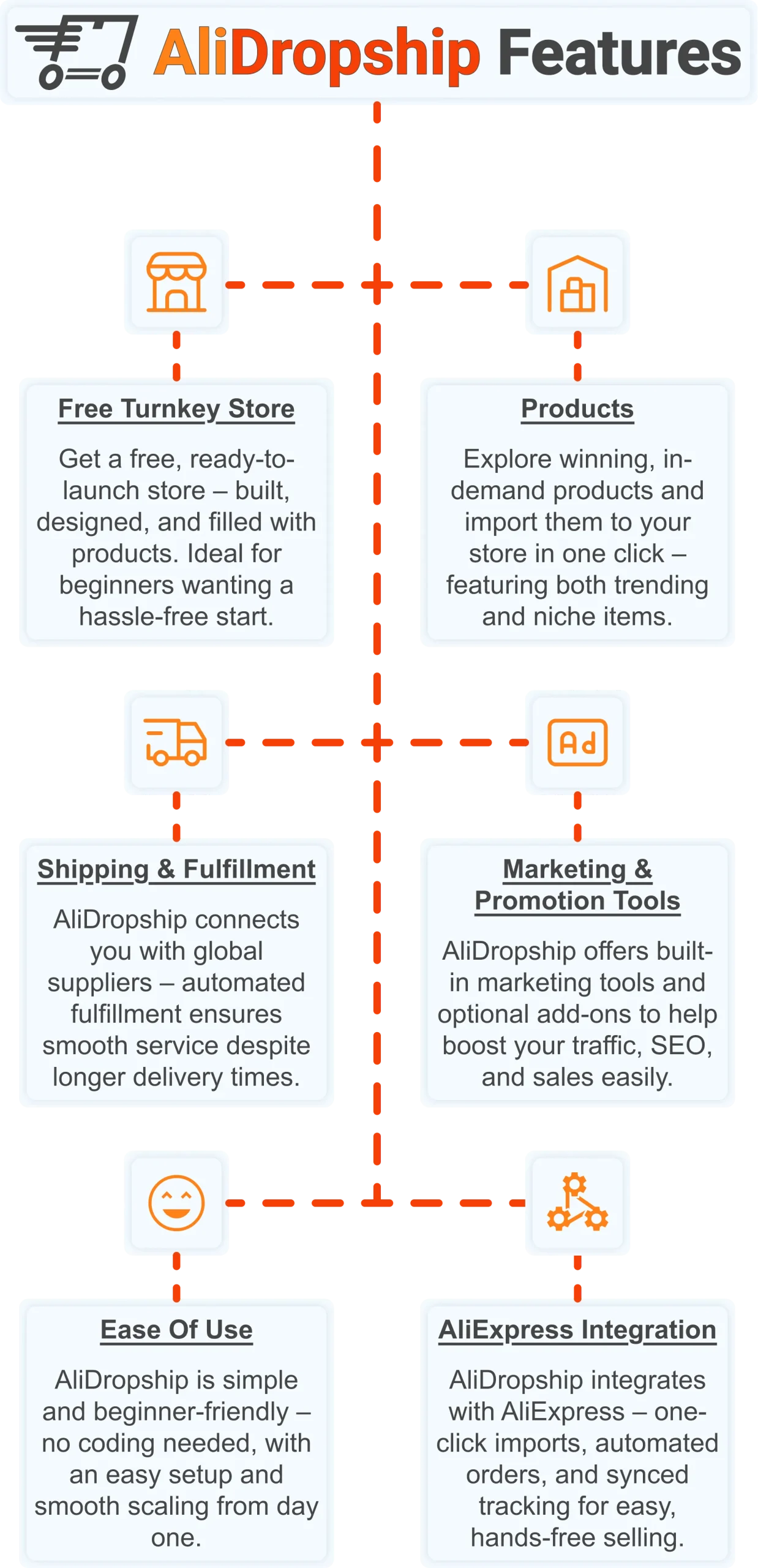
If you want the simplest possible way to start dropshipping – especially if you’re brand new – AliDropship remains one of the most beginner-friendly tools available in 2026. It brings together store creation, product imports, automation, and marketing into a single streamlined system designed to help you launch quickly and grow confidently.
Free turnkey store 🛍️
Get a free turnkey store – built, designed, and filled with products. Ideal for beginners wanting a hassle-free start, the store comes fully optimized to attract customers right away, saving you time on setup. Plus, it includes professional design elements to give your business a polished, trustworthy look from day one. This ready-made foundation makes it easy to move seamlessly into product selection.
Products 📦
Once your store is set up, you can explore winning, in-demand products and import them in one click – featuring both trending and niche items. This wide selection lets you cater to diverse customer interests and test what works best. Regular updates ensure you always have fresh products, keeping your store competitive and relevant. With great products in place, smooth shipping becomes the next essential step.
Shipping & fulfillment 🚚
AliDropship connects you with global suppliers, and automated fulfillment ensures seamless order processing despite international delivery times. Customers receive real-time tracking updates, which builds confidence and trust in your store. Once shipping is handled reliably, you can focus on promoting your store and attracting traffic.
Marketing & promotion tools 📣
To maximize sales, AliDropship offers built-in marketing tools and optional add-ons that help boost traffic, SEO, and conversions. From email campaigns and discounts to social media integration, these tools empower you to reach and retain customers without needing prior marketing experience. With promotion strategies in place, managing your business becomes simpler and more efficient.
Ease of use 👌
AliDropship is beginner-friendly – no coding needed, with an intuitive dashboard that guides you through every step. Easy setup and smooth scaling let you expand your store without stress. As your business grows, adding new features, products, and marketing campaigns remains hassle-free, giving you more time to focus on sales.
AliExpress integration 🛒
Finally, AliDropship integrates seamlessly with AliExpress, enabling one-click imports, automated orders, and synced tracking. Your inventory stays up-to-date with the latest products and prices, while automated order processing frees you from manual tasks. Combined with the turnkey setup, reliable shipping, and built-in marketing tools, this integration ensures your dropshipping business is fully equipped for growth and success.
If you are ready to start selling products from home and want a proven system behind you, AliDropship gives you everything you need in one place. Get your free turnkey store and a $100 welcome gift to start selling today.
What are the best products to sell from home in 2026?
How do I find product ideas to sell online from home?
Can you make a full-time income selling products online from home?
What is the easiest way to start selling products online from home?
How long does it take to start earning money selling products from home?