How To Start Pinterest Affiliate Marketing And Earn In 2026

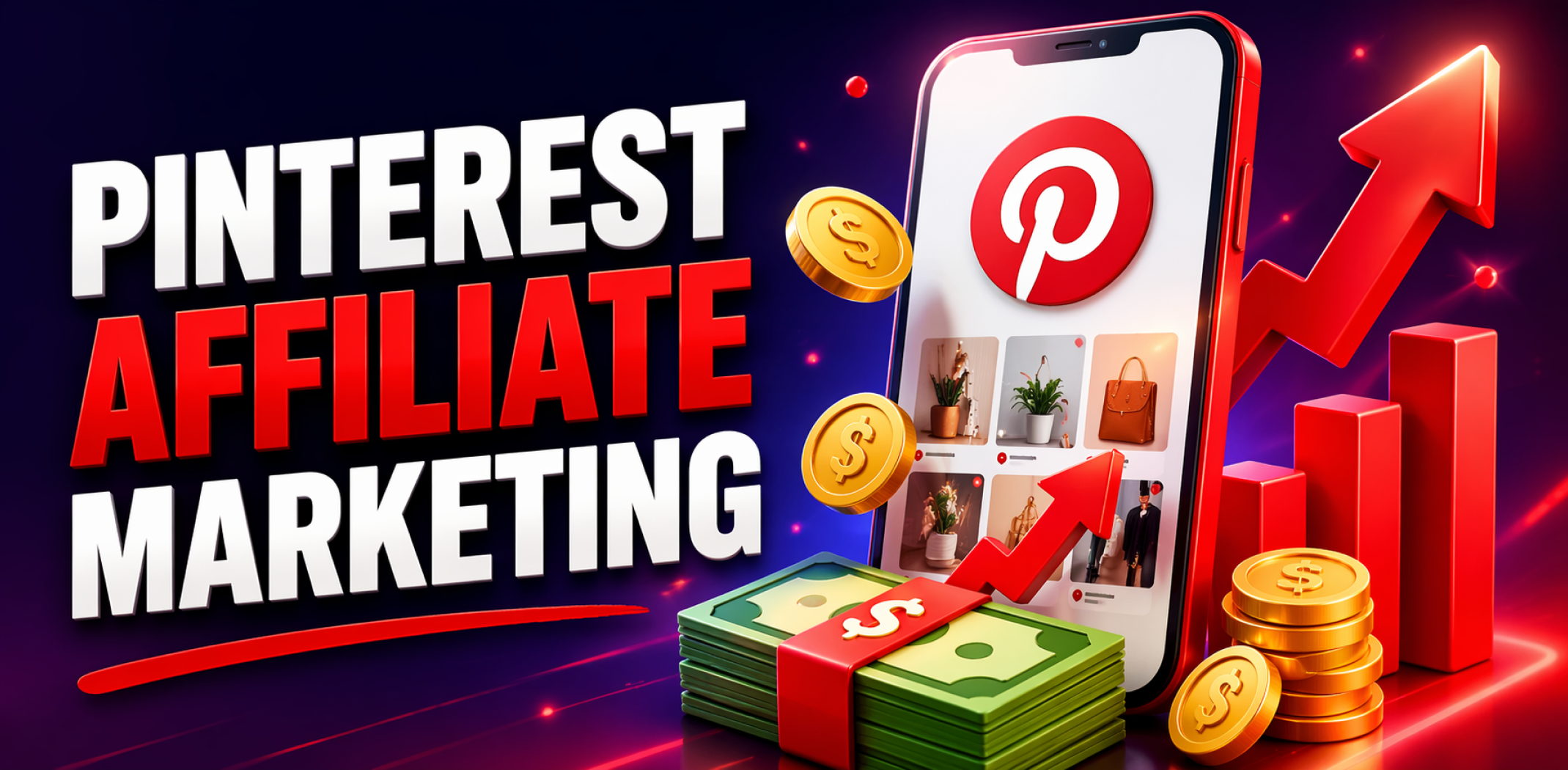
Pinterest sits quietly behind Instagram and TikTok in most conversations about social media income – but for affiliate marketers, it is one of the most underrated platforms available in 2026. Unlike short-form video content, Pinterest pins stay discoverable for months or even years after you publish them, meaning a single well-optimized pin can generate commissions long after you have moved on to other projects. With over 570 million monthly active users actively searching for products, ideas, and inspiration, the platform consistently rewards creators who publish regularly with reliable, compounding traffic.
Quick Answer: Pinterest affiliate marketing means creating pins that contain affiliate tracking links. When someone clicks your link and makes a qualifying purchase, you earn a commission – no blog, no storefront, and no upfront investment required. You can start with a free Pinterest business account and begin earning within your first few weeks.
This guide covers exactly how pinterest affiliate marketing works in practice, how much you can realistically earn, which affiliate programs perform best on the platform, and how to build a strategy that generates income consistently – whether you have a blog or not.
Pinterest functions as a visual search engine rather than a pure social media feed, and that distinction is what makes it so valuable for affiliates. Users come to Pinterest with purchase intent – they are planning a project, researching a product, or looking for the best option in a category. That buying mindset is why pinterest affiliate marketing consistently outperforms other social channels on click-through and conversion rates. Before jumping into tactics, it is worth understanding exactly what the model involves and what makes it work the way it does in 2026.

What is pinterest affiliate marketing?
Pinterest affiliate marketing is the practice of creating and sharing pins – images, graphics, or short videos – that contain affiliate tracking links pointing to products or services. When a viewer clicks through and completes a qualifying purchase, the pin creator earns a commission from the seller. No inventory, no customer service, and no product creation required on your end.
What separates Pinterest from other affiliate marketing channels is the longevity of its content. Instagram posts and TikToks typically fade from feeds within 24–48 hours. A well-optimized Pinterest pin, by contrast, can surface in search results months or even years after it was published, turning a single afternoon of content creation into a long-running traffic source. This compounding effect is why experienced affiliates treat Pinterest as a foundational traffic channel rather than a quick-hit social strategy.
Pinterest removed its ban on direct affiliate links in 2016 and has maintained that policy ever since. In 2026, you can link a pin directly to an affiliate URL without owning any website – though building a blog or landing page alongside your Pinterest profile does meaningfully increase both conversions and long-term earnings. If you are starting from nothing, your Pinterest profile alone is a perfectly valid place to begin.
Important note: Pinterest requires all affiliate pins to carry a visible disclosure. Adding “#ad” or “#affiliate” to your pin description is the minimum requirement under FTC guidelines. Pins without disclosure risk being removed, and repeated violations can result in your account being flagged or restricted.
Pinterest affiliate marketing is a legitimate, scalable income model – but it has a ceiling, and understanding that ceiling upfront helps you make smarter decisions about where to invest your time and effort. The next section gives you a realistic look at what the numbers actually look like.
How much can you realistically earn with pinterest affiliate marketing?
Earnings from pinterest affiliate marketing vary widely depending on your niche, affiliate program selection, pin volume, and how much organic traffic your profile attracts. Most beginners starting from scratch see their first commissions within 60–90 days, with monthly earnings typically between $50 and $300 during the first six months. Established accounts in high-commission niches – personal finance, software, home decor, or wellness – can reach $1,000–$3,000 per month with consistent, strategic effort.
These ranges reflect accounts in moderately competitive niches publishing 10–20 pins per week with optimized titles, descriptions, and relevant board structures. High-commission niches like software and finance push those figures higher, while low-commission niches like fast fashion typically sit at the lower end of each range.
One note on the upper figures: Reaching $5,000+ per month requires a mature account, a well-trafficked blog or website feeding Pinterest, and high-commission programs across multiple niches – typically 18 or more months of consistent work. Most part-time affiliates realistically earn between $200 and $800 per month, which is meaningful supplemental income but not a full-time replacement without serious long-term commitment.
Commission rates are another variable that dramatically shapes your pinterest affiliate income potential. Amazon Associates pays 1–4% depending on category, while software and digital product programs routinely pay 20–50% per sale. A single $97 software subscription at 40% commission earns you $38.80 per conversion – compared to roughly $0.40 from a $10 Amazon product at 4%. Niche selection and program choice matter far more than raw pin volume when projecting realistic earnings.
With a clear earning picture established, the practical next step is setting up a Pinterest strategy that gives you the best chance of reaching the higher end of those ranges – starting with the foundational decisions that affect everything that follows.
How to start pinterest affiliate marketing: the basics
Getting started with pinterest affiliate marketing comes down to three foundational decisions made before you publish a single pin: the right account type, a focused niche, and the affiliate programs that match your content. None of these require technical skills or a starting budget – but each one directly affects how quickly you see results and how far your income can scale.
Set up a Pinterest business account
A personal Pinterest account will not give you access to analytics, rich pins, or the performance data affiliate marketers depend on. Converting to a free business account unlocks pin-level click tracking and audience insights so you can see exactly which content drives the most outbound traffic. Set your profile bio to clearly signal your niche, use a consistent profile image, and choose an account name that reflects what you help people find – not just your personal name.
Enable rich pins if your content includes products, articles, or recipes – they pull metadata directly from source URLs and make your pins more informative and credible in the feed. Verify your website if you have one, since Pinterest consistently gives better search placement to verified accounts. Getting the account structure right from day one saves you from rebuilding authority later.
Choose a profitable niche for your Pinterest strategy
Pinterest performs best in visually appealing, purchase-intent niches. The categories consistently producing the strongest affiliate returns in 2026 include home decor, personal finance, fitness and wellness, fashion and beauty, food and recipes, travel planning, and digital tools for bloggers and small business owners. Your niche should satisfy two criteria: enough visual content potential to keep boards fresh, and affiliate programs with commission rates that make the effort worthwhile.
Narrow your niche more than you think you need to. “Home decor” is too broad to rank in Pinterest search. “Small apartment minimalist decor under $100” is focused enough to attract a defined buyer, surface in specific searches, and convert because your pins directly answer a purchase question. The tighter your niche, the faster Pinterest’s algorithm identifies who to show your content to – and the more targeted (and buyable) your audience becomes over time.
Join the right affiliate programs
Most affiliate programs are free to join and approve new members within a few days. Amazon Associates is the most accessible entry point because it covers virtually every product category, but commission rates are low – typically 1–4%. For higher earning potential, explore networks like ShareASale, CJ Affiliate, or Impact, each of which hosts hundreds of brands across every niche with significantly better commission structures and longer cookie windows.
Once approved, you receive a unique tracking link for each product. On Pinterest, you paste that link directly into the destination URL field when creating a pin. The cookie window – the period during which you earn a commission after someone clicks your link – varies by program, typically ranging from 24 hours with Amazon to 30–60 days with most other networks. Programs with longer cookie windows are generally worth prioritizing on Pinterest, where users often take time between discovery and final purchase.
With the foundational setup in place, the next decision is which specific programs to actually prioritize – because not every affiliate program converts equally well for Pinterest audiences, and choosing the right ones early makes a significant difference.
Best affiliate programs for pinterest in 2026
Choosing the right affiliate programs is the single most important variable in your pinterest affiliate income potential. The best-performing programs on the platform combine high visual content appeal with strong commission structures and cookie windows that give your traffic time to convert. Here are the programs consistently delivering results for Pinterest affiliates across different niches.
Physical and lifestyle products
Amazon Associates
Amazon Associates remains the most popular starting point for Pinterest affiliates because virtually every product category is covered and Amazon’s brand recognition drives strong conversion rates even with cold traffic. Commission rates are low – 1–4% depending on category – but the depth of the product catalog means you can pin across your entire niche without hunting for individual brand deals. Focus Amazon pins on product categories in the 3–4% tier, such as clothing, accessories, and kitchen goods, where average order values are high enough to justify the commission percentage.
ShareASale
ShareASale hosts over 25,000 merchants, many of which are well-matched to Pinterest’s strengths in home decor, fashion, beauty, and wellness. Commission rates on the platform routinely reach 10–20%, and 30–60-day cookie windows are standard across most merchants. ShareASale is one of the best networks for Pinterest affiliates because its catalog aligns closely with the platform’s top-performing visual categories – and higher commission rates mean each click goes significantly further than an equivalent Amazon referral.
CJ Affiliate
CJ Affiliate (formerly Commission Junction) connects you with larger, established brands in travel, finance, technology, and retail. Approval requirements tend to be stricter than Amazon or ShareASale, so apply once you have a consistent publishing history on Pinterest. For affiliates in travel or personal finance – both strong Pinterest niches – CJ’s catalog includes programs with fixed payouts of $50–$150 per qualified referral rather than percentage-based commissions, which dramatically changes the math on traffic conversion.
Digital and subscription products
Canva affiliate program
Canva is one of the highest-converting affiliate offers on Pinterest because the audience overlap is nearly perfect – Pinterest creators are already the target user for Canva Pro. Sharing design templates, pin creation tutorials, or visual content tips gives you a natural bridge to the affiliate link. The program pays up to $36 per new Canva Pro subscriber through the Impact network, with a 30-day cookie window. Design content performs exceptionally well in Pinterest feeds, making this one of the most efficient affiliate relationships available on the platform.
Skillshare
Skillshare’s affiliate program pays commissions for each new member trial referral, with rates ranging from $7 to $67 per sign-up depending on the subscription tier. The platform covers graphic design, photography, business, writing, and marketing – all niches with motivated Pinterest audiences. Rather than linking to the Skillshare homepage, create pins around specific course topics and link to the relevant class landing page directly. Topic-specific pins significantly outperform generic “learn a new skill” pins in both click-through rate and conversion.
Bluehost
Bluehost pays a flat $65–$100 per successful hosting referral, making it one of the highest single-transaction affiliate products available for Pinterest. It performs best in the blogging and online business niche, where pins about “how to start a blog” or “how to build a website” attract exactly the audience most likely to convert. At $65 per referral, one conversion per day would produce roughly $1,950 per month – which illustrates how dramatically high-commission programs change the income ceiling compared to percentage-based physical product commissions.
How to create pins that drive affiliate clicks
Having the right affiliate programs in place means nothing if your pins do not generate clicks. Pinterest is a visual platform, and the content that consistently performs shares a set of design and copywriting principles that apply across every niche. Here is what works in 2026 – and what separates a pin that converts from one that gets scrolled past.
Design for the search feed
Vertical pins in a 2:3 ratio (typically 1000 x 1500 pixels) consistently outperform square or horizontal formats in Pinterest’s search feed. Use clean, high-contrast visuals with minimal text overlay – enough to communicate the pin’s value without crowding the image. Tools like Canva make it easy to build polished pin templates you can adapt for multiple products. Sticking to 2–3 brand colors across your pins builds visual consistency and makes your profile recognizable as your audience grows.
Write keyword-rich descriptions that convert
Pinterest’s algorithm reads pin titles and descriptions to determine where your content surfaces in search results. Treat every description as a short SEO asset: include your primary keyword naturally in the first sentence, add 2–3 supporting terms throughout, and explain the value of clicking through rather than simply describing what the pin shows. Descriptions of 100–200 words perform well across most niches. Keyword stuffing is penalized the same way it is on Google – write for the reader first, and the algorithm will follow.
Use idea pins and video pins strategically
Standard static pins remain the backbone of any pinterest affiliate marketing strategy, but idea pins (Pinterest’s multi-frame story format) and short video pins receive meaningful algorithmic boosts in 2026. Idea pins cannot carry external links directly, but they drive follower growth and account authority – which translates into more clicks on your linked standard pins over time. Use them to demonstrate a product in real use, walk through a quick tutorial, or share a before-and-after result, then point viewers to your linked pin for the full product details.
Organize boards around buyer intent
Your board structure affects how Pinterest categorizes your account and which searches your content surfaces in. Build boards around specific buyer intentions rather than broad topics – “best standing desks under $300” converts better than “home office ideas.” Aim for 10–20 well-named boards in your niche, each containing 20–50 pins: a mix of your own content and repinned material from credible sources in the same space. Board names carry real SEO weight on Pinterest, so choose them with the same care you would apply to a blog page title.
Consistency matters more than volume on Pinterest. Publishing 5–10 fresh pins per day signals the account activity that Pinterest’s Smart Feed algorithm rewards. A burst of 50 pins followed by a week of silence works against you. Treat Pinterest as a long-term compounding traffic strategy and the platform’s search-driven discovery model will work in your favor over the 12–18 months it takes to see serious results.
Pinterest affiliate marketing without a blog
One of the most common questions new affiliates ask is whether a blog is necessary for pinterest affiliate marketing. The direct answer is no – Pinterest has allowed direct affiliate links on pins since 2016, meaning you can link a pin straight to a product page and earn commissions without owning any website. This makes Pinterest one of the most accessible entry points into affiliate marketing for complete beginners with no technical background and no existing online presence.
Operating without a blog does come with meaningful limitations. You are entirely dependent on Pinterest’s platform and policies, which can and do change. Direct affiliate links are more exposed to flag risks than links pointing to content you own. You also lose the ability to build an email list, create retargeting audiences, or establish the kind of brand presence that turns occasional visitors into repeat buyers.
The most practical approach is a middle path: start with direct Pinterest affiliate links while simultaneously building a simple landing page or focused buying guide that you own. Even a one-page site comparing 5–10 products in your niche gives you a buffer between Pinterest and the affiliate offer, tends to improve conversion rates, and protects your income against platform algorithm shifts. Most successful long-term Pinterest affiliates treat their own content site as the foundation and Pinterest as the primary traffic engine feeding it.
Why this works in 2026: Pinterest has been steadily expanding its shopping and product discovery features, competing more directly with Google Shopping and TikTok Shop for purchase-intent traffic. Affiliates who build consistent, high-quality content in focused niches are benefiting from increased organic reach as Pinterest continues investing in its search algorithm and shoppable pin infrastructure.
Legal and ethical considerations for pinterest affiliate marketing
Pinterest affiliate marketing is entirely legitimate, but there are platform rules and advertising laws you need to follow to stay compliant. Ignoring these requirements risks account suspension, removed content, and in some cases legal consequences under FTC guidelines in the US and equivalent regulations elsewhere.
Key principle: Disclosure is not optional. The FTC requires any paid or incentivized promotion to be clearly identified before the viewer engages with it. On Pinterest, this means placing “#ad,” “#affiliate,” or a clear commission disclosure prominently in your pin description – not buried after 200 words of text where no one sees it.
What to avoid absolutely in your pinterest affiliate marketing practice:
- Publishing affiliate pins without a visible disclosure statement in the description
- Promoting products you have not verified as legitimate – if the product disappoints the buyer, your credibility takes the hit alongside it
- Using misleading pin titles that overstate product benefits or imply guaranteed earnings
- Creating multiple Pinterest accounts to artificially drive traffic or saves to your pins
- Promoting products that violate Pinterest’s advertising policies, including get-rich-quick schemes or unsubstantiated health claims
What to do instead: disclose every affiliate relationship clearly and early, only pin products you genuinely believe solve a real problem for your audience, and build your boards around content that helps people make better buying decisions. Pinterest’s algorithm actively rewards value-first content over purely promotional pins – so the ethical approach and the high-performing approach are the same approach.
Following these principles protects your account, your audience’s trust, and your long-term pinterest affiliate income – all three of which are worth far more than any short-term shortcut.
Final thoughts: choosing the right pinterest affiliate strategy for you
Pinterest affiliate marketing is a genuine, accessible income model – but your approach should match your current situation, timeline, and income goals. Here is how to think about it depending on where you are starting from.
Complete beginner
If you are new to online income, start with a free Pinterest business account and one or two affiliate programs in a niche you already understand. Amazon Associates and ShareASale are the easiest entry points. Spend your first 90 days learning which pin formats, descriptions, and board structures generate the most clicks before trying to optimize for income. Expect $50–$150 per month in the early months and treat it as paid learning – the knowledge you build in that period is worth more than the early commissions.
Intermediate / part-time
If you have been publishing pins for 6–12 months and are seeing consistent traffic but modest earnings, the focus should shift to increasing your average commission rate. Audit your current programs and replace low-percentage offers with higher-value alternatives in the same niche. Add a simple landing page or buying guide to capture email addresses and improve conversions. Accounts at this stage that stay consistent and strategic regularly reach $500–$1,500 per month within 12–18 months of their start date.
Advanced / full-time goal
If your goal is full-time income, pinterest affiliate marketing alone is unlikely to get you there without significant scale and diversification. Think 50,000+ monthly page views, a healthy email list, multiple high-commission programs, and income from at least two or three distinct sources – affiliate commissions, brand partnerships, and ideally a product or store you own outright. Building an ecommerce component alongside your affiliate content is one of the most effective ways to push past the income ceiling that affiliate-only models inevitably hit as they mature.
Whichever stage you are at, the core principle stays the same: Pinterest rewards consistent, niche-focused, high-quality content over the long run. Start with what you have, optimize as you learn, and reinvest early earnings into better tools and traffic channels that you fully control.
AliDropship: Your complete all-in-one solution for starting dropshipping in 2026
If you want the simplest possible way to start dropshipping – especially if you’re brand new – AliDropship remains one of the most beginner-friendly tools available in 2026. It brings together store creation, product imports, automation, and marketing into a single streamlined system designed to help you launch quickly and grow confidently.
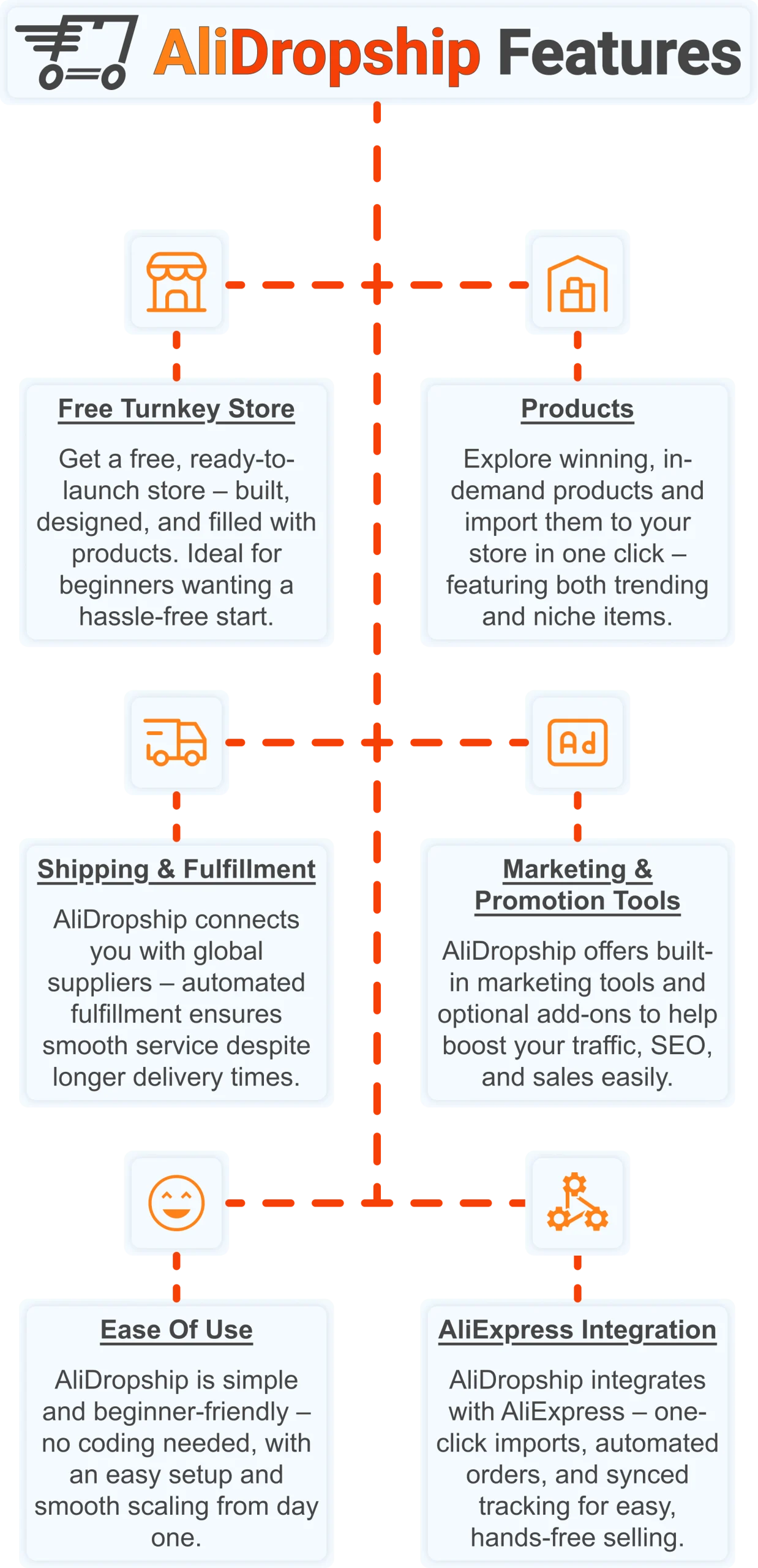
Free turnkey store 🛍️
Get a free turnkey store – built, designed, and filled with products. Ideal for beginners wanting a hassle-free start, the store comes fully optimized to attract customers right away, saving you time on setup. Plus, it includes professional design elements to give your business a polished, trustworthy look from day one. This ready-made foundation makes it easy to move seamlessly into product selection.
Products 📦
Once your store is set up, you can explore winning, in-demand products and import them in one click – featuring both trending and niche items. This wide selection lets you cater to diverse customer interests and test what works best. Regular updates ensure you always have fresh products, keeping your store competitive and relevant. With great products in place, smooth shipping becomes the next essential step.
Shipping & fulfillment 🚚
AliDropship connects you with global suppliers, and automated fulfillment ensures seamless order processing despite international delivery times. Customers receive real-time tracking updates, which builds confidence and trust in your store. Once shipping is handled reliably, you can focus on promoting your store and attracting traffic.
Marketing & promotion tools 📣
To maximize sales, AliDropship offers built-in marketing tools and optional add-ons that help boost traffic, SEO, and conversions. From email campaigns and discounts to social media integration, these tools empower you to reach and retain customers without needing prior marketing experience. With promotion strategies in place, managing your business becomes simpler and more efficient.
Ease of use 👌
AliDropship is beginner-friendly – no coding needed, with an intuitive dashboard that guides you through every step. Easy setup and smooth scaling let you expand your store without stress. As your business grows, adding new features, products, and marketing campaigns remains hassle-free, giving you more time to focus on sales.
AliExpress integration 🛒
Finally, AliDropship integrates seamlessly with AliExpress, enabling one-click imports, automated orders, and synced tracking. Your inventory stays up-to-date with the latest products and prices, while automated order processing frees you from manual tasks. Combined with the turnkey setup, reliable shipping, and built-in marketing tools, this integration ensures your dropshipping business is fully equipped for growth and success.
Pinterest affiliate marketing is a great way to test what sells and build traffic – but if you want to own your income rather than earn commissions on someone else’s products, a turnkey ecommerce store is the natural next step. Claim your free store today and start building an online business you fully control.
What is pinterest affiliate marketing and how does it work?
Can you do affiliate marketing on Pinterest without a blog?
How much can you earn from pinterest affiliate marketing?
What are the best affiliate programs for Pinterest?
How do beginners start pinterest affiliate marketing?